 listicle
Best Dirt Bike Storybooks for Beginning Readers
Table of Contents
- Why Dirt Bike Storybooks Matter for Beginning Readers
- Dirt Bike Books for Kids: What Makes Them Different
- Dirt Bike Early Reader Books That Build Confidence
- Read-Aloud Books About Motorcycles for Younger Riders
- How to Get Kids Excited About Reading Dirt Bike Stories
- Choosing the Right Book by Age and Reading Level
- Building a Motocross Story Collection for Your Young Rider
- Frequently Asked Questions
Last Updated: October 17, 2026
Why Dirt Bike Storybooks Matter for Beginning Readers
Dirt bike storybooks for beginning readers bridge two worlds: the excitement young riders crave and the literacy skills they need. When a child loves motocross, a well-crafted story about Ryder conquering a track becomes motivation to practice reading, confidence to tackle harder words, and proof that reading connects to the sport they love.
At Nelmgerian MX, we understand that many parents face the same problem: their child would rather be on a dirt bike than with a book. The solution isn't forcing reading. It's choosing stories that speak to what they already love. A beginning reader who races through 30 pages of motocross adventures builds fluency faster than one slogging through generic picture books.
Screen-free activities matter more than ever. Between practice days and races, young riders need something to keep their minds engaged with the sport they love. Dirt bike storybooks do exactly that, reinforcing confidence and creating moments for parents and children to connect over a shared passion.
Dirt Bike Books for Kids: What Makes Them Different
Not every children's book about motorcycles works for beginning readers. The difference comes down to three things: reading level alignment, character-driven storytelling, and authentic motocross context.
A true dirt bike book for kids respects the sport. It doesn't oversimplify motocross into a generic racing story. Instead, it weaves in real elements: acceleration, discipline, friendship, and competition. Characters like Ryder and Wheelie aren't just riding bikes. They're learning responsibility, handling setbacks, and discovering what it takes to improve.
Reading level matters more than most parents realize. A book that's too easy feels babyish; one that's too hard frustrates. The best dirt bike early reader books hit a sweet spot, using repetition and phonetic patterns strategically so the child builds confidence with each page.
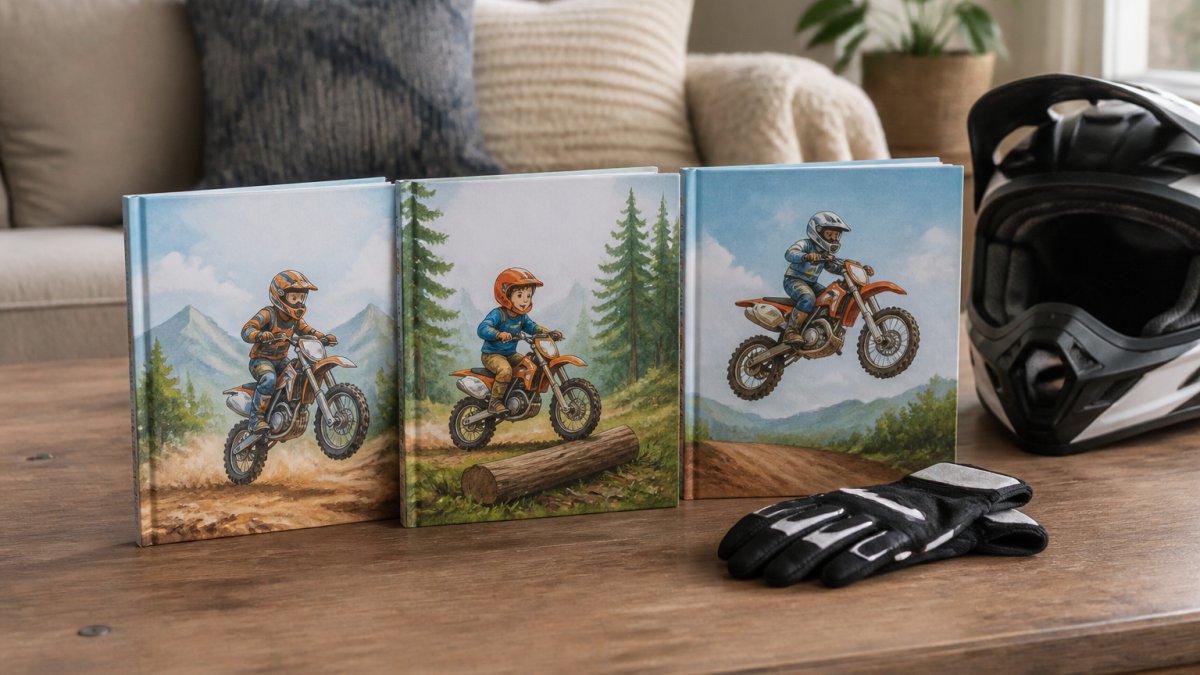
Illustrations make a real difference. Young readers rely on pictures to support meaning, predict what's next, and stay connected to characters. Dirt bike storybooks for beginning readers should feature detailed artwork that captures the energy of riding. When a child sees Ryder mid-jump or celebrating a finish line, the story comes alive.
Dirt Bike Early Reader Books That Build Confidence
The books in this section are designed for early readers, typically in kindergarten through second grade, who are building foundational skills. Each uses controlled vocabulary, repetitive sentence structures, and visual support to help young riders develop fluency while staying captivated by motocross storytelling.
Ryder's First Motocross Race
This is the entry point for beginning readers who love dirt bikes. The story follows Ryder as he prepares for and competes in his first motocross race, capturing the nerves, excitement, and triumph that every young rider understands.
The book uses short, punchy sentences and high-frequency words beginning readers recognize instantly. Repetition appears naturally throughout, Ryder's mantra, his practice routine, the countdown to race day. That repetition builds automaticity, reading words without conscious effort, which frees mental energy for comprehension.
What makes this book stand out is its emotional authenticity. Ryder doesn't win by natural talent. He wins by practicing, listening to advice, and believing in himself.
The illustrations capture key moments: Ryder at the starting line, leaning into a turn, crossing the finish line. Each picture supports the text and gives early readers visual clues. For children still building sight-word recognition, these images are essential scaffolding.
Visit Ryder's First Motocross Race to explore this title.
Ryder and Wheelie's Big Ride
This book expands the Nelmgerian MX universe by introducing Wheelie, a character who brings humor and friendship. Ryder and Wheelie's Big Ride works well for readers who've mastered basic early reader books and are ready for slightly more complex narratives.
The story involves adventure beyond the track. Ryder and Wheelie explore new terrain, face unexpected challenges, and learn that riding is about more than competition. It's about discovery, friendship, and pushing your limits safely.
The reading level is calibrated for early readers moving toward mid-level proficiency. Sentences grow slightly longer, vocabulary expands, but the core remains accessible. The repetitive elements support comprehension, while new words appear in context that helps readers infer meaning.
Humor plays a bigger role here. Wheelie's personality keeps young readers laughing while they build skills. That combination of learning and joy is what keeps kids coming back to read more.
Check out Ryder and Wheelie's Big Ride to see this adventure unfold.
Ryder's Digraph Dirt Track
This book takes a focused approach to phonics, specifically targeting digraphs, two letters that make one sound, like "ch," "sh," "th," and "wh." For beginning readers, digraphs are a critical milestone. Once they master these patterns, fluency jumps significantly.
Ryder's Digraph Dirt Track weaves digraph-heavy words naturally into the motocross narrative. Words like "chase," "shift," "wheel," and "think" appear repeatedly, giving readers multiple exposures in context, far more effective than isolated phonics drills.
The book doesn't feel like a workbook. It reads like a real story. A child practicing digraphs doesn't feel like they're doing schoolwork. They feel like they're reading about Ryder's adventures on the track.
This title works especially well for children whose parents or teachers want to reinforce specific phonetic patterns, and for children who benefit from explicit, structured literacy instruction. The motocross theme keeps engagement high while the phonics foundation builds steadily.
Explore Ryder's Digraph Dirt Track to see how phonics instruction meets motocross passion.
Read-Aloud Books About Motorcycles for Younger Riders
Not every child is ready to read independently. Younger riders, typically ages 3-5, benefit from read-aloud books where a parent or caregiver voices the story while the child listens and looks at pictures.
Read-aloud books about motorcycles serve a different purpose than early reader books. They build vocabulary, develop listening comprehension, and create shared moments around a topic the child loves. A 4-year-old hearing dirt bike stories absorbs language patterns, learns new words in context, and builds excitement about the sport.
The best read-aloud books for younger riders use rhythmic, repetitive language that's fun to say out loud. They include sound effects and onomatopoeia, words like "vroom," "zoom," and "whoosh", that invite participation. A child might chime in with engine sounds or repeat a favorite phrase, turning reading into an interactive experience.
Illustrations in read-aloud books need to be large, bold, and engaging. A 3-year-old's attention span is shorter, so each page should hold visual interest. Bright colors, clear action, and recognizable characters keep young listeners focused.
Ryder's First Motocross Race →
The Nelmgerian MX collection includes options suited for read-aloud time.
How to Get Kids Excited About Reading Dirt Bike Stories
The biggest mistake parents make is treating reading as separate from riding. They expect their child to read during quiet time, then ride as a completely different activity. But reading and riding aren't separate. They're connected.
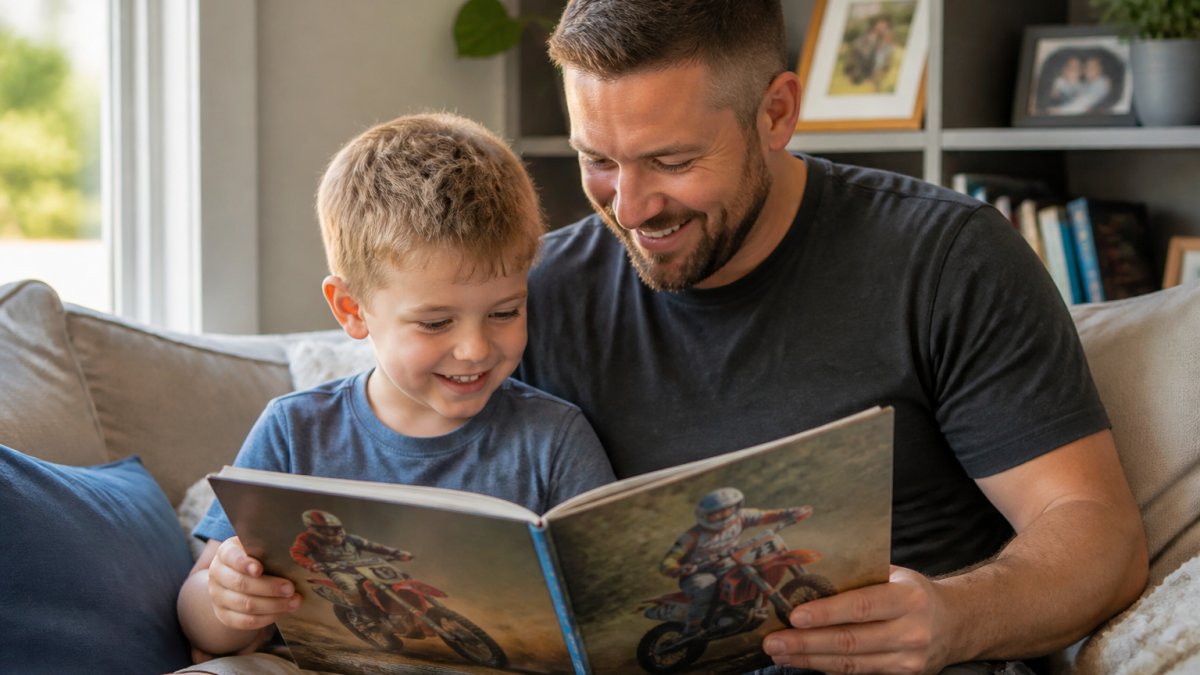
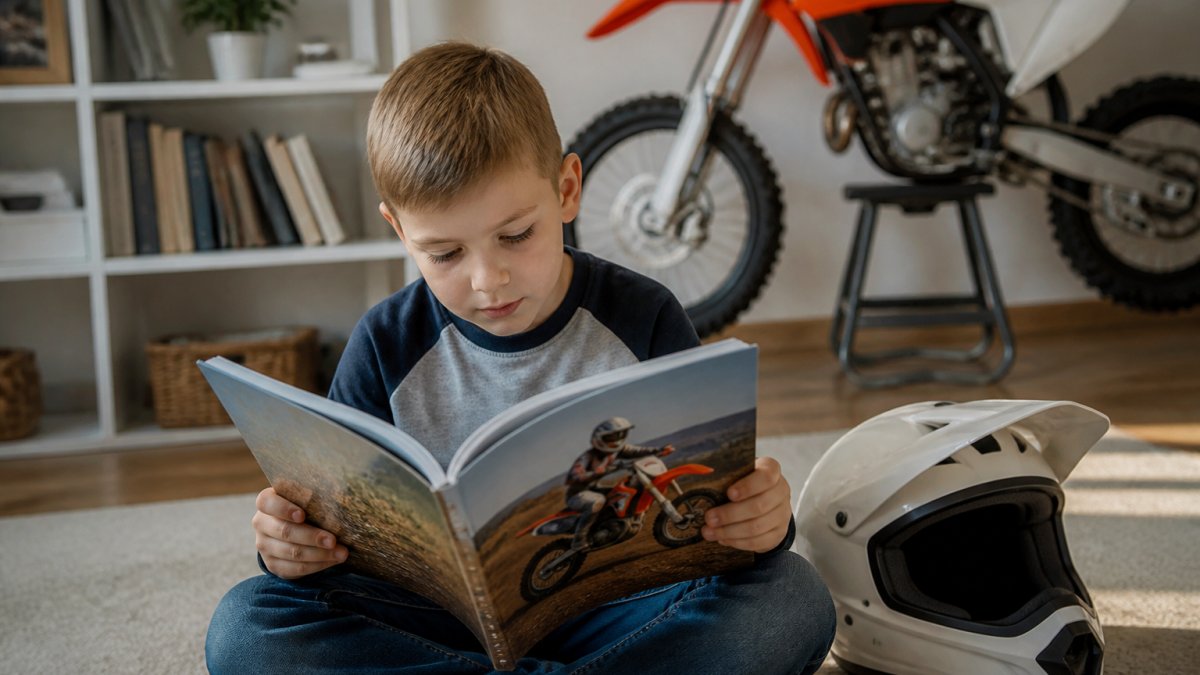
Start by letting your child choose the book. If they pick Ryder's First Motocross Race because the cover shows a dirt bike, that's perfect. A child who selects their own book is far more likely to stay engaged than one assigned a title by an adult (ncbi.nlm.nih.gov).
Read together, especially at first. Even if your child can decode words independently, reading aloud creates a shared experience. Discuss what's happening, ask questions, and let your child predict what comes next.
Connect the story to real life. After finishing a chapter about Ryder practicing starts, ask your child about their own practice routine. "Ryder worked on his starts today.
Make reading time special. Create a cozy spot, maybe near a window or with a blanket. Keep it consistent. A child who knows that 7 p.m. is "story time" will anticipate it.
Don't force it. If your child isn't ready for a particular book, set it aside and try again in a few months. Reading development isn't linear.
Celebrate progress. When your child reads a word they struggled with last week, notice it. When they finish a book, make it an event. These moments of recognition reinforce that reading is an achievement worth celebrating.
Choosing the Right Book by Age and Reading Level
Age and reading level don't always align. A 7-year-old might be a strong reader or still developing foundational skills. The key is matching the book to the child's actual reading level, not their age.
| Age Range | Reading Level | Best Dirt Bike Book Match | Why It Works |
|---|---|---|---|
| 3-4 years | Pre-reader | Read-aloud collections | Large illustrations, rhythm, parent interaction |
| 5-6 years | Early reader (K-1) | Ryder's First Motocross Race | Short sentences, high-frequency words, motocross context |
| 6-7 years | Developing reader (1-2) | Ryder and Wheelie's Big Ride | Longer narratives, expanded vocabulary, adventure elements |
| 7-8 years | Fluent reader (2-3) | Ryder's Digraph Dirt Track | Phonics focus, more complex plots, independent reading |
To assess your child's reading level accurately, listen to them read aloud. Do they recognize most words instantly, or do they pause and sound out frequently? Can they retell what they just read, or do they struggle to remember details?
A child reading at level K-1 will do best with books that use mostly high-frequency words (the, and, to, in), short sentences, and lots of white space on the page. Ryder's First Motocross Race fits this profile perfectly.
A child reading at level 1-2 can handle longer sentences, less repetition, and more sophisticated vocabulary. They're building toward independence but still benefit from engaging illustrations and high-interest topics. Ryder and Wheelie's Big Ride meets these needs.
If your child is struggling, don't jump to a harder book. Go back to an easier one and build confidence.
Consider your child's interests too. A child obsessed with motocross will push through a slightly harder book because the topic matters to them. That motivation is powerful. Use it.
Building a Motocross Story Collection for Your Young Rider
Starting a motocross story collection for your young rider isn't about owning every book available.
Begin with one strong foundational book. For most beginning readers, Ryder's First Motocross Race is the starting point.
Once your child has finished that book and is ready for more, add a second title. Ryder and Wheelie's Big Ride expands the world and introduces new adventures.
Consider your child's specific literacy needs. If phonics instruction is important, add Ryder's Digraph Dirt Track to reinforce those skills in a context your child loves.
Rotate books regularly.
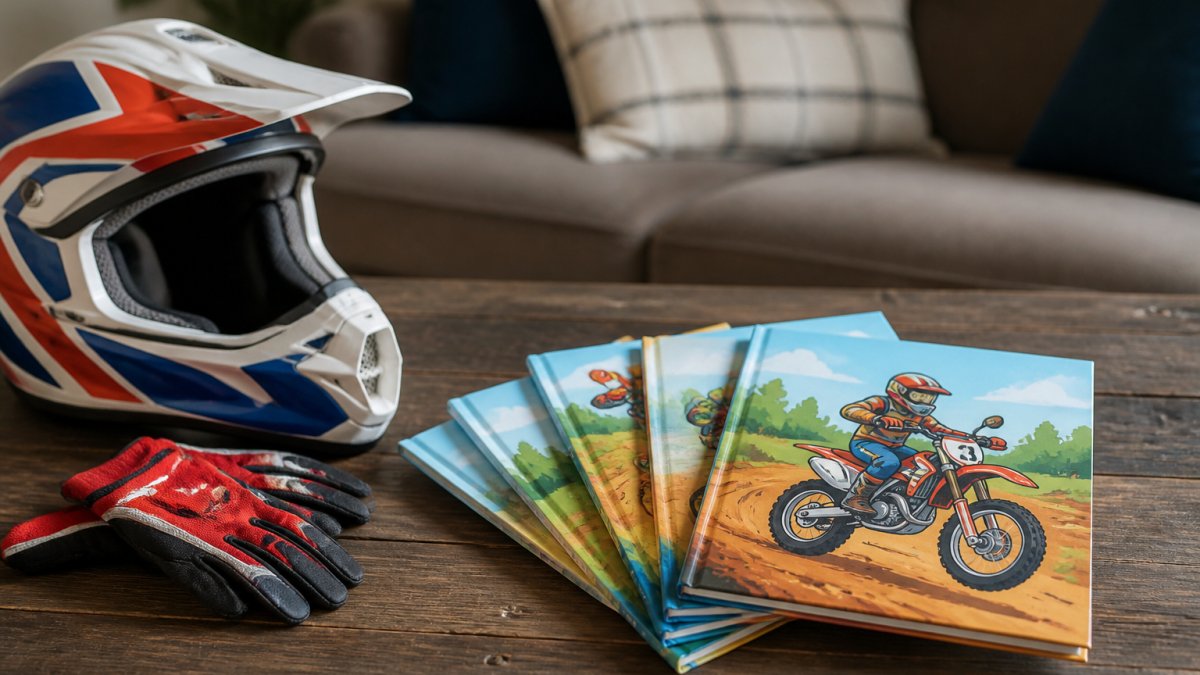
Use books as gifts. Grandparents, relatives, and friends often ask what to get a young rider. A dirt bike storybook from Nelmgerian MX is a gift that keeps giving.
Store books where your child can access them. A low shelf, a basket in the reading corner, or a special box makes books visible and available.
Building a reading habit in a young rider starts with choosing the right books. Dirt bike storybooks for beginning readers do more than teach literacy skills.
At Nelmgerian MX, we've built our entire collection around this belief. Ryder, Pepper, and Wheelie aren't just characters. They're invitations for young riders to see themselves as readers.
Frequently Asked Questions
What age should a child be to start reading dirt bike storybooks independently?
Children ages 5-7 typically begin reading early reader books independently, though this varies by individual development. Dirt bike storybooks for beginning readers are designed for ages 4-8, with picture support and controlled vocabulary. Younger children (ages 3-5) benefit most from read-aloud formats where an adult shares the story. Always check the specific reading level on each book to match your child's abilities.
Are there dirt bike books for kids who are just learning to read?
Yes. Dirt bike early reader books use repetitive text, sight words, and illustrations to support children building reading skills. These books feature simple sentences, phonetic patterns, and motocross themes that keep young riders engaged. Ryder's Digraph Dirt Track, for example, combines phonics instruction with dirt bike adventures, making it ideal for children actively learning to decode words.
How can I get my child excited about reading if they'd rather be riding?
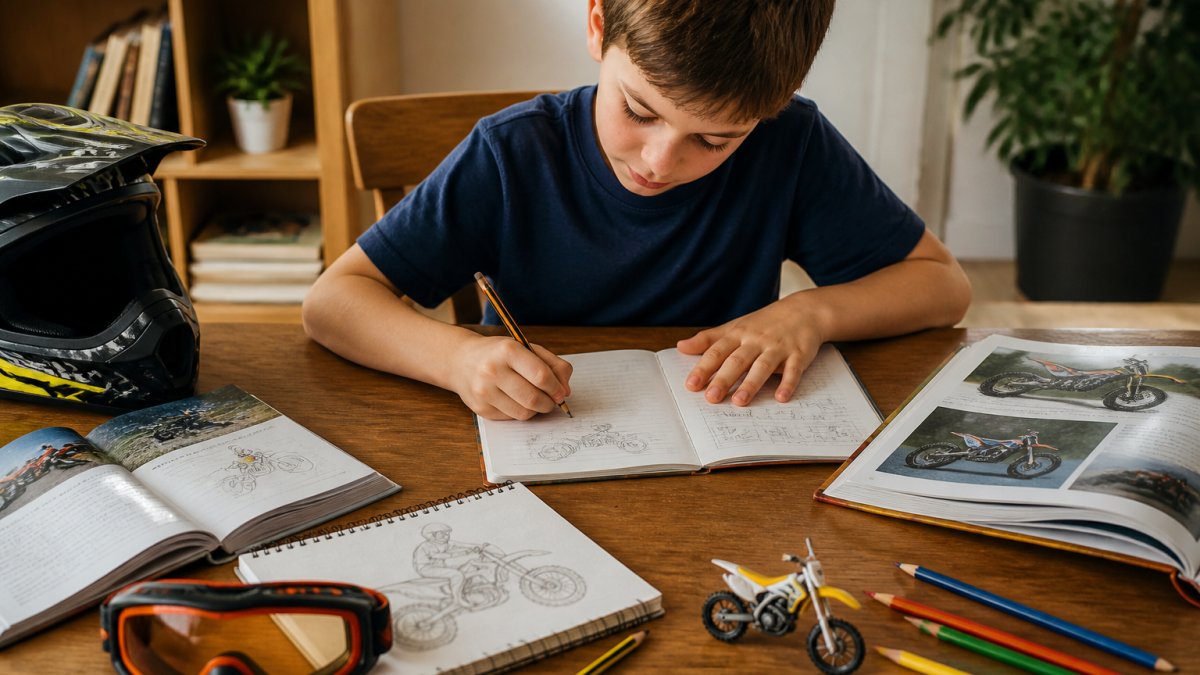
Connect reading to their passion for dirt bikes and motocross. Choose storybooks featuring motocross characters and adventures so reading feels like an extension of the sport they love. Read together during downtime between practice sessions, make it a bedtime routine, or use books as training tools (like rider journals) to track progress. When kids see reading as part of their motocross identity, excitement follows naturally.
What should parents look for in a motocross book for beginning readers?
Look for clear reading levels, age-appropriate content, and engaging illustrations. Choose books with motocross themes that match your child's skill level, beginner riders benefit from stories about learning and building confidence. Check for positive lessons about responsibility, perseverance, and sportsmanship. Verify the vocabulary matches your child's reading stage, and ensure the story length fits their attention span (15-30 minutes is typical for early readers).