 listicle
5 Best Youth Motocross Goggles for Kids
Table of Contents
- Quick Comparison: Top 5 Youth Motocross Goggles
- How to Fit Youth Motocross Goggles for Maximum Comfort
- Motocross Goggle Lens Types and What They Mean
- Youth Helmet Compatibility: What You Need to Know
- Top 5 Youth Motocross Goggles Reviewed
- Key Features That Matter in Youth Motocross Goggles
- Common Mistakes to Avoid When Choosing Youth Goggles
- Conclusion
Last Updated: August 10, 2026
Quick Comparison: Top 5 Youth Motocross Goggles
Choosing the right youth motocross goggles requires balancing three essentials: fit for a child's smaller face, anti-fog technology that works, and a secure seal that stays put during aggressive riding.
| Goggle Model | Best For | Starting Price | Key Strength |
|---|---|---|---|
| Fly Racing Focus Youth | Budget-conscious riders | $26.95 | Anti-fog reliability |
| 100% Strata 2 Youth | Comfort and sweat control | $19.95-$59.95 | Dual-layer moisture-wicking foam |
| Fox Racing Main II Youth | Peripheral vision | $29.95 | Expansive wide-view port |
| Scott Buzz MX Youth | Smaller faces | $25.00-$45.00 | Junior-optimized fit |
| Oakley O-Frame 2.0 Pro XS | Premium protection | $48.00-$60.00 | Prescription eyewear compatibility |
How to Fit Youth Motocross Goggles for Maximum Comfort
A goggle that's too loose will shift during jumps; too tight causes discomfort that ruins the ride.
Measuring Your Child's Face
Measure the width of your child's face from temple to temple across the widest point. Most youth goggles fit faces between 4.5 and 5.5 inches wide, though Scott Buzz MX and Oakley O-Frame 2.0 Pro XS are engineered for smaller faces in the 4-5 inch range. Even a half-inch difference changes how the frame sits on the cheekbones.
The goggle frame should sit snugly on the nose bridge without pinching. If there's a gap between the foam and nose, dust will pour in. The face foam must make complete contact across the entire face to create a proper seal.
Strap Adjustment and Seal Testing
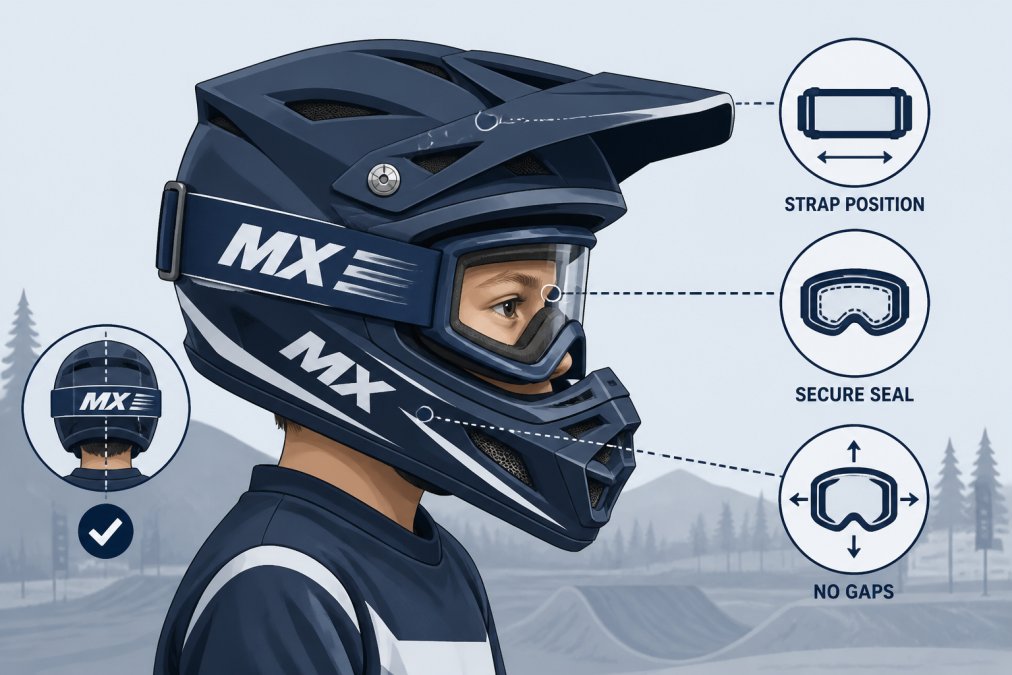
The goggle strap should sit on top of the helmet's crown, not dig into the forehead or slip down the back. A silicone-backed strap prevents slipping better than fabric alone, especially when sweating.
To test the seal, have your child put on the goggles and helmet together. Press gently on the goggle frame, it should feel secure and not shift. Have them move their head side to side and nod up and down. If the goggles slide, tighten the strap incrementally until locked in place. Avoid over-tightening, which reduces comfort and causes pressure marks. Aim for snug but not restrictive.
Motocross Goggle Lens Types and What They Mean
Understanding lens differences helps you pick the right goggle for your child's riding conditions.
Anti-Fog Coatings and Ventilation
Anti-fog coating prevents moisture from beading up and obscuring vision. Most quality youth goggles use either permanent anti-fog treatment (like Scott's NoFog™) or replaceable inserts. Permanent versions last longer but wear down over time.
Ventilation ports allow air circulation inside the lens chamber, reducing moisture buildup. The tradeoff is that more ventilation means slightly less dust filtration. For humid climates or summer riding, dual-layer lens designs like the 100% Strata 2 are worth the investment, with the inner layer absorbing moisture while the outer stays clear.
Lens Tint Options for Different Conditions
Clear lenses work in bright sun, overcast conditions, and early morning rides. For bright conditions, mirrored or tinted lenses reduce glare and eye strain. Gold or amber tints enhance contrast on dusty tracks. Most youth goggle brands offer multiple lens options, often sold separately.
Youth Helmet Compatibility: What You Need to Know
Your child's motocross goggles must work seamlessly with their helmet, meaning the goggle strap must interact properly with the helmet's crown and the frame must align with the helmet's visor.
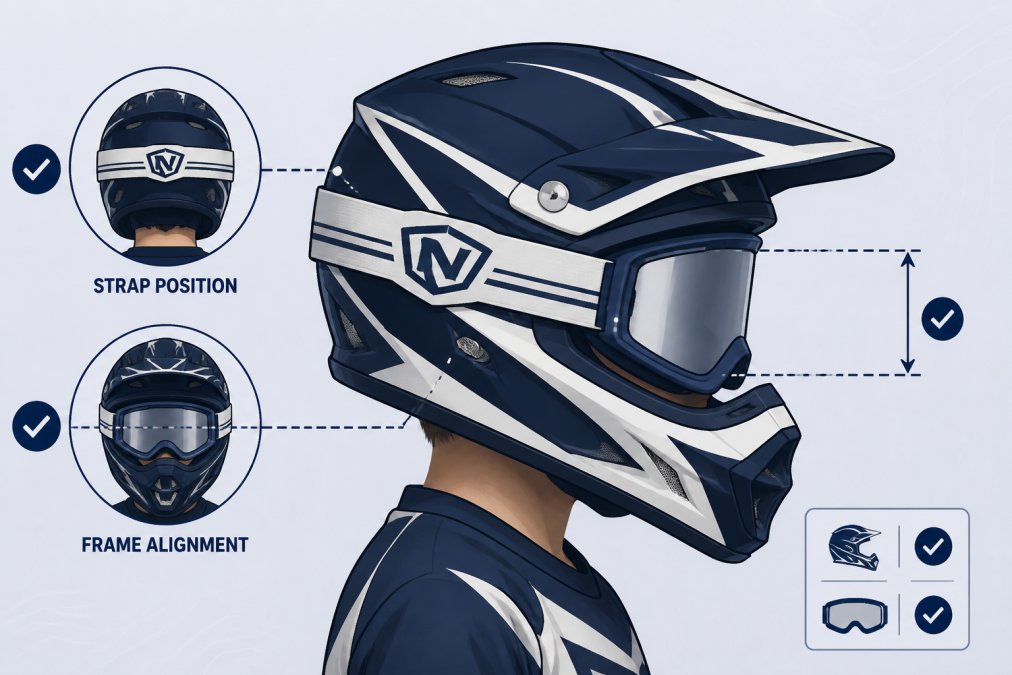
Most youth helmets have a slightly recessed crown to accommodate goggle straps. The strap should sit on top of the helmet, not wrap around it. Check the goggle frame's upper edge relative to the helmet's visor, ideally, there should be a quarter-inch gap between the top of the goggle frame and the bottom of the helmet visor. This prevents the visor from pressing down on the goggles and creating pressure on the nose bridge.
Some helmets have built-in goggle retention features, small tabs or notches that the goggle strap clips into. Use these if available. Test by having your child put on the helmet and goggles, then gently try to pull the goggles forward. They should resist and stay in place.
Top 5 Youth Motocross Goggles Reviewed
1. Fly Racing Focus Youth Goggles: Best Value
The Fly Racing Focus Youth Goggle delivers reliable anti-fog performance and wide-view design at $26.95. The polycarbonate lens has anti-scratch and anti-fog coatings. The 40mm adjustable silicone-backed strap keeps goggles locked during aggressive riding. The lightweight polyurethane frame flexes to accommodate different face shapes, and dual-layer face foam provides decent comfort for extended wear.
The Focus lacks advanced features like tear-off systems or interchangeable lenses, but for young riders just starting or parents buying their first pair, it offers solid fundamentals at an unbeatable price.
Best for: Budget-conscious parents and riders aged 4-10 who prioritize value over premium features.
2. 100% Strata 2 Youth Goggles: Best Comfort and Moisture Control
The 100% Strata 2 Youth Goggles excel in comfort with plush double-layer face foam that absorbs sweat and moisture, making them ideal for young riders who sweat heavily or ride in humid conditions. The anti-fog coated polycarbonate lens is scratch-resistant. The 9-point lens retention system keeps the lens locked even during hard crashes. The 40mm silicone-coated strap is wider than most competitors, distributing pressure evenly. Pricing ranges from $19.95 to $59.95 depending on lens type.
Lens interchangeability is a major advantage, 100% Strata 2 lenses work with 100% Accuri 2 youth goggles, letting you build a lens collection without buying entirely new goggles.
Best for: Young riders who sweat heavily or ride in hot, humid climates.
3. Fox Racing Main II Youth Goggles: Best Field of View
The Fox Racing Main II Youth Goggle prioritizes peripheral vision with an expansive wide-view port, giving exceptional track awareness. Starting at $29.95, the triple-layer face foam includes a fleece liner that's soft and absorbs sweat effectively. The Lexan lens offers UV protection.
The VLS (Variable Lens System) is a standout feature, you can transfer standard and injection-molded lenses between frames without tools. This flexibility is huge if your child rides in varying conditions or wants to upgrade lenses later.
Best for: Young riders aged 4-14 who value field of view and plan to ride seriously enough to justify lens upgrades.
4. Scott Buzz MX Youth Goggles: Best for Smaller Faces
Scott engineered the Buzz MX specifically for junior riders. The frame geometry is optimized for smaller faces, sitting naturally without excessive strap tension. The 2-layer face foam is comfortable for extended wear. The TruView single WORKS lens is optically correct, showing the track clearly without distortion. The NoFog™ anti-fog treatment is effective and long-lasting. Pricing ranges from $25 to $45.
The Buzz excels in simplicity, you get a complete, ready-to-ride goggle out of the box. Limited lens options are the downside if you want to swap lenses for different conditions.
5. Oakley O-Frame 2.0 Pro XS Youth Goggles: Best Premium Option
The Oakley O-Frame 2.0 Pro XS at $48-$60 brings Oakley's reputation for innovation to the youth market. The injection-molded, high-impact lens offers superior optical clarity and impact protection. The flexible O Matter® chassis conforms comfortably without pinching. The triple-layer face foam includes moisture-wicking polar fleece lining, keeping sweat away from skin and reducing fogging.
The standout feature is prescription eyewear compatibility, discreet frame notches allow your child to wear glasses inside the goggles, a game-changer for vision correction needs. Build quality is excellent and these goggles will last through multiple kids or seasons.
Best for: Young riders who wear prescription glasses, require premium impact protection, or whose parents prioritize long-term durability.
Key Features That Matter in Youth Motocross Goggles
Impact Resistance and Durability
Polycarbonate is the standard for youth goggles, it's lightweight, affordable, and absorbs impact well. Injection-molded polycarbonate is slightly more durable than standard polycarbonate. Flexible polyurethane frames absorb impact without cracking. Lens retention systems keep the lens from popping out during a crash. All quality youth goggles block 100% UVA and UVB radiation, protecting your child's developing eyes.
Peripheral Vision and Frame Design
Frame design directly impacts peripheral vision. Wider frames with higher placement give better side vision and improve track awareness. For young riders, peripheral vision improves track awareness and reduces accidents. Frame height matters too, taller frames block more sun and dust but can interfere with helmet fit.
Face Foam and Breathability
Dual-layer foam is standard on quality goggles. Triple-layer foam with fleece lining is the premium option, offering maximum comfort and sweat management. Moisture-wicking foam is worth the extra cost if your child rides in hot conditions or sweats heavily. Breathability is determined by frame ventilation and face foam density.
Common Mistakes to Avoid When Choosing Youth Goggles
Buying too large expecting them to grow into it. Oversized goggles don't seal properly and won't stay in place. Buy goggles that fit now.
Choosing based on looks instead of fit. A cool-looking goggle that doesn't fit your child's face is useless. Fit is non-negotiable.
Ignoring helmet-goggle integration. Always test the goggle and helmet together before committing.
Buying the cheapest option without considering durability. A $20 goggle that falls apart after one season costs more over time than a $40 goggle lasting three seasons.
Not maintaining the anti-fog coating. Never use hot water or abrasive cloths on the lens. Clean with cool water and a soft microfiber cloth.
Underestimating the importance of proper seal. A goggle with poor seal will fog up, let in dust, and shift during riding. Spend time getting fit and strap adjustment right.
Choosing the right youth motocross goggles comes down to three priorities: fit for your child's face, reliable anti-fog performance, and a secure seal that stays locked in place. The five goggles reviewed here represent the best options across different budgets and needs. Start with proper fit and strap adjustment, test the goggle-helmet combination before riding, and maintain the anti-fog coating with gentle cleaning. Get those fundamentals right, and your child will have clear, comfortable vision on the track every time they ride.
Frequently Asked Questions
What size youth motocross goggles should I buy for my child?
Youth motocross goggles are typically sized by age range (3-9 years, 9-14 years) rather than specific measurements. Measure the width of your child's face from temple to temple, most youth goggles fit faces 4.5 to 5.5 inches wide. Check the manufacturer's sizing chart, as brands like Scott Buzz and Oakley O-Frame 2.0 Pro XS are specifically designed for smaller faces. The goggle should sit snugly without gaps, and the strap should not pinch the sides of the head.
How do you prevent fogging in youth motocross goggles?
Most quality youth motocross goggles come with anti-fog lens coatings built in. To maximize effectiveness, ensure proper ventilation by keeping the goggle vents clear of dirt and moisture. Use moisture-wicking face foam, which absorbs sweat instead of letting it pool. On humid days, apply anti-fog spray before riding. Clean the inner lens gently with a soft cloth, never use your sleeve, as this can damage the coating. Tear-offs can also help; when one layer fogs, simply peel it off to reveal a clear lens underneath.
Do youth motocross goggles fit all helmets?
Most youth motocross goggles work with standard youth motocross helmets, but compatibility depends on the helmet's shape and vent design. Goggles with adjustable, flexible straps adapt better to different helmet sizes. Before purchasing, check that the goggle's strap width (typically 40-45mm) sits comfortably on your child's helmet without pinching or slipping. Some goggles like the Leatt Velocity 4.5 Mini are specifically designed for smaller helmets. Always test the fit together if possible, as a loose goggle-helmet combination can shift during riding.
What features should I look for in youth dirt bike goggles?
Prioritize anti-fog lens technology, scratch-resistant polycarbonate material, and UV protection for outdoor riding. Look for dual-layer face foam that absorbs sweat and keeps the goggle sealed against dust and moisture. A wide field of view helps younger riders stay aware of their surroundings. Check that the strap is silicone-backed for grip and won't slip on the helmet. Impact-resistant lenses are essential for safety. Finally, consider whether the goggle offers tear-off posts or roll-off compatibility, which lets your child quickly clear vision if needed during a ride.
This article was written using GrandRanker