 listicle
How to Clean Youth Motocross Gear: Complete Guide
Table of Contents
- Why Proper Cleaning Matters for Youth Motocross Gear
- Pre-Cleaning Steps: Preparation and Mud Removal
- Best Laundry Detergent for Motocross Gear
- Machine Washing Motocross Jerseys and Pants
- How to Wash Motocross Boots Safely
- How to Clean Motocross Helmet Liners and Visors
- Drying, Deodorizing, and Storage for Long-Term Gear Care
Last Updated: August 15, 2026
Why Proper Cleaning Matters for Youth Motocross Gear
Keeping youth motocross gear clean isn't just about appearance. It's about safety, longevity, and protecting your investment. When dirt, mud, and sweat accumulate on jerseys, pants, boots, and protective padding, they break down the fabric's integrity and create an environment where bacteria and mold thrive. This degrades the gear's protective properties and can cause skin irritation or infections if left unchecked.
Young riders spend hours in their gear, and the combination of perspiration, friction, and exposure to the elements means cleaning becomes essential maintenance, not optional upkeep. Nelmgerian MX understands that parents managing youth motocross gear need practical guidance that goes beyond surface-level washing. The right cleaning approach extends gear life by years, maintains the effectiveness of impact armor, and keeps young riders comfortable and protected on the track.
Proper care also prevents odor buildup that can discourage kids from wanting to ride. A rider who feels fresh and confident in clean gear is more likely to focus on improving their skills rather than being distracted by discomfort or smell.
Pre-Cleaning Steps: Preparation and Mud Removal
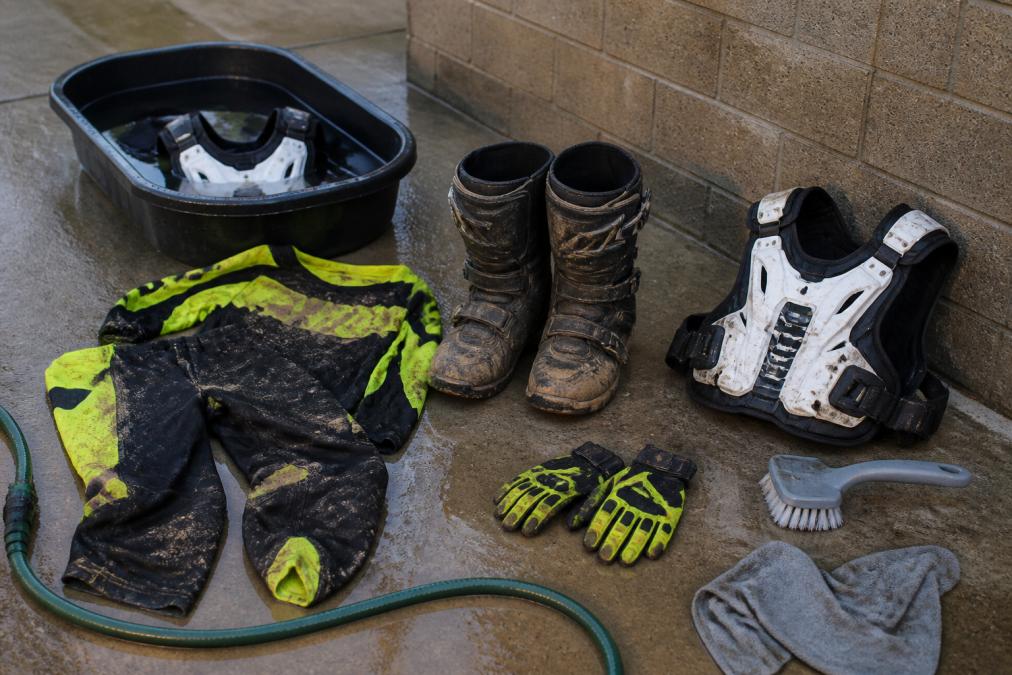
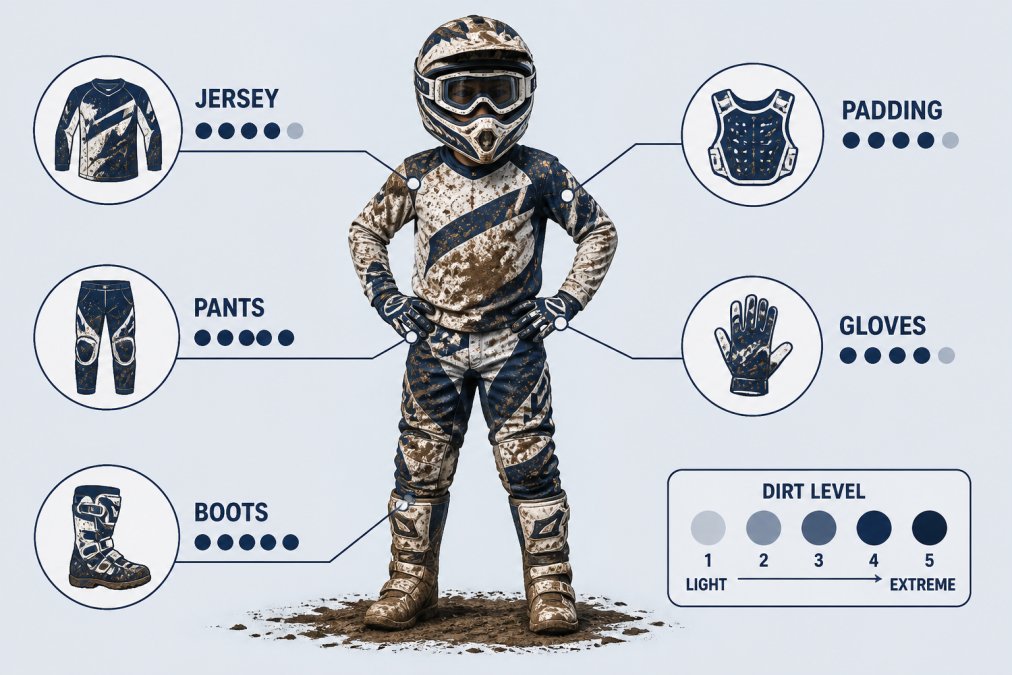
Before you toss youth motocross gear into the washing machine, remove the bulk of loose dirt and mud. This step prevents your washing machine from becoming clogged and ensures the detergent can actually reach the fabric instead of being blocked by dried soil.
Start by taking the gear outside and shaking it vigorously. Hold the jersey and pants by the seams and shake hard to dislodge caked-on mud. For boots, tap the soles together and bang the sides against a hard surface to break up dried dirt. This alone removes most surface debris.
Next, use a soft brush or old toothbrush to gently scrub away remaining mud from seams, velcro fasteners, and textured areas. Pay special attention to the inner lining where mud tends to accumulate. For stubborn, dried mud, a slightly damp cloth helps loosen it without damaging the synthetic fabric or breathable mesh panels.
If the gear is extremely muddy, consider a quick rinse with a garden hose on low pressure. Avoid high-pressure settings, which can force water into padding or damage delicate mesh. Let excess water drip off before moving to the washing stage.
This pre-cleaning process typically takes 5-10 minutes and makes a significant difference in wash effectiveness. Skipping it means your detergent has to work harder and your machine works longer, both of which reduce the lifespan of the gear.
Best Laundry Detergent for Motocross Gear
Not all detergents are created equal when it comes to cleaning youth motocross gear. You need a formula that tackles tough stains like red clay, grease, and grass without damaging synthetic fabrics or the protective properties of impact armor.
Alco Laundry Powder stands out as a heavy-duty option specifically designed for riding gear. Its formula removes tough stains like grease, mud, blood, and red clay while remaining gentle enough for everyday fabrics. The hypoallergenic, non-toxic formula rinses residue-free, which is important for gear that sits against young skin for hours. A single 2.64 lb container handles up to 100 loads, making it economical for families managing multiple riders or frequent washing.
For gear with persistent stains, Dirt-Care No Stain Gear Cleaner works as a pre-treatment or direct wash additive. This biodegradable cleaner is specifically formulated for machine-washable bike clothing and equipment. It's safe for all fabrics except wool or silk, making it ideal for the synthetic materials and breathable mesh common in youth motocross jerseys and pants. The cleaner is particularly effective on red dirt stains, which are notoriously difficult to remove.
Avoid fabric softeners and bleach. Fabric softeners coat synthetic fibers and reduce breathability, trapping moisture against skin. Bleach can weaken synthetic fabrics and damage colored gear. Standard mild detergents work in a pinch, but they often leave residue and don't tackle the heavy soil loads that motocross gear experiences.
When selecting how to wash motocross boots safely and clean youth motocross gear generally, the detergent choice sets the foundation for success. Invest in a formula designed for athletic or heavily soiled gear rather than standard laundry detergent.
Machine Washing Motocross Jerseys and Pants
Once you've removed loose mud and chosen the right detergent, the washing machine step is straightforward if you follow a few key rules.
Use cold water. Hot water can set stains and damage synthetic fabrics. Cold water is effective for removing dirt and works with most quality detergents designed for motocross gear.
Select a gentle cycle. Standard or heavy-duty cycles are too aggressive for the breathable mesh and synthetic blends used in youth motocross jerseys and pants. A gentle cycle reduces stress on seams and protective padding while still providing adequate agitation to remove dirt.
Turn gear inside out before washing. This protects the outer graphics and helps detergent reach the inner lining where sweat and bacteria accumulate. Inside-out washing also reduces pilling on the outer surface.
Wash with similar colors to prevent dye transfer. Separate bright colors, darks, and reds. Red clay stains from motocross tracks can bleed onto lighter gear if washed together.
Fill the machine no more than three-quarters full. Overcrowding prevents water and detergent from circulating properly, reducing cleaning effectiveness. If you're washing multiple pieces of gear, run separate loads rather than cramming everything in.
Avoid the dryer for the initial dry. Machine drying can shrink synthetic fabrics and damage impact armor padding. Air drying is the safest method for preserving gear integrity.
How to Wash Motocross Boots Safely
Motocross boots require different handling than jerseys and pants because they're constructed with stiffer materials, metal buckles, and insoles that can't withstand aggressive machine washing.
Start with the pre-cleaning step: shake out loose dirt, tap the soles together, and use a soft brush to remove caked mud from seams and the sole. For heavy buildup, rinse with a garden hose on low pressure.
For the main cleaning, hand washing is safer than machine washing. Fill a bucket with cold water and add a small amount of mild detergent or Grip Clean Heavy Duty Hand Soap, which is formulated to remove stubborn dirt from boots while remaining safe for the materials. Submerge the boots and use a soft brush or cloth to scrub the exterior, paying attention to seams, the sole, and any velcro fasteners.
For the inner lining and insole, use a damp cloth to wipe away sweat and dirt. If the insole is removable, take it out and wash separately. Many youth motocross boots have moisture-wicking linings that benefit from gentle cleaning and thorough drying.
Rinse thoroughly under cold running water until all soap residue is gone. Residual detergent can irritate skin and trap moisture.
Stuff the boots loosely with newspaper to help them hold their shape as they dry. Replace the newspaper every few hours to speed drying and absorb moisture. Never use direct heat or a clothes dryer. Air drying in a well-ventilated space takes 24-48 hours but preserves the boot's structure and materials.
If boots develop odor between washes, use Dirt-Care Fresh Guard Odor Eliminator Spray or Revivex Odor Eliminator by GEAR AID. These products neutralize odors caused by bacteria and moisture without requiring a full wash, extending the time between cleanings.
How to Clean Motocross Helmet Liners and Visors
Helmet liners absorb sweat and can harbor bacteria if not cleaned regularly. Visors and goggles accumulate mud, insects, and oily residue that impairs vision and scratches if not handled properly.
For helmet liners, remove the liner from the helmet shell if possible. Many youth motocross helmets have removable, washable liners. Hand wash the liner in cold water with mild detergent, using gentle agitation to remove sweat and dirt. Rinse thoroughly and air dry completely before reinstalling. If the liner is not removable, use a damp cloth with mild detergent to wipe the interior, then dry with a clean towel.
For visors and goggles, use the Muc-Off Visor, Lens & Goggle Cleaning Kit. This portable kit includes a pH-balanced, biodegradable spray and a premium microfiber cloth designed to remove dust, mud, insects, and oily residue without leaving streaks or scratching lens coatings. The kit's small size makes it convenient for on-the-go cleaning during practice sessions.
At home, use Molecule Helmet Cleaner and Polish to clean and protect the helmet shell exterior. This two-in-one spray cleans and polishes in a single step, working safely on all helmet finishes including flat and matte surfaces. It can also be used on visors to restore clarity and add a protective layer.
Never use abrasive cloths or harsh chemicals on goggles or visors. Scratches compromise vision and create safety hazards. Always use soft, lint-free microfiber cloths and gentle, lens-safe formulas.
Drying, Deodorizing, and Storage for Long-Term Gear Care
How you dry and store youth motocross gear directly impacts its longevity and performance. Improper drying traps moisture, encouraging mold and mildew growth. Poor storage allows protective padding to compress and lose its impact-absorbing properties.
Air dry all gear in a well-ventilated space away from direct sunlight or heat sources. Hang jerseys and pants on hangers or lay them flat on a clean surface. Avoid folding damp gear, which creates creases and traps moisture in the fabric. Drying typically takes 24-48 hours depending on humidity and ventilation. Ensure gear is completely dry before storage to prevent mold.
For boots, helmets, and gloves, use a Moose Racing Boot/Helmet/Glove Dryer (PEET Multi Dryer) to speed the process safely. This dryer uses convection air technology to dry multiple pieces simultaneously without applying direct heat that could damage materials. It eliminates odors caused by perspiration and bacteria while preventing mold and mildew. The dryer includes ports for boots, gloves, and helmets, making it efficient for families managing multiple riders' gear.
Deodorizing extends time between washes and keeps gear fresh. For persistent odors, use Revivex Odor Eliminator by GEAR AID, a water-activated formula that removes bacteria, mildew, and mold at the source. Alternatively, sprinkle baking soda inside boots and gear, seal in a bag overnight, and shake out the powder the next morning. This natural approach works well for mild odors and is safe for all gear types.
Once gear is completely dry, store it in a cool, dry location with good air circulation. Avoid plastic bins or sealed containers, which trap moisture. Instead, use breathable storage bags or open shelving where gear can air. Keep protective padding and armor in their original shape to maintain impact protection. Don't compress or fold gear tightly for extended storage.
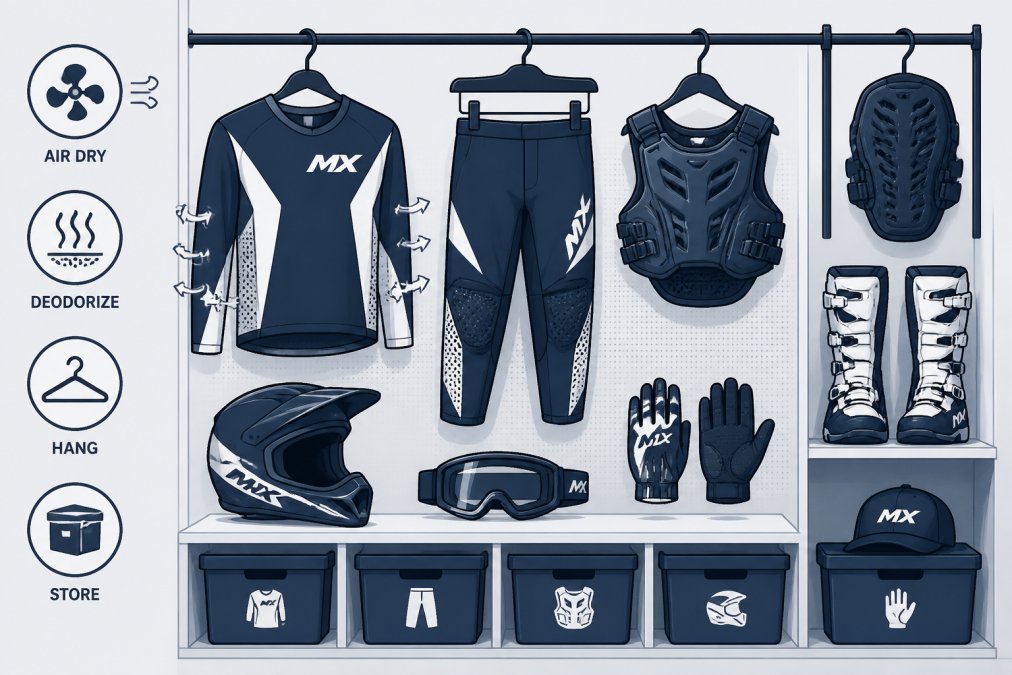
For young riders building their gear collection, proper storage preserves resale value if the child outgrows equipment. Well-maintained gear in good condition can be passed down to younger riders or sold to offset new purchases.
| Gear Type | Cleaning Method | Drying Time | Storage |
|---|---|---|---|
| Jersey & Pants | Gentle machine wash, cold water | 24-48 hours air dry | Hang on hangers, breathable bag |
| Boots | Hand wash, mild detergent | 24-48 hours with newspaper | Upright on shelf, newspaper inside |
| Helmet Liner | Remove and hand wash or spot clean | 12-24 hours air dry | Reinstall when completely dry |
| Visor/Goggles | Microfiber cloth with lens-safe spray | Immediate air dry | Store in protective case |
| Protective Padding | Spot clean or gentle machine wash | 24-48 hours air dry | Maintain original shape |
Keeping youth motocross gear clean is an investment in your child's safety, comfort, and performance on the track. The process doesn't require expensive equipment or complicated steps, but it does require consistency and attention to material-specific care. When young riders feel confident in clean, well-maintained gear, they're free to focus entirely on developing their skills and building the discipline that motocross demands. At Nelmgerian MX, we believe that supporting young riders goes beyond the track, and that includes helping families maintain the gear that protects them. Start with the right detergent like Alco Laundry Powder, follow these proven cleaning steps, and your gear will last through multiple seasons while keeping your child protected and ready to ride.
Frequently Asked Questions
How often should you wash youth motocross gear?
Wash youth motocross gear after every ride or practice session, especially if your child rode in muddy conditions. Immediate washing prevents mud and dirt from setting into fabrics and protective padding. For light practice sessions on dry tracks, you may wash gear every other use, but never wait longer than two rides. Regular washing extends gear lifespan and prevents odor and bacterial buildup in moisture-wicking fabrics and inner linings.
Can you wash motocross pants in the washing machine?
Yes, motocross pants can be machine washed on a gentle cycle with cold water. Remove any removable protective padding or armor first, then wash separately by hand or in a mesh bag. Use a mild detergent designed for dirt bike gear. Turn pants inside out to protect graphics and velcro fasteners. Avoid bleach and fabric softener, as these can damage synthetic fabrics and reduce the effectiveness of moisture-wicking materials.
Is it safe to put motocross boots in the washing machine?
No, do not put motocross boots in the washing machine. The agitation can damage the soles, linings, and structural integrity of the boots. Instead, hand wash boots with a soft brush, mild detergent, and cold water. Scrub the outer soles and mesh areas gently, then rinse thoroughly. Air dry completely at room temperature away from direct heat or sunlight. For stubborn mud, use a pre-soak with cold water and mild detergent before scrubbing.
How do I get mud stains out of white motocross gear?
For white motocross gear, pre-treat mud stains immediately by rinsing with cold water to remove excess soil. Apply an oxygen-based cleaner or spot-treat with a stain removal product designed for athletic wear. Let it sit for 15-30 minutes, then gently scrub with a soft brush. Wash on a gentle cycle with cold water using a mild detergent. Avoid bleach, which can weaken synthetic fabrics. Air dry completely, as heat can set any remaining stains.
This article was written using GrandRanker