 listicle
Is Motocross Gear Worth the Cost? A Rider's Guide
Table of Contents
- Why Motocross Gear Costs What It Does
- Safety Standards and Impact Protection: What You're Paying For
- Budget vs. Premium Gear: Where the Real Differences Lie
- Best Value Motocross Gear Brands for Your Budget
- When to Replace Motocross Helmet and Other Protective Gear
- Cost-Per-Ride Analysis: Is Premium Gear a Smart Investment?
- Essential Gear List for Beginners: What to Buy First
- Conclusion
Last Updated: August 14, 2026
Why Motocross Gear Costs What It Does
A premium motocross helmet runs $500 to $600. Quality boots cost $600 to $680. A complete gear setup easily exceeds $2,500. Before dismissing it as overpriced, understand what's inside that price tag.
Motocross protective equipment is engineered to absorb impacts, distribute force across larger surface areas, and prevent catastrophic injuries at 40+ mph. Multi-directional impact protection systems, dual-density EPS liners, high-density polymer plates, and synthetic ligament technology don't come cheap. Neither does the research and testing required to certify gear against safety standards.
Premium brands conduct impact testing, iterate designs based on real crash data, and use materials from specialty suppliers. A helmet like the Fox Racing V3 incorporates Multi-Directional Impact Protection System (MIPS) technology and Varizorb EPS liners designed to manage rotational forces. Boots like the Alpinestars Tech 10 feature dual-blade flex systems and contoured calf protectors molded to protect vulnerable joints. These are specialized protective equipment refined through years of professional use.
Established manufacturers like Fox Racing, Alpinestars, Troy Lee Designs, and Leatt have spent decades building credibility through professional racing sponsorships and real-world testing. When you buy from them, you're paying partly for that track record. The real question isn't whether gear costs too much, it's whether the cost aligns with what you get in return.
Safety Standards and Impact Protection: What You're Paying For
Understanding safety standards helps justify the expense.
Motocross helmets sold in the U.S. must meet Department of Transportation (DOT) standards at minimum. Many premium helmets also achieve Snell certification, which involves more rigorous impact testing and stricter safety criteria. The difference can be $100 to $200, reflecting additional protective testing and design refinement.
The DOT safety standards for motorcycle helmets establish baseline requirements for impact absorption and penetration resistance. Snell Memorial Foundation testing protocols go further by testing helmets at higher impact velocities and requiring more consistent performance across multiple impact zones. For motocross, where crashes happen at unpredictable angles on uneven terrain, this extra margin of protection matters.
MIPS (Multi-Directional Impact Protection System) reduces rotational forces transmitted to the brain during angled impacts, the kind of hits that cause concussions. Dual-density EPS liners manage both high-speed and low-speed impacts. These address how motocross injuries actually occur.
Chest protectors use similar logic. A basic roost deflector costs $50 to $100. A certified chest protector like the Leatt 5.5 Pro HD costs $250 to $280 because it features articulated hard-shell plates, impact-tested construction, and CE certification.
Neck braces like the Atlas Air cost $350 to $400 because they're engineered to reduce forces transmitted to the cervical spine during crashes. The suspension system and flex-frame design distribute energy rather than transferring it directly to your neck.
Boots, gloves, and pants contribute to overall safety through abrasion resistance and joint protection. Leather panels reinforced with DuPont Kevlar stitching resist tearing during slides. Shin plates and calf protectors prevent fractures from impacts.
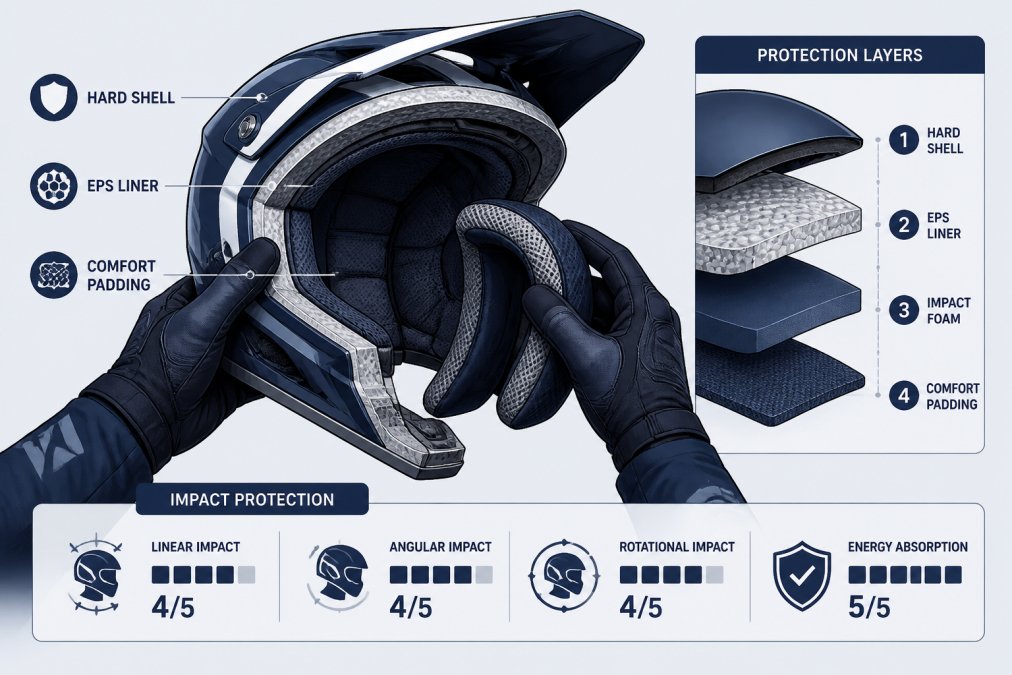
Premium gear costs more because it's been tested to protect against specific injury mechanisms. Budget gear might meet minimum standards, but premium options provide additional layers of protection through better materials, more sophisticated design, and rigorous testing protocols.
Budget vs. Premium Gear: Where the Real Differences Lie
Real differences exist in materials, technology, and protective performance, but not every rider needs the premium tier.
Budget motocross gear typically meets basic safety standards but uses simpler construction. A budget helmet might have a single-density EPS liner instead of dual-density, basic ventilation instead of advanced airflow management, and standard impact absorption without MIPS technology. Budget jerseys and pants use basic polyester fabrics with standard seams. Budget gloves might have minimal padding and basic grip.
Premium gear addresses real comfort and performance issues that matter during actual riding. Moisture-wicking materials keep you dry during intense sessions. Ergonomic fit means the gear stays in place and doesn't restrict movement. Advanced ventilation prevents overheating. Better materials last longer, with premium leather and reinforced stitching withstanding more crashes before degrading.
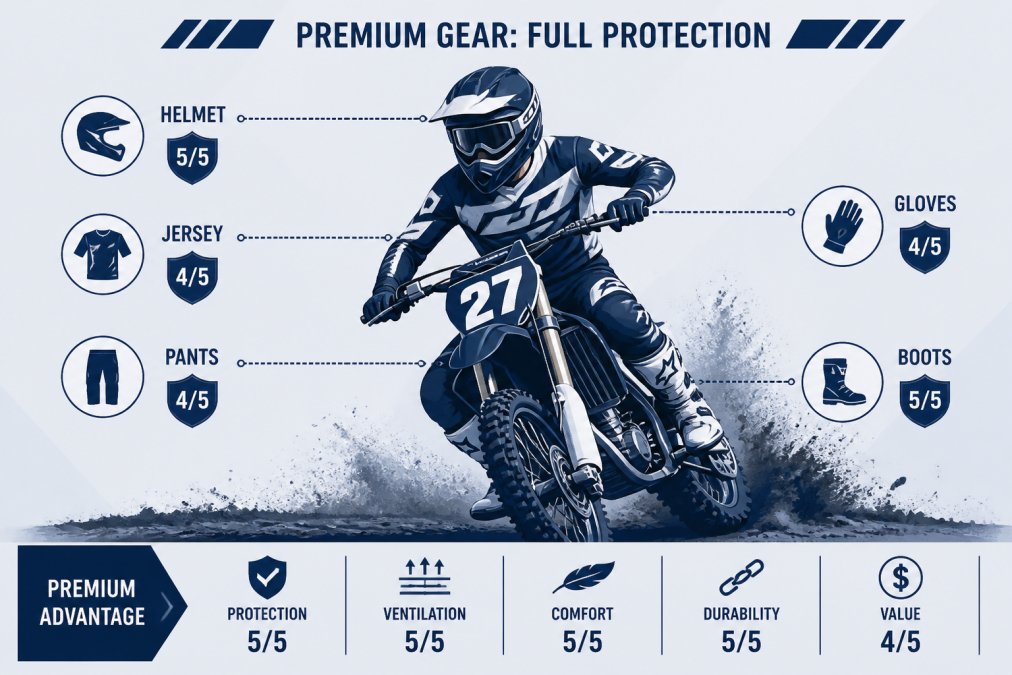
The protection differences are measurable. Premium helmets with MIPS technology reduce rotational forces by 10 to 20 percent compared to standard designs. Dual-density EPS liners manage both high-speed and low-speed impacts more effectively. Certified chest protectors distribute impact forces across larger surface areas than basic roost deflectors. Premium boots with dual-blade flex systems offer better ankle support and joint protection.
Budget gear makes sense if you're starting out and riding casually. A $150 helmet that meets DOT standards protects you adequately for beginner-level riding.
Premium gear pays off if you ride regularly, push harder, or ride in challenging conditions. You'll ride longer without fatigue, recover faster from crashes, and reduce injury severity when accidents happen. For competitive riders, premium gear is essentially mandatory.
Mid-range gear from established brands often offers the best value. A mid-range helmet at $250 to $350 includes better materials and ventilation than budget options without the premium price tag.
| Gear Type | Budget Option | Mid-Range Option | Premium Option |
|---|---|---|---|
| Helmet | Basic EPS, meets DOT | Better ventilation, improved comfort | MIPS, dual-density, Snell certified |
| Boots | Basic protection, stiff | Improved flex, decent ankle support | Advanced flex systems, superior protection |
| Chest Protector | Roost deflector only | Soft-shell protection | Hard-shell, certified, CE rated |
| Gloves | Minimal padding, basic grip | Good padding, improved feel | Premium materials, excellent control |
| Jersey/Pants | Basic polyester, standard seams | Moisture-wicking, better ventilation | Advanced airflow, ergonomic fit |
Best Value Motocross Gear Brands for Your Budget
Troy Lee Designs occupies the sweet spot for many riders. Their SE Pro Gloves start around $23 to $45 and deliver exceptional feel and control. The lightweight perforated palm offers superior grip and feedback on the controls.
Thor offers practical gear that balances features and affordability. The Pulse Jersey at $40 includes moisture-wicking material, laser-cut ventilation, and hybrid raglan sleeves for mobility.
Fly Racing targets aggressive riders who want performance without the highest price tags. Their Lite Pants at $190 to $220 feature multi-directional stretch-rib panels, laser-cut perforations for advanced ventilation, and Kevlar stitching in critical areas.
For helmets, the mid-range tier offers better value than both budget and premium extremes. A $250 to $350 helmet from an established brand includes solid construction, good ventilation, and impact protection without reaching the $500+ premium tier.
Alpinestars Tech 10 Boots at $600 to $680 represent the premium tier. The dual-blade flex system, contoured calf protector, and inner ankle brace system provide measurable protection improvements.
Leatt's 5.5 Pro HD Chest Protector at $250 to $280 delivers certified protection with good ventilation and a reasonable price relative to the protection provided.
For budget-conscious riders starting out, prioritize helmet safety first. Then work your way through other gear as your budget allows. Boots and chest protection should be next priorities, followed by gloves and apparel.
The key to value is matching gear quality to your riding frequency and intensity.
When to Replace Motocross Helmet and Other Protective Gear
Protective gear doesn't last forever.
Motocross helmets should be replaced every 3 to 5 years, even if they haven't been crashed. The EPS foam degrades over time from UV exposure, heat cycles, and normal wear. A helmet that's been crashed should be replaced immediately, regardless of visible damage. Internal foam compression can occur without obvious external signs.
Check your helmet regularly for visible damage: cracks in the shell, separated foam, loose padding, or compromised strap systems. If you notice any of these issues, replace the helmet.
Chest protectors and back protectors typically last 3 to 5 years with regular use. Hard-shell plates can crack from impacts. Replace them if you notice cracks, dents that don't pop out, or foam that feels compressed and unresponsive.
Neck braces should be inspected after every crash. If the frame is bent or the suspension feels less responsive, replacement is necessary.
Boots last 2 to 3 years of regular riding before the sole wears significantly and structural support degrades. If the boot feels less supportive or the sole is worn smooth, it's time to replace them.
Gloves wear out through abrasion and impact. When the palm material is worn thin, the grip deteriorates and impact protection is reduced. Most riders replace gloves annually if they ride regularly.
Jerseys and pants degrade from UV exposure, repeated washing, and abrasion. Replace them when they're no longer providing adequate coverage or protection.
Protective gear is an investment in your safety. When it shows signs of wear, damage, or age, replace it.
Cost-Per-Ride Analysis: Is Premium Gear a Smart Investment?
The real question is what gear costs per ride. Amortizing gear expense across your actual riding frequency reveals whether premium gear makes financial sense.
For a casual rider going out 10 times per year: A complete budget gear setup costs around $800 to $1,000, or $80 to $100 per ride. A complete premium setup costs $2,500 to $3,000, or $250 to $300 per ride. Budget gear makes financial sense if it meets safety standards.
For a serious rider going out 40 times per year: The same budget setup is $80 to $100 per ride, while the premium setup is $62 to $75 per ride. The more you ride, the lower the cost-per-ride for premium gear because it lasts longer.
Durability matters too. Premium gear lasts longer, reducing replacement frequency. A premium helmet lasting 5 years versus a budget helmet lasting 2 years changes the cost calculation significantly.
Comfort also factors in. Premium gear reduces fatigue during long sessions, meaning you can ride longer and get more value from each outing.
Injury prevention is the final variable. Premium gear reduces injury severity when crashes happen. Medical costs for serious injuries easily exceed $10,000 to $50,000. Premium gear that prevents or reduces injury severity has enormous financial value.
If you ride fewer than 15 times per year, budget gear makes sense. If you ride 20+ times per year, mid-range gear offers better value. If you ride 40+ times per year or competitively, premium gear becomes the more economical choice when you factor in durability, comfort, and injury prevention.
Essential Gear List for Beginners: What to Buy First
Starting out in motocross means buying protective equipment strategically.
Helmet is non-negotiable. Buy the best helmet you can afford. A helmet directly protects your brain, and brain injuries are permanent. Spend at least $150 to $200 on a helmet that meets DOT standards. If possible, stretch to $250 to $350 for better ventilation and comfort.
Boots come next. Your feet and ankles take tremendous impact and stress during riding. Mid-range boots at $250 to $350 provide better ankle support and protection.
Chest protector should be your third priority. A certified soft-shell protector at $150 to $200 offers better protection for your ribs and organs.
Gloves come next at $20 to $50 for budget options or $50 to $100 for mid-range.
Jersey and pants can start at budget levels, $40 to $60 for a basic jersey and $100 to $150 for basic pants.
Neck brace is optional for beginners but worth considering if you're young or prone to crashes. Entry-level neck braces cost $200 to $300.
Goggles complete the setup at $30 to $50 for budget options or $100 to $200 for premium goggles like Oakley Airbrake MX.
A realistic beginner setup costs $600 to $800: quality helmet ($250), mid-range boots ($300), basic chest protector ($100), basic gloves ($30), basic jersey ($40), basic pants ($100), and basic goggles ($40).
As you progress and ride more frequently, upgrade pieces systematically. Replace the chest protector with a certified hard-shell version. Upgrade to mid-range gloves and apparel. Add a neck brace if you're serious about the sport.
Protect your head and joints first, then worry about apparel and comfort upgrades.
Is motocross gear worth the cost? The answer depends on your commitment level, but proper protective equipment reduces injury severity dramatically. For casual riders, budget gear that meets safety standards is adequate. For serious riders, mid-range to premium gear delivers better value through durability, comfort, and protection. Start with a quality helmet and protective essentials, then upgrade as your riding frequency increases. At Nelmgerian MX, we understand that building confidence in motocross starts with the right mindset and preparation, and that includes having gear you trust. Whether you're just beginning or progressing through the sport, investing in proper protection lets you focus on developing skills and enjoying the ride.
Frequently Asked Questions
How much does a full set of motocross gear cost?
A complete beginner setup typically ranges from $800 to $1,500, while competitive riders often invest $2,500 to $4,000 or more. The cost depends on whether you prioritize entry-level or premium brands. Essential items include helmet, jersey, pants, gloves, boots, chest protector, and goggles. Pricing varies by brand and whether you purchase items individually or look for bundle options.
What are the safety differences between entry-level and premium motocross gear?
Premium gear typically features advanced impact protection technology like MIPS (Multi-Directional Impact Protection System), dual-density EPS liners, and certified safety standards such as DOT and Snell. Entry-level gear meets basic safety requirements but may lack these enhanced technologies. Premium materials also provide better abrasion resistance and joint protection during crashes. The difference can be significant in high-impact scenarios.
When should I replace my motocross helmet?
Replace your motocross helmet every 3-5 years or immediately after any significant impact or crash. Even if the helmet appears undamaged, internal foam can compress over time, reducing its protective capability. Check the manufacturer's guidelines, as some recommend replacement sooner. Regular inspection for cracks, dents, or loose padding helps determine if earlier replacement is necessary.
Which motocross gear brands offer the best value?
Brands like Thor, Fly Racing, and Troy Lee Designs offer solid performance at mid-range prices, balancing durability with affordability. These brands provide quality protective equipment without premium pricing. Entry-level options from established manufacturers still meet safety standards while costing less than top-tier brands. Comparing specific features like breathability, ergonomic fit, and durability helps identify true value rather than just low price.
Is it worth investing in premium motocross gear as a beginner?
Beginners should prioritize safety-critical items like helmets and boots with quality impact protection before upgrading to premium brands. A mid-range helmet meeting DOT and Snell standards offers excellent protection at lower cost. As your riding frequency and skill increase, premium gear becomes more worthwhile due to improved comfort, durability, and advanced protection technology. Consider your riding intensity and budget when deciding between entry-level and premium options.
This article was written using GrandRanker