 listicle
Motocross Training Journals Review: 10 Tools Compared
Table of Contents
- Motocross Training Journals Review: Quick Comparison
- How We Evaluated These Tools
- Physical Motocross Training Log Books That Work
- Digital Motocross Training Apps & Platforms
- Digital vs. Physical Motocross Training Journals: Which Wins?
- Motocross Fitness Planner Integration & Off-Bike Training
- Motocross Goal Setting Journal Framework
- Which Motocross Training Journal Should You Choose?
- Common Mistakes When Using Motocross Training Journals
- Frequently Asked Questions
Motocross Training Journals Review: 10 Tools Compared
Last Updated: July 23, 2026
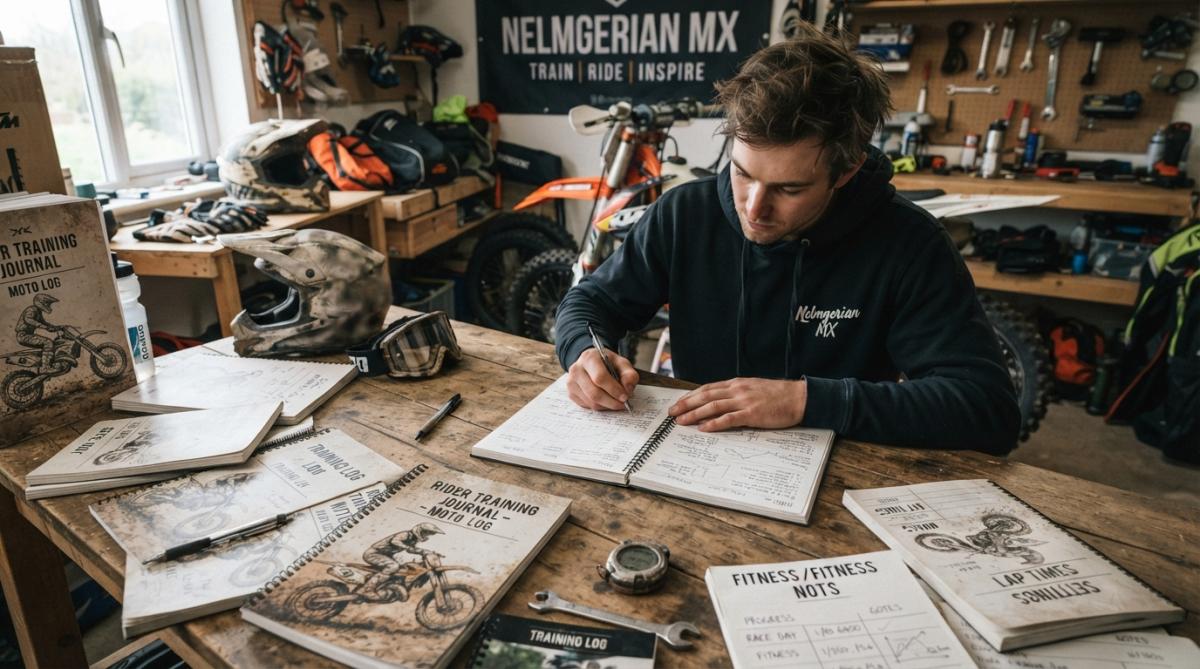
The difference between riders who improve consistently and those who plateau comes down to one simple habit: structured reflection. Whether you're tracking bike setup, monitoring physical conditioning, or analyzing lap times, the right journal transforms scattered experience into measurable progress. At Nelmgerian MX, we've watched young riders and serious racers unlock breakthrough improvements by documenting their training with intention. Below, we'll show you how to choose between physical logbooks and digital apps, and which tools actually deliver results.
Motocross Training Journals Review: Quick Comparison
The motocross training journals landscape splits into two camps: physical notebooks for trackside simplicity and digital platforms for deep analytics. The decision isn't about which is objectively better, but matching the tool to your actual workflow. A rider testing suspension setups needs something portable and durable. A competitive racer chasing lap times needs analytics that reveal subtle improvements. A young rider building confidence needs a journal that makes training feel rewarding.
| Tool | Format | Best For | Key Feature |
|---|---|---|---|
| Nelmgerian MX Training Journal | Physical | Young riders building confidence | Structured reflection framework |
| Dirt Notes by Lil' Smokies Racing | Physical | Goal-focused racers | Yearly planning + race recaps |
| MX-Development Data Log Book | Physical | Setup-obsessed riders | 20-track baseline settings |
| Dirt Bike Dialed | Digital | Multi-bike owners | Maintenance + ride logs unified |
| LITPro | Digital | Performance-focused riders | GPS lap timing + fitness integration |
| Crossbox Lap Timing | Digital | Competitive racers | Advanced acceleration analytics |
How We Evaluated These Tools
Evaluation focused on five criteria: portability, data capture speed, actionability, durability, and cost-to-value ratio. We weighted portability and data capture speed heavily because a journal that sits at home provides zero value, and a tool requiring 30 minutes of data entry after every ride gets abandoned. The critical insight: most riders don't fail because they lack tools, they fail because they choose tools designed for someone else's workflow.
Physical Motocross Training Log Books That Work
Nelmgerian MX Training Journal: Built for Young Riders
Nelmgerian MX Training Journal stands apart because it's designed explicitly for confidence-building through structured reflection, not just data logging. Created by motocross enthusiast Shaun Nelms, this journal combines sections for documenting training sessions, bike settings, and track conditions with dedicated space for race results and lessons learned. The framework pushes riders to think about what worked, what didn't, and why, the exact mental process that separates improvement from repetition.
For young riders, this reflective structure matters more than feature density. The physical format works trackside without batteries or connectivity issues. Riders report that handwriting reflections creates stronger memory encoding and more thoughtful analysis than typing notes.
Dirt Notes by Lil' Smokies Racing: Goal Setting & Race Craft
Dirt Notes positions itself as a yearly race craft journal. Unlike generic training logbooks, it opens with goal-setting pages, then progresses through a moto calendar, training day sections, and dedicated race day recaps. This progression forces riders to connect their preparation to their results, a critical mindset shift that separates racers from riders.
The $34 price point reflects a premium annual product. Training day pages ask riders to record conditions, bike setup, what they worked on, and how they felt, then connect those observations to upcoming race goals. Race day recaps ask riders to identify what preparation paid off and what they'd change.
MX-Development Data Log Book: Bike Setup Precision
For riders who test suspension, gearing, and tire pressures obsessively, the MX-Development Data Log Book records baseline settings across different tracks and conditions. The book includes pre-printed sheets for 20 different tracks, with dedicated sections for suspension setup, carburetor or EFI settings, gearing ratios, tire pressures, and maintenance records.
The 6" x 9" compact size fits inside a gear bag. Over a season, this consistency reveals patterns: which suspension range works best at your home track, how weather affects optimal settings, what gearing suits your riding style. At $15-$25, it's an affordable addition to any serious rider's toolkit.
Digital Motocross Training Apps & Platforms
Dirt Bike Dialed: Maintenance & Ride Logging in One Place
Dirt Bike Dialed unifies ride notes, maintenance history, and setup records into a single digital logbook. The app logs ride location, conditions, and bike hours while capturing suspension setup and tire pressure in structured fields. Most importantly, it lets you add notes on bike feel and maintenance clues in the same entry. This unified approach reveals connections a physical journal can't.
Dirt Bike Dialed offers a free tier for one bike. The Pro tier unlocks unlimited bikes and advanced features, critical for riders managing multiple machines. The app is currently available on iOS through the App Store, with Google Play coming soon.
LITPro: GPS Lap Timing with Fitness Integration
LITPro is a GPS lap timing app with advanced riding analysis including line comparison, acceleration, braking, and corner analytics. For riders with compatible GPS devices (RaceBox, Garmin, Polar, Apple Watch, XGPS160, or LITPro's own HDGPS), the app transforms raw timing data into actionable insights.
The fitness integration is where LITPro separates from basic lap timing. The app tracks heart rate, cardio effort, and fatigue during sessions. A rider whose heart rate spikes above 180 bpm after 10 minutes is running out of gas before their skills plateau. Identifying this gap lets riders target their off-bike training. Segment-level analysis shows exactly where you're losing time, which corners, which straights, which braking zones.
Crossbox Lap Timing: Advanced Analytics for Competitive Riders
Crossbox takes lap timing further with high-accuracy GPS and deep analytics designed specifically for motorsports. The platform includes heart rate tracking and analytics covering lap times, acceleration, braking, and line choices. Line analysis shows exactly which racing line you took through each corner and compares it to faster laps. If you're competing at a level where 0.1-second improvements matter, Crossbox's investment is justified.
Digital vs. Physical Motocross Training Journals: Which Wins?
The question isn't which is objectively superior, but which matches your actual behavior. A digital app that sits unused is worse than a physical journal you carry to every session.
When Physical Journals Make Sense
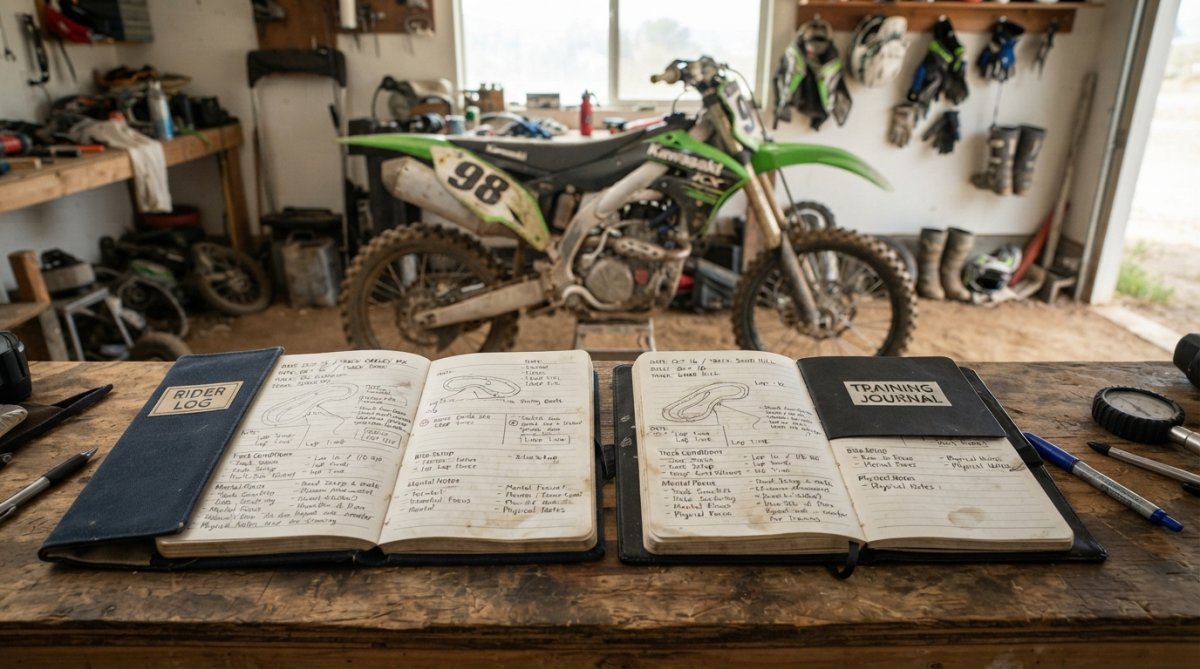
Physical journals win when you value simplicity, durability, and trackside usability. A notebook doesn't require battery charging, doesn't have screen glare in bright sunlight, and doesn't tempt you with notifications. Physical journals also create a keepsake. Flipping through a season's worth of handwritten notes creates a narrative of your progress that digital data doesn't replicate. Physical journals work best for riders who value the reflective process over detailed analytics.
When Digital Apps Deliver More Value
Digital tools win when you need to identify patterns across multiple sessions, integrate data from multiple sources, or compare performance metrics over time. A digital app instantly shows which track conditions produce your fastest lap times, or whether your performance correlates with physical conditioning. Digital tools excel for riders managing multiple bikes or families with multiple riders. Digital tools are essential for competitive racers. If you're still experimenting with whether you'll actually maintain a training journal, start physical and upgrade to digital later.
Motocross Fitness Planner Integration & Off-Bike Training
Physical conditioning separates riders who improve from those who plateau. A training journal that ignores off-bike fitness is incomplete because motocross demands explosive power, sustained endurance, and rapid recovery. When you see that your fastest lap times correlate with weeks of consistent strength training, the motivation to keep training off-bike increases dramatically.
LITPro's fitness integration does this by tracking heart rate during rides and comparing it across sessions. If your heart rate during a moto has decreased over four weeks while your lap times improved, you've gained fitness. This objective feedback is powerful.
Motocross Goal Setting Journal Framework
A goal-setting journal shapes what happens next. Riders who start a season with written goals improve faster than those who ride without a plan. A motocross goal-setting journal should open with seasonal goals, then break those into quarterly targets, then monthly milestones. Each goal should be specific and measurable: "improve my starts" is vague; "reduce my start line reaction time from 0.35 seconds to 0.25 seconds" is measurable.
Dirt Notes uses this framework explicitly. The journal opens with goal-setting pages, then provides a moto calendar where you can track which events you're entering and what you're targeting at each one.
Self-Assessment Framework for Progress Tracking
A self-assessment framework lets you evaluate your own performance without relying on external validation. A simple framework might ask: On a scale of 1-5, how was my bike control today? How was my fitness? How was my mental focus? How was my risk management? These subjective ratings, tracked over time, reveal trends. If your self-assessed bike control improves from 3/5 to 4/5 over six weeks, that's progress.
Which Motocross Training Journal Should You Choose?
The right choice depends on three variables: your age and experience level, your specific goals, and your actual commitment level.
For Young Riders Just Starting Out
Young riders benefit from journals that build confidence and create positive feedback loops. The Nelmgerian MX Training Journal is designed explicitly for this purpose. A young rider on a 50cc or 65cc doesn't need GPS lap timing or advanced fitness analytics. They need something that makes training feel intentional and rewarding. The commitment required is minimal: five minutes after each ride to write three things. This low friction makes it likely they'll actually maintain the journal.
For Serious Racers Chasing Lap Times
Serious racers need tools that reveal micro-improvements and identify exactly where performance gains are possible. Crossbox Lap Timing or LITPro becomes valuable because the data precision justifies the complexity. A 0.1-second improvement per lap is meaningful when you're racing competitively. Consider combining a digital lap timing tool with a physical goal-setting journal. The digital tool provides objective performance data. The physical journal provides the reflective framework that connects that data to your goals.
For Budget-Conscious Families
Start with a physical journal and upgrade to digital tools only when the physical option is limiting your progress. The MX-Development Data Log Book offers solid functionality at a low price point. A family with multiple riders might invest in one Dirt Bike Dialed Pro subscription to manage all bikes, then use physical journals for each rider. The key is choosing one tool and actually using it rather than buying multiple tools and using none of them.
Common Mistakes When Using Motocross Training Journals
The most common mistake is choosing a tool designed for someone else's workflow. The second mistake is logging without reflecting. Writing down suspension settings or lap times without asking "why did this happen?" and "what will I change next time?" transforms your journal into a data dump rather than a learning tool.
The third mistake is inconsistency. A journal that gets used after 50% of your sessions is nearly useless. The fourth mistake is over-complication. A journal with too many fields becomes burdensome. Start simple: what went well, what was challenging, what will you adjust next time?
The gap between riders who improve consistently and those who plateau isn't talent, it's the habit of structured reflection. A motocross training journal transforms scattered experience into measurable progress by creating a feedback loop where you document what happened, reflect on why it happened, and plan what to adjust next time. Nelmgerian MX Training Journal provides that structure for young riders building confidence, while serious racers benefit from digital tools like LITPro or Crossbox that integrate GPS and fitness data. The right choice depends on your age, goals, and actual commitment level. Start with whichever tool matches your workflow, maintain consistency, and review regularly. The journal itself doesn't create improvement; your willingness to reflect, learn, and adjust does. Nelmgerian MX offers rider training journals designed to build confidence and knowledge for racing, keeping young riders engaged and learning both on and off the track. Get started with a structured approach to tracking your progress and watch your improvement accelerate.
Frequently Asked Questions
What should I track in a motocross training journal?
Effective motocross training journals capture track conditions, bike setup details (suspension, tire pressure, gearing), lap times, body positioning notes, and how you felt during each session. Include weather, track moisture, and specific areas where you struggled. The Nelmgerian MX Training Journal and Dirt Notes guide riders through structured tracking of both technical and mental performance. Consistent data collection helps identify patterns in your riding technique and bike performance across different terrain types.
Are digital motocross training apps better than physical training log books?
Both formats have strengths. Digital apps like Dirt Bike Dialed and LITPro offer searchability, automatic backups, and fitness integration with wearable tech, ideal for serious racers analyzing lap times and heart rate data. Physical journals like the Nelmgerian MX Training Journal encourage deeper reflection and work better for younger riders building the habit of structured training. Choose digital if you want GPS lap timing and performance metrics; choose physical if you prefer tactile note-taking and a distraction-free approach to reflection.
Can a motocross training journal actually improve my race performance?
Yes. Training journals create accountability and reveal patterns you'd otherwise miss. By documenting bike setup, track conditions, and performance metrics, you build a personal database of what works. Riders using goal-setting journals like Dirt Notes report better race craft and consistency. The key is reviewing your entries regularly and adjusting your preparation based on what the data shows. Journals transform random track time into intentional skill progression with measurable improvement.
What makes a good motocross goal setting journal for young riders?
The best goal-setting journals for young riders balance structure with engagement. Nelmgerian MX Training Journal combines age-appropriate goal tracking with confidence-building exercises. Look for journals with sections for seasonal goals, weekly training objectives, and race-day reflection. Self-assessment frameworks, where riders rate their own performance on key skills like body positioning and throttle control, build self-awareness. Avoid overly complex journals; young riders benefit from simple, encouraging formats that make tracking feel rewarding rather than like homework.
This article was written using GrandRanker