 listicle
Tips for Young Motocross Riders: 7 Essential Skills to Master
Table of Contents
- Getting Started: Foundations for Tips for Young Motocross Riders
- Motocross Safety Gear for Kids: Non-Negotiable Protection
- Master Core Riding Techniques: Body Position and Throttle Control
- Youth Motocross Training: Practice Drills That Build Real Skills
- Motocross Mental Toughness: Building Confidence and Overcoming Fear
- Dirt Bike Maintenance for Young Riders: Responsibility and Care
- Common Beginner Mistakes and How to Avoid Them
- Key Takeaways for Young Motocross Riders on the Path to Success
- Frequently Asked Questions
Last Updated: July 30, 2026
Getting Started: Foundations for Tips for Young Motocross Riders
Young riders entering the sport build foundations in their first months that shape their entire motocross career. At Nelmgerian MX, we've seen that rapid progression comes down to getting the basics right: proper technique, confidence, equipment knowledge, and the mental framework that separates casual riders from serious competitors.
The American Motorcyclist Association (AMA) oversees youth motocross classes across the United States with age-based divisions for good reason. A 4-year-old on a 50cc bike needs entirely different guidance than a 9-year-old on an 85cc.
Choosing the Right Bike for Your Age and Size
The most common mistake parents make is buying a bike their child will "grow into." A bike that's too large is dangerous, young riders can't control it, their feet don't touch the ground, and they lose confidence immediately.
Your child's toes must touch the ground when sitting on the seat with both feet down. This is non-negotiable for safety and control. A child who can touch the ground can catch themselves if they lose balance, plant their feet in ruts, and feel secure on the bike.
Seat height matters far more than displacement. A 50cc bike with a 26-inch seat height suits most 4-6 year olds. An 85cc with a 28-30 inch seat works for 7-9 year olds, depending on height. Measure your child's inseam and compare it directly to the bike's seat height specifications.
Weight is the second consideration. Young riders lack upper body strength. A 50cc bike should weigh under 140 pounds; an 85cc should stay under 180 pounds. Heavier bikes tire young riders faster and make maneuvering difficult.
Understanding Youth Motocross Classes and Displacement
The AMA divides youth riders into classes based on age and engine displacement. The 50cc class (ages 4-7) produces around 4-6 horsepower and teaches basic throttle control and balance. The 65cc class (ages 6-9) produces 8-10 horsepower and bridges the gap to 85cc. The 85cc class (ages 7-9+) produces 15-20 horsepower and marks where real separation between riders emerges. The 125cc class (ages 10+) produces 25-35 horsepower and transitions riders toward adult motocross.
Motocross Safety Gear for Kids: Non-Negotiable Protection
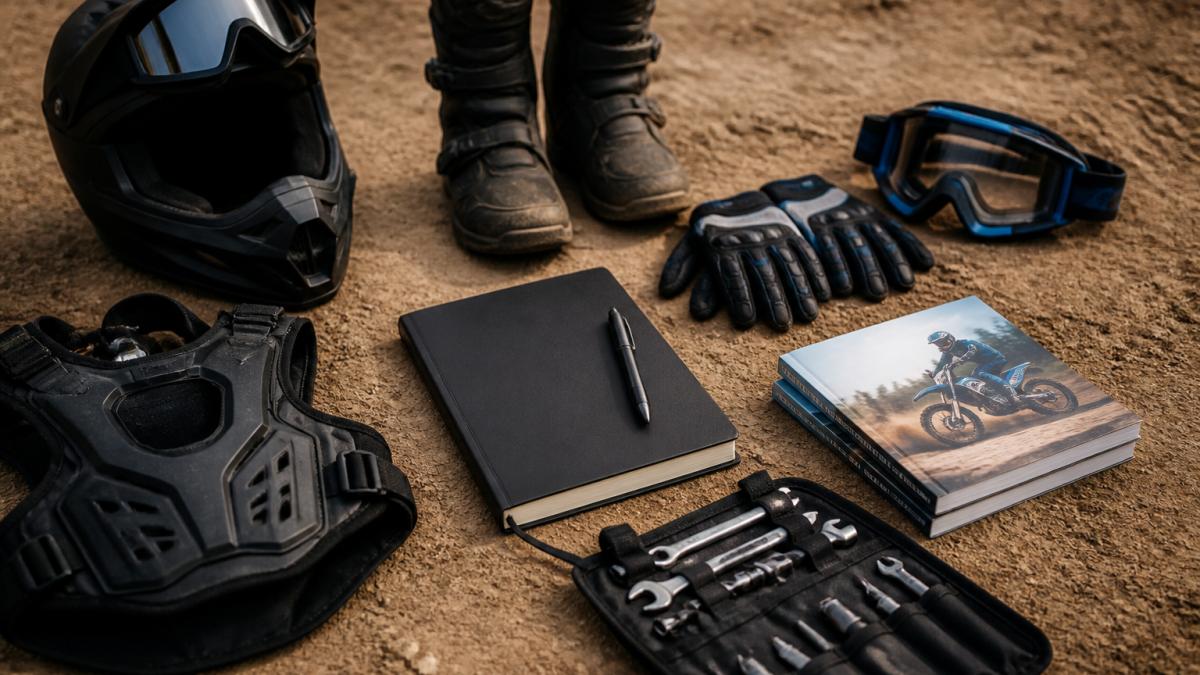
Every young rider needs the same protection as adult riders, sized appropriately. A helmet protects the head. Body armor protects the spine, ribs, and shoulders. Gloves protect the hands. Boots protect the ankles and feet. Goggles protect the eyes. Neck support protects the cervical spine. Missing even one piece significantly increases injury risk.
Research from the Journal of Athletic Training shows that properly fitted protective gear reduces injury severity by up to 60% in youth motocross riders.
Helmet, Goggles, and Neck Support Essentials
A helmet is the single most important piece of safety equipment. A child's skull is still developing, and direct impact without a helmet causes permanent damage. The helmet must fit snugly, you should fit one finger between the cheek pad and your child's cheek. If it shifts side to side, it's too loose.
Youth helmets from brands like Fox Racing Youth V1 start around $230-260 and offer MIPS (Multi-directional Impact Protection System) technology that absorbs rotational impacts. Goggles protect eyes from roost and dust; the 100% Strata 2 Youth MX Goggle costs around $30 with anti-fog lens and secure strap. Neck support redirects impact energy away from the cervical spine; the Alpinestars Youth Neck Support costs approximately $170 and reduces whiplash injuries.
Body Armor, Gloves, and Boots for Complete Coverage
Body armor protects the spine, ribs, chest, and shoulders. Youth chest protectors should be lightweight to avoid fatigue. Budget $100-150 for quality youth armor. Gloves protect hands and improve grip; the Fox Youth Dirtpaw Gloves cost $25-35 with padded knuckles and silicone grip. Boots protect the ankle, shin, and foot from engine heat, rocks, and impact. The Alpinestars Youth Tech 3S Boots cost around $200 and are designed for smaller feet.
| Gear Item | Purpose | Approx. Cost | Priority |
|---|---|---|---|
| Helmet (with MIPS) | Head and brain protection | $230-260 | Critical |
| Goggles | Eye protection, visibility | $30-50 | Critical |
| Neck Support | Cervical spine protection | $170 | High |
| Chest Protector | Spine, ribs, chest | $100-150 | High |
| Gloves | Hand protection, grip | $25-35 | High |
| Boots | Ankle, foot, shin protection | $150-200 | Critical |
| Jersey & Pants | Abrasion protection | $80-150 | Medium |
Master Core Riding Techniques: Body Position and Throttle Control
The foundation of motocross riding is body position. Before worrying about jumps or racing, young riders must understand how to sit on the bike, where to place their weight, and how to move their body to control the machine. Poor body position makes everything harder; proper position makes the bike easier to control.
Attack Position and Balance on the Bike
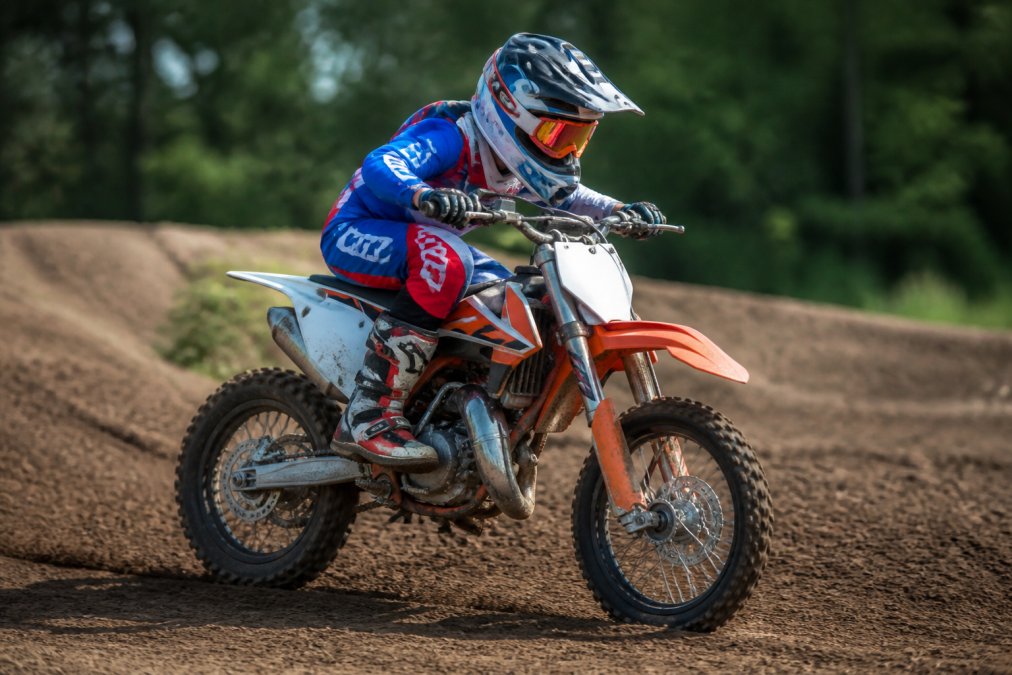
The attack position is the foundation of modern motocross riding. Your child sits forward on the seat with their chest over the handlebars, elbows bent and pointing outward, knees gripping the tank firmly. This position lowers the center of gravity, puts weight forward over the front wheel for traction, and allows the rider to move their body around the bike to maintain balance.
Teaching this position takes time. Most young riders naturally sit back and grip handlebars tightly, the opposite of what works. Start by practicing the attack position while the bike is stationary. Once comfortable, practice at walking speed in a flat, open area. The goal is muscle memory.
Balance comes from weight distribution. In a straight line, weight should be centered. In a corner, the bike leans and the body follows, with the inside knee gripping the tank. This is counterintuitive for young riders who want to lean their body away from the turn.
Braking, Cornering, and Managing Ruts and Whoops
Most young riders brake too hard, lock up the rear wheel, and skid. The correct technique is to brake smoothly before the turn, then release brakes as you enter the corner. Teach your child to use both brakes, the front brake does 70% of stopping work, the rear brake prevents rear wheel locking. Feathering the brakes (gentle, steady pressure) is better than grabbing them.
Cornering technique requires proper body position. As your child approaches a corner, they should brake in a straight line, release brakes as they turn, lean the bike, move their body inside the turn, and apply throttle smoothly exiting. Throttle should increase as they exit, not decrease.
Ruts are grooves created by repeated passes. Young riders should ride in the rut, not jump over it. The rut provides a predictable line and keeps the bike stable. Whoops are small bumps that require steady throttle, accelerating unsettles the bike, braking causes the rear wheel to hop.
Youth Motocross Training: Practice Drills That Build Real Skills
Random riding builds bad habits. Structured practice builds skill. The difference between young riders who improve month over month and those who plateau is deliberate, focused training with specific goals.
Structured Practice Sessions and Endurance Drills
A typical practice session for young motocross riders should last 45-60 minutes of actual riding time. Younger riders (4-6) should do 30-40 minutes; older riders (7-9) can handle longer sessions.
Structure sessions into three parts: warm-up (10 minutes of slow, easy riding), skill work (20-30 minutes focusing on one specific area like cornering or braking), and endurance work (15-20 minutes of steady riding to build stamina).
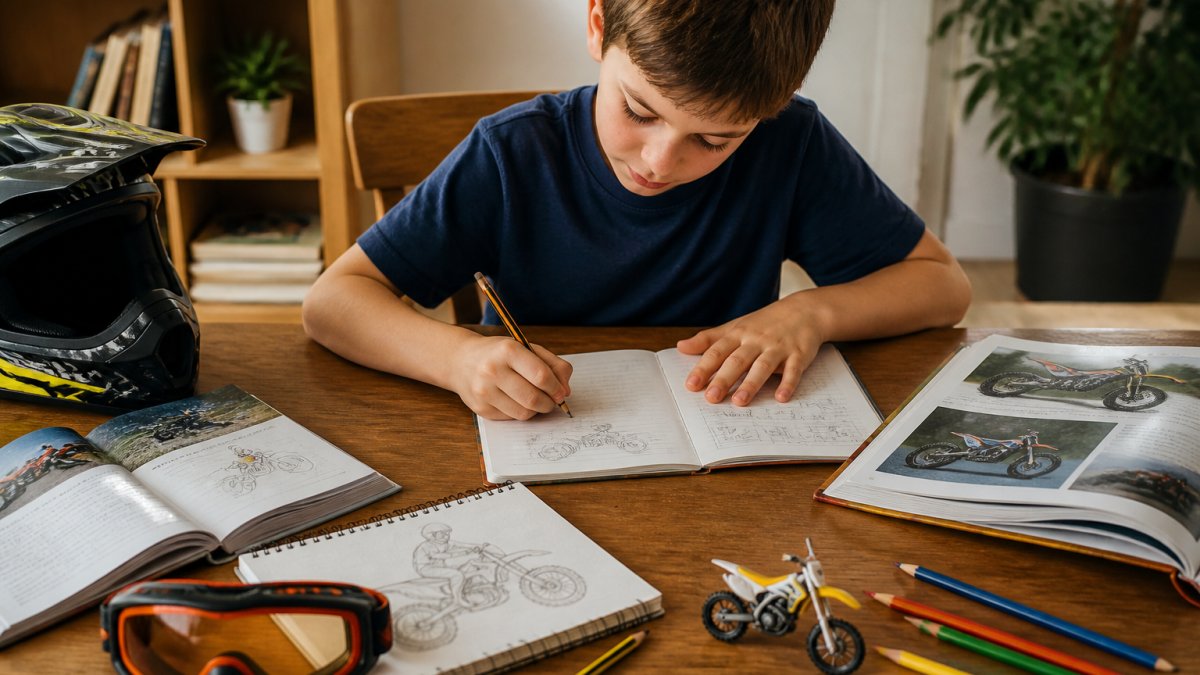
Track progress in a training journal. Write down what skill was practiced, repetitions, and how it felt. This creates accountability and shows progress over weeks and months.
Working with a Mentor or Coaching for Faster Progress
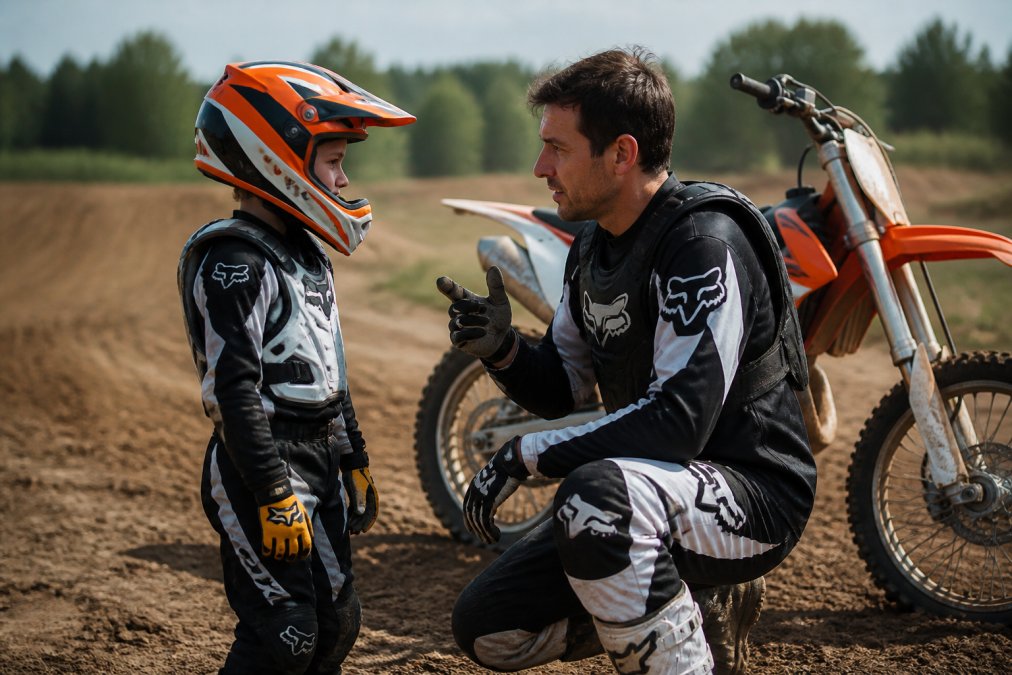
Young riders improve fastest with experienced guidance. A coach can identify bad habits before they become ingrained and provide encouragement. The Motorcycle Safety Foundation (MSF) DirtBike School offers one-day training courses for riders ages 6 and up. For families in the Southeast, Iron Horse Country Ranch offers kids' motocross summer camps with small camper-to-staff ratios and personalized instruction.
A local mentor, an experienced rider who volunteers to help, is often more valuable than formal coaching. Many local tracks have experienced riders who mentor young riders.
Motocross Mental Toughness: Building Confidence and Overcoming Fear
The mental side of motocross is as important as physical skill. A young rider who's afraid will ride tight and progress slowly. A confident young rider will push harder and improve month over month.
Age-Specific Confidence Building for Younger Riders (Ages 4-6)
Young riders ages 4-6 build confidence through success. Start with small, manageable challenges and build up. Celebrate small wins. Avoid forcing them into situations that terrify them. If your child is scared of jumps, let them ride around the jump for a few sessions before attempting it.
Use positive language. Instead of "Don't crash," say "Smooth throttle and good body position." Instead of "You're not fast enough," say "You're improving, I noticed better cornering today." Create small goals like "This week, let's practice riding through that corner without braking."
Advanced Mental Skills for Older Youth (Ages 7-9)
Older young riders (7-9) can handle more complex mental training. Teach them to focus on what they control: their own body position, throttle control, and line choice. They can't control other riders or track conditions.
Practice visualization. Before a race or practice session, have your child close their eyes and imagine riding a perfect lap. This primes the brain for success.
Teach them to recover from mistakes. In motocross, crashes happen every session. The difference between riders who improve and those who don't is how they respond. Teach your child: crash, get up, figure out what went wrong, try again.
Dirt Bike Maintenance for Young Riders: Responsibility and Care
Teaching young riders to maintain their own bike builds responsibility and deepens their understanding of how the machine works. Start with simple tasks and add complexity as your child grows.
A 6-year-old can help with pre-ride checks: checking tire pressure and looking for damage. A 7-8 year old can learn to clean the air filter and check oil level. By age 9, a young rider can change the oil (with supervision) and perform basic chain maintenance.
Track maintenance in a journal. This creates a record and shows cause and effect.
Suspension is complex, but young riders should understand the basics: softer suspension is more comfortable, stiffer suspension is more responsive. Most young riders ride bikes set up too stiff. Work with a suspension specialist to set up your child's bike for their weight and riding level. This is one of the best investments you can make.
Common Beginner Mistakes and How to Avoid Them
Mistake 1: Sitting back instead of forward. Solution: Practice the attack position at walking speed until it's automatic.
Mistake 2: Gripping the handlebars too tightly. Solution: Teach your child to grip the tank with their legs, not the handlebars with their hands.
Mistake 3: Braking in corners. Solution: Brake before the turn, release brakes as you enter the corner, apply throttle as you exit.
Mistake 4: Accelerating through whoops. Solution: Teach steady throttle through whoops.
Mistake 5: Not wearing proper gear. Solution: Enforce gear use every single time. No exceptions.
Mistake 6: Inconsistent practice. Solution: Commit to 2-3 practice sessions per week. Consistency beats intensity.
Mistake 7: Racing before ready. Solution: Focus on skill development first. Racing comes later.
Key Takeaways for Young Motocross Riders on the Path to Success
Building a young motocross rider is a multi-year process. The foundation you build in the first year, proper body position, consistent practice, mental toughness, and respect for safety gear, determines how far your child will progress.
The most important tip is consistency. Two focused practice sessions per week beats one intense session per month. Skill builds through repetition. Confidence builds through small wins. Start with the right bike, invest in proper safety gear, find a mentor or coach, track progress in a training journal, celebrate small wins, and keep riding.
Young riders who follow this path progress rapidly and develop a lifelong love for motocross. Nelmgerian MX provides tools to support this journey, from rider training journals that track skill development to community resources that connect young riders with mentors and coaches. Whether your child is just starting on a 50cc or progressing to an 85cc, having the right resources and support system accelerates progress and builds confidence both on and off the track.
Frequently Asked Questions
What age should a child start learning tips for young motocross riders?
Children as young as 4-6 years old can begin learning basic riding skills on 50cc bikes, though readiness depends on physical coordination and maturity. The Motorcycle Safety Foundation offers instruction for riders aged 6 and up. Start with smaller displacement bikes and focus on fundamental balance and throttle control before progressing to more technical skills.
What is the most important motocross safety gear for kids?
A quality helmet is the most critical piece of motocross safety gear for kids, look for DOT-certified models with MIPS technology. Equally essential are neck support (like Alpinestars Youth Neck Support), body armor, gloves, and motocross boots. Together, this gear protects against the most common injuries young riders face during falls and crashes.
How can youth motocross training help my child improve faster?
Structured youth motocross training with certified coaches accelerates skill development through focused practice drills, personalized feedback, and progressive technique instruction. Programs like the Motorcycle Safety Foundation DirtBike School provide one-day hands-on sessions covering riding fundamentals and safety. Working with a mentor or attending camp-style training (such as Iron Horse Country Ranch) combines expert instruction with peer learning for faster confidence building.
How do I help my young rider build motocross mental toughness?
Building motocross mental toughness starts with celebrating small wins and normalizing fear as part of learning. Age matters, younger riders (4-6) benefit from play-based confidence building and positive reinforcement, while older youth (7-9) respond well to goal-setting and visualization techniques. Consistent practice, supportive coaching, and creating a growth mindset around mistakes all strengthen mental resilience and help riders push through anxiety.
This article was written using GrandRanker