 how-to
Step-by-Step Motocross Training Plan for Beginners
Table of Contents
- What You'll Need Before You Start
- Motocross Fitness Exercises for Beginners
- How to Build Endurance for Motocross
- Dirt Bike Riding Drills for Beginners
- Your Weekly Motocross Training Plan Schedule
- Recovery, Nutrition, and Mental Preparation
- Common Mistakes to Avoid in Your Motocross Training Plan
- Frequently Asked Questions
Last Updated: September 11, 2026
What You'll Need Before You Start
A step by step motocross training plan for beginners starts with the basics: safe gear, a properly set-up bike, and a place to train. This guide from Nelmgerian MX covers every stage, from your first fitness session to race-day readiness.
Most beginners skip straight to riding and tire out after two laps. Fitness comes first, before you ever touch the throttle.
Essential Gear and Bike Setup
Proper gear is not optional. A well-fitting helmet, goggles, gloves, boots, chest protector, and knee braces protect against the most common injuries in off-road riding (msf-usa.org).
Bike setup matters just as much. Set your levers so they're reachable seated and standing, check tire pressure before every session, and match suspension sag to your body weight. A bike that fights you drains energy fast.
Budget-Friendly Home Gym Setup
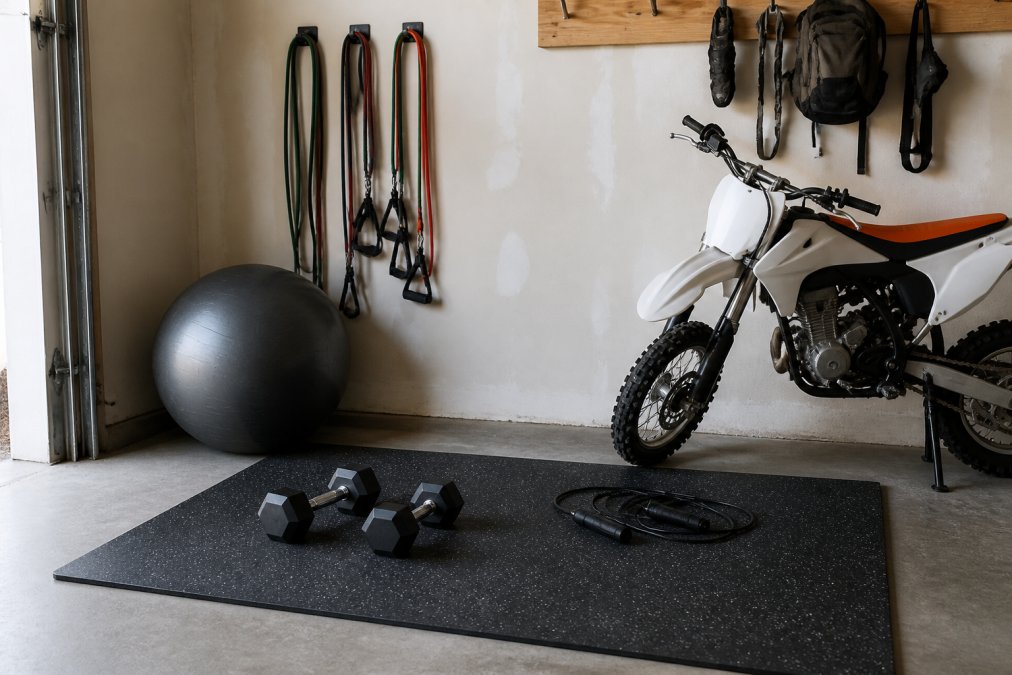
You don't need a commercial gym to build motocross fitness. A jump rope, resistance bands, and two dumbbells cover most of what you need.
Add a pull-up bar and stability ball to train nearly every muscle group that matters on a bike, in about the space of a parking spot.
Motocross Fitness Exercises for Beginners
Motocross fitness exercises for beginners should target the muscles you actually use on a bike: core, legs, grip, and shoulders. Skip the bodybuilding routines. Build functional strength instead.
Core Stability and Functional Strength
Core stability keeps you balanced through ruts, whoops, and off-camber turns. A weak core forces your arms to do work they shouldn't, leading directly to arm pump.
Start with planks, side planks, and bird-dogs. Three sets of 30-45 seconds each, three days a week (the CDC). Add squats, lunges, and push-ups for functional strength.
Plyometrics for Explosive Power
Plyometrics build the explosive power you need for starts and passing. Box jumps, broad jumps, and medicine ball throws train your muscles to fire quickly.
Keep plyometric sessions short: two a week at 15-20 minutes is plenty for a beginner. More isn't better; recovery matters.
How to Build Endurance for Motocross
Endurance is the difference between riding strong for 30 minutes and fading after 10. Building endurance for motocross means training your cardiovascular system for the stop-start demands of a moto, not just logging easy miles.
Interval Training and Heart Rate Zones
Interval training mimics race conditions better than steady-state cardio. A heart rate monitor helps you stay honest about intensity.
Try this beginner-friendly session: warm up for 10 minutes, then alternate 30 seconds hard and 90 seconds easy for 20 minutes. Cool down for 5 minutes. Two or three sessions a week builds a real endurance base.
Progressive Overload for Beginners
Progressive overload means gradually increasing training demands so your body keeps adapting. Beginners either push too hard too fast or never increase difficulty at all.
Add roughly 10% more volume each week. If you rode 20 minutes of intervals this week, aim for 22 next week. Small, steady increases beat dramatic jumps every time.
| Week | Interval Volume | Strength Sessions | Focus |
|---|---|---|---|
| 1-2 | 15 minutes | 2 per week | Form and breathing |
| 3-4 | 20 minutes | 3 per week | Consistency |
| 5-6 | 25 minutes | 3 per week | Intensity control |
| 7-8 | 30 minutes | 3 per week | Race-pace efforts |
Dirt Bike Riding Drills for Beginners
Dirt bike riding drills for beginners build skills faster than free riding. Twenty focused minutes of drills beats two hours of aimless laps.
Agility and Balance Drills
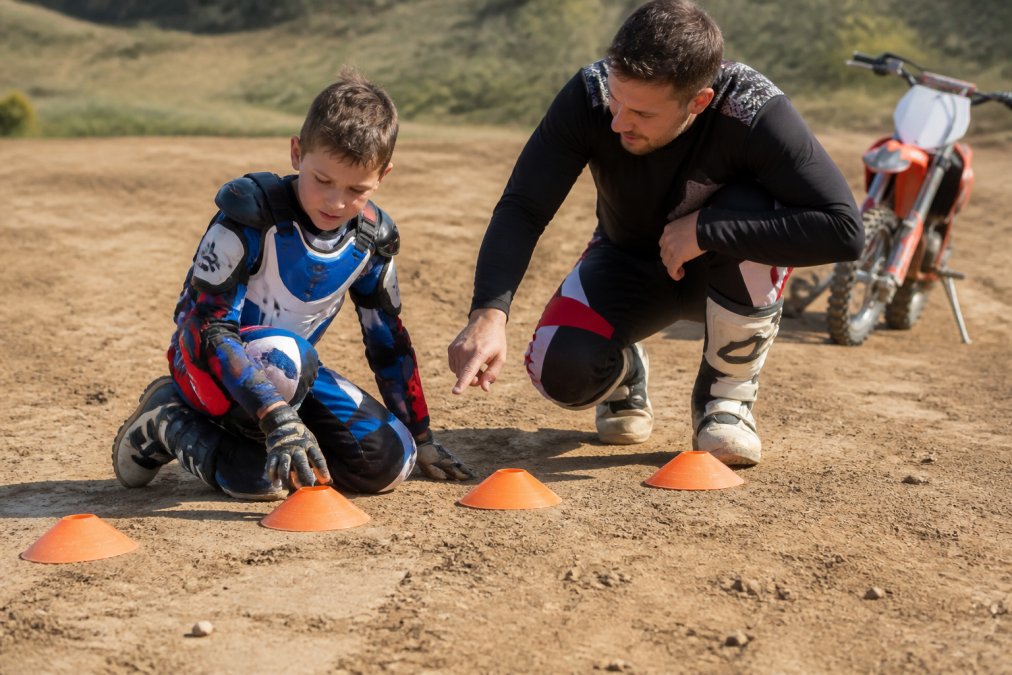
Agility and balance drills teach your body to react without overthinking. Set up a cone figure-eight and ride it slowly, standing on the pegs the whole time.
Practice slow-speed balance by riding as slowly as possible without putting a foot down. Ten minutes of this drill per session sharpens motorcycle control quickly.
Braking and Cornering Practice
Braking and cornering practice should start at low speed. In a flat, open area, practice braking from moderate speed using both brakes together.
Then work on cornering: enter wide, sit forward, look through the turn, and roll on the throttle smoothly as you exit. Repeat each corner ten times before moving on.
Your Weekly Motocross Training Plan Schedule
A weekly motocross training plan balances riding, fitness, and rest. Beginners who train daily burn out or get hurt; structure prevents both.
Here's a schedule that works for most beginners, with a duration and effort target for each session. Use a heart rate monitor or a 1-10 perceived effort scale (1 = sitting still, 10 = all-out, can't speak).
| Day | Session | Duration | Effort Target |
|---|---|---|---|
| Monday | Rest or light mobility (foam roll, hip and shoulder openers) | 15-20 min | 1-2 |
| Tuesday | Strength and core | 40-45 min | 6-7 on working sets |
| Wednesday | Interval training (bike, rower, or running) | 35-40 min total | 8-9 on hard efforts |
| Thursday | Strength and plyometrics | 40 min | 6-7 strength, 8 plyo |
| Friday | Rest or active recovery (easy walk, spin, swim) | 20-30 min | 2-3 |
| Saturday | Riding day: drills first, then free riding | 2-3 hrs | 5-7 average |
| Sunday | Light cardio or full rest | 20-30 min or off | 3-4 |
How to Structure a Single Training Week
Order matters. Put plyometrics earlier in the week when you're freshest, and never stack two high-intensity days back to back. Tuesday and Thursday strength sessions should be separated by Wednesday's cardio so your legs recover between loading days.
A common beginner mistake is riding hard Saturday and then trying to do plyometrics Sunday. That's two maximal-effort days in a row, and it's how overuse injuries start. If you only have three training days, drop Thursday and keep Tuesday, Wednesday, and Saturday.
The First 30 Days: A Ramp-Up Plan
Most beginner plans fail because they start at full volume. Your first month should build gradually so tendons, joints, and your aerobic base adapt before you push intensity, progressive overload applied to your calendar, not just your weights.
- Week 1: Two strength sessions (30 min each), one interval session (15 min of work), one easy ride. No plyometrics yet.
- Week 2: Same structure, add 5 minutes to the interval session and one set to each strength exercise.
- Week 3: Add a short plyometric block (10 min, low box, focus on soft landings). Keep strength at two sessions.
- Week 4: Deload. Cut volume by about 30% and keep intensity moderate. Deload weeks are when your body actually consolidates the fitness you built.
After week 4, resume the weekly table above and add roughly 10% more volume per week. If you feel flat, sore for more than two days, or your morning resting heart rate is elevated, take an extra rest day. That's how you avoid the crash that costs you two weeks.
Off-Season vs. In-Season Training
Off-season training builds your base: volume up, intensity moderate, with a focus on strength, mobility, and endurance. This is the time to add muscle and fix weaknesses, because you're not performing on race day.
In-season training maintains what you built. Riding takes priority, strength drops to twice a week, and recovery becomes non-negotiable. Keep one plyometric session to preserve explosive power, but halve the volume. Building fitness during race season usually backfires: you arrive at the gate tired instead of sharp.
A simple rule: in-season, you should finish every strength session feeling like you could do one more set. Off-season, you can push closer to failure.
Recovery, Nutrition, and Mental Preparation
Recovery is where your body actually gets stronger. Skip it, and every other part of your training plan suffers. This section covers the hour after a moto, fueling and hydration for a track day, and the mental drills most beginner guides skip.
Post-Ride Recovery Routines
Post-ride recovery starts the moment you pull off the track, not when you get home. The first 60 minutes matter most: your body is most receptive to refueling and tight muscles are easiest to lengthen.
A practical post-ride routine:
- Minutes 0-10: Get out of sweaty gear and into dry clothes. Wet gear chills your core and slows recovery.
- Minutes 10-30: Drink 16-24 oz of water or an electrolyte drink (acsm.org). Eat 20-30 grams of protein with 40-60 grams of carbs. Chocolate milk, a turkey sandwich, or a protein shake with a banana all work. The goal is to start glycogen replenishment while your muscles are still warm.
- Minutes 30-60: Ten minutes of light stretching focused on hip flexors, hamstrings, calves, and forearms. Hold each stretch 20-30 seconds. Don't force range of motion; you're loosening, not testing flexibility.
- Later in the day: 10-15 minutes of foam rolling or a easy 15-minute walk. Active recovery moves blood through sore muscles better than lying on the couch.
A common mistake is going straight from the track to the couch. That leaves muscles tight and sore for days, and it makes your next ride feel worse than it should.
Hydration Strategy and Body Composition
A hydration strategy for motocross means drinking consistently before, during, and after riding, not just when thirsty. Thirst lags behind actual dehydration, and by the time you notice it, reaction time and focus are already dropping, dangerous on a bike.
A simple framework:
- Two hours before riding: Drink 16-20 oz of water.
- During riding: Sip 4-8 oz every 15-20 minutes, more in heat. A hydration pack makes this automatic.
- After riding: Drink 16-24 oz for every pound lost during the session. Weigh yourself before and after a hot ride once to learn your sweat rate.
For sessions under an hour in mild conditions, water is fine. For longer or hotter rides, add electrolytes, especially sodium and potassium. You lose both through sweat, and replacing only water can dilute your blood sodium, which causes cramping and fatigue.
Keep body composition in a healthy range for your age and build. Extreme weight-cutting has no place in beginner motocross, especially for young riders. Performance comes from fitness and skill, not from being under-fueled.
Mental Preparation and Focus Training
Mental preparation separates riders who improve steadily from those who plateau. Focus is a skill you can practice, not a personality trait you either have or don't. Most beginner guides ignore this entirely, which is why so many riders stall out after their first season.
Three drills that work:
Pre-ride visualization (2 minutes). Before you start the bike, sit quietly and picture your first three laps. See the lines, feel the body position, hear the engine. Visualization primes your nervous system to execute what you've rehearsed. It's the same mechanism athletes in other sports use before competition.
One-skill focus per session. Pick a single skill for the day, such as "stand through every corner" or "brake later into the outside rut." Trying to fix everything at once fixes nothing. Write the skill on a piece of tape on your crossbar if you need a reminder.
Breathing reset between motos. After a hard moto, your heart rate stays elevated and your focus narrows. Spend 60 seconds doing slow nasal breathing (in for 4, out for 6). This brings your heart rate down faster and resets your attention for the next session.
The riders who improve fastest aren't the ones who ride the most. They're the ones who show up with a plan, focus on one skill at a time, recover properly between sessions, and train their focus like any other muscle.
Common Mistakes to Avoid in Your Motocross Training Plan
The biggest mistake beginners make is treating riding as the whole training plan. Fitness, recovery, and mental work matter just as much as seat time.
Other traps to watch for:
- Skipping warm-ups, which raises injury risk on cold muscles
- Increasing training load too quickly, which leads to fatigue and crashes
- Ignoring hydration until you're already thirsty
- Training hard every day with no rest days built in
- Neglecting mobility work, which limits how long you can ride comfortably
For families tracking a young rider's progress, a structured journal helps you spot patterns. The Nelmgerian MX Training Journal gives riders a place to log practice sessions, goals, and race results, which makes it easier to see what's actually working.
Frequently Asked Questions
What is a good motocross training routine for beginners?
A good routine combines three days of physical training with two days of riding. Focus on core stability, functional strength, and cardiovascular endurance. Start with bodyweight exercises like planks and squats before adding resistance. On riding days, practice dirt bike riding drills for beginners such as figure-eights and braking exercises. Always include a warm-up routine and cool-down. Track your progress in a training journal to see how your lap times and stamina improve over weeks.
How do I build endurance for motocross riding?
Build endurance by doing interval training that mimics race intensity. Use a heart rate monitor to stay in specific intensity zones. Start with 20-minute sessions alternating 30 seconds hard and 90 seconds easy. Gradually increase to 40 minutes. Add cardiovascular endurance work like cycling or rowing twice a week. This approach raises your anaerobic threshold, helping you maintain speed through longer motos without muscle fatigue.
What physical skills are most important for new motocross riders?
Core stability and functional strength matter most for motorcycle control. A strong core prevents arm pump and reduces fatigue. Balance and agility let you shift weight quickly through corners. Flexibility helps you move on the bike without stiffness. Practice motocross fitness exercises for beginners like planks, lunges, and single-leg balances. These build the foundation for safe riding and better lap times.
How often should a beginner practice on a dirt bike?
Ride two to three times per week, with at least one rest day between sessions. Each practice should last 30 to 60 minutes, focusing on specific dirt bike riding drills for beginners rather than just free riding. This gives your body time for active recovery and prevents burnout. Consistency beats intensity. Use a training journal to log each session and track what you worked on.
Building a step by step motocross training plan for beginners takes patience, consistency, and a willingness to train off the bike as hard as you ride on it. Nelmgerian MX supports young riders and their families with training journals, storybooks, and screen-free resources that build confidence and skill between practice days. Get started with Nelmgerian MX and give your rider the tools to improve on and off the track.