 How-to
How to Store Motocross Gear to Prevent Damage
Last Updated: November 21, 2026
Quick Summary
To store motocross gear to prevent damage, wash and fully dry every piece before it goes away, since dirt and trapped moisture break down fabric and start mildew. Then hang gear on a rack off concrete, keep helmets in padded bags off the floor, and store boots upright.
- Inspect every piece in good light and repair or replace frayed seams, broken zippers, and cracked lenses before storage.
- Wash mesh jerseys and synthetic pants cold, air dry them, and follow each care label.
- Never stack anything on a helmet; store it in a padded bag away from heat and sunlight.
- Seal gaps around doors and vents with steel wool or hardware cloth to keep mice out of gear.
- Check stored gear every few weeks to catch mildew and pests early.
Table of Contents
- Step 1: Inspect and Prep Your Gear Before Storage
- Step 2: How to Clean and Store Motocross Gear So It Lasts
- Step 3: How to Store a Motocross Helmet Without Cracking the Shell or Liner
- Step 4: How to Store Motocross Gear in a Garage or Shed
- Step 5: How to Store Motocross Gear in the Off-Season
- Troubleshooting: Fixing Mildew, Odor, and Deformation
- Build a Gear Care Routine for Your Young Rider
- Frequently Asked Questions
Step 1: Inspect and Prep Your Gear Before Storage
The single biggest cause of ruined motocross gear isn't the storage spot. It's what riders put away dirty. Learning how to store motocross gear to prevent damage starts before anything goes on a shelf, and inspection is where most families skip a step.
Lay every piece out in good light and check for problems:
- Frayed seams or torn liners
- Broken zippers that need repair now
- Cracked or cloudy goggle lenses
- Boot buckles that no longer latch
- Worn knee pads and armor straps
Anything that fails this check should be repaired or replaced before storage. A small tear becomes a big one after months in a bag. Gear care is part of rider care, and a quick inspection keeps both in shape.
If you're unsure whether a piece still fits or protects properly, our guide on choosing essential motocross safety gear for beginners walks through what to look for. For younger riders, this youth motocross safety gear checklist makes the inspection easy to run through together.
Step 2: How to Clean and Store Motocross Gear So It Lasts
Dirt left on fabric breaks down fibers and traps moisture. The fix is simple: wash everything before it goes into storage, not after the season starts. But motocross gear is not one material. A mesh jersey, a synthetic pant, a leather boot, a foam knee pad, and a polycarbonate chest protector each fail in a different way, so the wash-and-store routine should change piece by piece.
Washing Mesh Jerseys and Synthetic Pants
Turn jerseys and pants inside out and remove every armor insert first. Mesh jerseys are the most breathable piece in the bag and the easiest to clog: wash cold with a mild detergent and hang to air dry. Synthetic pants may carry a water-resistant coating, and care labels typically advise against hot water and hot dryers, so wash cold, air dry, and follow the label on each item.
Watch out: leaving a damp jersey balled up in a gear bag for a week is how mildew starts, and the smell rarely comes out with a single wash.
Cleaning Leather Boots
Leather boots need different handling than fabric. Brush off dried mud with a soft brush, wipe with a damp cloth, and let them air dry fully away from direct heat. Stuff newspaper inside to pull moisture out and hold the shape. Once dry, a light application of leather conditioner keeps the leather from cracking in a dry garage over the winter. Do not soak leather boots or run them through a washing machine.
Rinsing Foam Padding and Plastic Armor
Foam padding in knee guards, elbow guards, and chest protectors absorbs sweat and holds it. Rinse foam by hand in cool water, squeeze gently, and dry in the shade with airflow on both sides. Plastic armor and chest protectors rinse clean with a hose or damp cloth, then dry in the shade. Keep plastic pieces out of direct sun where possible.
Gloves and Goggles
Gloves get hand-washed in cool water and air-dried flat, away from direct sun. Goggle lenses should be cleaned with a soft cloth and lens-safe cleaner, never a harsh detergent, and the foam face seal should be air-dried before the goggles go back in their bag.
Clean gear stores better and lasts longer. If you're already cleaning the bike, this 7-step dirt bike cleaning guide pairs well with a gear wash day.
Step 3: How to Store a Motocross Helmet Without Cracking the Shell or Liner
Helmets are the most expensive piece of gear and the easiest to damage in storage. How to store a motocross helmet correctly comes down to three rules: keep the shape, keep it dry, and keep it out of heat. Once the helmet is protected from heat and moisture, keeping the rest of your kit clean and dry helps prevent storage damage too, and Higher Purpose Racing connects that care with washing racing apparel properly.
- Never stack anything on top of a helmet
- Store it in a padded helmet bag
- Keep it off the floor and away from sunlight
- Let the liner air out fully before bagging
Heat and sunlight can degrade helmet liners over time. Pull the liner if it's removable and let it dry separately, and treat storage as part of safety.
Step 4: How to Store Motocross Gear in a Garage or Shed
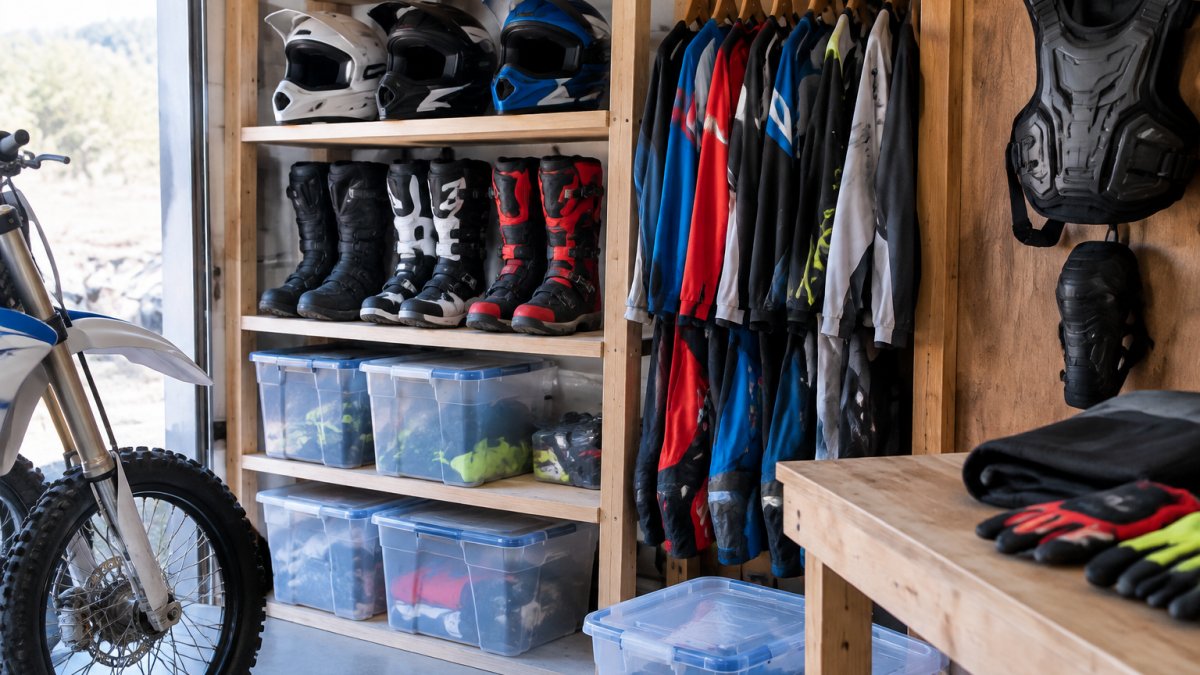
A garage or shed works well if you control moisture and pests. How to store motocross gear in a garage comes down to airflow and elevation. Hang gear on a rack, keep it off concrete, and leave space between items so air moves.
A storage rack or shelving unit is a good choice, since sealed plastic bins can trap damp air. If you use bins, choose breathable containers. Keeping boots and bags off a concrete floor helps limit moisture.
Pest-Proofing Your Storage Space
Mice chew liners, straps, and foam, and a shed or garage is exactly where they look for nesting material. The goal is to make the space boring to a mouse without using poison around gear a rider will wear.
Start with the building itself. Walk the walls and seal gaps around doors, vents, and where pipes enter with steel wool or hardware cloth, because mice can squeeze through openings far smaller than they look. Keep grass and stored wood away from exterior walls so mice have no cover leading to the door.
Then remove the attractants. Store gear off the floor on shelves or racks, keep pet food and birdseed in sealed metal or heavy plastic containers, and never store gear next to a feed bag. Empty and wipe out gear bags at the end of the season, since crumbs and wrappers left in a bag are an invitation.
Use scent and physical barriers rather than poison. Cedar blocks, peppermint-soaked cotton balls, and dryer sheets placed around shelves are common non-toxic deterrents, though their effect fades and they need refreshing. Breathable garment bags and boot bags add a physical layer that keeps mice off the fabric. Check the space monthly, especially in fall when mice move indoors, and look for droppings, chewed straps, or nesting material in helmet liners and boot toes.
Watch out: mice can chew through liners and straps quickly, and chewed foam can be a safety problem as well as a cosmetic one.
Step 5: How to Store Motocross Gear in the Off-Season
Long breaks need a little more care. How to store motocross gear in the off-season means full cleaning, complete drying, and a protected spot.
| Gear Item | Prep Before Storage | Storage Method |
|---|---|---|
| Jersey and pants | Wash cold, air dry | Hang on rack |
| Helmet | Clean liner, air dry | Padded bag, shelf |
| Boots | Wipe, stuff with paper | Upright, off floor |
| Gloves | Hand wash, air dry flat | Breathable bag |
| Armor | Rinse, shade dry | Shelf, not stacked |
Check stored gear every few weeks. A quick look catches mildew and pests early.
Troubleshooting: Fixing Mildew, Odor, and Deformation
Mildew and odor usually mean gear went away damp. Wash the item again with mild detergent, then dry it fully in open air. For stubborn smells, a mix of water and white vinegar helps. Never store gear until it's bone dry.
Deformation comes from bad storage. Boots that flop over lose their shape, so store them upright with supports inside. Helmets crushed under bags lose their liner shape. If a piece is damaged beyond saving, our guide on choosing the right motocross protective gear helps you replace it with the right fit.
Build a Gear Care Routine for Your Young Rider
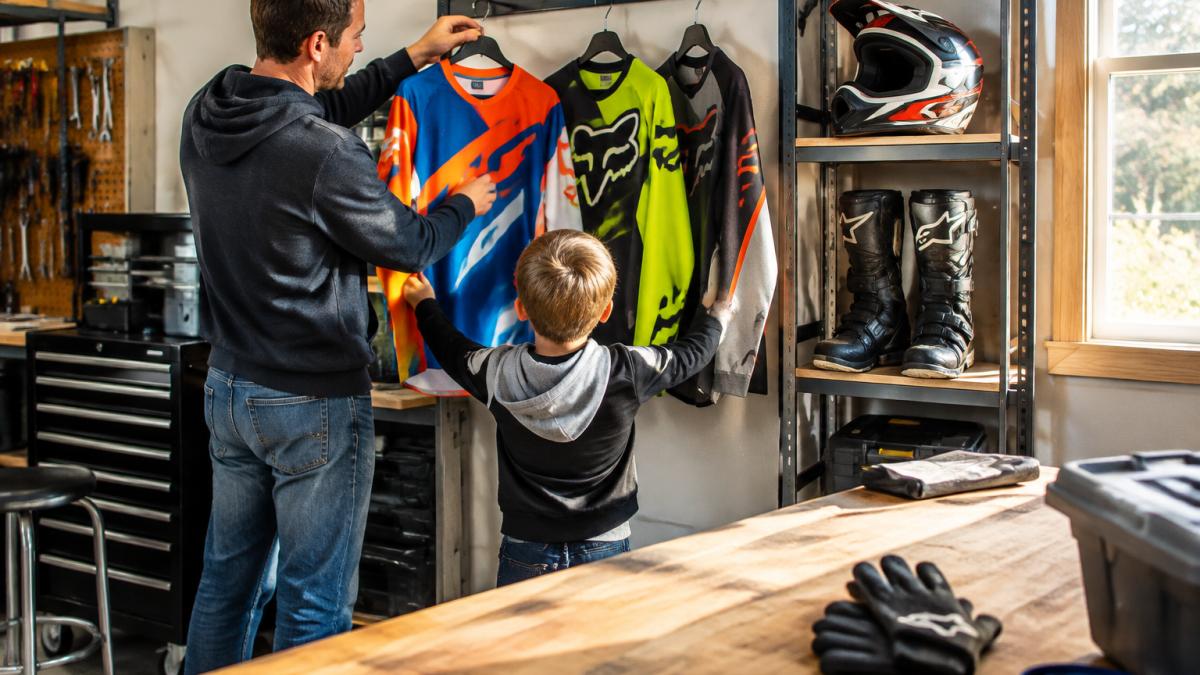
Kids outgrow gear fast and forget to clean it faster. Make care a habit, not a chore. A simple weekly routine keeps young riders involved and teaches responsibility.
- Rinse and air gear after every ride
- Do a full wash once a week
- Inspect for tears before each ride
- Store everything in its spot
Our motocross training journals for kids help young riders build habits that carry over to gear care. At Nelmgerian MX, we believe the same discipline that builds skill on the track builds good habits off it.
Storing motocross gear well takes a little effort, but it saves money and keeps riders safe. Nelmgerian MX helps families build that mindset early with children's books, activity books, and rider training journals that make motocross a year-round passion. Our journals track progress, our storybooks build confidence, and our screen-free activities keep kids connected to the sport between rides. Get started with Nelmgerian MX and give your young rider the tools to grow on and off the track.
Frequently Asked Questions
What is the best way to store motorcycle gear so it doesn't get moldy?
Wash and dry every item completely before it goes into storage. Hang jerseys, pants, and jackets on wide hangers so air reaches the fabric, and set boots upright on a rack. Keep the storage area cool and dry, and avoid sealing damp gear in plastic bins. A simple dehumidifier or a moisture absorber in a garage or shed helps in humid months. Check gear monthly for odor or spotting, and air it out if you notice either.
How should motocross boots be stored to keep their shape?
Clean mud off the soles and uppers, then let boots air dry away from heaters and sunlight. Stuff the toes with newspaper or boot trees to hold the shape, and stand them upright on a shelf or rack. Never fold or stack boots, because creases in the leather or synthetic shell can crack over time. A boot rack keeps them off the floor and away from moisture and pests.
Can you store motocross gear in a garage or shed?
Yes, if the space stays dry and out of direct sun. Garages and sheds work when gear is off the floor, away from windows, and protected from mice. Use sealed bins for gloves, socks, and small items, and hang larger pieces on a rack. Check the space after heavy rain and during seasonal changes, since humidity swings are what cause mildew and cracked plastics.
Should motocross gear be washed before storage?
Always wash gear before it goes into storage. Sweat, dirt, and mud hold moisture and feed mildew and odor, and grit wears down zippers and seams. Follow each item's care label, turn jerseys and pants inside out, remove armor inserts, and air dry everything completely. A clean helmet liner and fresh gloves also make the first ride of the next season far more pleasant for your young rider.