 blog
blog
Alternatives to Expensive Motocross Training Camps
Table of Contents
- Why Motocross Training Camps Cost So Much
- BuddyMX Alternative for Home Training: What Parents Can Do Instead
- DIY Motocross Practice Drills You Can Set Up in Your Backyard
- Motocross Training Journals for Kids: Tracking Progress Without a Coach
- Local Pro Coaching: Private Sessions vs. Week-Long Camps
- Budget-Friendly Practice Tracks and Open Practice Days
- Remote Coaching and Video Analysis for Rider Development
- Building a Home Training Schedule That Actually Works
- Frequently Asked Questions
Last Updated: September 15, 2026
Why Motocross Training Camps Cost So Much
A week-long residential motocross camp can run into thousands of dollars once you add tuition, travel, lodging, meals, and bike transport (Articles). That price reflects real overhead: facility leases, insurance, paid instructors, equipment, and the logistics of housing riders for days at a time. For a family with one young rider, the math rarely works in your favor.
Here's what most parents miss: the skills camps teach are not secret. Body positioning, throttle control, braking zones, and cornering speed can all be practiced at home with the right structure. This guide from Nelmgerian MX walks through affordable alternatives to expensive motocross training camps, from backyard drills to local private coaching and remote video analysis. The goal is steady rider development without the five-figure price tag.
BuddyMX Alternative for Home Training: What Parents Can Do Instead
A BuddyMX alternative for home training starts with a simple idea: replicate the structure of a coached session, not the facility. Camps work because they force repetition, feedback, and accountability. You can build all three at home.
- Set a fixed practice time each week so training feels like a commitment, not a whim
- Pick one skill per session instead of drilling everything at once
- Record short clips so your rider can see their own body positioning
- End every session with one small win to protect rider confidence
The trade-off is honest: you won't get a professional's eye on every lap. What you get is consistent seat time at a fraction of the cost, which for most young riders matters more than a single intense week.
DIY Motocross Practice Drills You Can Set Up in Your Backyard
Backyard drills build real technique when you keep them short and specific. Twenty focused minutes beats two unfocused hours.
Body Positioning and Throttle Control Drills
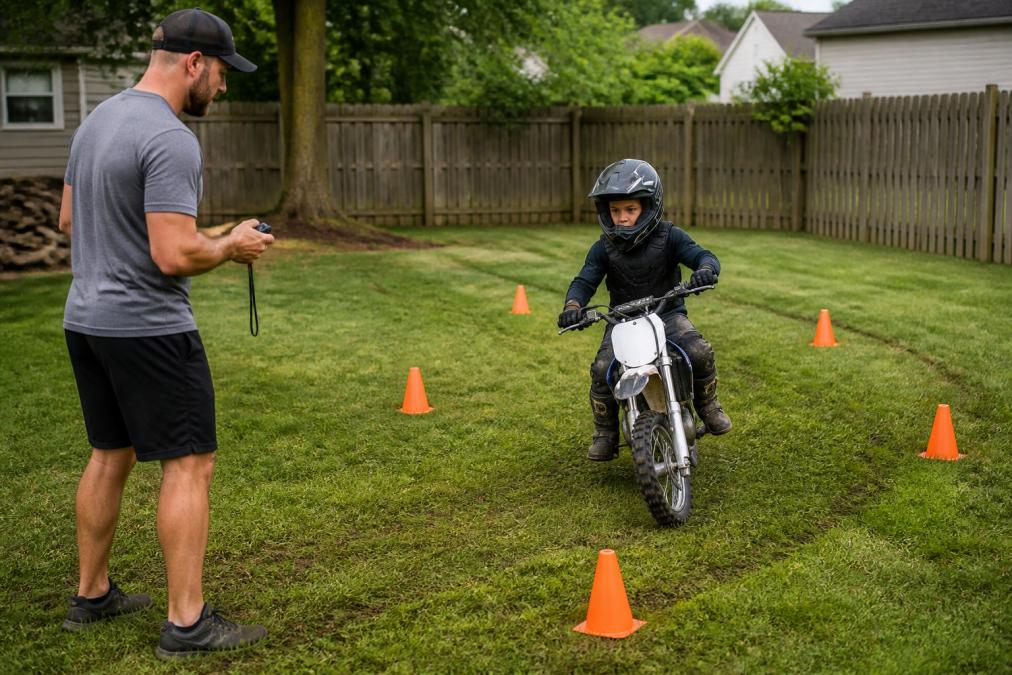
Set up two cones about 6 meters apart and have your rider practice standing through slow figure-eights (msf-usa.org). Standing forces correct body positioning and teaches throttle control at low speed, where mistakes are cheap. A common mistake is letting kids sit through every drill; standing is the habit that carries over to the track.
Braking Zone Practice Without a Full Track
Mark a braking zone with two cones and have your rider accelerate briefly, then brake to a full stop inside the zone. Move the entry cone back a meter at a time as control improves. This teaches braking zones and cornering speed entry without needing a full track.
Motocross Training Journals for Kids: Tracking Progress Without a Coach
A training journal turns scattered practice into visible skill progression. When there's no coach writing the notes, the journal becomes the coach.
Motocross training journals for kids give young riders a place to log lap times, drills completed, and one thing they want to improve next session. Parents can review entries weekly and spot patterns: a rider who keeps noting "arm pump" may need more physical conditioning; one who logs the same drill for a month may be ready for a new challenge.
Nelmgerian MX publishes a training journal built for exactly this, designed for young riders and racing families who want to track practice, goals, and race progress between sessions.
Local Pro Coaching: Private Sessions vs. Week-Long Camps
Private coaching is the single highest-leverage alternative to a residential camp, but only if you hire the right person. The gap between a great local pro and a fast local rider who happens to coach is enormous, and the price difference is often zero.
What Private Coaching Actually Costs
A residential camp bundles tuition, lodging, meals, and bike transport into one multi-thousand-dollar bill. Private coaching strips all of that out. You pay an hourly rate for instruction only, and you keep sleeping at home. Most families find that a handful of focused private sessions spread across a season costs a fraction of one camp week, and the rider keeps the same coach instead of starting over with a stranger every summer.
Ask any prospective coach three questions before you book:
- What is your hourly rate, and do you offer a discounted block of sessions?
- Do you require a minimum number of sessions or a season-long commitment?
- Is there a separate track fee, and who pays it?
Get the answers in writing, even if it's just a text thread. Verbal rates have a way of drifting.
How to Vet a Local Pro Before You Pay
Fast does not equal good teacher. Use this checklist:
- Verify they actually race or have raced at a level above your rider. Ask which classes and which series. A local A-class rider is more than enough for a beginner or intermediate kid.
- Ask for two references from parents of riders at your kid's skill level, not their fastest student. A coach who only has elite references may not know how to teach fundamentals.
- Watch one session before committing. Most pros will let a parent observe. Look for whether they explain why a correction matters, or just yell "stand up" on repeat.
- Confirm they carry liability insurance. Many tracks require it for paid instruction; ask to see the certificate.
- Check whether they have a background check on file if they'll be alone with a minor. This is non-negotiable for parents.
What a Good Private Session Looks Like
A productive one-hour session is not an hour of hot laps. A common pattern among experienced coaches:
- 10 minutes, warm-up and observation. The coach watches without correcting, noting two or three specific issues.
- 20 minutes, one skill at a time. Body positioning, then braking, then corner entry. Not all three at once.
- 20 minutes, applied laps. The rider drills the corrected skill at speed while the coach watches from a fixed corner.
- 10 minutes, debrief. The coach writes down one thing to practice before the next session. If they don't write it down, ask them to.
Where to Find Local Pros
Private Coaching vs. Camp: An Honest Trade-Off
| Factor | Residential Camp | Private Local Coaching |
|---|---|---|
| Total cost | High (tuition + travel + lodging + meals) | Low (hourly rate + track fee) |
| Attention per rider | Shared across a group | One-on-one |
| Peer group | Built in | None, you supply it |
| Immersion | Total, for one week | Spread across a season |
| Scheduling | Fixed dates | Fits your calendar |
| Best for | Older riders chasing a specific breakthrough | Young riders building fundamentals |
Budget-Friendly Practice Tracks and Open Practice Days
Remote Coaching and Video Analysis for Rider Development
How Remote Coaching Actually Works
A typical remote coaching engagement follows a repeatable loop:
How to Film Footage a Coach Can Use
What Remote Coaching Costs and What You Get
Pricing models vary, but the common ones are:
Remote Coaching vs. In-Person Instruction
Building a Home Training Schedule That Actually Works
Frequently Asked Questions
Can you become a competitive rider without attending expensive camps?
Yes. Many competitive riders build skills through consistent local practice, private coaching sessions, and structured home drills. The key is deliberate practice with feedback, not the price tag of a camp. Focus on motocross technique fundamentals like body positioning and throttle control, track your lap times, and seek input from experienced riders at your local track. A training journal helps you spot patterns and set weekly goals.
What are the best DIY motocross training resources for families?
Start with a structured practice plan that covers cornering speed, jumping mechanics, and start gate practice. Use cones or markers for drills in your yard. A motocross training journal for kids helps track progress and keeps young riders motivated. Online videos from reputable coaches can supplement your sessions, and local pro coaching once or twice a month adds expert feedback without the camp price.
How do you structure a home-based motocross practice schedule?
Aim for two to three short sessions per week, each 45 to 60 minutes. Warm up with physical conditioning, then rotate through drills: one day for cornering, another for braking zones, and a third for jumping mechanics. End each session with a cool-down and a quick journal entry noting what improved and what needs work. Consistency matters more than long sessions.
Are online motocross coaching programs effective?
They can be, especially for riders who already have basic bike control. Remote coaching typically uses video analysis, where you submit clips and receive feedback on body positioning, throttle control, and line choice. This approach works well for skill progression when paired with regular track time. It is not a replacement for hands-on instruction, but it costs far less than a residential camp.
The hardest part of motocross training isn't finding drills. It's keeping a young rider motivated between practice days. Nelmgerian MX builds tools for exactly that gap, from children's motocross storybooks featuring Ryder, Pepper, and Wheelie to a rider training journal that turns weekly practice into visible progress. Get started with Nelmgerian MX and give your young rider the structure, confidence, and screen-free engagement that keeps them improving on and off the track.