 blog
Motocross Cornering Drills for Sandy Tracks That Build Real Speed
Last Updated: November 12, 2026
Quick Summary
Start every sand session with cornering drills: figure-eights between two cones 15 to 20 feet apart, single-cone circles, one-hand drills, cone chicanes, and rut entry reps. Stand through the entry and sit through the exit, keeping steady throttle so the front end skims instead of plowing.
- Mark two cones 15 to 20 feet apart and ride slow figure-eights, ten laps each direction.
- Stand through the entry and sit through the exit to keep the front end light.
- Enter ruts slow with steady throttle, keep both wheels in the groove, and drive out.
- Hold one throttle setting for a full 30-foot circle and listen for a steady engine note.
- Cap drill blocks at fifteen to twenty minutes and stop when your lines start wandering.
Table of Contents
- Why Sand Rewards Drills Over Raw Speed
- Dirt Bike Body Position for Cornering in Soft Sand
- Dirt Bike Cornering Drills to Start Every Session
- Motocross Rut Riding Drills for Deep Sand
- Throttle, Clutch, and Brake Control Through Sand Turns
- Building a Motocross Cornering Practice Plan
- Troubleshooting Cornering Mistakes by Rider Symptom
- Tracking Your Young Rider's Progress Between Practice Days
- Frequently Asked Questions
Why Sand Rewards Drills Over Raw Speed
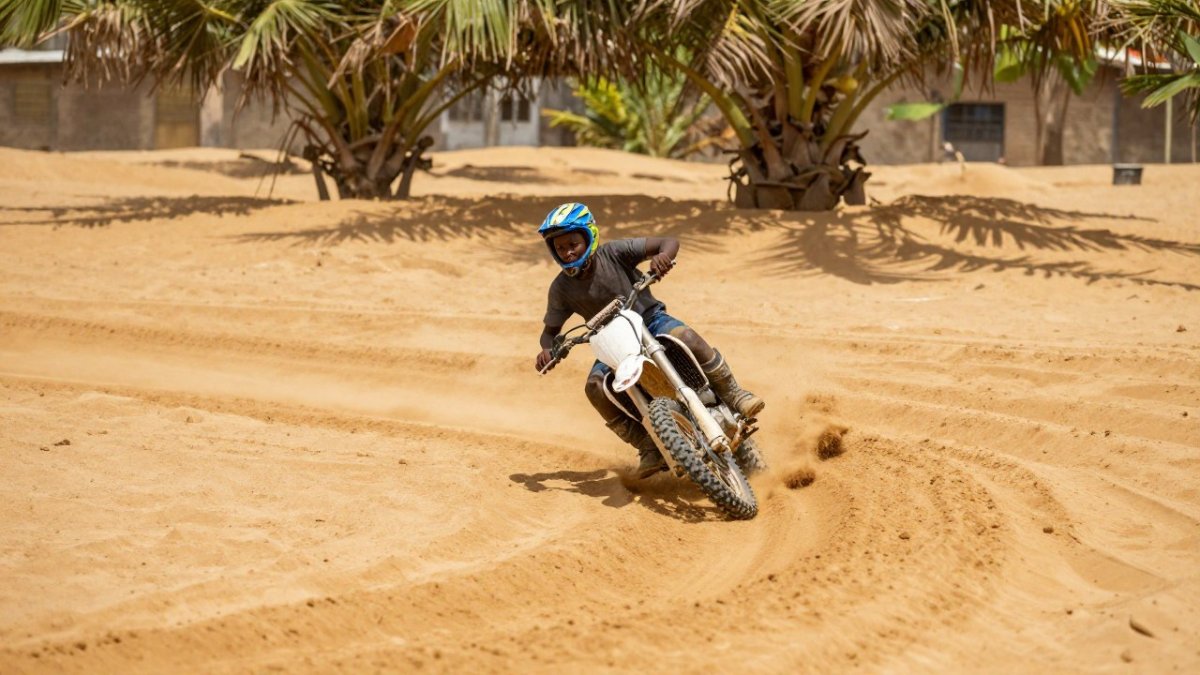
Sand punishes riders who charge in hot and rewards those who repeat the basics until they're automatic. That's the core idea behind all motocross cornering drills for sandy tracks: you build speed by slowing down the process and grooving the right movements.
Most riders treat a sand turn like hardpack, braking late and squaring it off.
The fix is repetition, not bravery. Our guide on how to improve cornering speed with confidence pairs well with the sand-specific work below.
Dirt Bike Body Position for Cornering in Soft Sand
Body position is the single biggest lever in a sand turn. Get it right and the bike floats. Get it wrong and you fight the front end the whole way through.
For cornering in soft sand, keep weight balanced and the front end light enough to skim the surface. Here's how we coach it:
- Stand tall through the entry. Knees bent, elbows up, eyes forward.
- Shift weight to the outside peg. This loads the tires and keeps traction.
- Keep your upper body over the tank. Don't hang off the back.
Bike setup matters too. Suspension that's too stiff will deflect off sand ruts and chatter. Our essential motocross bike setup tips for rider stability walk through sag, clickers, and tire pressure so your body position has a stable platform.
Standing vs. Sitting Through a Sand Turn
Stand through the entry, sit through the exit. Standing keeps your weight centered and lets the bike pivot under you; sitting on the way out moves weight to the rear wheel and helps the tire hook up.
Sitting the whole turn loads the front and the front washes. Stand first, sit last.
Dirt Bike Cornering Drills to Start Every Session
Start every practice with drills before you ride full laps. Warm-up drills build bike control and set the tone for the session. Here's the sequence we recommend for dirt bike cornering drills.
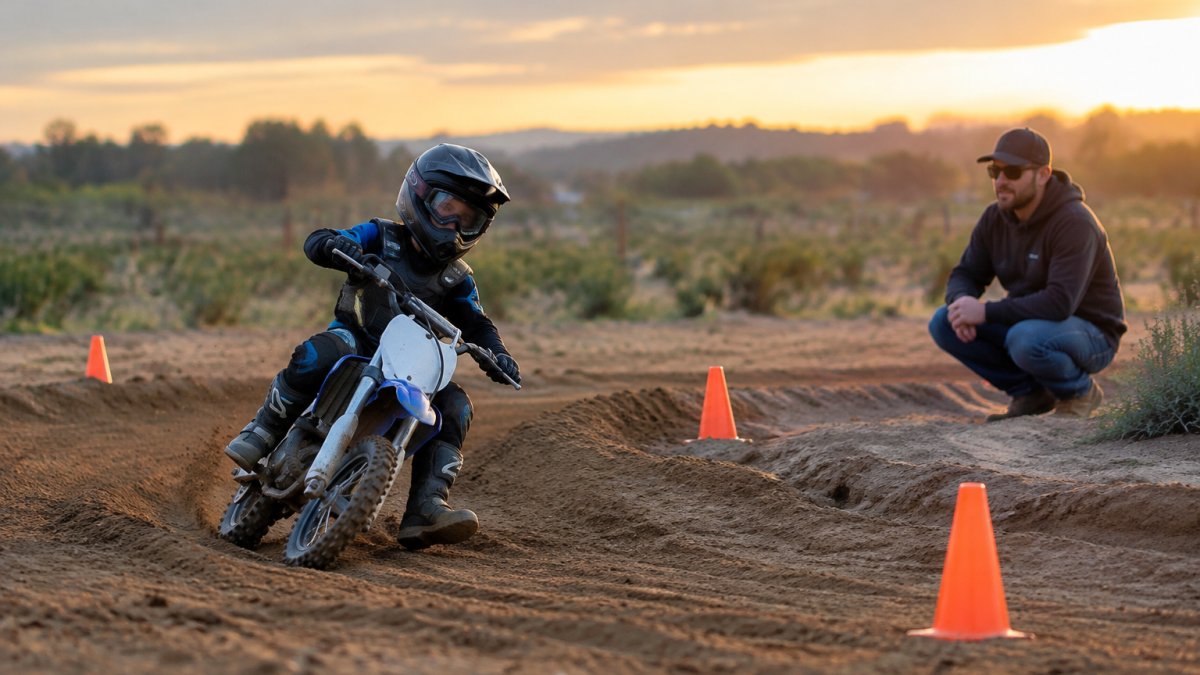
- Figure-eights in a sand patch. Ride slow, lean the bike, keep steady throttle. Ten laps each direction.
- Circle drills around a single cone. Start wide, tighten each lap. This teaches bike lean and balance.
- One-hand drills. Ride a circle with one hand off the bar. It forces smooth throttle and weight control.
- Cone-marker chicanes. Set three cones in a zigzag. Practice smooth transitions from side to side.
- Rut entry reps. Roll into a shallow rut, stay on the gas, exit clean.
The Figure-Eight and Circle Drill Setup
Mark two cones about 15 to 20 feet apart on a flat sand patch. Ride a figure-eight between them, keeping your speed low and your turns smooth. For circles, use one cone and ride around it, tightening the line each lap. Pair these with balance-building exercises for motocross riding to speed up progress.
Motocross Rut Riding Drills for Deep Sand
Ruts in deep sand are your friend once you trust them. A rut is a worn groove where the sand has been pushed aside; riding a rutted corner well means letting the bike follow the groove while you stay on the gas.
Here's how to practice motocross rut riding drills:
- Enter slow, exit fast. Roll in with steady throttle, then drive out.
- Keep both wheels in the rut. Don't let the front climb the wall.
- Stay on the gas. Momentum keeps the bike from stalling in the sand.
Watch out: chopping the throttle mid-rut buries the front wheel and kills your momentum. Smooth is fast here.
Throttle, Clutch, and Brake Control Through Sand Turns
Throttle control separates a smooth sand turn from a fight.
Roll off the gas in a sand turn and the rear stops throwing sand, the bike decelerates, and weight transfers forward onto a front tire already sitting in loose material. The front knobs can't bite, so the wheel pushes a pile of sand and the bike stands up or washes.
Throttle: One Smooth Roll, Not a Chop
Treat the throttle as one continuous roll from entry to exit, with the slide starting at the apex and drive building from there. Riders new to sand often chop mid-corner when the bike feels loose, and that chop is usually what makes it loose. Practice holding constant throttle through a full circle drill and listen to the engine note: if it drops and rises, your hand is chopping.
Clutch: Feather to Manage the Rear Wheel
Clutch control manages how hard the rear wheel spins. On a four-stroke, a light slip through the middle smooths the transition from closed to open throttle and keeps the rear from hooking up and standing the bike up. On a two-stroke, feathering keeps the power valve from snapping open and breaking the rear loose. A steady rear wheel also depends on a balanced chassis, so check sag with Death Deleter before changing your cornering technique.
Braking: Rear First, Front Light
Braking needs a reset in sand. Use the rear brake to scrub speed and settle the chassis on entry, and the front only lightly and only while the bike is straight; in deep sand the front tire has very little bite, so a fistful buries the front end. The sequence: rear brake to set entry speed while upright, release, roll the throttle on before the bike leans, and drive through.
Drills That Build Throttle, Clutch, and Brake Control
- Constant-throttle circles. Ride a 30-foot circle around one cone in sand and hold one throttle setting for the whole lap. Repeat in both directions. The goal is an engine note that does not waver.
- Roll-on reps from a stop. From a stop in sand, roll the throttle on smoothly enough that the rear tire spins without trenching. Ten reps, then repeat with a light clutch feather on a two-stroke or a four-stroke.
- Rear-brake entry drill. Approach a marked cone at moderate speed, use only the rear brake to slow before the cone, then roll on through the turn. This teaches the brake-to-throttle transition without front-end dive.
Watch out: if the front end pushes or knifes during any of these drills, you're almost certainly still trailing the front brake or coasting with the throttle closed. Fix the hand before you add speed.
Pair this with the body-position cues above, because throttle, clutch, and brake inputs only work when your weight is in the right place. If the bike still feels unsettled, check suspension and tire pressure before blaming technique.
Building a Motocross Cornering Practice Plan
A motocross cornering practice plan turns random riding into real progress. Structure beats seat time alone, and in sand it matters more because the surface changes hour to hour and fatigue shows up fast. The plan below sequences sand cornering drills from slow-speed control to race-speed execution and tells you how to adjust when the sand changes under you.
A Progressive Sand Cornering Drill Sequence
Work through these stages in order over several sessions; each builds the control the next one assumes.
- Stage 1: Slow-speed control (figure-eight and circles). Flat sand patch, two cones 15 to 20 feet apart. Ride figure-eights at walking-to-jog pace, then single-cone circles, tightening the line each lap. Ten laps each direction. The goal is smooth lean and steady throttle with no foot dabs.
- Stage 2: Constant-throttle and clutch reps. Same circle, but hold one throttle setting for the whole lap and feather the clutch only if the rear starts to break loose. This is where throttle and clutch control become automatic.
- Stage 3: Rut entry and exit. Find a shallow, well-formed rut in sand. Roll in with steady throttle, keep both wheels in the groove, and drive out. Ten clean entries is the target before you add speed.
- Stage 4: Linked corners. Set three cones in a zigzag or a simple S. Practice the transition from one lean to the next without standing the bike up between turns. This is the stage where most riders discover they are chopping the throttle between corners.
- Stage 5: Race-pace corner reps. Once stages 1 through 4 are clean, ride full laps at race pace but isolate one corner per lap for focused repetition. Alternate which corner you focus on so you do not over-ride one section.
Adapting the Plan to Changing Sand Conditions
Sand is not one surface. Adjust the drills to what is under the tires:
- Deep, loose sand: shorten the drills and lower the speed. Emphasize constant-throttle circles and rut entries. Expect the front to feel vague; that's normal, and the fix is more drive, not less.
- Shallow or packed sand: you can carry more entry speed and use a light front-brake touch, but don't let it tempt you into late, hard braking; the transition back to loose sand is where riders get caught out.
- Fresh ruts versus worn ruts: fresh ruts are sharp and can catch a front wheel, so enter slower and stay centered; worn, wide ruts are more forgiving and let you carry more speed. Re-check rut depth each session.
Session Management, Safety, and Fatigue
Sand cornering is physically demanding, and technique deteriorates before you notice it. Keep sessions short and focused:
- Warm up before drills. Five to ten minutes of easy riding, then start with Stage 1 drills; cold muscles and cold tires make slow-speed drills sloppy.
- Cap drill blocks. Fifteen to twenty minutes per block, then a short rest. Stop when your lines start wandering or you begin dabbing a foot; that's fatigue, not a technique problem.
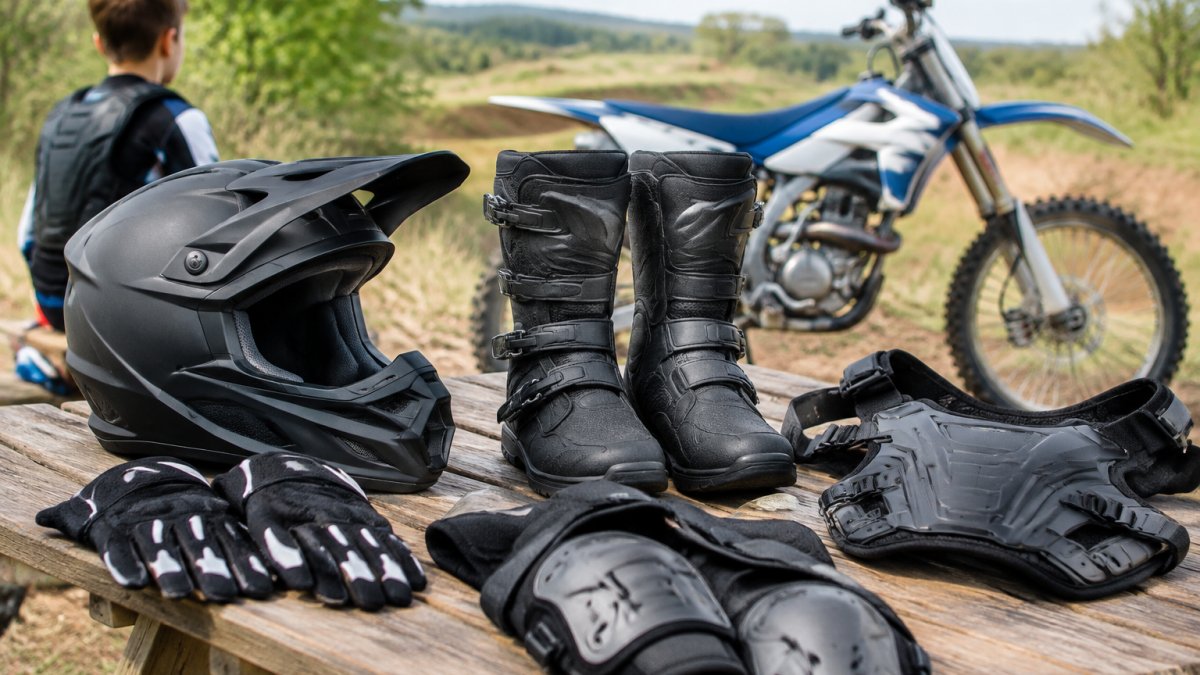
- Protect the body. Full gear every session, including a well-fitting helmet, goggles that seal against sand, gloves, boots, and knee and elbow protection. Check goggle seals and clean air filters after sandy sessions.
Measurable Progress Markers to Track
You can't feel progress day to day, so track it. Log these markers after each session:
- Number of clean rut entries out of ten
- Figure-eight laps without a foot dab
- Corner exit speed (note it, don't time it)
Our motocross training journals for kids give young riders a simple place to log sessions, goals, and race progress so progress is visible over weeks, not guessed at.
Work through these stages in order over several sessions, because each one builds the control the next stage assumes.
| Stage | Drill | Target |
|---|---|---|
| Stage 1 | Figure-eights and single-cone circles | Ten laps each direction, no foot dabs |
| Stage 2 | Constant-throttle and clutch reps | One throttle setting for the whole lap |
| Stage 3 | Rut entry and exit | Ten clean entries before adding speed |
| Stage 4 | Linked corners in a zigzag or S | Smooth lean-to-lean transitions |
| Stage 5 | Race-pace corner reps | Isolate one corner per lap |
Troubleshooting Cornering Mistakes by Rider Symptom
Match the symptom to the fix. Most cornering mistakes fall into a few clear buckets.
- Front end washes out: too much front brake, weight too far forward, or sitting too early. Stand longer and ease off the front.
- Bike stands up mid-turn: you're rolling off the throttle. Stay on the gas.
- Rear steps out: too much clutch or throttle. Smooth it out.
For a wider catalog of errors, our guide on common dirt bike riding mistakes to avoid covers the habits that creep in over time.
Tracking Your Young Rider's Progress Between Practice Days
Progress doesn't stop when the bike is parked.
We built our children's motocross books, activity books, and rider training journals to keep young riders learning off the bike.
For parents of riders ages 3 to 9, that mix of reading, activities, and tracking builds confidence and discipline that shows up on the track.
Sand turns reward the rider who puts in focused reps.
Frequently Asked Questions
How do you corner a motocross bike in soft sand?
Enter the turn standing with weight centered, then sit forward as you tip the bike in. Keep steady throttle so the front wheel stays light and skims the surface instead of digging. Look through the turn to the exit, lean the bike more than your body, and roll on the gas smoothly as the bike stands up. Cornering drills on a sandy track, repeated at low speed first, build the feel faster than riding at race pace.
What drills help improve motocross cornering?
Start with figure-eight and circle drills using cone markers to practice body position and bike lean at low speed. Add one-hand drills to reduce grip tension, then progress to rut riding drills in deep sand. A motocross cornering practice plan that repeats these dirt bike cornering drills in short, focused blocks will improve corner speed and smooth transitions faster than long, unfocused rides.
Should you stand or sit when cornering on a sandy track?
Stand through the approach and entry for balance and bike control, then sit forward as you initiate the turn to weight the front end. In deep sand, many riders stay more upright and let the bike move underneath them. Practice both positions in the same drill session so you can feel which one keeps momentum through soft sand turns on your track.
How do you practice riding ruts in sand?
Find a rutted corner with a consistent line and ride it at moderate speed, keeping your eyes ahead rather than at the front wheel. Stay smooth on the throttle and let the rut guide the bike instead of forcing it. Motocross rut riding drills work best in short repetitions, five to eight passes per session, so fatigue does not undo the technique you are building.