 blog
blog
Best Beginner Motocross Training Resources for Kids
Table of Contents
- Why Beginner Motocross Training Resources Matter for Young Riders
- Dirt Bike Riding Techniques for Beginners Every Young Rider Should Know
- How to Get Kids Excited About Motocross Beyond Just Riding
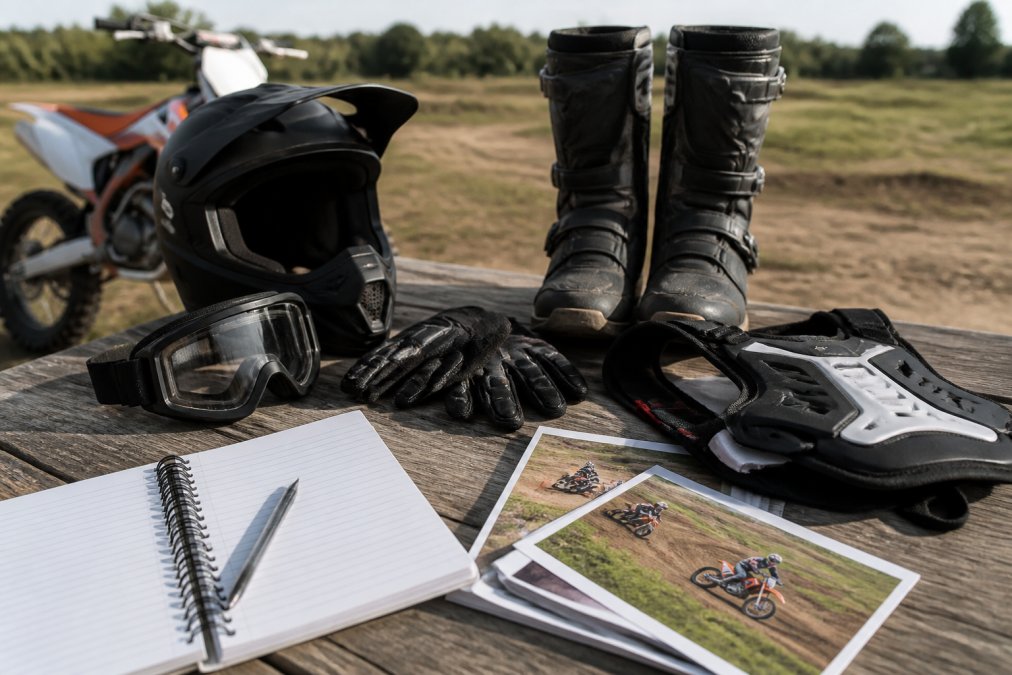
- Motocross Training Journals for Kids: Building Skills and Tracking Progress
- Essential Safety Gear and Protective Equipment for Young Riders
- Finding Professional Riding Clinics and Certified Coaches
- Building a Complete Beginner Training Plan
- Frequently Asked Questions
Last Updated: September 1, 2026
Why Beginner Motocross Training Resources Matter for Young Riders
Getting kids started in motocross requires structured guidance, confidence-building activities, and tools that keep them engaged both on and off the track. The first few months of riding determine whether a child stays committed or loses interest. Without proper instruction in body positioning, throttle control, and safety awareness, young riders develop bad habits that become harder to break later and face unnecessary risk.
Beyond riding instruction, kids need encouragement to stay connected between practice sessions. Screen-free activities like training journals, storybooks, and skill-tracking tools keep excitement alive while building mental toughness and discipline. A training journal transforms practice into purposeful progression rather than just going through the motions. The best beginner motocross training resources combine practical riding instruction with activities that develop confidence and responsibility.
Dirt Bike Riding Techniques for Beginners Every Young Rider Should Know
Solid fundamentals make everything else possible. Young riders who master basic dirt bike riding techniques early gain confidence faster and progress without developing compensatory bad habits.
Body Positioning and Weight Distribution
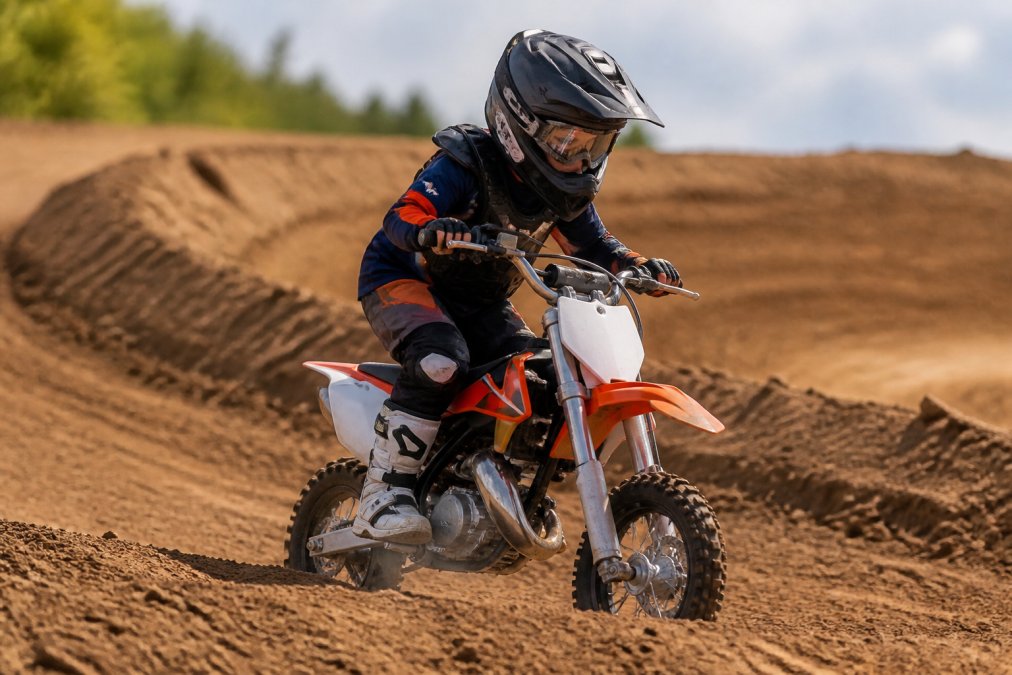
Proper body positioning is the single most important element of off-road riding. A rider's weight distribution determines how the bike responds to throttle input, braking, and cornering. Young riders should sit slightly forward on the seat with knees gripping firmly, creating a connection that allows weight shifts to translate into precise bike control. Elbows should stay up and slightly forward, never locked or hanging loose, giving the rider control over the handlebars and allowing quick steering corrections.
During cornering, the rider's upper body should lean into the turn while hips stay centered or move slightly outside. This counter-intuitive positioning allows the bike to lean deeper into the corner while maintaining traction. Weight distribution also changes with terrain: forward on uphills to keep weight over the front wheel, back on downhills to prevent the front from diving, and neutral on flat sections. Teaching young riders to feel these weight shifts builds the proprioceptive awareness that separates smooth riders from jerky ones.
Throttle Control and Clutch Modulation
Throttle control separates smooth riders from those who look herky-jerky. Many beginners treat the throttle as an on-off switch. Smooth throttle control means rolling the throttle open gradually, maintaining steady acceleration, and using precise modulation to manage traction. Young riders benefit from drills in wide-open areas practicing smooth throttle rolls while maintaining straight lines.
Clutch modulation works hand-in-hand with throttle control. Smooth clutch engagement allows the rider to control how power reaches the rear wheel. Young riders should practice finding the bite point where the clutch begins to engage, then smoothly releasing while rolling on the throttle. A common mistake is holding the clutch in longer than necessary, creating delayed response when power is needed.
Braking Zones and Cornering Fundamentals
Braking technique determines how much speed a rider can carry into turns. Young riders often brake too hard too late, then panic-steer into corners. The smoother approach is to brake earlier and more gently, then roll on the throttle smoothly as the bike enters the turn. Braking zones should be identified during practice, with young riders practicing braking in the same spot each lap to build muscle memory.
Cornering fundamentals build on body positioning and throttle control. As the rider approaches a turn, they should brake in a straight line, then begin steering as braking pressure decreases. Once the bike is fully committed to the turn, the rider should roll on the throttle smoothly. Counter-steering happens naturally once proper body positioning and smooth throttle control are established.
How to Get Kids Excited About Motocross Beyond Just Riding
Motocross demands discipline, patience, and mental toughness. Kids who are only excited about riding often lose motivation during plateaus where progress slows. Parents who cultivate a broader connection to the sport through stories, activities, and goal-tracking build resilience and deeper commitment.
Screen-free activities keep young riders engaged between track days. Books featuring motocross characters help kids see themselves as part of a larger community. Activity books and coloring pages give young riders a way to express creativity and stay connected without screen time. Training journals are particularly powerful, when kids write down what they practiced, what went well, and what they want to improve, they shift from passive participation to active ownership of their progress. This psychological shift builds intrinsic motivation that lasts far longer than external rewards.
Motocross Training Journals for Kids: Building Skills and Tracking Progress
A motocross training journal transforms practice sessions from unstructured play into purposeful skill development. When young riders record what they did, how it felt, and what they want to improve, they develop the self-awareness that separates casual riders from committed athletes.
The best training journals for kids are simple enough for young riders to use independently but structured enough to guide meaningful reflection. A typical entry includes the date, duration of practice, weather conditions, techniques focused on, and a rating of execution. Over time, these entries create a record of progress that motivates continued effort.
The Nelmgerian MX Training Journal is designed specifically for young riders ages 3-9 and their families. It combines simple tracking with space for drawings, goal-setting, and reflection. Training journals also create accountability, when a child knows they'll record what they practiced, they're more likely to focus during sessions and push through difficulty.
Beyond tracking individual sessions, a good training journal helps young riders identify patterns. Did they perform better on certain days? Were there specific conditions that made techniques easier or harder? Over weeks and months, patterns emerge that guide future training. The most powerful aspect is that training journals shift focus from outcome to process, helping young riders value consistent practice and incremental improvement over immediate results.
Essential Safety Gear and Protective Equipment for Young Riders
Safety gear isn't optional, young riders crash as part of learning, and proper protective equipment means the difference between walking away with a scraped knee and serious injury.
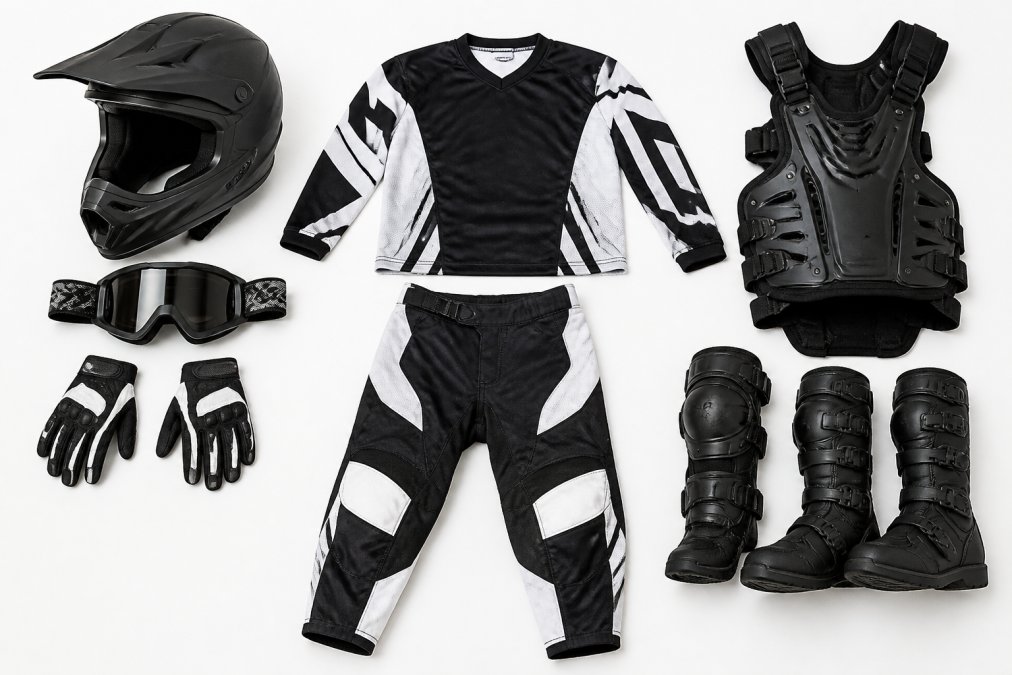
A quality DOT-approved helmet that fits snugly with good ventilation is the foundation (nhtsa.gov). Goggles protect eyes from dust and debris. Body armor protects the chest, back, and shoulders, basic padded jerseys provide adequate protection for beginners. Knee braces and elbow pads protect the joints most vulnerable to impact. Gloves protect hands from blisters and abrasions while improving grip on handlebars. Motocross boots provide ankle support and protect from engine heat and impact.
Parents should invest in quality gear that fits properly. Ill-fitting gear is uncomfortable and provides less protection. Rather than buying expensive premium gear initially, invest in well-fitting mid-range protective equipment that provides solid protection without breaking the budget.
Finding Professional Riding Clinics and Certified Coaches
Professional instruction accelerates learning and prevents bad habits. A certified coach can identify issues in a young rider's technique that the rider won't notice themselves. Riding clinics range from half-day workshops to multi-day intensive programs. Half-day clinics work well for young riders just starting out, while multi-day clinics suit riders with some experience who want to develop specific skills.
When evaluating a riding clinic, look for coaches with experience working with young riders. Ask about background, certifications, and experience. References from other parents are invaluable. The best clinics combine classroom instruction with on-track practice, explaining the "why" behind techniques rather than just demonstrating them. Group clinics offer community and peer learning, while individual coaching provides more personalized attention at higher cost. Start by asking at your local track whether they offer instruction or can recommend certified coaches.
Building a Complete Beginner Training Plan
A structured training plan prevents young riders from getting stuck or developing bad habits. The foundation of any beginner training plan is mastering fundamentals: body positioning, throttle control, and basic braking. Young riders should spend at least 10-15 practice sessions focusing exclusively on these basics before moving on to more advanced techniques (peer-reviewed research).
Once fundamentals are solid, introduce cornering techniques starting with wide-open corners at low speed, gradually tightening radius and increasing speed as confidence builds. Jumping comes later, only after the rider has solid throttle control and consistent body position.
A complete beginner training plan includes off-bike conditioning. Young riders benefit from exercises that build core strength, leg strength, and cardiovascular fitness (acsm.org). Mental preparation matters equally, young riders should practice visualization and managing fear. Regular assessment and adjustment keep the plan on track. Every few weeks, evaluate what's working and what needs adjustment based on the individual rider's progress and needs.
| Training Phase | Focus Areas | Duration | Key Outcomes |
|---|---|---|---|
| Foundation | Body positioning, throttle control, basic braking | 4-6 weeks | Smooth acceleration, consistent stopping, rider confidence |
| Cornering | Low-speed turns, body positioning in corners, throttle modulation | 4-6 weeks | Smooth cornering, understanding weight distribution, line choice |
| Progressive Speed | Increasing speed in familiar areas, maintaining technique at higher speeds | 4-8 weeks | Confidence at speed, smooth transitions, consistent execution |
| Skill Expansion | Jumping fundamentals, holeshot techniques, track-specific features | 6-12 weeks | Expanded skill set, readiness for competitive riding |
Getting young riders started in motocross the right way sets them up for years of success and enjoyment. The combination of professional instruction, structured training, quality gear, and engaging off-bike resources creates an environment where kids develop real skills while building confidence and resilience. Nelmgerian MX provides the educational resources and training tools that keep young riders engaged and progressing. Explore the Nelmgerian MX Training Journal and storybooks to build a complete learning experience that supports your child's motocross journey.
Frequently Asked Questions
What are the best beginner motocross training resources for a 5-year-old just starting out?
Start with age-appropriate beginner motocross training resources that combine hands-on learning with off-bike activities. Training journals designed for young riders help track progress and build confidence. Storybooks featuring motocross characters make learning engaging. Pair these with short, supervised practice sessions on a 50cc bike, proper safety gear, and time at local riding clinics. Screen-free activities keep kids connected to the sport between riding days.
How do motocross training journals for kids help with skill development?
Training journals for kids create accountability and boost confidence by letting young riders document their progress. They encourage goal-setting, track which techniques they've practiced, and help identify areas needing improvement. Writing about their riding experiences reinforces learning and builds discipline. Many young riders find that reviewing past entries motivates them to tackle harder challenges and celebrate small wins over time.
What dirt bike riding techniques should beginners focus on first?
Start with body positioning and weight distribution, as these form the foundation for all other skills. Young beginners should learn proper throttle control and clutch modulation before attempting advanced maneuvers. Braking technique and cornering fundamentals come next. Jumping should only be introduced after a rider demonstrates solid control in these core areas. Progression matters more than speed.
How can I get my child excited about motocross if they'd rather just ride than read?
Combine storybooks with the sport itself by reading about motocross characters and adventures together. Let your child choose books featuring exciting riding scenarios. Use training journals to turn practice into a game where they track their own achievements. Connect reading to real riding by showing how characters solve problems on the track. Make it interactive: ask questions about the story and relate lessons back to their own riding experiences.
This article was written using GrandRanker
Frequently Asked Questions
What are the best beginner motocross training resources for a 5-year-old just starting out?
Start with age-appropriate beginner motocross training resources that combine hands-on learning with off-bike activities. Training journals designed for young riders help track progress and build confidence. Storybooks featuring motocross characters make learning engaging. Pair these with short, supervised practice sessions on a 50cc bike, proper safety gear, and time at local riding clinics. Screen-free activities keep kids connected to the sport between riding days.
How do motocross training journals for kids help with skill development?
Training journals for kids create accountability and boost confidence by letting young riders document their progress. They encourage goal-setting, track which techniques they've practiced, and help identify areas needing improvement. Writing about their riding experiences reinforces learning and builds discipline. Many young riders find that reviewing past entries motivates them to tackle harder challenges and celebrate small wins over time.
What dirt bike riding techniques should beginners focus on first?
Start with body positioning and weight distribution, as these form the foundation for all other skills. Young beginners should learn proper throttle control and clutch modulation before attempting advanced maneuvers. Braking technique and cornering fundamentals come next. Jumping should only be introduced after a rider demonstrates solid control in these core areas. Progression matters more than speed.
How can I get my child excited about motocross if they'd rather just ride than read?
Combine storybooks with the sport itself by reading about motocross characters and adventures together. Let your child choose books featuring exciting riding scenarios. Use training journals to turn practice into a game where they track their own achievements. Connect reading to real riding by showing how characters solve problems on the track. Make it interactive: ask questions about the story and relate lessons back to their own riding experiences.