 blog
Books About Perseverance for Athletes
Table of Contents
- Why Books About Perseverance Matter for Young Athletes
- Motivational Books for Young Athletes That Build Confidence
- Mental Toughness Books for Young Athletes
- Children's Books About Perseverance Through Sport
- Sports Books for Kids Who Are Learning to Read
- How to Choose the Right Book for Your Young Rider
- Turning Reading Into a Motocross Family Habit
- Frequently Asked Questions
Last Updated: October 11, 2026
Why Books About Perseverance Matter for Young Athletes
Reading books about perseverance for athletes builds mental strength off the track. Young riders face real pressure, falls, losses, and frustration.
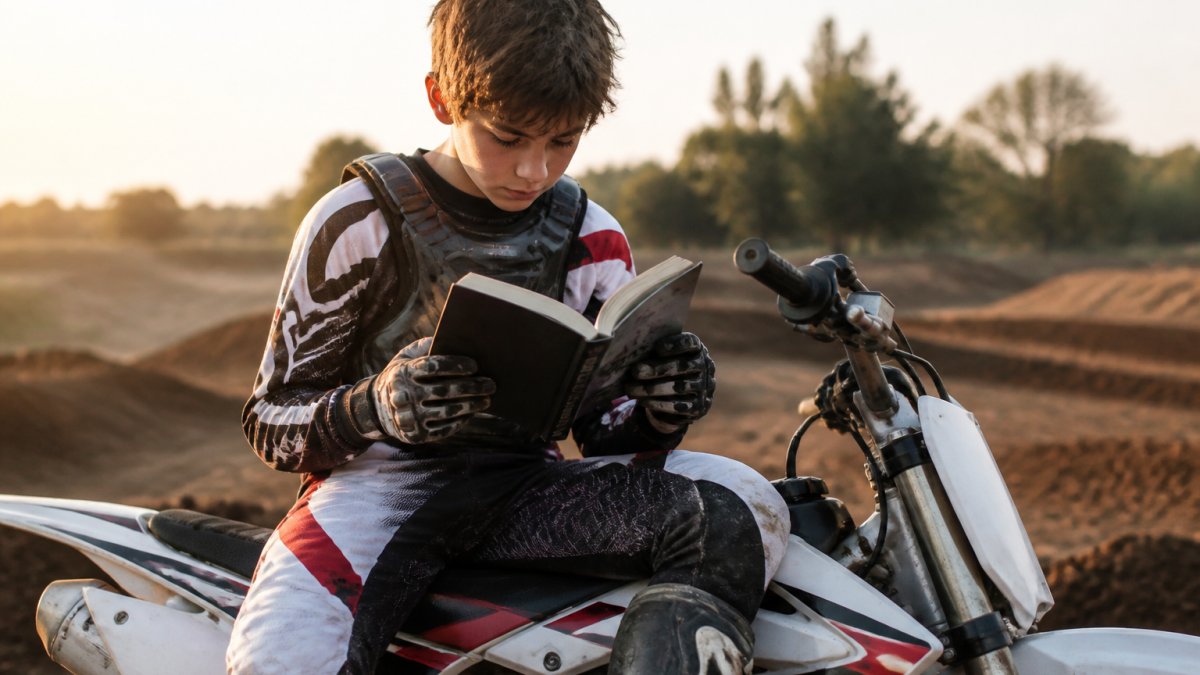
Reading transforms young riders. Kids who read about perseverance develop resilience, bounce back faster after a tough race, and understand that one bad day doesn't define them.
Books give riders language for their emotions. When a child reads about an athlete facing doubt, they learn they're not alone.
Screen-free reading also creates family time. Instead of scrolling, families talk about stories, kids ask questions, and parents share their own setbacks. These conversations stick longer than screen time.
Motivational Books for Young Athletes That Build Confidence
Motivational books for young athletes teach self-belief. Confidence grows when kids read about real athletes who doubted themselves and won anyway. What makes a book stick is specificity: a named athlete, a real setback, and a visible turning point.
What makes a good motivational book for young riders:
- Stories about athletes overcoming real obstacles
- Clear lessons about believing in yourself
- Age-appropriate language and pacing
- Connection to sports the child loves
- A named protagonist the reader can look up and follow
Curated picks by age and reading level
Early readers (ages 5-8)
- Wilma Unlimited: How Wilma Rudolph Became the World's Fastest Woman by Kathleen Krull, Rudolph overcame polio to win three gold medals at the 1960 Rome Olympics. The book shows the years of leg braces and therapy before the medals, exactly the "hard part" kids need to see.
- Emmanuel's Dream: The True Story of Emmanuel Ofosu Yeboah by Laurie Ann Thompson, Born with one functioning leg in Ghana, Yeboah cycled across the country to change how people with disabilities were treated. A strong pick for adaptive-sport conversations.
Middle grade (ages 8-12)
- The Crossover by Kwame Alexander, A novel in verse about twin basketball players; one brother's injury forces both to redefine success. The verse format keeps reluctant readers moving.
- Soul Surfer (young reader's edition) by Bethany Hamilton, Hamilton lost her arm to a shark at 13 and returned to competitive surfing. The book is honest about fear and doubt, not just the comeback.
- Rising Above: How 11 Athletes Overcame Challenges in Their Youth to Become Stars by Gregory Zuckerman, Short chapters on athletes including Stephen Curry and Tim Howard, each with a concrete obstacle and response. Good for kids who want variety over one long narrative.
Teens and collegiate athletes (ages 13+)
- Relentless: From Good to Great to Unstoppable by Tim Grover, Written by the trainer who worked with Michael Jordan and Kobe Bryant. Blunt and adult in tone; best for older teens who want a mindset framework rather than a story.
- The Mamba Mentality: How I Play by Kobe Bryant, Bryant walks through specific games, injuries, and preparation routines. The detail is the point: confidence was built through repetition, not talent alone.
How to match a book to a rider's need
- Recovering from injury: Soul Surfer, The Crossover
- Coping with a losing streak or cut from a team: Rising Above
- Sustaining motivation over a long season: Relentless, The Mamba Mentality
- Younger siblings or new readers: Wilma Unlimited, Emmanuel's Dream
Why these picks work
Kids engage more when the athlete's sport is adjacent to their own and the book names a real person they can search for afterward. A rider who watches a highlight reel of the athlete they just read about connects the story to reality.
Look for books that celebrate effort over talent. When a story praises "working harder" instead of "being naturally gifted," kids learn that practice matters.
Mental Toughness Books for Young Athletes
Mental toughness books for young athletes teach composure under pressure. Racing creates stress. Competition brings doubt. Books about handling pressure prepare kids for these moments.
Mental toughness isn't about being tough. It's about staying calm when things get hard and focusing on what you can control.
Key themes in mental toughness books:
- Staying focused during competition
- Bouncing back after losing
- Managing fear and nervousness
- Setting goals and pushing through challenges
- Separating identity from outcome ("I lost" vs. "I am a loser")
Curated mental toughness picks
For younger readers (ages 6-10)
- The Boy Who Never Gave Up (biographical picture books on athletes such as Michael Jordan's early cut from his high school team), the cut is the story, not the six championships.
- What Do You Do With a Problem? by Kobi Yamada, Not sports-specific, but it teaches that a problem can be approached rather than avoided. Useful for kids who freeze before competition.
For middle grade (ages 9-13)
- Mindset: The New Psychology of Success (young readers' edition) by Carol S. Dweck, Dweck's Stanford research distinguishes a fixed mindset from a growth mindset, translated here into school and sport examples.
- Grit: The Power of Passion and Perseverance (young readers' edition) by Angela Duckworth, Duckworth's work on grit as sustained passion plus persistence explains why some athletes improve over years while others plateau.
- The Champion's Mind: How Great Athletes Think, Train, and Thrive by Jim Afremow, Written by a sport psychologist, it includes concrete routines: pre-performance breathing, cue words, and refocusing plans after mistakes.
For teens and collegiate athletes
- Mind Gym: An Athlete's Guide to Inner Excellence by Gary Mack with David Casstevens, Short, one-idea-per-page chapters that read like a workbook. Good for athletes who won't sit through a long narrative.
- With Winning in Mind by Lanny Bassham, Bassham, an Olympic gold medalist in shooting, built a mental management system around rehearsal and self-image. It's specific enough to practice.
Practical takeaways you can run this week
- The refocus routine. After a mistake, athletes often replay it. A common pattern in sport psychology is a physical reset cue, tug a glove, tap the helmet, take one slow breath, followed by a single cue word ("next" or "ride"). Pick one cue and rehearse it at practice, not just on race day.
- The control circle. Have your rider draw two circles. Inside: what they control (effort, line choice, preparation, attitude). Outside: what they don't (weather, gate draw, other riders, judges). Read a chapter of Mind Gym or The Champion's Mind, then fill the circles with examples from the chapter.
- The pre-race script. Write three sentences the rider will say to themselves before the gate drops. Keep them short and physical ("breathe, look ahead, ride my line"). Rehearse the script aloud during the week.
- The post-race debrief. Three questions: What went well? What was one thing I controlled that I could improve? What is one thing I'll practice before the next race? This turns a loss into data instead of a verdict.
What to avoid
The best mental toughness books for kids avoid heavy psychology and use stories instead.
Look for books that address real racing scenarios. A story about handling nerves before a big race speaks directly to your rider's experience.
Overview of sport psychology concepts including arousal, focus, and the challenge-threat model
Ryder's First Motocross Race →
Children's Books About Perseverance Through Sport
Children's books about perseverance teach resilience through storytelling. Young kids learn through characters they care about. A character who tries again after failing teaches perseverance better than any lecture.
The best children's books about perseverance use simple language. Sentences are short. Ideas are clear. Pictures help tell the story.
Look for books where the main character faces a real problem and solves it through effort. Not luck. Not magic. Effort. This teaches kids that their work matters.
What to look for in perseverance books for kids:
- A character who wants something but struggles
- The character tries different approaches
- The character doesn't give up
- The character succeeds through persistence
Nelmgerian MX publishes children's books that blend motocross excitement with lessons about perseverance. Stories featuring characters like Ryder and Pepper show young riders that setbacks are part of racing.
Sports Books for Kids Who Are Learning to Read
Sports books for kids who are learning to read use simple words and short sentences.
Look for books with lots of pictures. Images help kids understand the story and give them a break, making reading feel less like work.
Motocross books for beginning readers are rare. Most early reader books focus on mainstream sports. But some publishers now create learn-to-read books about dirt bikes and racing.
Features of good early reader sports books:
- Simple vocabulary (common words)
- Short sentences (5-8 words)
- Lots of illustrations
- Topics that match the child's interests
- Repetition that builds confidence
Nelmgerian MX offers learn-to-read books designed for young riders. These books combine early reader fundamentals with motocross themes. Your child learns to read while reading about the sport they love.
How to Choose the Right Book for Your Young Rider
Choosing the right book matters. The wrong book sits on the shelf. The right book gets read three times.
Start with these questions:
- What's your child's reading level?
- What sports or activities does your child love?
- Does your child prefer stories or information?
- How long can your child focus while reading?
- Does your child like books with pictures?
Age matters, but reading level matters more. A 7-year-old might read at a 5-year-old or 9-year-old level, so check what your child handles comfortably.
Interest trumps everything. A book about motocross gets read. A book about a random sport collects dust. Match the book to your child's passion.
Turning Reading Into a Motocross Family Habit
Building a reading habit requires consistency. One book doesn't change anything. Regular reading does.
Create a reading routine:
- Pick a time each day (bedtime works well)
- Read together for 10-15 minutes
- Let your child pick the book sometimes
- Talk about the story afterward
- Keep books visible and accessible
Make reading part of your motocross family culture. Just like practice and races, reading becomes normal. It's what your family does.
Connect reading to racing.
Nelmgerian MX training journals pair with books perfectly. Your child reads a perseverance story, then writes about their own goals in their journal.
Celebrate reading wins.
Reading builds more than literacy. Books about perseverance teach your young rider that setbacks are temporary. Effort matters. Belief grows through practice.
Frequently Asked Questions
What books help athletes develop perseverance?
Books about perseverance for athletes focus on mental toughness, overcoming setbacks, and building resilience. Look for stories featuring real athlete journeys, championship comebacks, and characters who face failure but keep pushing forward. Sports-themed books that show how champions handle pressure, learn from losses, and maintain self-belief are especially powerful for young riders learning to compete.
Are there books about athletes overcoming injuries or setbacks?
Yes. Many motivational books for young athletes specifically address handling pressure, bouncing back from failure, and moving forward after disappointment. These stories teach that setbacks are part of athletic development, not the end of the journey. For motocross riders, books that show persistence through crashes, missed races, or tough competition teach valuable lessons about resilience and determination.
What are some good sports books for kids who are learning to read?
Children's books about perseverance through sport come in different reading levels. Look for beginner-friendly titles with short sentences, large illustrations, and engaging characters. Stories featuring young riders or athletes relatable to your child's age and sport work best. Pairing these with activities like rider training journals helps reinforce the lessons and keeps kids engaged between reading sessions.
How do I get my child excited about reading sports books instead of just riding?
Connect reading to their passion for the sport. Choose books featuring athletes in the sports they love, or characters who compete in motocross. Read together before or after practice, make it a family habit, and discuss the character's perseverance and mental toughness. Combining sports books with hands-on tools like training journals that track their own progress makes reading feel relevant to their riding goals.