 blog
blog
Common Dirt Bike Riding Mistakes to Avoid
Table of Contents
- Why Dirt Bike Riding Mistakes Matter for Young Riders
- Gripping Too Hard and Other Throttle Control Errors
- Dirt Bike Body Position: Standing vs. Sitting Mistakes
- Dirt Bike Braking Techniques: Front Brake Misuse and Locking
- Looking Down and Not Planning Your Line
- Dirt Bike Safety Tips: Rushing Corners and Riding Above Skill Level
- How to Improve Dirt Bike Riding Skills Through Progressive Practice
- Pre-Ride Inspection: Catching Problems Before They Cause Mistakes
- Frequently Asked Questions
Last Updated: October 8, 2026
Why Dirt Bike Riding Mistakes Matter for Young Riders
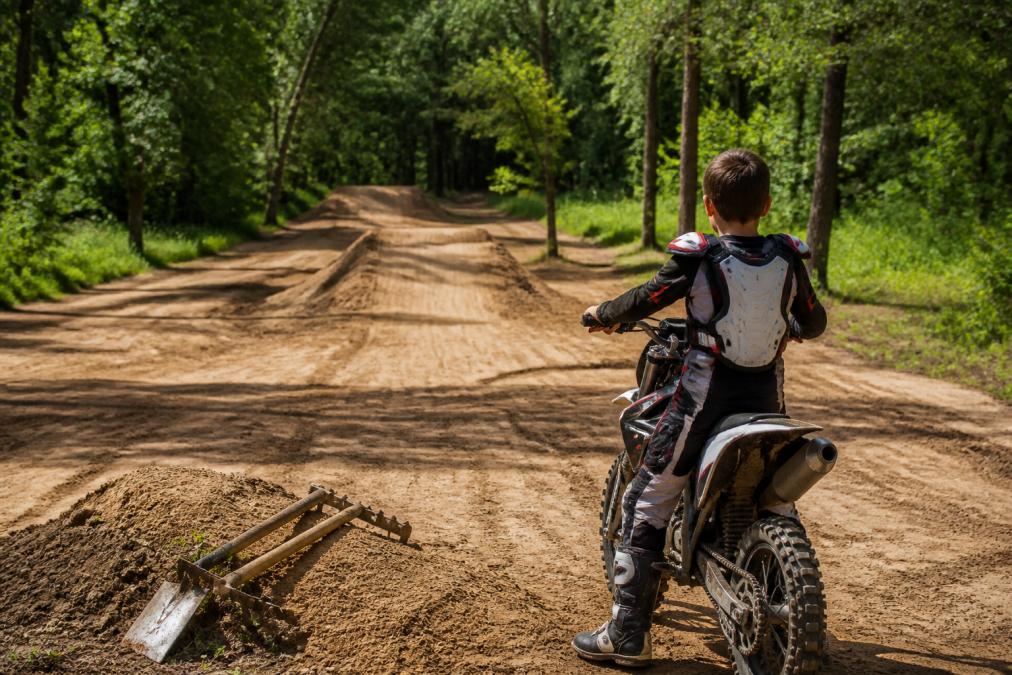
Learning to ride a dirt bike is thrilling for young riders, but it comes with real risks. At Nelmgerian MX, we understand that common dirt bike riding mistakes can lead to crashes, injuries, and lost confidence, but most are preventable with proper instruction and practice.
Young riders often rush the learning process: they grip too hard, stand when they should sit, brake incorrectly, and look down instead of ahead. Each error compounds the others.
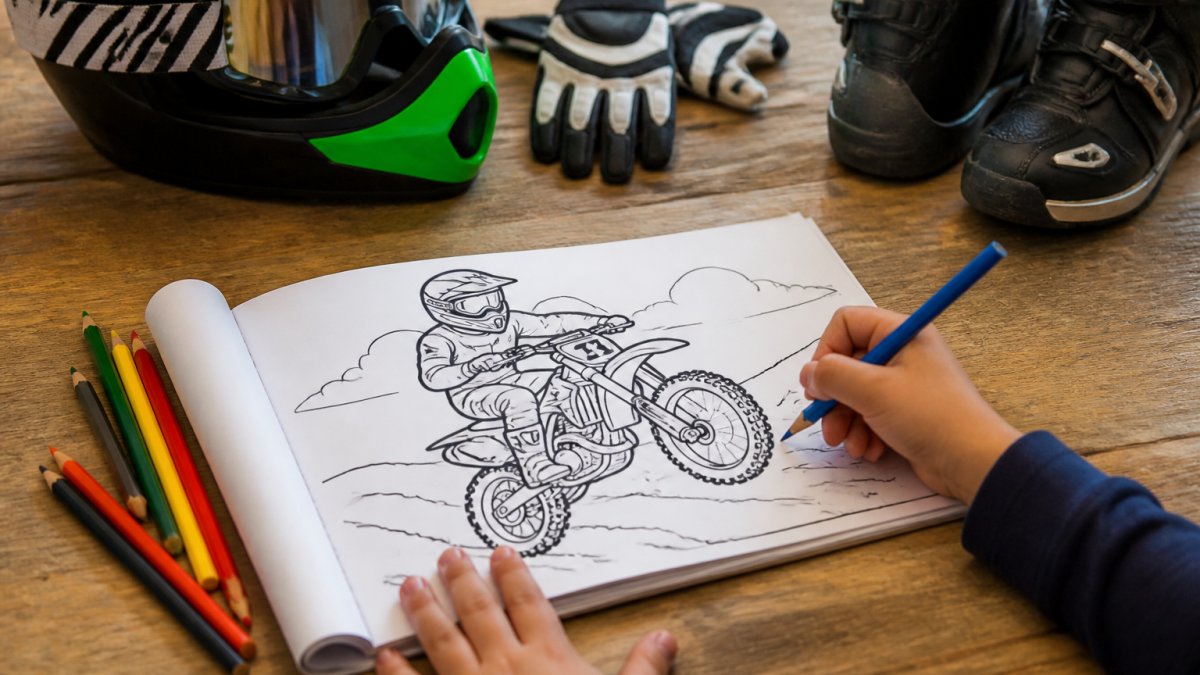
The foundation for safe, confident riding starts early: correct technique from the beginning builds muscle memory that protects riders for years. That's why we created the Nelmgerian MX Training Journal to help young riders track progress and reinforce good habits between sessions.
Understanding why each mistake happens is the first step to fixing it. Here are the most common errors and how to correct them.
Gripping Too Hard and Other Throttle Control Errors
A death grip on the handlebars is the single biggest throttle control mistake young riders make. Tense, locked hands can't feel what the bike is doing, so the throttle becomes jerky.
Proper grip technique is simple: hold the bars firmly but not tight, relaxed enough that someone could pull your fingers off without much effort. This lets you make small, precise throttle adjustments.
Common throttle mistakes include:
- Grabbing the throttle suddenly instead of rolling it on smoothly
- Holding the throttle wide open instead of modulating speed
- Tensing up when nervous, which makes jerky inputs worse
- Forgetting to use the clutch to control power delivery
The fix is progressive practice: start in an open area and roll the throttle on and off gently. Most young riders improve dramatically after a few focused sessions.
Dirt Bike Body Position: Standing vs. Sitting Mistakes
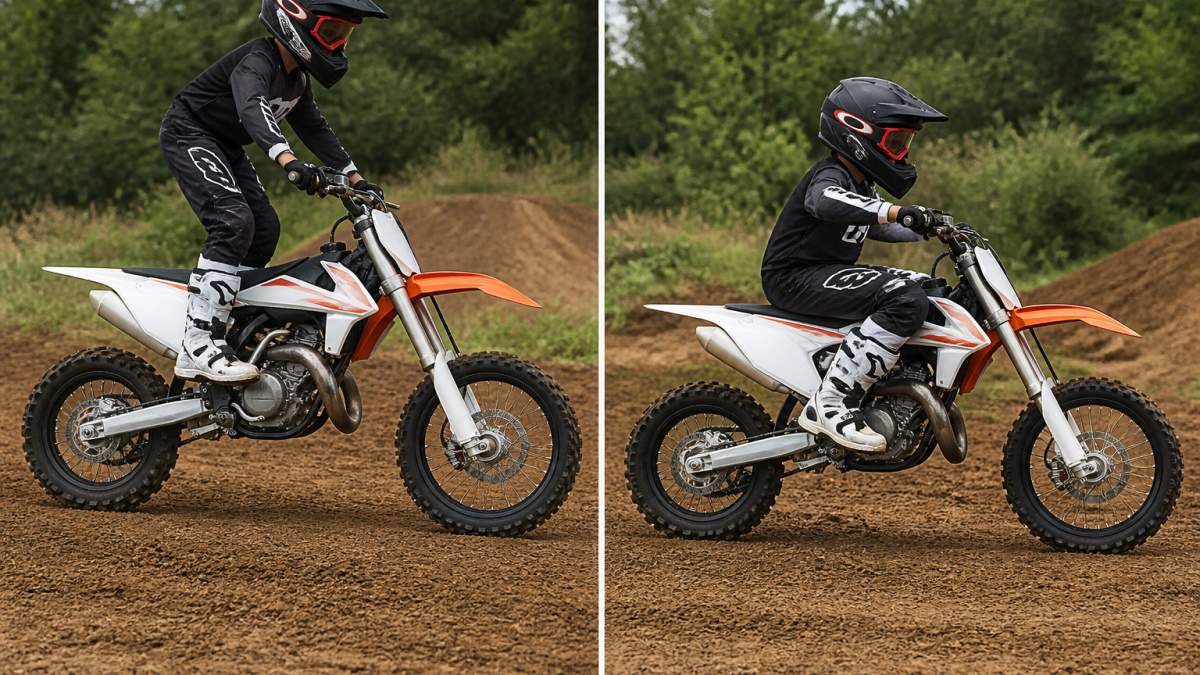
Body position determines how much control a rider has. Many young riders sit too far back, stay seated when they should stand, or stand when sitting would be more stable.
The standing position is used for acceleration, jumping, and rough terrain. When standing correctly:
- Knees grip the tank
- Elbows point outward
- Weight is centered over the bike
- Eyes look ahead
The sitting position works best for smooth terrain and braking. When sitting:
- You're lower and more stable
- The bike is easier to control
- Braking is more effective
- Turns are smoother
A common mistake is staying locked in one position. Skilled riders shift between sitting and standing based on terrain, and young riders often don't realize they can move mid-ride.
Another mistake is leaning too far back while standing. This shifts weight behind the rear wheel, making the front wheel light and harder to control.
Dirt Bike Braking Techniques: Front Brake Misuse and Locking
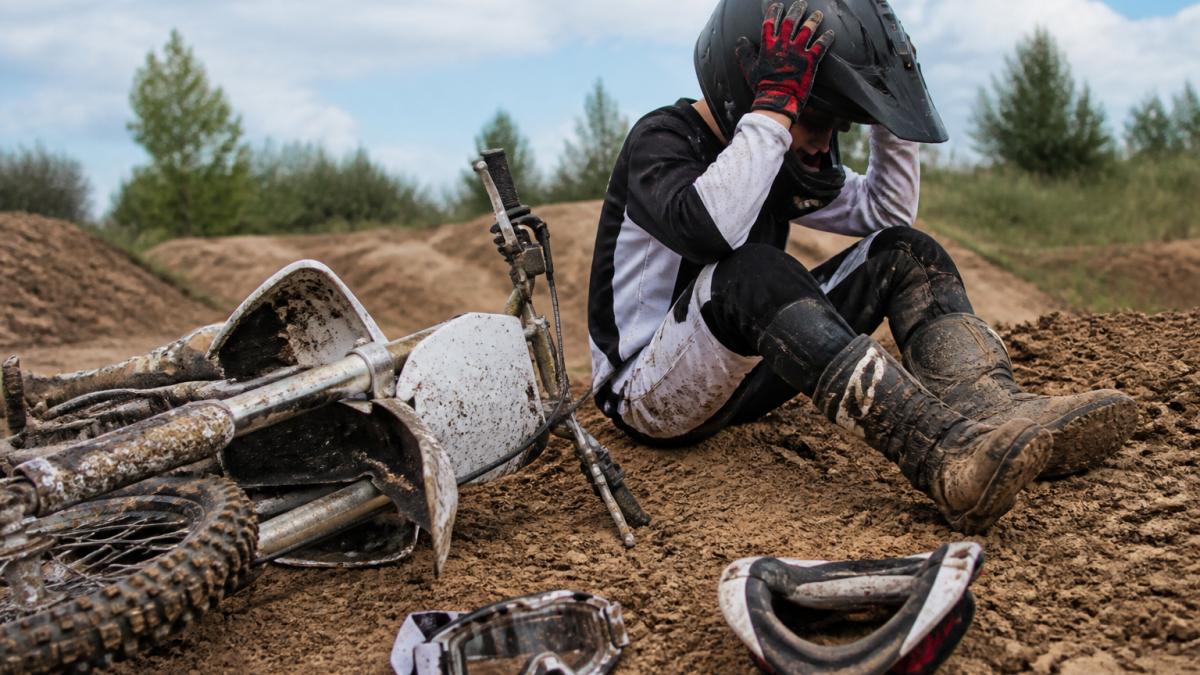
Braking mistakes cause more crashes than almost any other error.
The front brake provides around 70 percent of your stopping power, but it's also the easiest to lock up.
Common braking errors include:
- Grabbing the front brake instead of squeezing it gradually
- Locking the front wheel on loose terrain
- Only using the rear brake and ignoring the front
- Braking while turning instead of braking before the turn
- Braking too late and entering corners too fast
- Dragging the rear brake through the whole corner instead of using it to settle the bike
Match the brake to the surface. On hardpack and packed clay, the front brake does most of the work and can be applied firmly.
The key rule: brake in a straight line before the turn. Once you're turning, don't brake. This gives the tires maximum grip for cornering.
A concrete drill: the three-speed stop. On a straight, flat section of hardpack, mark a start line and a stop zone.
Young riders improve fastest when they practice braking in controlled settings.
Looking Down and Not Planning Your Line
Looking down destroys bike control.
Proper vision technique means looking 10 to 15 feet ahead of the front wheel, which gives you time to plan your line and react to obstacles.
Why line choice matters: The line you choose determines your speed, balance, and safety through a turn. A good line is smooth and efficient. A bad line forces hard corrections.
Young riders often don't realize they're looking down, focusing on the immediate ground instead of the path ahead, which makes them slow to react.
Nelmgerian MX Training Journal →
The fix is conscious practice. Tell your young rider: "Look where you want to go, not at the ground in front of you." Have them pick a spot 10 feet ahead and focus on it.
Dirt Bike Safety Tips: Rushing Corners and Riding Above Skill Level
Rushing corners combines speed with poor technique. Young riders enter too fast, then panic and either crash or make jerky corrections.
Corners should be approached with a plan. Brake before the turn. Lean the bike. Roll on the throttle smoothly as you exit. This sequence is smooth and controlled.
Cornering mistakes by terrain. The same corner demands different technique depending on surface:
- Hardpack: the tires bite predictably, so a rider can carry more entry speed and lean further. Rushing here usually means running wide, not crashing.
- Loose corners (gravel over hardpack): the front tire has little grip, so entry speed must drop and the rider should weight the outside peg and stay more upright.
- Ruts: the bike must be committed to the rut early. Riders who rush and try to change lines mid-rut catch a wheel and go down.
- Sand: the front tire pushes, so the rider needs to stay on the throttle to keep the front light and the bike tracking. Braking hard in sand buries the front wheel.
- Mud: everything happens slower and grip is low, so smooth inputs matter more than speed.
A concrete drill: the cone corner. Set up four cones in a large, gentle arc on flat ground.
What to do after a fall or near miss. A crash or close call is a signal, not a failure. Stop the ride.
Progressive skill building is the solution. Master basic control on flat, open ground, then add small obstacles and gradually increase difficulty.
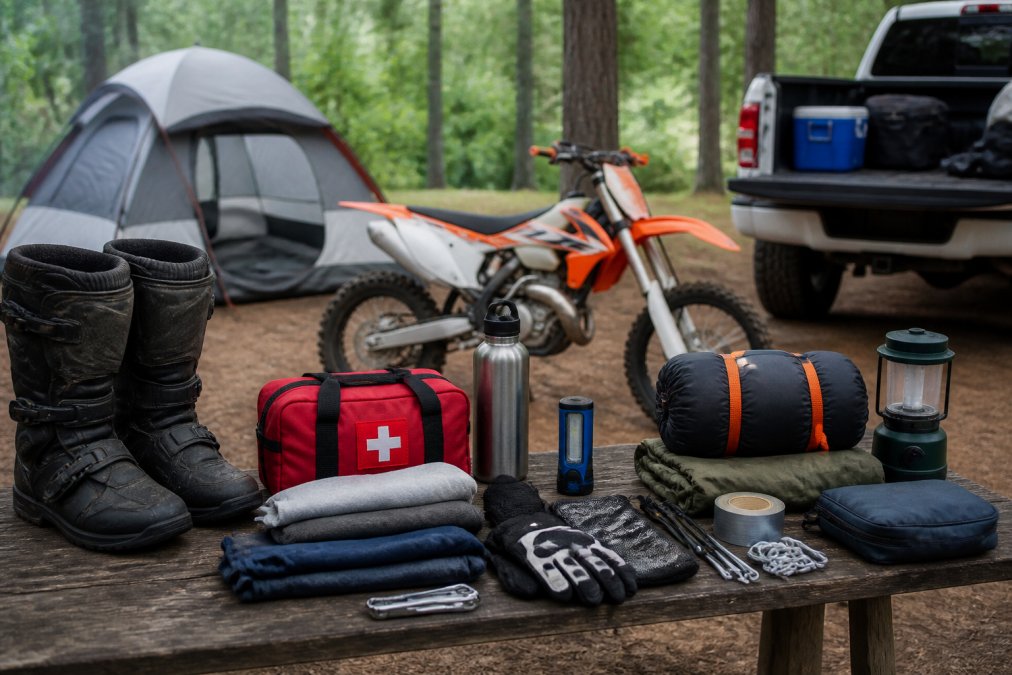
Protective gear matters too. A helmet, goggles, gloves, chest protector, and boots reduce injuries when crashes happen.
How to Improve Dirt Bike Riding Skills Through Progressive Practice
Progressive practice means starting simple and adding difficulty slowly. This builds confidence and prevents bad habits from forming under stress.
A solid practice structure looks like this:
- Week 1-2: Basic control, Straight lines, gentle throttle control, smooth braking
- Week 3-4: Body position, Practice sitting and standing transitions
- Week 5-6: Turning, Large, gentle turns at low speed
- Week 7-8: Obstacles, Small jumps, ruts, or rocks
- Week 9-10: Speed, Faster riding on familiar terrain
- Week 11+: Complexity, Combining multiple skills at once
Each phase should feel easy before moving to the next. If your young rider is struggling, stay at the current phase longer.
| Practice Phase | Focus | Duration | Success Signal |
|---|---|---|---|
| Basic Control | Throttle, braking, balance | 2 weeks | Smooth inputs, no crashes |
| Body Position | Sitting/standing transitions | 2 weeks | Confident position changes |
| Turning | Line choice, lean angle | 2 weeks | Smooth corners without corrections |
| Obstacles | Small jumps, terrain changes | 2 weeks | Controlled obstacle navigation |
| Speed | Faster riding | 2 weeks | Comfort at higher speeds |
| Complexity | Multiple skills combined | Ongoing | Smooth riding in varied terrain |
The Nelmgerian MX Training Journal helps track this progress. Young riders can record what they practiced, what went well, and what needs work. This reflection builds awareness and accelerates improvement.
Pre-Ride Inspection: Catching Problems Before They Cause Mistakes
A broken bike causes crashes that aren't the rider's fault. Before every ride, check the bike for basic problems.
A simple pre-ride checklist takes five minutes and prevents most mechanical failures:
- Tire pressure, Check with a gauge, not by feel
- Tire condition, Look for cuts, wear, or embedded rocks
- Chain, Is it tight? Does it move freely?
- Brakes, Squeeze both levers; they should feel firm
- Throttle, Does it snap back smoothly?
- Fuel, Is there enough gas for your ride?
- Air filter, Is it clean or clogged?
- Bolts and fasteners, Are they tight?
- Handlebars, Do they move or feel loose?
- Seat, Is it secure?
Young riders often skip this step because they want to ride, but a mechanical failure mid-ride creates panic and mistakes. A five-minute inspection prevents hours of frustration.
Make the inspection part of the routine. Before every practice session, walk through the checklist together. This teaches responsibility and bike awareness.
According to American Motorcyclist Association safety guidelines, pre-ride inspection is the foundation of safe riding. Many crashes blamed on "rider error" are actually caused by mechanical problems that proper inspection would have caught.
Learning to ride dirt bikes safely takes time and patience. Young riders make mistakes because they're building new skills, not because they're careless.
At Nelmgerian MX, we believe that confidence comes from knowing you've done the work. The Nelmgerian MX Training Journal and our Ryder's First Motocross Race book help young riders track their progress and celebrate their improvements.
Frequently Asked Questions
What are the most common dirt bike riding mistakes beginners make?
Beginners often grip the handlebars too tightly, sit too far back on the seat, look down instead of ahead, brake with only the rear wheel, and rush into corners faster than their skill allows. These mistakes happen because young riders haven't built muscle memory yet and tend to tense up when nervous. Each mistake compounds the others, a death grip makes steering jerky, poor body position throws off balance, and looking down prevents you from seeing the line ahead. Fixing one mistake at a time, starting with throttle control and body position, creates a foundation for better riding overall.
How should you use the front and rear brakes on a dirt bike?
The front brake provides most of your stopping power, roughly 70% of braking force comes from the front wheel on a dirt bike, while 30% comes from the rear. Squeeze the front brake smoothly and progressively; jerking it causes the wheel to lock or wash out. Use the rear brake to help stabilize the bike during hard stops and to prevent the front wheel from diving too steeply. Practice braking in a straight line first, then gradually apply brakes before turns. Many beginners rely only on the rear brake or grab the front brake suddenly, which leads to loss of traction and crashes.
Where should you look when riding a dirt bike?
Look at least 10-15 feet ahead on the trail or track, not at the ground directly in front of your wheel. Your eyes should scan for ruts, rocks, jumps, and the line you want to take. Where your head looks, your body and bike naturally follow. Beginners who stare down at the ground often ride into obstacles they could have avoided and struggle to maintain a smooth line. Practice lifting your eyes early, before you reach a turn, look through the turn to where you want to exit. This habit builds confidence and helps you anticipate terrain changes.
How can beginners avoid common dirt bike mistakes?
Start with a pre-ride bike check to catch worn tires, low pressure, or loose parts that make mistakes more likely. Wear proper protective gear including helmet, goggles, gloves, and body armor so you can focus on riding, not fear. Practice on terrain that matches your current skill, rushing to advanced tracks or jumps is how most mistakes happen. Use a training journal to track what you worked on each session, what felt good, and what needs more practice. Ride with experienced riders or a trainer who can point out bad habits before they become automatic. Most importantly, progress slowly; each skill builds on the last.