 blog
Motocross Fitness Programs in Alabama: A Training Guide
Last Updated: November 10, 2026
Quick Summary
Motocross fitness programs in Alabama usually come as youth riding clubs, private coaches or track-based camps, and they differ in how much off-bike conditioning they include. Parents should confirm what fitness work is covered, how often sessions meet and how the program handles heat and injury before enrolling.
- Compare youth clubs, private coaches and track-based camps before enrolling a rider.
- Ask how much of each session is off the bike, since some programs only offer riding time.
- Confirm in writing whether off-bike conditioning is included before paying.
- Ask how the program handles hot-weather days, because summer heat makes long sessions risky for children.
- Use a checklist covering age groups, coach experience, rest days and parent communication.
Table of Contents
- Why Motocross Fitness Matters for Young Riders
- Core Components of a Motocross Workout Plan
- Motocross Workouts at Home Without Equipment
- Finding Motocross Fitness Programs in Alabama
- A Free Motocross Workout Routine to Start With
- Using a 12 Week Motocross Training Program PDF
- Keeping Young Riders Training Safely and Consistently
- Frequently Asked Questions
Why Motocross Fitness Matters for Young Riders
Nelmgerian MX has built its training resources around one idea: young riders who are fit ride longer, safer and with more confidence. A typical motocross race can run well past an hour, and riders who train their endurance and strength are better able to hold their form through the final laps. A study of ten members of the Finnish motocross team looked at what happened to their endurance after a three-month program that stressed aerobic fitness (PubMed study on interseason training and aerobic fitness of motocross).
Fitness also helps young riders. Good training helps a child stay sharp when the track gets rough.
Core Components of a Motocross Workout Plan
A motocross workout plan covers four areas: cardiovascular endurance, grip and forearm strength, core stability and leg power. Each one supports a different part of riding, and the balance among them shifts as a rider moves from casual weekend riding toward competitive racing.
Cardiovascular endurance keeps a rider's heart rate and breathing manageable across a moto that often runs 20 to 30 minutes for older youth classes. Steady-state work such as jogging, cycling or swimming builds the aerobic base, while short interval efforts prepare a rider for the repeated hard starts and sprints that define a race. Weekend riders can focus mostly on steady work. Competitive racers usually need a larger share of interval training.
Grip and forearm strength are often overlooked. Holding handlebars through rough sections, braking hard and absorbing bumps all draw on the forearms and hands. Squeezes with a grip ball, dead hangs from a pull-up bar and wrist curls with light weight build this capacity. Forearm fatigue is one of the most common reasons riders lose control late in a race, so grip work pays off quickly.
Core stability connects the upper and lower body and lets a rider stay centered over the bike. Planks, side planks and balance work on one leg transfer directly to standing on the pegs and shifting weight through jumps and corners. A rider with a stable core uses less energy to stay in position, which saves strength for the finish.
Leg power drives the bike out of corners and absorbs landings. Squats, lunges and box jumps build the force needed for these moves. Because landings put significant load through the knees and hips, leg power work should always include controlled landing mechanics and should progress gradually.
How the plan looks changes by skill level. For a weekend rider, a reasonable pattern is two to three short sessions per week that combine light cardio, bodyweight strength and stretching. A competitive racer typically adds a fourth session, includes interval work several times a week and programs more explicit power and grip progressions. Racers also need to schedule deload weeks to avoid overuse problems.
For young riders, keep each session short and varied:
- Warm up with 5 to 10 minutes of light cardio
- Build grip with squeezes and hanging holds
- Train core with planks and balance work
- Add leg power with jumps and squats
- Finish with stretching for the hips and hamstrings
Watch out: Adding load or jump height too quickly is a common cause of knee and hip irritation in young riders. Increase one variable at a time and allow a full recovery day between hard sessions.
Rest is part of the plan, not a break from it. Growing bodies recover from training while they sleep and between sessions, so schedule at least one full rest day each week.
The article breaks a motocross workout plan into four components, each supporting a different part of riding.
| Component | What it supports | Example drills |
|---|---|---|
| Cardiovascular endurance | Heart rate and breathing across a moto | Jogging, cycling, swimming |
| Grip and forearm strength | Holding bars, braking, absorbing bumps | Grip ball squeezes, dead hangs, wrist curls |
| Core stability | Staying centered over the bike | Planks, side planks, one-leg balance |
| Leg power | Driving out of corners and absorbing landings | Squats, lunges, box jumps |
Motocross Workouts at Home Without Equipment
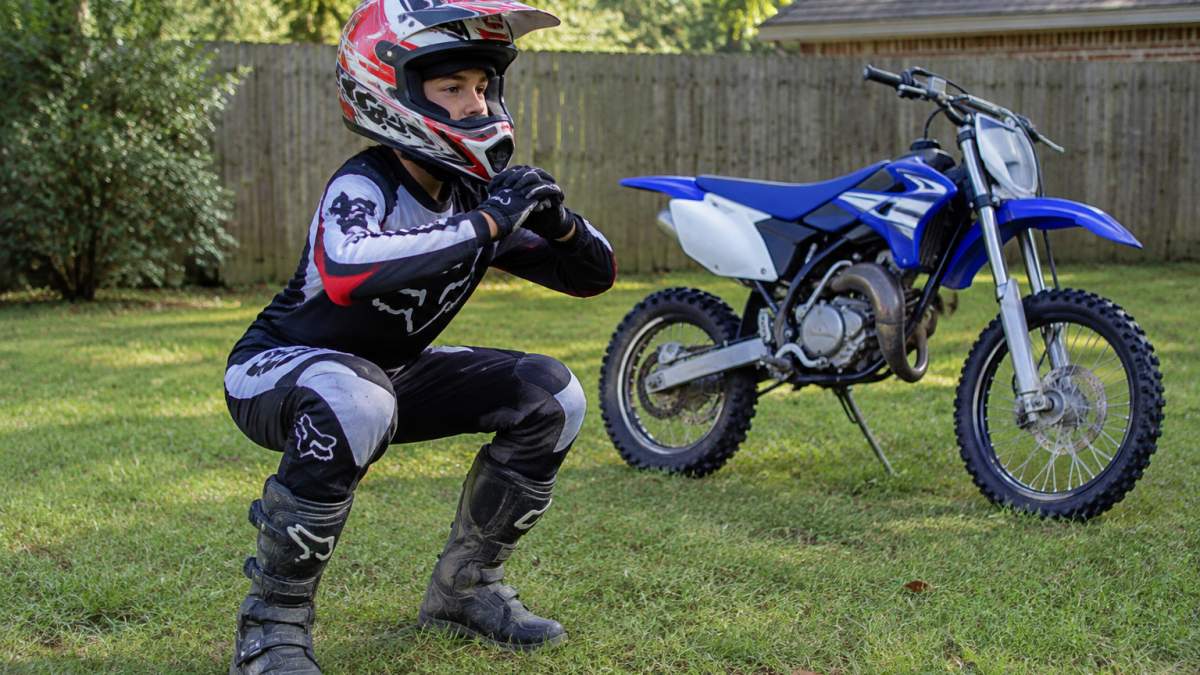
Families do not need a gym to build motocross fitness. Bodyweight work covers most of what a young rider needs. Squats build leg strength, push-ups build upper body strength, and planks build the core that holds a rider steady in the saddle. As these bodyweight exercises build the strength and control needed on the bike, 7S PowerSports, LLC can be part of the next step when it is time to find a dirt bike that fits the rider.
Try a simple circuit:
- 10 squats
- 5 push-ups (or knee push-ups)
- 20-second plank
- 10 jumping jacks
- Rest for one minute, then repeat three times
A young rider in gear doing squats on a backyard lawn beside a parked 50cc dirt bike is a good picture of this kind of training in action.
Finding Motocross Fitness Programs in Alabama
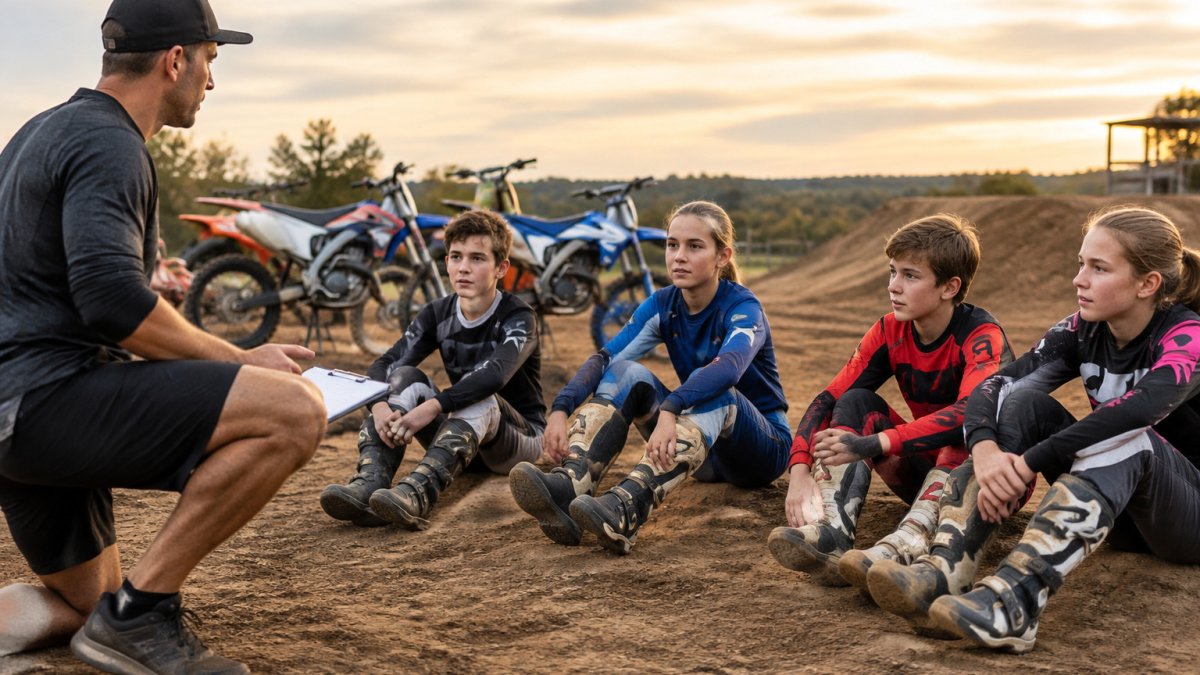
Parents searching for motocross fitness programs in Alabama usually find three kinds of options: organized youth riding clubs that run practice days, private coaches who work with riders one-on-one, and track-based camps that bundle on-bike instruction with off-bike conditioning. Each one may handle fitness differently, so it helps to know what to ask before you enroll.
Start with the track or club itself. Ask whether the club has a designated youth coordinator and whether that person has completed any first aid or youth safety training. A club that runs regular practice days is a stronger signal than one that only holds occasional events.
Next, look at how the coach treats conditioning. A capable youth coach will be able to explain the difference between a session built around riding time and a session that adds grip work, core work and recovery. Ask directly: How much of each session is off the bike? What does a rider do on a day with no track access? How do you adjust training for a rider who is new to the sport compared with one who already races?
Summer heat and humidity can make long outdoor conditioning sessions risky for children. Ask any program how it handles hot-weather days.
When you compare options, use this checklist:
- Age groups the program serves and whether riders are grouped by skill level
- How often sessions meet, and whether off-bike conditioning is scheduled or optional
- Coach experience with youth riders and any relevant certifications
- Whether training covers strength, endurance, recovery and rest days
- How the program handles heat, injury and missed sessions
- Parent communication, such as progress updates or shared training logs
Watch out: Some programs market themselves as fitness-focused but only offer riding time. Confirm in writing what off-bike work is included before you pay.
If a local program does not offer structured conditioning, you can supplement it at home. The training journal linked on this site can help you track progress between track days, but it works best as a complement to coaching rather than a replacement for it.
A Free Motocross Workout Routine to Start With
A free routine is a good first step. Start two or three days a week, with a rest day between sessions.
- Jog or march in place for 5 minutes
- Do 10 bodyweight squats
- Do 5 knee push-ups
- Hold a plank for 15 to 20 seconds
- Do 10 standing leg raises per side
- Cool down with 5 minutes of stretching
Add one round each week as strength improves. Keep the pace fun. Young riders stick with training when it feels like play.
Using a 12 Week Motocross Training Program PDF
A 12-week motocross training program PDF gives structure. Print it, pin it up and check off each session. Build in two rest days each week and move up gradually.
Track each workout in a journal. Write the date, the drills completed and how the rider felt. Over twelve weeks, these notes show clear progress. The Nelmgerian MX Training Journal is designed for this purpose, and you can see the training log here.
Keeping Young Riders Training Safely and Consistently
Consistency beats intensity. A child who trains a little each week will improve more than one who trains hard for two weeks and then quits. Keep sessions fun, celebrate small wins and let the rider set a goal, such as holding a plank longer.
Watch for signs of overtraining, including unusual tiredness, soreness that does not go away and loss of interest. Rest when these appear. Always check with a pediatrician before starting a new training plan.
guidance on physical activity for children from the CDC recommends that children get at least 60 minutes of physical activity each day, which fits well with a motocross routine.
Ready to keep your young rider training and learning between races? Nelmgerian MX makes training journals and books that help kids stay connected to motocross all year. Get started with the Nelmgerian MX Training Journal and build a routine your rider will actually stick to.
Frequently Asked Questions
What is the best fitness training program for motocross?
The best motocross fitness program combines cardiovascular endurance, functional strength, core stability, and grip work, since races often run longer than two hours and demand constant control of the bike. Look for a plan that alternates strength days with endurance sessions and includes recovery time. Adjust the volume to the rider's age and skill level, and build up gradually rather than starting with intense sessions. A structured motocross workout plan that progresses over several weeks can help riders build fitness steadily.
How many days a week should a motocross rider work out?
Most young riders do well with three to four structured fitness sessions per week, combined with time on the bike. Spacing strength and endurance work across non-consecutive days allows muscles to recover. During the offseason, a rider may train more often, while in race season the focus shifts to maintaining conditioning and avoiding fatigue. Rest days matter as much as training days, especially for children whose bodies are still developing.
Can you train for motocross at home without equipment?
Yes. Bodyweight exercises such as squats, lunges, planks, push-ups, and jump squats build leg power, core stability, and endurance without gym equipment. Balance work on one leg and grip exercises like dead hangs also translate well to riding. A home motocross workouts routine can be done in a backyard for 30 to 45 minutes. Parents should supervise younger children and keep sessions short and fun.
Are there motocross fitness programs for kids in Alabama?
Parents should ask local tracks and coaches about instruction for their child's age and skill level, and check whether fitness work is included. Nelmgerian MX offers motocross training journals that help young riders track practice, goals, and race progress between sessions. Check current program availability directly with local providers, since schedules change by season.