 how-to
Youth Motocross Stamina: A Training Guide
Table of Contents
- Why Youth Motocross Stamina Matters
- Build a Youth Motocross Fitness Plan
- Essential Motocross Endurance Exercises for Kids
- Youth Motocross Nutrition Tips for Performance
- Warm-up Routines and Flexibility Work
- Mental Conditioning and Psychological Stamina
- Recovery Protocols and Rest Days
- Common Mistakes to Avoid When Building Stamina
- Frequently Asked Questions
Last Updated: September 28, 2026
Why Youth Motocross Stamina Matters
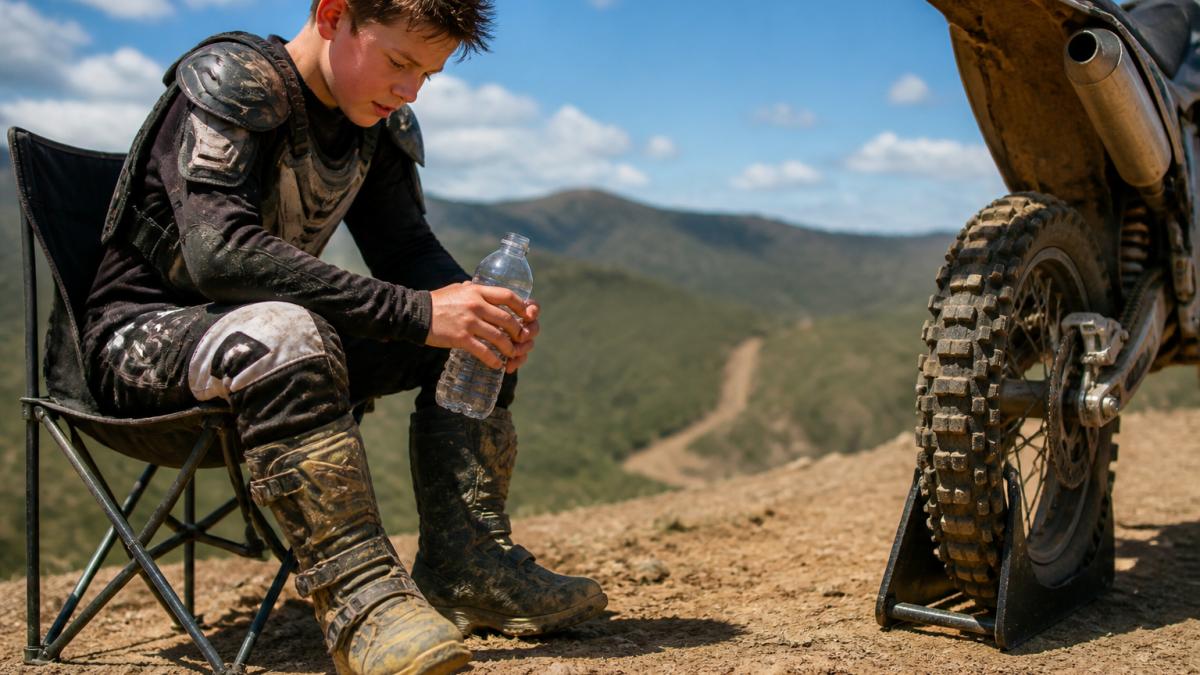
Building youth motocross stamina improves race performance, recovery between motos, and safety. Young riders need strong cardiovascular endurance, core stability, and mental conditioning to handle the intense demands of motocross: explosive power, sustained grip strength, precise body control, and focus while managing lactic acid buildup and mental fatigue.
Many young riders hit a wall halfway through their second moto because their bodies and minds aren't trained for the sport's specific demands. Riders who train off-bike with structured, age-appropriate conditioning complete full motos strong, avoid costly mistakes in final laps, and build confidence.
This guide walks you through exactly how to build youth motocross stamina using practical drills, nutrition strategies, and recovery protocols that work for young riders aged 5 and up.
Build a Youth Motocross Fitness Plan
A solid youth motocross fitness plan combines cardiovascular work, functional strength, and sport-specific conditioning, balancing on-bike practice with targeted off-bike training to develop all physical systems motocross demands.
Cardiovascular endurance on and off the bike
Cardiovascular endurance is the foundation of youth motocross stamina. The most effective approach combines steady-state cardio with interval training.
Steady-state cardio builds aerobic capacity through running, cycling, or swimming at moderate pace for 20-30 minutes, 2-3 sessions per week. Intensity should feel challenging but sustainable, riders should be able to talk but not sing.
Interval training builds anaerobic threshold, the point where muscles produce lactic acid faster than the body can clear it. A simple session: 5-minute warm-up, 8 rounds of 30 seconds hard effort and 90 seconds easy recovery, 5-minute cool-down. Young riders who train intervals push through tight sections without losing control and recover faster between motos.
Core stability and functional strength
Core stability is the engine of youth motocross stamina, keeping riders centered on the bike, reducing arm and shoulder fatigue, and preventing injury. Core work should happen 3-4 times per week.
Effective core exercises for young riders include:
- Planks (hold for 20-30 seconds, 3 sets)
- Dead bugs (controlled leg and arm movements lying on back, 10 reps per side)
- Bird dogs (opposite arm and leg extension, 10 reps per side)
- Pallof presses (resisting rotation with a resistance band, 10 reps per side)
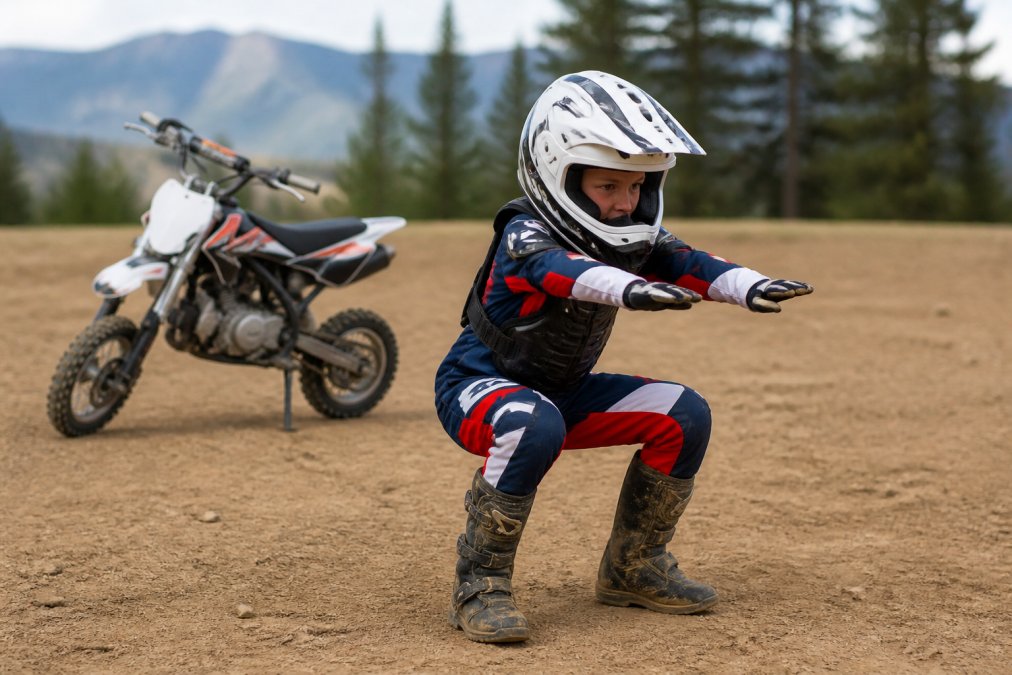
Functional strength work targets legs, grip strength, and upper body stability using bodyweight exercises. Leg drills: squats (15-20 reps, 3 sets), single-leg squats or step-ups (10 reps per side), lunges (10 reps per leg). Grip drills: farmer carries (30-40 seconds), dead hangs (15-30 seconds), towel wrings (3 sets of 10).
Essential Motocross Endurance Exercises for Kids
Off-bike training drills prepare the body for motocross demands without crash injury risk.
Interval training vs steady-state cardio
Young riders need both interval and steady-state cardio. Steady-state builds aerobic base and fat-burning efficiency; interval training builds anaerobic capacity and work capacity. A practical split: 2 sessions per week steady-state (20-30 minutes at moderate pace), 1 session per week intervals (8-12 rounds of hard effort and recovery). Young riders who do both progress faster than those using one approach.
Off-bike training drills for grip strength and leg endurance
Grip strength drills (2-3 times per week) prevent second-moto struggles: pull-up bar hangs (10-15 seconds, build to 30+), grip trainer squeezes (3 sets of 15), farmer carries (30-40 seconds). Leg endurance drills (3-4 times per week) maintain body position: wall sits (20-40 seconds, 3 sets), step-ups (15-20 reps per leg, 3 sets), single-leg balance (30-60 seconds per side, 3 sets). Consistency yields dramatic improvements in body position and grip pressure.
Youth Motocross Nutrition Tips for Performance
Nutrition directly impacts youth motocross stamina. Young riders who fuel properly have more energy, recover faster, and stay focused through multiple motos. The nutrition strategy should be simple, practical, and based around whole foods.
Hydration strategy and electrolyte balance
Dehydration kills youth motocross stamina faster than anything else. Young riders lose fluids through sweat, and even mild dehydration reduces performance and increases injury risk. A solid hydration strategy starts before the bike and continues after.
Pre-ride hydration should happen 2-3 hours before practice or racing. Young riders should drink 16-20 ounces of water. This gives the body time to absorb the fluid and allows them to use the bathroom before getting on the bike.
During riding, hydration depends on session length. For short sessions (under 30 minutes), water is sufficient. For longer sessions or hot days, young riders benefit from electrolyte replacement. Electrolytes (sodium, potassium, magnesium) help the body retain fluid and maintain muscle function. A simple sports drink or electrolyte tablet mixed into water works well.
Nelmgerian MX Training Journal →
Post-ride hydration is critical for recovery. Young riders should drink 16-24 ounces of water within 30 minutes of finishing. This starts the rehydration process and helps clear metabolic waste from muscles.
Pre-ride and post-ride fueling
Pre-ride meals should happen 2-3 hours before practice or racing. The goal is to provide steady energy without causing stomach discomfort. Good pre-ride options include:
- Oatmeal with banana and honey
- Toast with peanut butter and jam
- Pasta with light sauce
- Rice with chicken
These meals are easy to digest and provide carbohydrates for energy and some protein for sustained fuel.
Post-ride nutrition is where many young riders miss recovery gains. Within 30-60 minutes of finishing, young riders should eat a meal with carbohydrates and protein. This replenishes energy stores and starts muscle repair. Good post-ride options include:
- Chocolate milk (simple carbs and protein)
- Turkey sandwich with whole grain bread
- Chicken and rice
- Greek yogurt with fruit
The timing matters. Young riders who fuel within the first hour after riding recover faster and are ready for the next session sooner.
Warm-up Routines and Flexibility Work
A proper warm-up routine prepares young riders mentally and physically for the demands of motocross. Many young riders skip warm-ups or rush through them, which increases injury risk and reduces performance. A complete warm-up should take 10-15 minutes.
Start with light movement to elevate heart rate. This might be jogging in place, jumping jacks, or easy cycling for 3-5 minutes. The goal is to raise body temperature and get blood flowing.
Follow with dynamic stretching. Unlike static stretching (holding a stretch), dynamic stretching involves moving through a range of motion. Effective dynamic stretches for motocross include:
- Leg swings (forward and backward, 10 per leg)
- Walking lunges (10 per leg)
- Arm circles (10 forward, 10 backward)
- Torso rotations (10 per side)
- Hip circles (10 circles each direction)
Mental Conditioning and Psychological Stamina
Physical stamina means nothing if the mind gives up. Young riders who develop mental toughness complete races strong, make better decisions under pressure, and bounce back faster from mistakes. Mental conditioning is trainable, just like physical fitness.
Recovery Protocols and Rest Days
Recovery is where young riders actually build stamina. Training creates the stimulus. Recovery allows the body to adapt and grow stronger. Many young riders train too hard too often, which leads to fatigue, injury, and burnout.
A solid recovery protocol includes:
- Sleep (8-10 hours per night for young riders)
- Nutrition (proper meals and hydration)
- Light movement on rest days (easy walking or stretching, not hard training)
- Foam rolling or massage (3-5 minutes on sore muscles)
Common Mistakes to Avoid When Building Stamina
Many young riders and parents make the same mistakes when building youth motocross stamina. Understanding these pitfalls helps you avoid them.
| Common Mistake | Why It Hurts | The Fix |
|---|---|---|
| Training too hard every day | Fatigue, injury, burnout | 2-3 hard sessions, rest days in between |
| Skipping warm-ups | Injury risk, poor performance | 10-minute warm-up before every session |
| Poor nutrition | Low energy, slow recovery | Consistent meals with carbs and protein |
| Insufficient sleep | Fatigue, weak immune system | 8-10 hours per night |
| Repetitive training | Adaptation plateau | Vary intensity, exercises, and terrain |
| Comparing to other riders | Pressure, overtraining | Focus on your child's progress |
Frequently Asked Questions
How can young riders safely build motocross stamina?
Safe stamina building starts with age-appropriate progression. Young riders should begin with 20-30 minute sessions combining light cardiovascular work and mobility drills, gradually increasing duration over weeks. Incorporate rest days between intense training, warm up thoroughly before each session, and focus on proper technique over speed. Hydration and nutrition support endurance development without forcing overtraining. A youth motocross fitness plan tailored to your child's age and current fitness level prevents injury while building aerobic capacity and muscle endurance.
What are the best cardiovascular exercises for youth motocross?
Effective cardiovascular work includes interval training (short bursts of high intensity followed by recovery), steady-state cardio like running or cycling at moderate effort, and sport-specific drills such as hill sprints and agility ladder work. Motocross endurance exercises for kids should emphasize consistency over intensity, three 20-minute sessions weekly outperforms one exhausting session. Swimming and jumping rope build lung capacity and anaerobic threshold without the impact of running. Mix on-bike practice with off-bike conditioning to develop well-rounded aerobic fitness.
How does proper nutrition impact a young rider's endurance?
Nutrition directly fuels muscle endurance and recovery. Youth motocross nutrition tips include eating balanced meals with carbohydrates for energy, protein for muscle repair, and healthy fats for sustained fuel. Hydration before, during, and after riding maintains performance and prevents premature fatigue. Electrolyte balance supports muscle function during long sessions. Avoid heavy meals immediately before riding; instead, eat a light snack 1-2 hours prior. Post-ride recovery nutrition within 30 minutes helps replenish glycogen and repair muscle tissue, accelerating adaptation to training.
How do you prevent burnout while training for motocross?
Burnout occurs when training intensity or volume exceeds recovery capacity. Prevent it by balancing hard training days with easy recovery days, varying training activities to maintain engagement, and ensuring adequate sleep (8-10 hours for youth). Include fun, low-pressure riding sessions alongside structured training. Monitor for signs of overtraining: declining performance, persistent fatigue, or loss of motivation. Progressive overload, gradually increasing intensity or duration, builds stamina sustainably. A training journal helps track workload and recovery, revealing patterns that lead to burnout before they become serious.