 ultimate-guide
Build Confidence and Knowledge for Racing: Youth Fitness Guide
Table of Contents
- Why Confidence and Knowledge Matter in Youth Racing
- How to Start Motocross Racing Kids: The Right Foundation
- Mental Preparation for Young Racers: Building Psychological Toughness
- Physical Fitness Requirements for Dirt Bike Riding
- Motocross Racing Journals for Kids: Tracking Progress and Growth
- The Role of Parents in Youth Sports Development
- Building Athlete Confidence Through Gym-Based Training
- Frequently Asked Questions
Last Updated: September 26, 2026
Why Confidence and Knowledge Matter in Youth Racing
Confidence and knowledge for racing are the foundation of every young rider's success. Without them, even the most physically talented kid will hesitate at the gate and leave performance on the track.
A rider who knows their bike, track, and capabilities rides safely, progresses consistently, and makes better decisions under pressure. They recover faster from mistakes and show up ready to improve.
Building this foundation requires intentional work across mental toughness, physical fitness, goal setting, and parental support, most of it through structured practice, deliberate reflection, and the right mindset.
How to Start Motocross Racing Kids: The Right Foundation
Starting a child in motocross racing requires three things: age-appropriate equipment, realistic expectations, and a clear progression plan. Rushing without this groundwork leads to injury, lost interest, or bad habits.
Begin with bike size matched to your child's age and experience level. A 50cc is standard for kids ages 4-7. Your child should touch the ground with their toes while seated, not flat-footed or tippy-toed, for control and confidence.
Protective gear is non-negotiable: helmet, goggles, chest protector, gloves, boots, and riding pants. Quality gear is the difference between a scraped knee and a broken collarbone.
Start at a local track with beginner classes or open practice sessions. Track time builds muscle memory and confidence while teaching throttle control, body positioning, and turns.
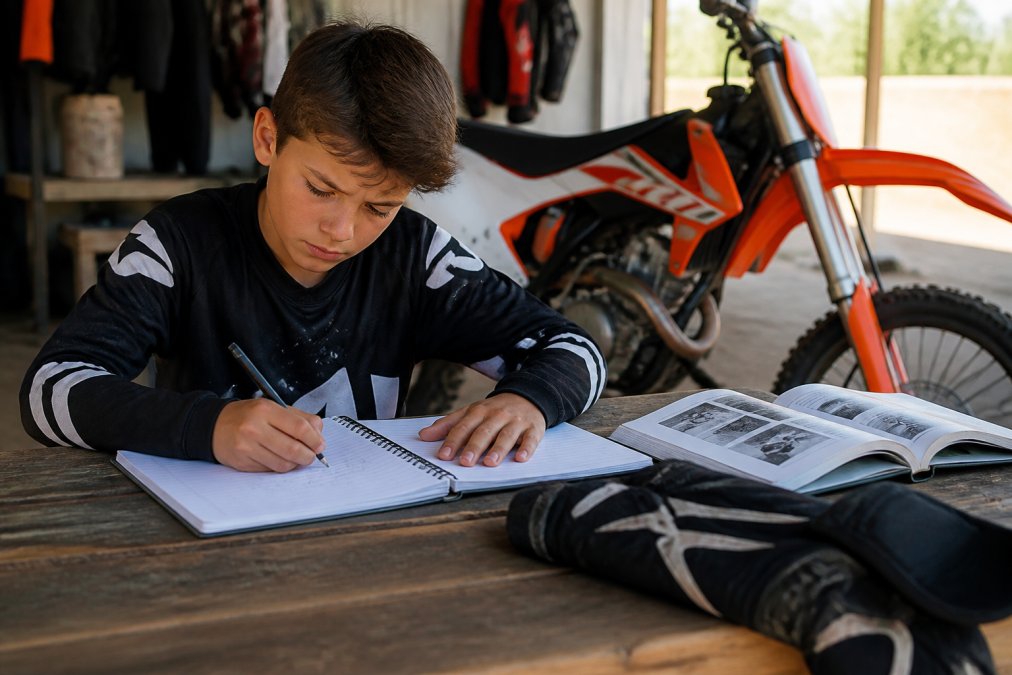
Document their progress from day one. A training journal for young athletes helps riders track what they worked on, what improved, and what still needs attention. This reflective practice accelerates learning. The Nelmgerian MX Training Journal is specifically designed for this.
Mental Preparation for Young Racers: Building Psychological Toughness
Mental toughness is about managing fear, staying focused under pressure, and bouncing back from setbacks. A mentally tough rider executes their plan even when things feel hard.
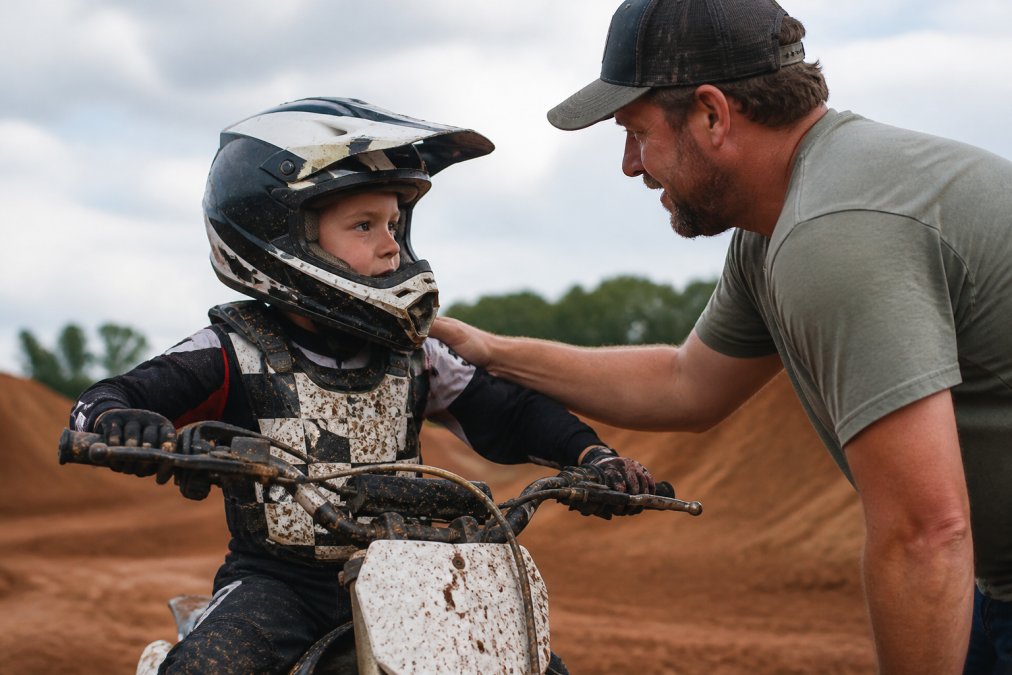
Mental toughness is controlled confidence: knowing limits, respecting the track, and riding within capability while pushing to improve. Young riders should communicate feelings with parents and coaches instead of bottling them up.
Visualization and Mental Rehearsal Techniques
Visualization is underused in youth motocross. Before races or practice, riders mentally run through their lap, seeing themselves hitting marks and executing smooth turns. This mental rehearsal activates the same neural pathways as physical practice.
Start with simple visualization: have your child sit quietly for 2-3 minutes before practice and mentally ride one lap, including sensory details like engine sound, throttle feel, and sight lines.
As riders mature, visualization becomes more specific: recovering from mistakes, passing competitors, or managing fatigue. This builds confidence because they've already "done it" mentally.
Goal Setting and Pre-Competition Routines
Goals give young racers direction and something to measure progress against. But most young riders set vague goals: "I want to win" or "I want to be fast." These don't work. Goals need to be specific, achievable, and tied to actions the rider can control.
Instead of "win the race," a better goal is "nail my start and stay smooth through the first three turns" or "improve my time by two seconds from last week." These are process goals, they focus on what the rider does, not on outcomes beyond their control. A rider can't always control where they finish, but they can control their effort, focus, and execution.
Pre-competition routines build confidence and reduce anxiety. A routine might include: arrive at the track 30 minutes early, walk the course once, do five minutes of visualization, stretch, put on gear in a specific order, and listen to one song before the gate opens. The routine doesn't have to be complicated. It just needs to be consistent. Consistency signals to the brain that the rider is prepared and ready.
Physical Fitness Requirements for Dirt Bike Riding
Motocross is one of the most physically demanding youth sports. Riders need strength, endurance, agility, and coordination. A young rider who shows up to the track unfit will fatigue quickly, lose focus, and make mistakes. Fitness directly impacts performance and safety.
The physical demands vary by age. A 5-year-old on a 50cc needs basic motor skills and light conditioning. A 9-year-old on a larger bike needs real strength training, cardiovascular endurance, and advanced coordination. Progression matters, you can't jump a young rider into advanced training without building a foundation.
Strength, Endurance, and Recovery Balance
Building strength doesn't mean lifting heavy weights. For young riders, strength training focuses on functional movement patterns and bodyweight exercises. Core strength is critical, it stabilizes the rider on the bike and prevents fatigue-related mistakes. Planks, dead bugs, bird dogs, and modified push-ups build core stability without requiring equipment.
Nelmgerian MX Training Journal →
Leg strength matters too. Squats, lunges, and step-ups build the leg endurance needed to grip the bike for 15-20 minute races. Hand and grip strength keeps the rider from fatiguing on the throttle and brakes. Farmer carries and dead hangs build grip endurance.
Cardiovascular fitness determines whether a young rider can maintain intensity throughout the race. High-intensity interval training (HIIT) mimics the demands of racing, short bursts of hard effort followed by recovery (Checking your browser). Sprints, jump rope, and cycling intervals build this capacity efficiently.
Recovery is where many young riders fall short. They ride hard, then go straight to screen time or sit around. Recovery includes sleep, nutrition, hydration, and active recovery like walking or easy stretching. A young rider who recovers well between sessions shows faster improvement and stays healthier.
Injury Prevention and Safe Progression
Injury prevention starts with respecting progression. A common mistake is pushing young riders too hard, too fast. They get injured, lose confidence, and sometimes quit the sport. Safe progression means gradually increasing intensity, duration, and complexity, not all at once. Developing a disciplined approach to physical movement helps young athletes maintain their composure under pressure, a mental fortitude that mirrors the way many competitors build confidence through martial arts.
Proper form on basic movements prevents injury. Before a young rider does advanced tricks or aggressive riding, they need solid fundamentals: smooth throttle control, balanced body position, and smooth braking. Rushing past these basics leads to crashes and injuries.
Strength imbalances create injury risk. If a young rider has strong legs but weak core, or strong arms but weak shoulders, they'll develop compensatory movement patterns that lead to injury. Balanced training prevents this. A good conditioning program hits all major muscle groups and movement patterns.
Listen to pain signals. Kids sometimes push through pain because they want to impress coaches or parents. Teach young riders to distinguish between normal training discomfort and pain that signals injury. Sharp pain, swelling, or pain that gets worse with activity means stop and assess.
Motocross Racing Journals for Kids: Tracking Progress and Growth
A motocross racing journal is one of the most underrated tools for young rider development. It transforms vague practice sessions into deliberate, purposeful training. A young rider who writes down what they worked on, what improved, and what still needs attention learns faster than one who just shows up and rides.
The journal serves multiple purposes. It creates accountability, the rider knows they're going to write about their session, so they focus more during practice. It provides a record of progress that motivates continued effort. It helps identify patterns: maybe the rider struggles with a specific turn, or their performance dips when they're tired, or they ride better after visualization practice.
Nelmgerian MX's training journal is specifically designed for young riders.
Encourage your child to write honestly in their journal. This isn't a report card, it's a tool for learning. If they crashed, they write it down and think about why. If they nailed a section, they note what they did right so they can repeat it. This reflective practice accelerates improvement dramatically.
The Role of Parents in Youth Sports Development
Parents shape whether a young rider develops confidence and knowledge for racing or burns out, gets injured, or loses interest. The parental role is less about being a coach and more about being a consistent, encouraging presence that keeps the focus on improvement and enjoyment.
Start by managing expectations. Your child is learning a complex skill that takes time.
Building Athlete Confidence Through Gym-Based Training
Gym-based training builds confidence in two ways: it improves physical capabilities, and it gives young riders concrete evidence that they're getting stronger and more capable. This dual benefit accelerates confidence development.
Frequently Asked Questions
What age is appropriate to start youth motocross racing?
Most children can begin on 50cc bikes between ages 4 and 6, though readiness depends on individual maturity, coordination, and interest. Younger riders benefit from smaller, slower bikes that let them develop motor skills and confidence at their own pace. Starting young builds familiarity with dirt bikes and allows time to develop the physical conditioning and mental toughness needed for racing. Always prioritize safety gear and professional instruction regardless of age.
How do training journals help young athletes track their progress?
Motocross racing journals for kids create a structured record of practice sessions, race results, goals, and personal reflections. This documentation helps riders see improvement over weeks and months, builds accountability, and reinforces goal setting. Journaling also encourages self-awareness about what worked well and what needs practice. Many young racers find that reviewing past entries boosts confidence by showing tangible progress, turning abstract skill gains into visible evidence of their development.
How does mental preparation improve racing performance for young riders?
Mental preparation for young racers reduces performance anxiety, improves focus, and builds self-esteem on race day. Techniques like visualization, goal setting, and pre-competition routines help riders manage stress and stay confident under pressure. Young athletes who practice mental rehearsal, mentally running through the race course and imagining success, perform better than those who rely on physical skill alone. Sports psychology research shows that combining physical training with cognitive training produces peak performance and faster skill acquisition.
What physical fitness requirements do kids need for dirt bike riding?
Young dirt bike riders need functional movement strength, cardiovascular endurance, and core stability to control the bike safely and maintain stamina through races. Grip strength, leg power, and balance are especially important. Recovery protocols between practice sessions prevent overuse injuries and allow proper training load management. Age-appropriate conditioning, emphasizing safe progression and injury prevention, builds the physical foundation needed for competitive racing while protecting developing bodies from harm.