 comparison
2-Stroke vs 4-Stroke Dirt Bikes for Kids: 2026 Guide
Table of Contents
- 2-Stroke vs 4-Stroke Dirt Bikes for Kids: Key Differences
- Comparison Table: 2-Stroke vs 4-Stroke for Young Riders
- Best Beginner Dirt Bike for Kids: Which Engine Type Wins
- Dirt Bike Maintenance for Parents: What You Need to Know
- Learning to Ride a Dirt Bike: Tips for Choosing the Right Bike
- Cost of Ownership: 2-Stroke vs 4-Stroke Over Time
- Environmental Impact and Emissions
- Conclusion
Last Updated: August 8, 2026
2-Stroke vs 4-Stroke Dirt Bikes for Kids: Key Differences
Choosing between a 2-stroke and 4-stroke dirt bike for your child fundamentally changes how the bike feels, maintenance requirements, and long-term costs. The choice isn't about which is objectively "better", it's about understanding the trade-offs and picking the right fit.
Engine Mechanics and Power Delivery
A 4-stroke engine completes combustion in four separate piston strokes: intake, compression, combustion, and exhaust. A 2-stroke does the same job in two strokes, firing on every revolution. This creates dramatically different power characteristics.
The 2-stroke delivers snappy, responsive power that hits hard and fast. A 65cc 2-stroke feels closer to a 110cc 4-stroke. The narrow, explosive power band is perfect for racing but demands precise throttle control.
The 4-stroke produces power linearly and predictably. Young riders can twist the grip without the bike lurching forward. The gentler engine braking helps inexperienced riders modulate speed without getting thrown over the handlebars. For a child learning throttle control and body positioning, this predictable power curve is a genuine advantage.
Weight, Agility, and Handling
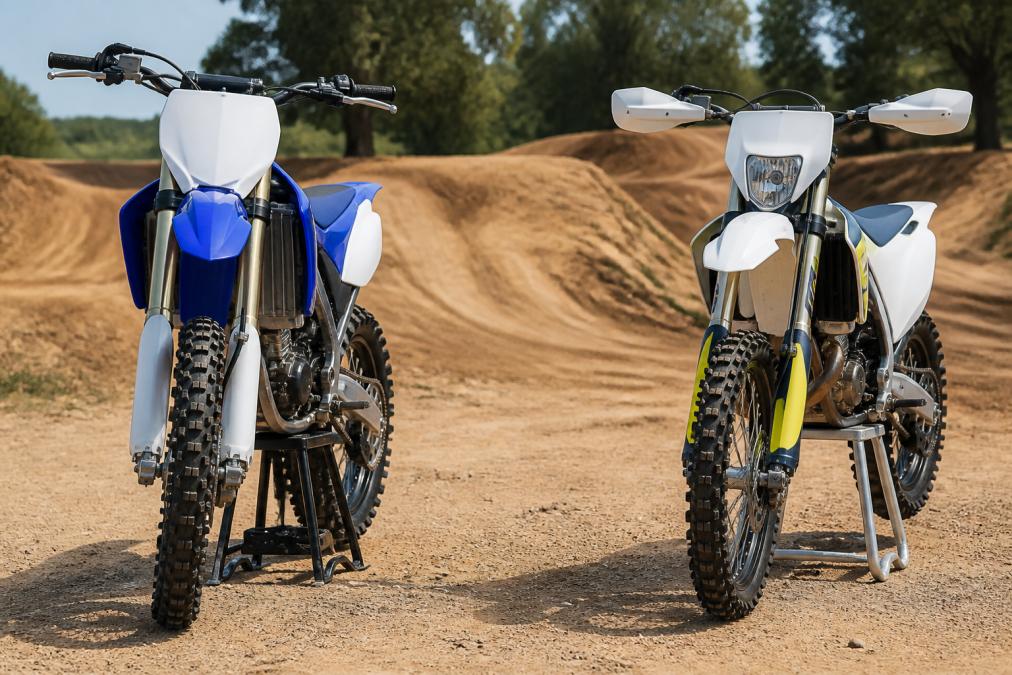
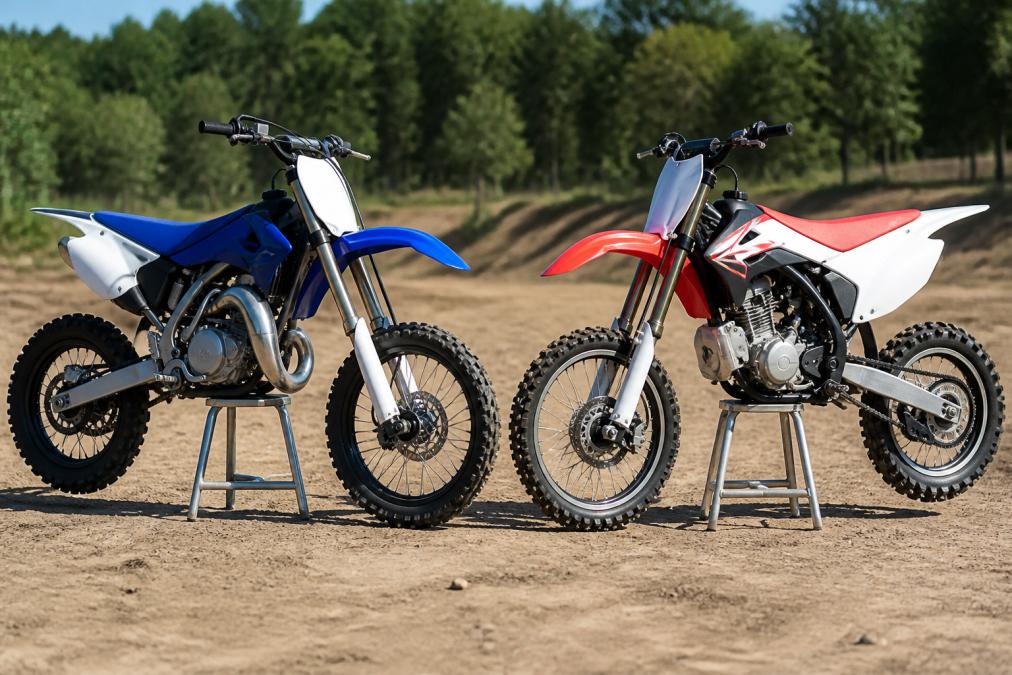
A 2-stroke 65cc bike typically weighs 130-140 pounds wet. A comparable 4-stroke 110cc bike weighs 180-200 pounds. That 50-pound difference matters when a child is learning to balance and maneuver.
The lighter 2-stroke is easier to pick up after a crash and feels more nimble on the track. The heavier 4-stroke feels planted and stable, especially at slower speeds, helping beginners feel more secure. However, that same weight makes the bike harder to move around and more challenging to pick up if your child crashes.
Comparison Table: 2-Stroke vs 4-Stroke for Young Riders
| Feature | 2-Stroke | 4-Stroke | Winner for Beginners |
|---|---|---|---|
| Power Delivery | Snappy, explosive | Linear, predictable | 4-Stroke |
| Typical Weight | 130-140 lbs | 180-200 lbs | 2-Stroke |
| Maintenance Interval | Every 10-20 hours | Every 50+ hours | 4-Stroke |
| Oil Changes | Pre-mix fuel (every fill) | Every 50-100 hours | 4-Stroke |
| Clutch Complexity | Often automatic | Often automatic | Tie |
| Engine Braking | Abrupt | Smooth | 4-Stroke |
| Throttle Control Difficulty | High | Low | 4-Stroke |
| Racing Potential | Excellent | Good | 2-Stroke |
| Fuel Costs | Slightly higher (pre-mix) | Standard | 4-Stroke |
| Long-Term Durability | Shorter lifespan | Longer lifespan | 4-Stroke |
Best Beginner Dirt Bike for Kids: Which Engine Type Wins
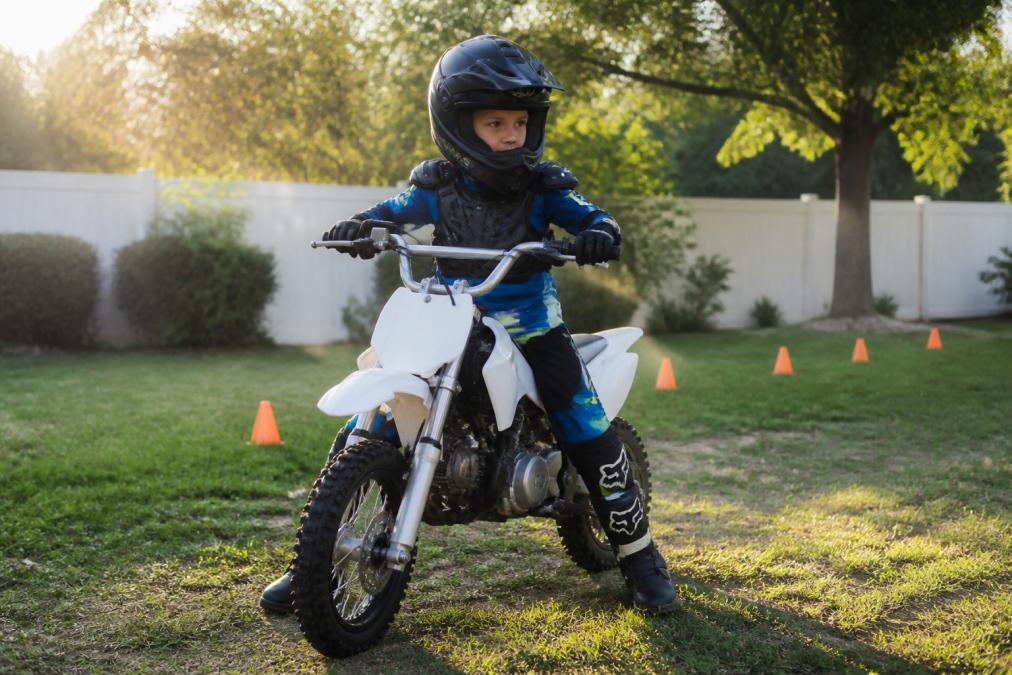
For most children starting out, a 4-stroke is the better choice. The predictable power delivery, smoother engine braking, and lower maintenance burden let young riders focus on learning balance, body positioning, and basic throttle control without fighting the bike.
4-Stroke Advantages for New Riders
The Honda CRF110F and Kawasaki KLX110R represent the gold standard for beginner bikes. Both feature automatic clutches that eliminate the need to manage a manual clutch while learning to ride.
The linear power delivery means small throttle movements produce proportional power increases. A child can twist the grip gently and feel the bike respond smoothly. Maintenance is dramatically simpler: an oil change every 50 to 100 hours of riding, not mixing fuel and oil before every ride. The smoother engine braking also prevents a common beginner mistake: rolling onto the throttle, panicking, and grabbing the brakes too hard.
2-Stroke Advantages for Young Racers
If your child has spent 20+ hours on a beginner 4-stroke and is ready to transition toward competitive riding, a 2-stroke becomes the better choice. The Yamaha YZ65 and KTM 50 SX are purpose-built race bikes that reward smooth, precise throttle control.
A 2-stroke's lighter weight matters once a child has developed basic bike control. The responsive power band teaches riders to be smoother with throttle input, skills that carry forward to larger bikes. However, this demands more from the rider. If your child is still developing throttle control or gets frustrated easily, the snappy power will work against them.
Dirt Bike Maintenance for Parents: What You Need to Know
Maintenance is where the 2-stroke vs 4-stroke decision impacts your wallet and free time.
4-Stroke Maintenance Schedule and Costs
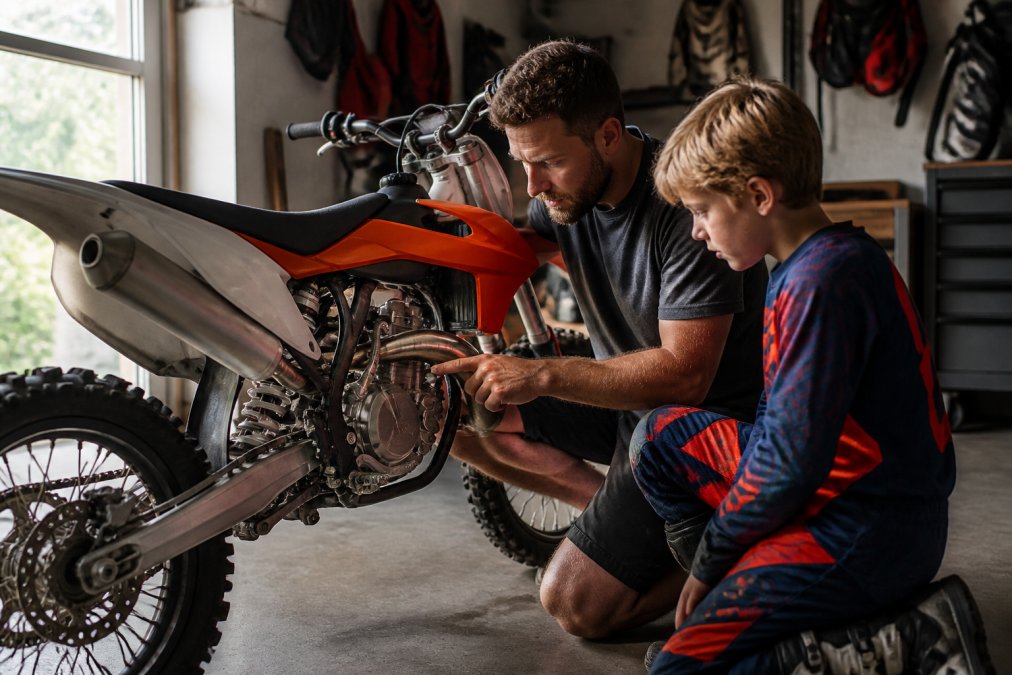
A 4-stroke requires regular oil changes, typically every 50 to 100 hours of riding. For a casual rider doing 10 hours per month, that's one oil change every 5-10 months. The oil costs $20-40 per change and takes 15 minutes if you do it yourself. Air filter changes happen every 50-100 hours and cost $15-30. Spark plugs last 100+ hours and cost $5-10 each.
Total annual maintenance on a 4-stroke for a casual young rider: roughly $100-150 in parts and supplies, plus a few hours of your time if you do it yourself.
2-Stroke Maintenance and Long-Term Reliability
A 2-stroke requires pre-mix fuel: you blend two-stroke oil into gasoline before every ride. The ratio is typically 50:1 or 32:1 depending on the bike. For a family doing 20 rides per month, that's 240 mixing sessions per year. If you mix too lean, the engine seizes. If too rich, you get spark plug fouling and hard starting.
Air filter maintenance is more frequent on a 2-stroke because they run richer and foul filters faster. Expect air filter changes every 20-30 hours instead of 50-100.
The real maintenance burden is top-end rebuilds. The piston, rings, and cylinder wear faster because they fire twice as often. A top-end rebuild typically costs $400-800 in parts and labor and becomes necessary every 100-150 hours of riding. For a kid riding 20 hours per month, that's every 5-7 months. A 4-stroke can go 300+ hours before a top-end rebuild is needed.
Over three years of ownership, a 4-stroke costs roughly $300-500 in routine maintenance. A 2-stroke costs $800-1,200 because of top-end rebuilds and spark plug replacements.
Learning to Ride a Dirt Bike: Tips for Choosing the Right Bike
Picking the right bike involves matching the bike's size and power to your child's physical development, riding experience, and learning pace.
Age, Size, and Physical Development Milestones
A 5-year-old needs a bike where both feet touch the ground while sitting on the seat. A Honda CRF110F (25.9-inch seat height) is appropriate for kids 5-7 years old who are average height. An 8-year-old who's been riding for a season can handle a slightly taller bike with a 27-28 inch seat height. By age 9-10, if your child shows genuine interest and rides regularly, they might be ready for a full-size pit bike like the Yamaha YZ65 or KTM 50 SX.
The mistake most parents make is buying too much bike too soon. A child who can barely touch the ground will develop bad habits: sitting too far back, not using their legs properly, and relying too heavily on handlebars for balance.
Safety Gear Integration and Throttle Control
Before your child throws a leg over a dirt bike, they need proper protective gear: a DOT or Snell-certified helmet, chest protector, gloves, boots, and goggles. Once geared up, your child will be heavier and less mobile. This is why starting on a 4-stroke with smooth, linear power delivery is important.
Throttle control is the hardest skill for beginners. Most kids instinctively grab the brakes when scared, which is the opposite of what they should do. A 4-stroke's gentle power delivery gives them more time to react and adjust. Spend the first 5-10 rides on flat, open ground with no obstacles. Once comfortable with basic throttle control, move to slightly rougher terrain.
Used Market Inspection Checklist
Buying used saves money, but a worn-out 2-stroke or neglected 4-stroke can become expensive. Check the spark plug: a chocolate-brown plug means the bike is running right. A white or pale plug means it's running too lean. A sooty black plug means it's running too rich.
Listen to the engine. A healthy 4-stroke should start easily and idle smoothly. A 2-stroke should start and idle without excessive smoke. Check compression by kicking the engine over by hand or turning the key. You should feel solid resistance. Weak compression on a 2-stroke suggests the piston and rings are worn and a top-end rebuild is imminent.
Inspect the clutch, suspension, and tires. On a 4-stroke with an automatic clutch, feel for smooth engagement. Push down on the bike and release, it should bounce back smoothly. Tires should have visible tread and no cracks in the sidewalls.
Cost of Ownership: 2-Stroke vs 4-Stroke Over Time
The purchase price is only the beginning. Over three years of ownership, total cost of ownership diverges significantly between 2-stroke and 4-stroke machines.
A new Honda CRF110F has an MSRP of $2,799. A Yamaha YZ65 costs $4,499. Used prices narrow the gap: a used CRF110F from 2 years ago might cost $1,800-2,200, while a used YZ65 might cost $2,800-3,200.
Over three years, assuming your child rides 15-20 hours per month, maintenance costs add up. The 4-stroke accumulates roughly $300-500 in routine maintenance. The 2-stroke accumulates $800-1,200 because of top-end rebuilds and spark plug replacements.
Resale value differs. A well-maintained CRF110F from 2024 resells for 60-70% of its original price. A well-maintained YZ65 resells for 70-80% because the racing community values them more.
Total cost of ownership over three years for a 4-stroke: $2,799 (purchase) + $400 (maintenance) + $150 (fuel/oil) - $1,800 (resale) = roughly $1,550 net cost.
Total cost of ownership over three years for a 2-stroke (new): $4,499 (purchase) + $1,000 (maintenance/rebuilds) + $200 (fuel/oil) - $3,200 (resale) = roughly $2,500 net cost.
That $950 difference is real money for most families. For a casual young rider, a 4-stroke makes financial sense. For a child with genuine racing ambitions, the 2-stroke is worth the extra investment.
Environmental Impact and Emissions
Modern 4-stroke engines are cleaner than 2-strokes. A 4-stroke produces lower emissions because the combustion cycle is more efficient. A 2-stroke is inherently less clean because the pre-mix oil is burned along with the fuel, producing blue smoke.
For a child riding in a backyard or small private area, this is minor. For families riding at public tracks or in areas with air quality regulations, the 4-stroke's lower emissions are an advantage. Some tracks have begun restricting 2-stroke use or requiring catalytic converters.
The long-term environmental impact includes durability. A 4-stroke lasting 300+ hours before a top-end rebuild produces fewer total emissions per hour of use than a 2-stroke needing a rebuild every 100-150 hours.
Conclusion
For most young riders starting out, a 4-stroke dirt bike is the smarter choice. The predictable power delivery, lower maintenance burden, and smoother learning curve make it easier for children to build confidence and develop proper riding technique. The Honda CRF110F and Kawasaki KLX110R are industry standards for a reason: they work.
For children who have already spent 20+ hours on a beginner 4-stroke and show genuine racing ambition, a 2-stroke like the Yamaha YZ65 or KTM 50 SX becomes the right next step. The responsive power and lighter weight reward precise throttle control and accelerate skill development.
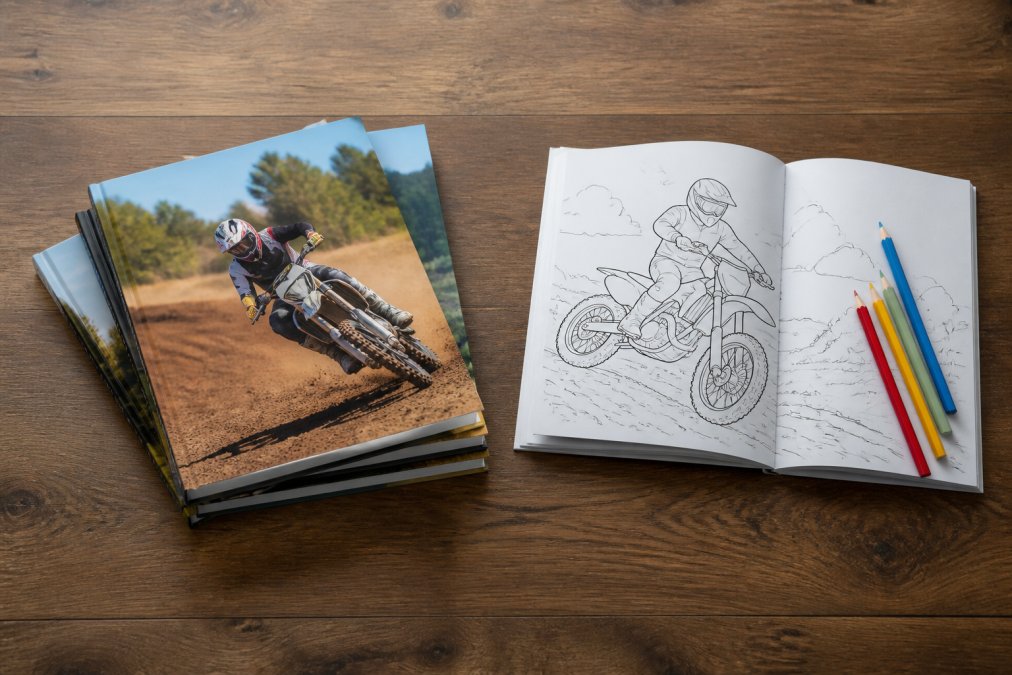
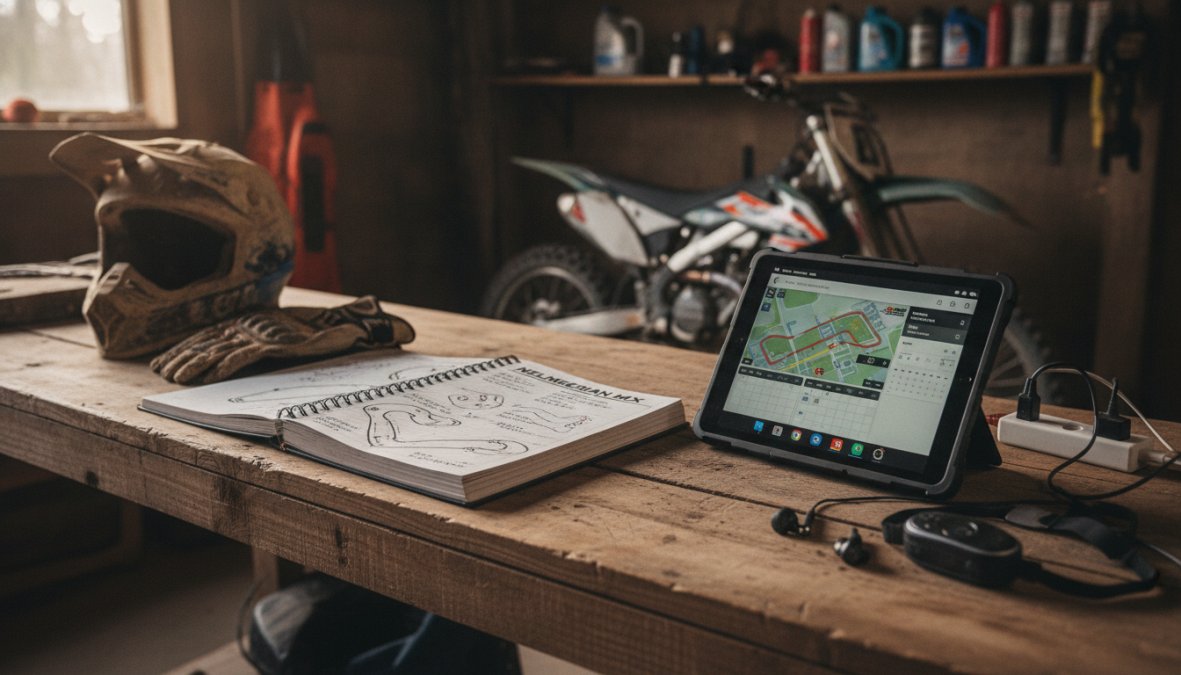
At Nelmgerian MX, we offer a curated collection of children's storybooks, coloring books, and rider training journals designed to build confidence, knowledge, and passion both on and off the track. Explore our collection of storybooks, coloring books, and rider training journals to support your child's motocross journey.
Frequently Asked Questions
Is a 2-stroke or 4-stroke dirt bike better for a beginner child?
For absolute beginners, a 4-stroke is typically better. Four-strokes deliver smooth, predictable power that helps young riders build confidence and learn throttle control without being overwhelmed. The automatic clutch on many 4-stroke models (like the Honda CRF110F) lets kids focus on balance and steering. Two-strokes produce snappier, more aggressive power that demands faster reactions, better for kids with prior riding experience or those ready for racing.
What are the main maintenance differences between 2-stroke and 4-stroke dirt bikes?
Four-strokes require regular oil changes (every 50-100 hours of riding), valve adjustments, and air filter cleaning. Two-strokes need fuel-oil mixture preparation, spark plug fouling checks, and top-end rebuilds more frequently due to higher combustion stress. Two-strokes have simpler designs with fewer moving parts, but their engines wear faster. Four-strokes last longer between major rebuilds but demand more routine upkeep. For parents new to maintenance, 4-strokes are less demanding overall.
Are 4-stroke dirt bikes easier to ride for kids?
Yes, generally. Four-strokes produce linear power delivery, meaning the throttle response is smooth and gradual. This makes them forgiving for young riders learning clutch control and throttle modulation. Two-strokes have a narrower power band with snappy, responsive acceleration that can catch beginners off guard. The automatic clutch on entry-level 4-strokes (like the Kawasaki KLX110R) also removes the complexity of manual clutch operation, letting kids ride immediately without stalling.
Do 2-stroke dirt bikes require more frequent engine rebuilds?
Yes. Two-stroke engines operate at higher combustion temperatures and have more aggressive piston ring wear, requiring top-end rebuilds every 40-80 hours of riding. Four-strokes can run 200+ hours between major rebuilds. If your child rides frequently, budget for more frequent rebuilds with a 2-stroke. This increases long-term cost of ownership, though individual rebuild costs may be lower than a 4-stroke overhaul.
Which dirt bike engine type is safer for a child learning to ride?
Four-strokes are safer for learning because their linear power delivery and lower engine braking make them more predictable. The smooth throttle response gives young riders time to react and adjust. Two-strokes' snappy power can surprise inexperienced riders, leading to loss of control or confidence. Pair a 4-stroke with proper safety gear (helmet, chest protector, gloves) and a training progression path, and your child will develop skills more safely before advancing to a 2-stroke if desired.
This article was written using GrandRanker