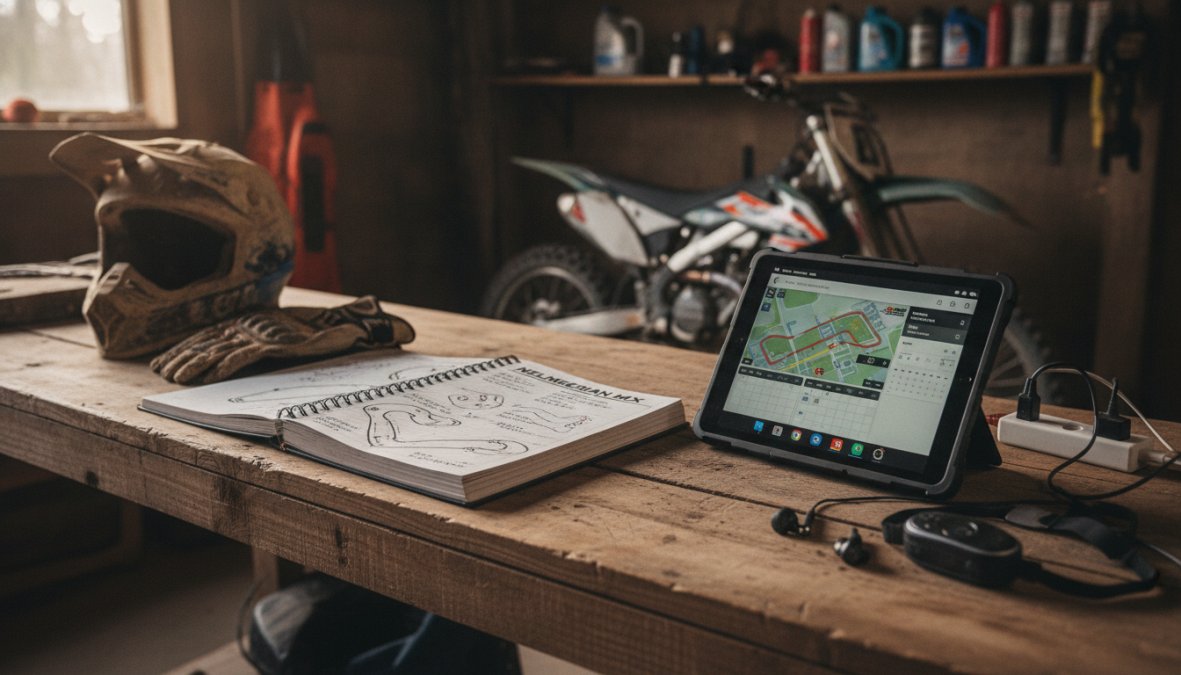
 comparison
Motocross Journals vs Digital Training Apps: 2026 Guide
Table of Contents
- Motocross Journals vs Digital Training Apps: Which Method Wins?
- Why This Choice Matters for Rider Development
- Feature Comparison: Journals and Digital Apps Side-by-Side
- The Case for Physical Motocross Training Journals
- Digital Training Apps: Advanced Motocross Lap Timing and Analysis
- Motocross Training Benefits: How Journals and Apps Build Rider Skills
- Dirt Bike Maintenance Tracking: Journal vs App Approaches
- Online Motocross Coaching Integration and Social Accountability
- Pricing and Cost Considerations
- Frequently Asked Questions
Last Updated: July 21, 2026
Motocross Journals vs Digital Training Apps: Which Method Wins?
Riders face a fundamental choice: track progress with a physical training journal or embrace digital training apps. The decision depends on your specific goals, riding environment, and how you process information. This guide breaks down both methods so you can make an informed decision that fits your riding style.
Why This Choice Matters for Rider Development
The tracking method you select directly influences how much you retain from your training sessions. Physical journals force you to slow down and write by hand, which research shows improves memory retention. Digital apps offer immediate data analysis, GPS tracking, and cloud synchronization that paper cannot match.
Both approaches work differently. A rider using a journal must manually review notes and identify patterns. A rider using a digital app sees graphs and lap-by-lap comparisons automatically. The choice affects your ability to share progress with coaches, digital platforms enable real-time collaboration, while journals require intentional sharing.
Feature Comparison: Journals and Digital Apps Side-by-Side
| Feature | Physical Journal | Digital Training App |
|---|---|---|
| Portability | Lightweight, always accessible | Smartphone-dependent, requires battery |
| Data Analysis | Manual calculation required | Automatic graphs and metrics |
| GPS Tracking | Not available | Available with compatible devices |
| Offline Access | Always works | Works offline, syncs when connected |
| Multimedia Support | Sketches and written notes only | Photos, video, voice notes, wearable data |
| Durability | Vulnerable to mud and moisture | Protected by phone case, water-resistant options |
| Setup Tracking | Written descriptions | Detailed logged parameters |
| Coaching Integration | Requires manual sharing | Cloud-based sharing and feedback |
| Cost | One-time, minimal investment | Ranges from free to subscription models |
| Long-term Retention | Physical archive | Cloud backup and searchable database |
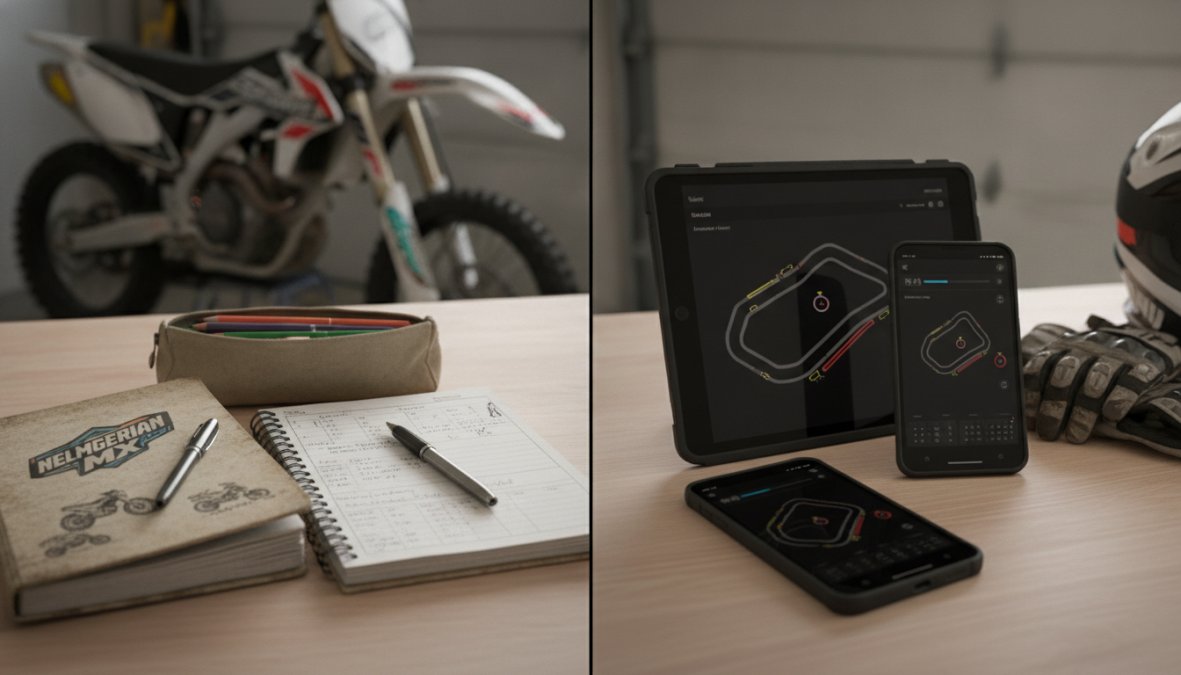
Neither option dominates across all dimensions. Journals excel at tactile engagement and distraction-free focus. Apps dominate in data synchronization, wearable integration, and multimedia support.
The Case for Physical Motocross Training Journals
Physical journals offer something digital tools cannot: a direct connection between your hand, your mind, and your experience. When you write down what happened during a session, you're processing it, not just documenting facts.
Tactile Feedback and Long-Term Retention
Handwritten notes create stronger memory encoding than digital alternatives. For motocross riders, insights you write in a journal tend to stick with you longer. The friction of writing forces you to be selective about what matters, you're capturing what your brain identifies as significant.
Reviewing old journal entries weeks or months later activates different memory recall than scrolling through an app. Many riders report that reviewing old entries reveals patterns they missed during original sessions.
Durability in Extreme Environments
A motocross track is harsh on electronics. Mud, water, temperature swings, and vibration create an environment where phones and smartwatches struggle. A physical journal in a waterproof case survives conditions that would damage most digital devices.
A journal doesn't need charging, doesn't require internet connectivity, and doesn't depend on app updates or server availability. You can use the same journal for an entire season without worrying about software compatibility issues.
Distraction-Free Performance Tracking
A journal forces focused attention. You're not tempted to check messages or social media while documenting your session. This focused state matters for rider development, you're entering deliberate reflection mode, thinking deeply about your performance without interruption.
Digital Training Apps: Advanced Motocross Lap Timing and Analysis
Digital apps represent the frontier of motocross performance tracking. They capture data that human observation alone cannot measure, enabling analysis that transforms how riders understand their performance.
Real-Time Data Synchronization and Cloud Storage
Modern motocross training apps automatically sync your session data to cloud servers, creating a permanent, searchable archive of every ride. Cloud storage eliminates the risk of losing critical performance records and keeps your data accessible from any device, anywhere.
This approach enables coaches to access your data remotely and provide feedback without being trackside. You can review sessions from months ago, compare metrics across entire seasons, and identify long-term improvement trends.
Wearable Integration and GPS Tracking
Digital apps integrate with wearable devices, smartwatches, and GPS units to capture biometric and positional data that journals cannot record. Your app tracks heart rate during intense sections, shows exact speed at every point on the track, and measures acceleration and braking force.
GPS tracking provides objective data about your racing line. Instead of relying on memory, you see your actual path overlaid on the track map. You can compare your line from one lap to the next, identifying where you're gaining or losing time.
Multimedia Support and Coaching Feedback
Digital apps let you attach photos, video clips, and voice notes to your session records. A coach can review your GPS data, watch your video, hear your notes, and provide specific feedback without being present. You can share your entire session with multiple coaches simultaneously, gathering diverse perspectives on your performance.
Motocross Training Benefits: How Journals and Apps Build Rider Skills
Both journals and digital apps contribute to rider development when used consistently. Journals build self-awareness through reflection, translating experience into language is where learning happens. Digital apps build precision through measurement, quantifying improvements you might otherwise miss.
The most effective riders often use both methods: apps for objective performance metrics and journals for subjective reflection. The combination creates a complete training picture.
Dirt Bike Maintenance Tracking: Journal vs App Approaches
Physical journals work well for maintenance tracking because they force you to document what you did and when. Over time, your journal becomes a complete service history of your bike.
Digital apps excel at maintenance reminders. They track service intervals and send notifications when maintenance is due. Apps also enable you to attach photos of maintenance work, track parts costs, and monitor long-term maintenance trends.
Online Motocross Coaching Integration and Social Accountability
Digital apps enable seamless coaching integration. You upload your session data, your coach reviews it remotely, and provides feedback directly within the app. Social accountability features in apps create motivation through visibility, you're more likely to train hard when your progress is visible to your community.
Journals provide a different kind of accountability. Sharing a journal entry with a coach requires intentional action, often leading to deeper conversations than automated app integration.
Pricing and Cost Considerations
Physical journals represent a one-time, minimal investment. A quality motocross training journal costs significantly less than most digital app subscriptions and requires no recurring fees.
Digital apps operate on different pricing models, some charge one-time fees, others use subscription models. Advanced features often require compatible wearable devices, smartwatches, or GPS units, representing significant additional investment.
For riders on a budget, a quality physical journal offers excellent value. For serious competitors with access to coaching and wearable technology, digital apps provide capabilities that can accelerate improvement.
The choice between motocross journals vs digital training apps isn't binary. Many elite riders use both methods, leveraging the strengths of each. Journals provide tactile engagement and distraction-free reflection. Digital apps deliver precise metrics and seamless coaching integration.
Your decision should align with your specific training goals, budget, and environment. The most important factor is consistency, whatever method you choose, use it reliably after every session. The tracking method matters far less than the discipline of actually tracking.
Frequently Asked Questions
What are the main benefits of using a motocross training journal instead of a digital app?
Physical motocross training journals offer tactile feedback that enhances long-term retention of training insights. They eliminate digital distractions at the track and provide a durable, offline-accessible record of your rides. Many riders find the act of handwriting notes strengthens memory and habit tracking. Journals also work in extreme track conditions without battery concerns, making them reliable for consistent performance monitoring across training sessions.
Can digital motocross training apps accurately track lap times and bike maintenance?
Yes. Digital training apps like MX Buddy and LITPro use GPS technology and wearable integration to provide precise lap timing, split times, and detailed riding analysis. They automatically sync data across devices via cloud storage and generate actionable coaching feedback. However, accuracy depends on external GPS devices (which may require additional investment) and consistent data entry. Apps excel at organizing maintenance logs with automated service notifications, unlike manual journals.
What's the best approach for young motocross riders learning to track their progress?
Young riders benefit from a hybrid approach combining both methods. A physical motocross training journal builds confidence and develops the habit of reflection without technology barriers, while occasional digital app use (with parental guidance) introduces performance metrics like lap timing and GPS tracking. This dual method supports rider development by blending the tactile, distraction-free benefits of pen-and-paper journaling with the advanced data analysis of digital platforms, helping kids understand their improvement over time.
How does motocross coaching online work with journals versus digital apps?
Digital training apps integrate seamlessly with online motocross coaching by sharing data directly with coaches, enabling real-time feedback on performance metrics, riding consistency, and technique. Physical journals require manual photo uploads or manual review sessions, which is slower but still valuable for coaching. Many serious riders use apps to provide coaches with detailed GPS playback and acceleration data, while journals serve as personal reflection tools that coaches can review during structured feedback sessions.
This article was written using GrandRanker