 ultimate-guide
Benefits of Motocross for Family Bonding: 2026 Guide
Table of Contents
- Why Motocross Creates Stronger Family Bonds
- How to Get Kids Started in Motocross
- Physical and Mental Benefits of Motocross for Children
- Budgeting for Family Motocross: What Parents Should Know
- Best Motocross Gift Ideas for Children
- Motocross Training Journals for Young Riders
- Maintenance as a Bonding Activity
- Frequently Asked Questions
Last Updated: September 14, 2026
Why Motocross Creates Stronger Family Bonds
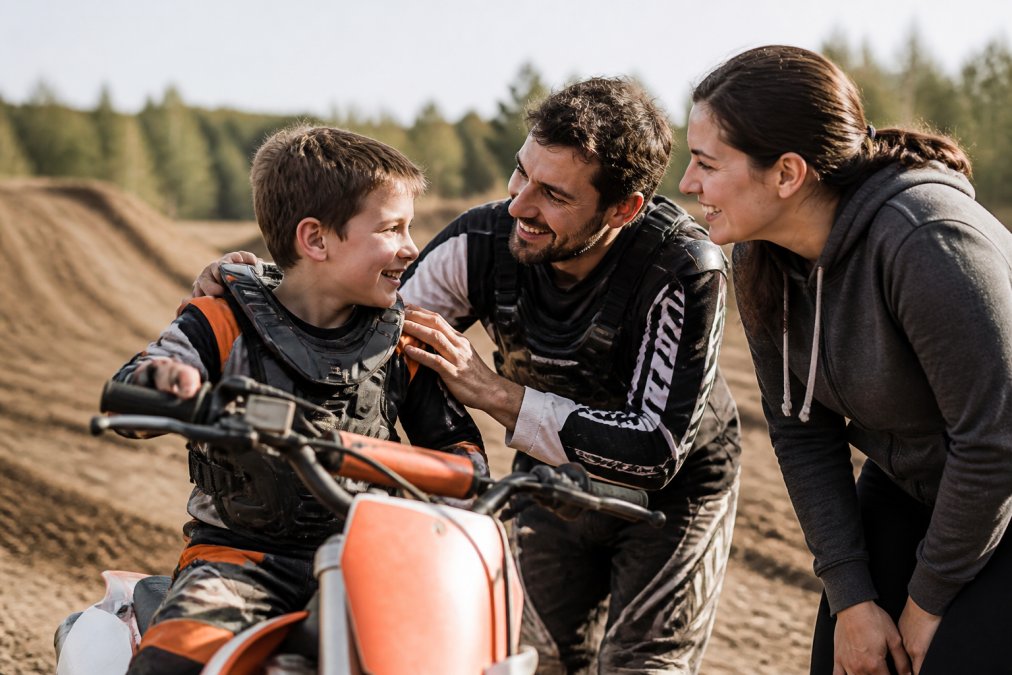
Motocross is one of the few youth sports where a parent cannot simply drop a child off and drive away. Someone has to load the bike, check the chain, mix the fuel, and stand at the fence for every lap. That requirement is why the benefits of motocross for family bonding run deeper than most weekend activities. This guide from Nelmgerian MX explains what happens when a family commits to the sport together.
The bonding starts with shared experience. Unlike a video game or a tablet, a dirt bike demands real-world attention from both parent and child.
Shared Experience and Communication
Shared experience is the foundation of family bonding, and motocross delivers it in concentrated form. A parent and child at the track are not just occupying the same space, they solve problems together: a fouled plug, a nervous first lap, a hill that looked steeper up close.
Communication improves because it has to. Riders learn to speak up about fear, fatigue, and mechanical trouble, and parents learn to listen without lecturing.
Building Trust and Teamwork on the Track
Trust gets built in small, repeated moments: a child who watches a parent check every bolt learns that preparation matters, and a parent who watches a cautious first lap learns patience.
Teamwork shows up in track etiquette too. Holding a gate, waiting for a slower rider to clear a jump, and helping a stranded kid restart a bike all teach sportsmanship that carries into school and friendships. Wearing matching team inspired apparel reinforces this sense of collective identity and shared commitment while you navigate the challenges of the track together.
How to Get Kids Started in Motocross
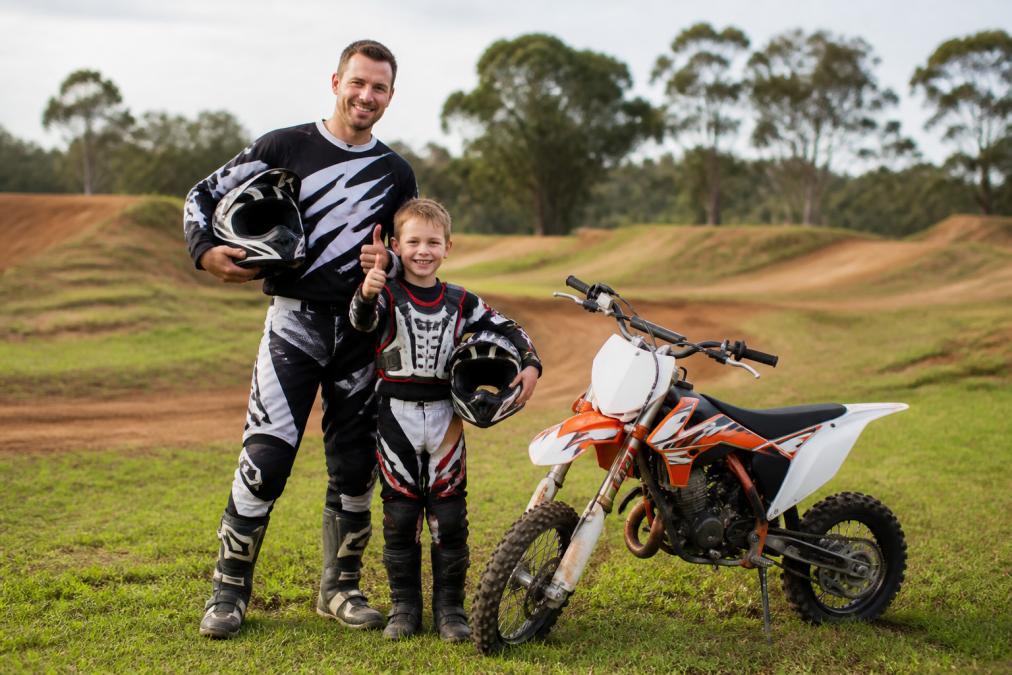
Getting kids started in motocross works best when you match the bike to the child, not the child to the bike. A rider over-mounted on a machine that is too tall or too powerful loses confidence fast, and confidence is harder to rebuild than to protect.
Start with a beginner-friendly dirt bike sized so the child can touch the ground with both feet. Then layer in protective gear before the first real ride, not after. The sequence matters: bike fit, then gear, then a controlled first session on flat, soft ground.
Choosing the Right First Dirt Bike
A first dirt bike should be small, light, and easy to start. For a young beginner, a 50cc machine with a throttle limiter is a common starting point, letting a parent dial back speed while the rider builds throttle control and balance (Before They Ride). The usual progression runs roughly 50cc to 65cc to 85cc, with each step adding power and seat height the child must be physically ready to manage.
Avoid the temptation to buy a bike the child will "grow into." A bike that is too large teaches fear instead of technique. Two practical checks before you buy:
- Flat-foot test: With the bike off and the child straddling it, both feet should reach the ground. If only the toes touch, the bike is too tall.
- Weight test: The child should be able to lift the bike off its side after a tip-over. If they cannot, the bike is too heavy to learn on safely.
Also match the machine to the terrain and discipline: a trail-oriented bike with softer suspension and a quieter exhaust suits open land, while a motocross-specific bike is built for closed courses and jump-heavy tracks. Buying used is sensible for a first bike, but inspect the frame, fork seals, chain, and air filter, and confirm it starts cold before money changes hands.
Essential Protective Gear and Safety Checklist
Motorcycle safety starts with gear, and the helmet is non-negotiable. Look for a snug fit and a recognized safety certification, and replace any helmet that has taken a hard impact (nhtsa.gov). Size gear to the child's current body, not oversized to last multiple seasons, loose gear shifts on impact and defeats its purpose.
Use this checklist before every ride, and treat it as a habit rather than a one-time setup:
- Properly fitted helmet with current certification
- Goggles that seal against the face
- Chest protector
- Gloves with good grip
- Riding boots that cover the ankle
- Knee and elbow pads
- Long sleeves and long pants
- Neck brace for younger or less experienced riders
- Kidney belt for older riders on longer sessions
Age and experience change what matters most. For the youngest beginners, priorities are a lightweight helmet, a chest protector, and boots that let them feel the pegs. As riders move up in size and speed, knee braces, a neck brace, and heavier-duty boots matter more because the forces in a fall grow with speed. Parents should gear up too, riding in shorts and sneakers models exactly the wrong behavior.
A Safe First Session
Before any real riding, walk the area with the child and point out hazards: rocks, ruts, other riders, and boundaries. Set a rule that the child rides only within sight of a parent. Let the child get used to the engine's sound and vibration, and practice stopping before going. A first session that ends with the child wanting more beats one that ends in a scare.
Physical and Mental Benefits of Motocross for Children
The physical benefits of motocross for children are easy to see: better balance, coordination, and endurance. Riding works the core, arms, and legs continuously, and most kids finish a practice session genuinely tired in a way screen time never produces (pubmed.ncbi.nlm.nih.gov).
The mental benefits matter just as much. Motocross builds mental toughness because every rider falls, and every rider has to decide whether to get back on. That decision, repeated over months, builds resilience and discipline that show up in schoolwork and friendships.
Risk assessment is another quiet benefit. Riders learn to read a track, judge a jump, and decide when to back off. Those judgment skills transfer far beyond the sport.
Budgeting for Family Motocross: What Parents Should Know
Budgeting is where most families either commit to motocross or quietly step away. The sport has real costs, and going in without a plan is the fastest way to resent it. Most families find ongoing expenses matter more than the initial purchase, so plan for the season, not just the bike, this is the part that decides whether a family stays in the sport.
The main categories to plan for are the bike itself, protective gear, maintenance parts and fluids, track fees, and travel. Gear and bike costs are largely one-time, while maintenance and track fees recur every month you ride.
| Cost Category | One-Time or Recurring | Planning Tip |
|---|---|---|
| First dirt bike | One-time | Buy used, size for now |
| Protective gear | One-time | Never cut corners on the helmet |
| Maintenance parts and fluids | Recurring | Budget monthly, not yearly |
| Track fees | Recurring | Check for family rates |
| Travel and food | Recurring | Pack meals to cut costs |
The Real Cost Drivers
Three things drive most of the ongoing spend, separating a family that rides for years from one that quits after a season.
Maintenance scales with hours, not months. A bike ridden every weekend needs more frequent oil changes, air filter cleanings, chain adjustments, and tire replacements than one ridden twice a month. Set aside a fixed monthly amount for consumables, oil, filters, chain lube, spark plugs, and tires, and treat it as a subscription rather than a surprise. Tires are usually the largest recurring part cost because soft track surfaces wear knobbies quickly.
Track fees reward frequency. Most facilities charge per rider per day, and many offer a family rate or season pass. If your family rides more than a handful of times a month, a season pass often pays for itself. Call ahead and ask about family and multi-rider options, because they are rarely advertised.
Travel is the hidden line item. Fuel, food, and lodging add up fast when the nearest track is an hour or more away. Packing meals and sharing rides with another family cuts this substantially. For families new to the sport, staying local the first season keeps travel costs predictable while skills and confidence grow.
Buying Used Without Getting Burned
The used market is where families save the most and also lose the most. A cheap bike needing a top-end rebuild, new suspension, and a chain and sprocket set can cost more than a well-maintained bike priced higher up front. Check the frame for cracks, the fork and shock for leaks, the wheel bearings for play, and the air filter for neglect. Ask when the top end was last serviced and whether the seller has receipts. A bike that starts cold and idles cleanly beats one warmed up before you arrive.
Where to Save and Where Not To
- Save on: used bikes, gently used gear in good condition, DIY maintenance, and season passes.
- Do not save on: helmets, boots, and anything between the rider and the ground. Safety gear is the one category where cutting corners has no upside.
Pricing for bikes, gear, and track access varies by region and season, so check current local listings and facility rates before you commit to a budget.
Best Motocross Gift Ideas for Children
The best motocross gifts for children keep them connected to the sport between rides. A child who cannot be on the bike every day can still read about it, color it, and track their progress.
Storybooks featuring riders and dirt bikes build early reading skills while feeding the obsession. Activity and coloring books work well for younger kids who are not yet reading independently. For older riders, a training journal turns practice into something they can see improving week over week.
Motocross Training Journals for Young Riders
Motocross training journals for young riders turn practice into measurable progress. A journal gives a child a place to record laps, goals, and race results, and gives parents a concrete way to see improvement that is not always obvious from the sidelines.
The real value shows up over a season: a rider who logs every practice can look back and see how far they have come, building confidence a single good day at the track cannot.
For families, the journal becomes a shared record. Parents and kids review it together, set new goals, and talk about what to work on next.
Maintenance as a Bonding Activity
Maintenance is the most overlooked bonding opportunity in motocross. It is easy to treat wrenching as a chore before the fun part, but families who lean into it often report it as the best part of the week.
Teaching a child to clean an air filter, check tire pressure, and tighten bolts builds mechanical aptitude and responsibility, and teaches that a cared-for bike runs better and lasts longer. Start with simple tasks and let the child take on more as skills grow.
Motocross asks a lot of a family: time, money, and a willingness to stand in the cold at the fence. The payoff is a child who learns resilience, responsibility, and sportsmanship while a parent learns patience alongside them. At Nelmgerian MX, we build the books, training journals, and screen-free activities that keep young riders learning between practice days. Our children's storybooks, rider journals, and activity books are designed to help young riders succeed on and off the track. Get started with Nelmgerian MX and give your rider the tools to grow every day, not just on race day.
Frequently Asked Questions
Is motocross a good hobby for family bonding?
Yes, motocross offers a unique shared experience that builds communication, trust, and teamwork. Families spend weekends together at the track or on trails, working on riding technique and celebrating progress. The sport also teaches resilience and sportsmanship, which strengthens family bonds through mutual support and encouragement.
How can families get started with motocross safely?
Start with a properly sized dirt bike and full protective gear, including a helmet, goggles, gloves, boots, and chest protector. Enroll in a local riding school or beginner clinic to learn throttle control and balance. Always ride within your skill level and supervise young riders closely. Many tracks offer family practice days with designated beginner areas.
What are the physical benefits of motocross for children?
Motocross improves cardiovascular endurance, muscle strength, and coordination. Young riders develop motor skills and balance through throttle control and body positioning. The sport also builds mental toughness and discipline as kids learn to handle challenges and follow track etiquette. These physical and mental benefits carry over into other areas of life.
Does motocross help build discipline in kids?
Yes, motocross requires discipline both on and off the track. Kids learn to follow safety rules, maintain their bikes, and practice regularly to improve. The structured environment of track days and riding schools teaches responsibility and risk assessment. These habits often translate into better focus at school and home.