 ultimate-guide
How Motocross Develops Young Riders' Minds
Table of Contents
- How Motocross Develops Young Riders' Minds and Builds Confidence
- Benefits of Motocross for Child Development
- How to Get Kids Excited About Reading Motocross Stories
- Using Motocross Training Journals for Kids to Track Progress
- Building Sportsmanship and Emotional Regulation Off the Track
- Getting Started: Safety Gear and Proper Preparation for Young Riders
- Long-Term Progression: From Beginner to Confident Rider
- Frequently Asked Questions
Last Updated: October 3, 2026
How Motocross Develops Young Riders' Minds and Builds Confidence
Motocross is far more than just riding dirt bikes. When young riders step onto the track, they're engaging in a sport that shapes how their minds work, how they handle pressure, and how they see themselves.
The sport forces young riders to make split-second decisions while managing fear, balance, and machine control simultaneously. This isn't passive entertainment. It's active cognitive development wrapped in the thrill of speed and competition. The benefits extend far beyond the track into school, friendships, and how children approach challenges in life.
Below, we'll explore how motocross develops young riders mentally and emotionally, what makes the sport uniquely powerful for child development, and how to support young riders in building genuine confidence through structured training and engagement.
Benefits of Motocross for Child Development
Physical Coordination and Motor Skills
Motocross demands exceptional coordination. Young riders must synchronize their hands, feet, and body weight while managing throttle control, braking, and steering on uneven terrain. This integration of complex motor skills happens in real time, with immediate feedback, if you get it wrong, you feel it.
Children who ride develop what researchers call "cross-lateral coordination," where opposite sides of the body work together in sophisticated patterns. Throttle control with the right hand while braking with the left, shifting body weight while cornering, and balancing on acceleration all require the nervous system to fire in precise sequences. Over weeks and months of practice, these neural pathways strengthen, making the skills automatic.
The physical benefits extend to everyday life. Young riders often show improved balance in school sports, better handwriting coordination, and more confident movement in general. The core strength developed through riding, holding position on a bike over rough terrain, translates to better posture and stability in other activities.
Mental Resilience and Pressure Management
Motocross teaches young riders to manage fear and pressure in real, measurable ways. Every time a rider approaches a jump or a challenging section of track, they're facing genuine risk and uncertainty.
The sport creates what's sometimes called "productive struggle." A young rider fails repeatedly, crashes, doesn't make a jump, loses control in a corner. But the track is forgiving in a way that builds resilience. You crash, you get up, you try again five minutes later. This cycle teaches that failure isn't permanent or catastrophic; it's information.
Mental resilience in motocross also comes from managing expectations. A child might set a goal to nail a specific section or improve their lap time. When they don't hit it on the first try, or the tenth, they learn to adjust their approach, practice deliberately, and persist. This is grit in action, not as an abstract concept but as lived experience.
Discipline and Goal Setting Through Racing
Motocross naturally teaches discipline because the sport has clear, measurable outcomes. You either made the jump or you didn't. Your lap time either improved or it didn't. A race result is objective. This clarity is powerful for young riders because it removes ambiguity from goal-setting.
A young rider might decide to improve their start technique or to nail a specific corner consistently. To achieve that, they need to practice deliberately, not just ride around. They learn that showing up matters, that repetition builds skill, and that small improvements compound. These are foundational lessons about how effort connects to results, lessons that are harder to teach in abstract terms but obvious on a dirt bike.
Discipline in motocross also means respecting the sport's demands. Proper preparation, maintenance of equipment, showing up to practice on schedule, and following track etiquette all require self-directed responsibility. A young rider learns that taking shortcuts, skipping warm-up, not checking tire pressure, ignoring safety protocols, has direct consequences.
How to Get Kids Excited About Reading Motocross Stories
Reading engagement drops when content feels disconnected from a child's real interests. But motocross stories bridge that gap, they're about the sport kids love, featuring characters they can relate to, and showing scenarios they recognize from their own riding experiences.
Books like Ryder's First Motocross Race and Ryder Meets Pepper work because they don't treat motocross as a backdrop. The sport is central to the story, and the lessons woven in, about courage, friendship, and believing in yourself, emerge naturally from riding scenarios.
The key to getting kids excited about reading is matching the reading level to their confidence while keeping the content genuinely interesting. A child who just started riding might gravitate toward Ryder's Digraph Dirt Track, which combines early literacy skills with motocross themes.
Parents can amplify interest by reading together, asking questions about the characters' choices, and connecting the stories to the child's own riding experiences. "How did Ryder handle being nervous?
Using Motocross Training Journals for Kids to Track Progress
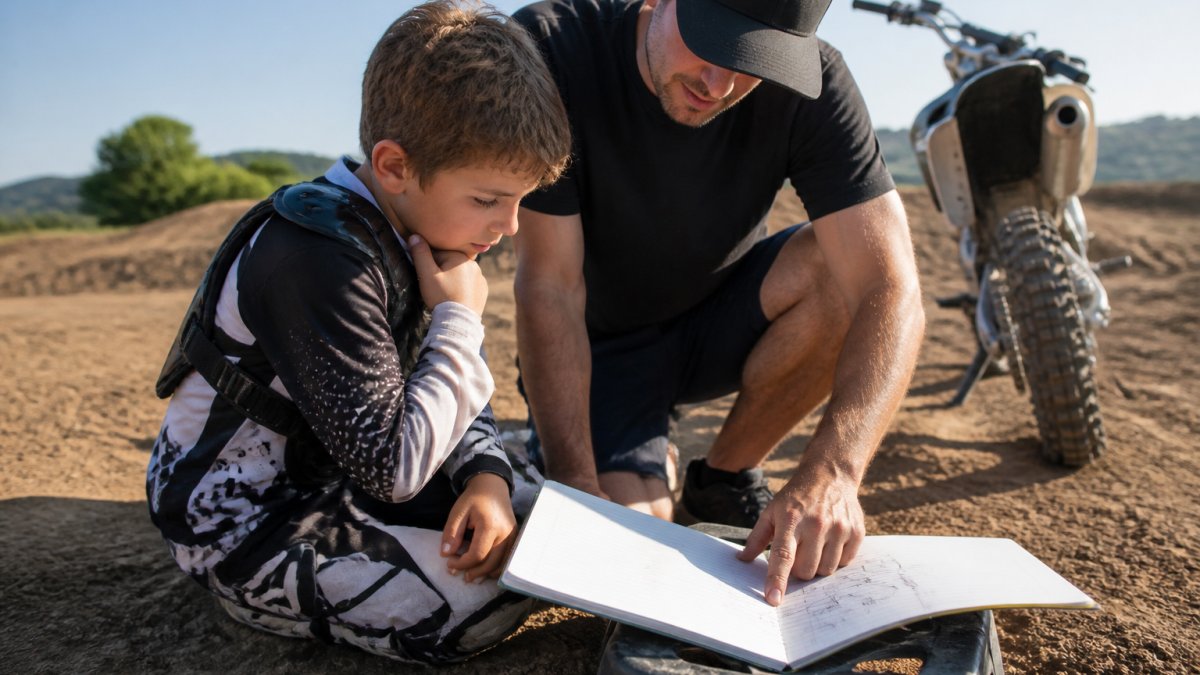
A training journal transforms practice from random activity into purposeful development. When a young rider writes down what they worked on, what went well, and what they'll focus on next time, they're engaging in deliberate practice, the kind that actually builds skill.
The Nelmgerian MX Training Journal is designed for young riders to record not just what happened, but why it matters. A child might note: "Worked on throttle control in the sandy section. Felt smoother on the third lap.
This simple practice accomplishes several things at once. First, it builds metacognition, the ability to think about thinking. Young riders learn to observe their own performance, identify patterns, and plan improvements. Second, it creates a visible record of progress.
Training journals also develop accountability. When a rider commits to a specific focus for the next session, they're more likely to follow through. And when they return to the journal after practice, they're reflecting on whether they achieved what they set out to do, another layer of self-directed learning.
Building Sportsmanship and Emotional Regulation Off the Track
Sportsmanship isn't something young riders absorb passively from motocross. It's developed through deliberate attention to how they handle winning, losing, frustration, and conflict with other riders.
Nelmgerian MX Training Journal →
Motocross teaches accountability in ways that stick. Track etiquette matters. Riders who respect the sport and other competitors build reputations.
Emotional regulation develops when young riders experience disappointment and learn to process it. A child who didn't place as expected might be upset, and that's okay. The skill is learning to sit with that feeling, understand what happened, and decide what to do differently next time. Over time, young riders develop resilience not by avoiding disappointment but by learning to move through it.
Stories and discussions about sportsmanship matter too. Books that feature characters handling tough emotions, frustration, jealousy, disappointment, give young riders language and frameworks for understanding their own feelings. When Ryder faces a setback in Ryder's First Motocross Race, young readers see that even heroes struggle, and that how you respond to struggle defines you.
Getting Started: Safety Gear and Proper Preparation for Young Riders
Safety isn't optional in motocross; it's foundational. Young riders who understand why they wear protective equipment, and who are properly outfitted, develop confidence because they know they're protected.
The essential gear for young riders includes a DOT-approved helmet, chest protector, goggles, gloves, boots, and knee/shin guards.
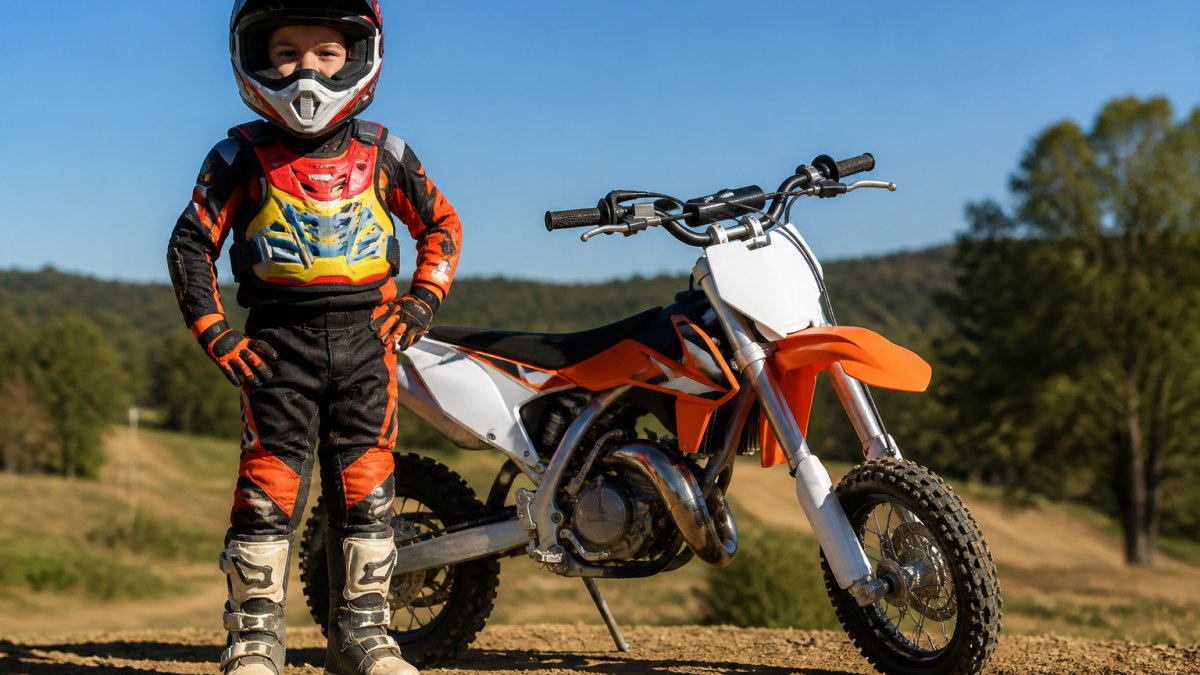
Proper preparation extends beyond gear. Before each ride, young riders should do a basic bike check: tire pressure, brake function, throttle response. This pre-ride ritual builds confidence because the rider knows the bike is ready. It also teaches responsibility, the bike requires care and attention, and respecting that keeps you safe.
Starting young riders on the right-size bike is critical. A 50cc is typical for children ages 5-7, but size and maturity matter more than age.
Long-Term Progression: From Beginner to Confident Rider
Motocross isn't a sprint; it's a long-term journey of skill development and confidence building.
Beginner phase (first 3-6 months): Focus on basic control, balance, throttle management, simple turns. Success at this stage means staying on the bike and feeling comfortable at low speeds.
Intermediate phase (6-18 months): As balance improves, young riders tackle more complex terrain. They learn to manage jumps, navigate corners at higher speeds, and handle mixed terrain.
Advanced beginner phase (18+ months): Young riders develop consistency. They're thinking about racing strategy, understanding track conditions, and managing pressure. This is when racing becomes realistic and exciting.
Throughout all phases, the Nelmgerian MX Training Journal helps young riders track their progress and set meaningful goals.
| Progression Phase | Timeline | Focus Area | Confidence Indicator |
|---|---|---|---|
| Beginner | 3-6 months | Balance and throttle control | Comfortable at low speeds |
| Intermediate | 6-18 months | Jumps, corners, mixed terrain | Managing faster speeds confidently |
| Advanced Beginner | 18+ months | Racing strategy and consistency | Setting and achieving specific goals |
Supporting long-term progression means celebrating small wins, maintaining realistic expectations, and keeping the sport fun. Young riders who feel pressured to advance faster than they're ready often lose confidence.
Motocross develops young riders in ways that reach far beyond the track. The confidence, discipline, resilience, and focus they build through riding become part of who they are.
Frequently Asked Questions
What age is best to start motocross, and how does it help young riders develop?
Young riders can start as early as 3-5 years old on small displacement bikes like 50cc models. Starting young builds motor skills, balance, and confidence at a critical developmental stage. Early exposure to dirt bikes teaches accountability, courage, and determination while developing explosive strength and coordination. Children who begin young often show greater mental resilience and focus as they progress through the sport.
How do motocross training journals for kids actually help with skill development?
Training journals create accountability and track measurable progress. Young riders record practice sessions, goals, and race results, which builds discipline and goal-setting habits. Reviewing past entries helps children recognize improvement, reinforcing confidence. The Nelmgerian MX Training Journal is designed specifically for this purpose, turning screen-free reflection into a tool for tracking advancement.
My child is 5 and just started on a 50cc, will motocross storybooks actually engage him?
Yes, when books feature relatable characters and focus on dirt bike adventures. Young riders connect with stories about characters like Ryder, Pepper, and Wheelie who face challenges on the track. Books like Ryder's First Motocross Race and Ryder Meets Pepper combine exciting narratives with age-appropriate learning, making reading feel like part of the motocross lifestyle rather than a separate activity. Pairing stories with real riding experiences strengthens engagement.
How can educational materials help young motocross riders develop mental toughness?
Educational resources teach young riders to handle pressure, setbacks, and competition through storytelling and structured reflection. Books introduce characters who demonstrate grit and perseverance, while training journals help children process race experiences and set recovery goals. Off-track learning activities build emotional regulation and sportsmanship. Together, these tools develop the mental resilience needed to push through difficult moments on the track.
What's the difference between just riding and using structured learning materials?
Riding alone builds physical skills; structured materials support mental and emotional development. Training journals, storybooks, and guided activities teach goal setting, accountability, and reflection, skills that transfer beyond motocross. Young riders who use educational tools can develop confidence, focus, and progression roadmaps. The combination of dirt bike experience and screen-free learning supports well-rounded development.
How do I keep my young rider motivated during the off-season?
Off-season engagement comes from screen-free activities that keep children connected to the sport. Motocross storybooks, coloring books, and training journals maintain excitement without requiring track access. Reading about riders overcoming challenges and working through training exercises keeps the passion alive. Many families use off-season months to develop reading skills and reflect on past races, building anticipation for the next season.