 ultimate-guide
How to Teach Kids Motocross Basics: A Parent's Guide
Table of Contents
- Start with the Right Bike and Gear for Kids Dirt Bike Safety
- Build Confidence with Kids Motocross Training Drills
- Create a Beginner Dirt Bike Practice Plan for Kids
- Teach Track Etiquette and Safety Protocols
- Transition from Balance Bike to Motorized Riding
- How to Start Motocross Racing for Kids
- Psychological Coaching and Emergency Protocol for Parents
- Frequently Asked Questions
Last Updated: October 19, 2026
Start with the Right Bike and Gear for Kids Dirt Bike Safety
Most parents begin with the machine. That is backwards. When teaching kids motocross basics, the first hour is often spent on fit and protection, not throttle.
Motocross basics are the foundational skills a young rider needs before touching a track: correct bike size, full protective gear, balance, throttle and brake control, and supervised practice. Get these right and everything else follows.
Bike Sizing and Ergonomics
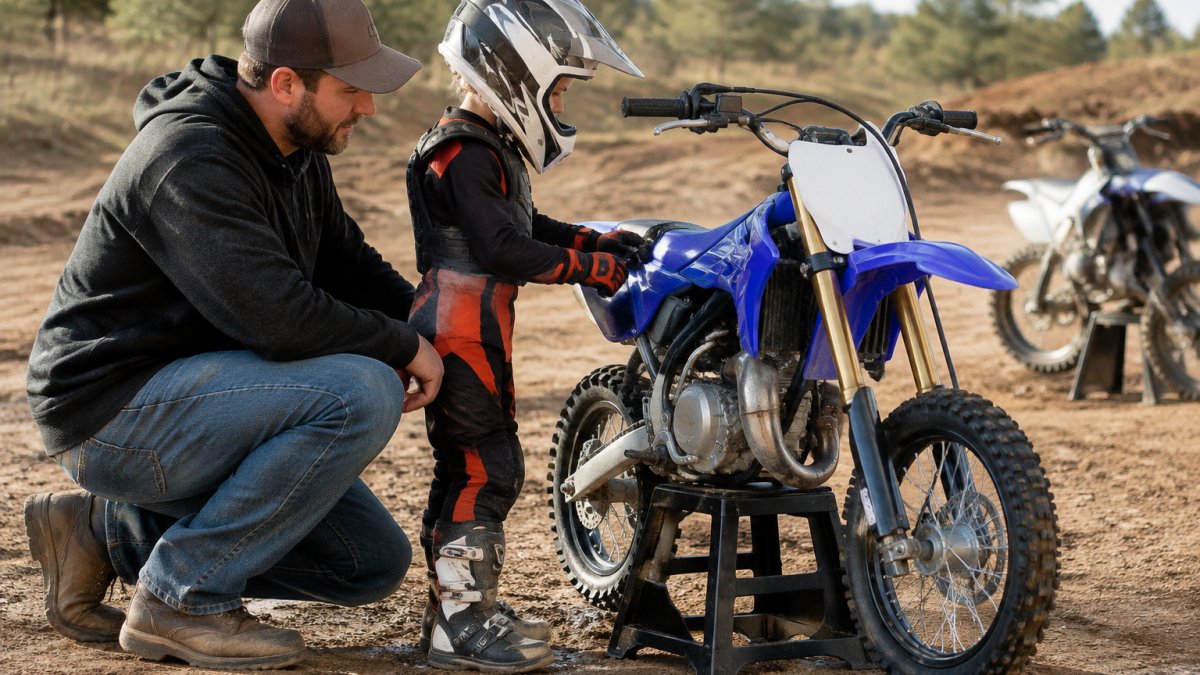
Seat height decides everything for a beginner. A child should be able to place both feet flat on the ground while seated, with knees slightly bent. If they are on tiptoes, the bike is too tall and confidence collapses.
Match engine displacement to age and size. Small four-stroke machines with smooth power delivery suit young beginners far better than aggressive two-strokes.
Essential Protective Equipment
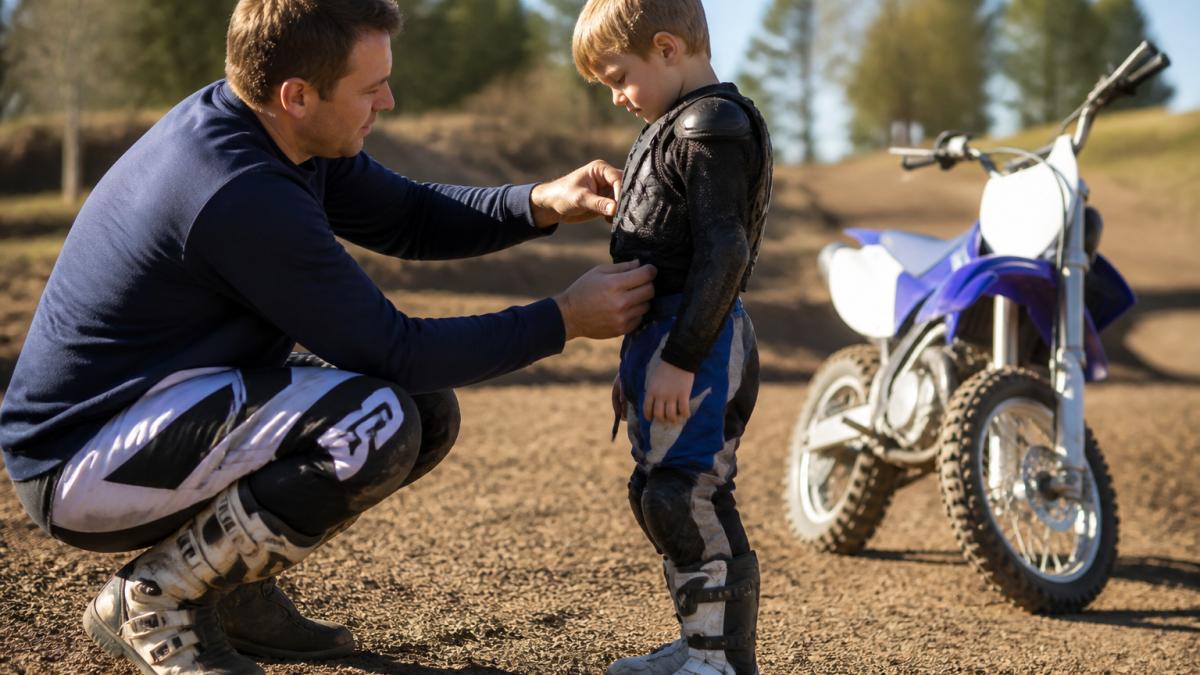
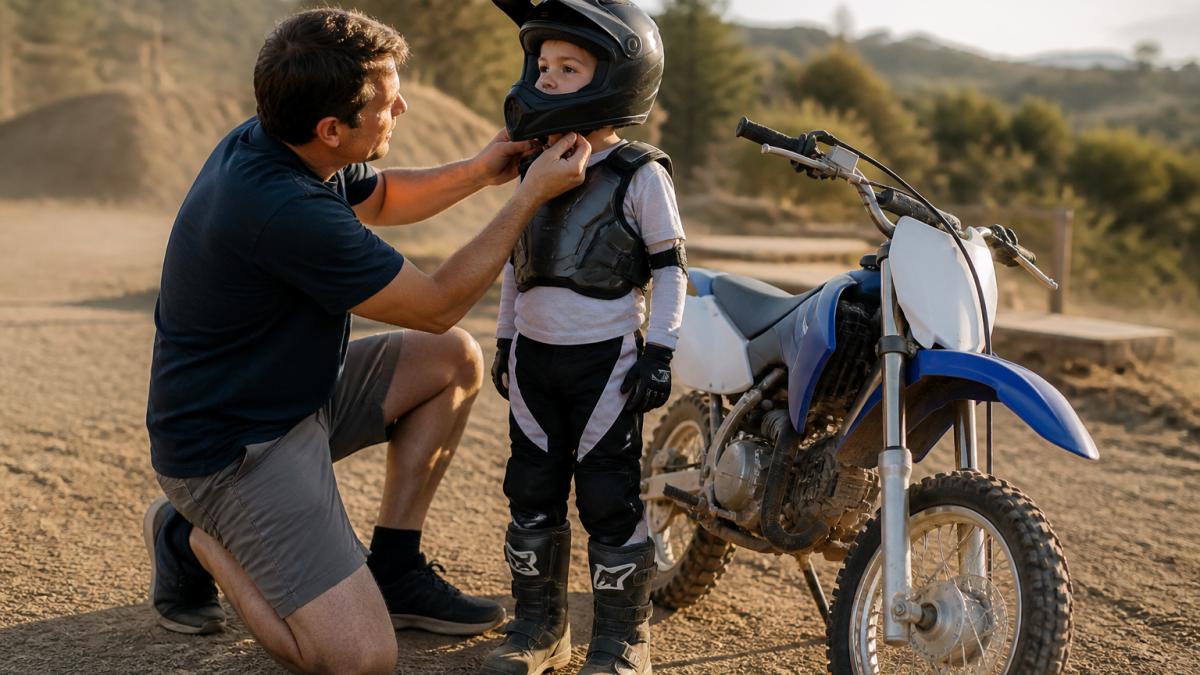
No exceptions here. Kids dirt bike safety gear is not optional equipment, it is the price of admission:
- Full-face helmet sized correctly and fastened every single ride
- Chest protector over the torso
- Riding boots with ankle support
Replace any helmet that has taken a hard impact. A cracked or compressed shell offers no protection, and hand-me-down helmets are a gamble we never recommend.
Build Confidence with Kids Motocross Training Drills
Confidence is a skill you rehearse, not a personality trait. Kids motocross training drills work because they break riding into repeatable pieces a child can master one at a time. Start every session with drills before free riding.
Balance and Body Positioning Drills
Before the engine runs, practice balance. Have your child stand on the pegs with the bike stationary, then roll slowly with feet hovering above the ground. Teach riding posture early: knees bent, elbows up, eyes forward, weight centered over the bike.
Weight distribution changes with terrain. Sitting keeps weight low for traction. Standing shifts weight to the pegs and absorbs bumps. Practice both on flat grass so the switch becomes automatic.
Throttle and Brake Control Exercises
Throttle control is the single most important beginner skill. Set up two markers and have your child ride between them at walking pace, then stop smoothly. Repeat until braking technique is predictable rather than panicked.
Then introduce clutch modulation if the bike has a clutch. Small, deliberate inputs, never a grab. Ten minutes of this beats an hour of aimless laps.
Create a Beginner Dirt Bike Practice Plan for Kids
A beginner dirt bike practice plan for kids should be short, frequent, and predictable. Twenty to thirty minutes, two or three times a week, beats one long weekend session every time. Young attention spans and muscles both need recovery, and skills consolidate between sessions rather than during them.
The Three-Part Session Structure
Every practice session should follow the same shape so your child knows what to expect:
- Warm-up (5 minutes): Slow riding on flat grass, standing on the pegs, weaving between markers. No throttle beyond walking pace. This primes balance and gets the jitters out.
- Skill block (10-15 minutes): One drill only. Pick a single focus for the day, braking at markers, standing through bumps, or looking through a turn, and repeat it. Switching drills mid-session fragments learning.
- Free ride (5-10 minutes): Let them ride however they want within the safe area. This is the reward that keeps them coming back.
Sample 4-Week Practice Schedule
| Week | Focus | Session Length | Frequency | Goal |
|---|---|---|---|---|
| 1 | Balance and posture on flat grass | 20 min | 2x | Feet on pegs, eyes forward |
| 2 | Throttle and brake control drills | 25 min | 2x | Smooth stops at markers |
| 3 | Standing vs sitting, weight shifts | 25 min | 3x | Confident posture changes |
| 4 | Supervised laps with turns | 30 min | 2x | Linked corners at low speed |
Progression Rules That Prevent Plateaus
Most parents advance too fast because the child can do a drill once. Use these gates instead:
- Two clean sessions before advancing. A skill is ready to build on when your child performs it correctly in two consecutive sessions without prompting.
- One variable at a time. Change speed, terrain, or drill, never two at once. If you add turns, keep the speed low. If you add speed, keep the terrain flat.
- Regress without shame. If a session goes sideways, drop back to the previous week's drill for ten minutes. Rebuilding confidence is faster than pushing through frustration.
The Post-Ride Debrief Framework
This is where most practice plans stop, and where the real learning happens. Spend three minutes after every session on a structured debrief. Ask three questions in this order:
- "What went well today?" Let them answer first. If they shrug, name one thing you saw, a smooth stop, a good look through a corner.
- "What was hard?" Listen without correcting. The goal is self-awareness, not a lecture.
- "What do you want to work on next time?" Write the answer down. Next session's skill block comes from their answer, not yours.
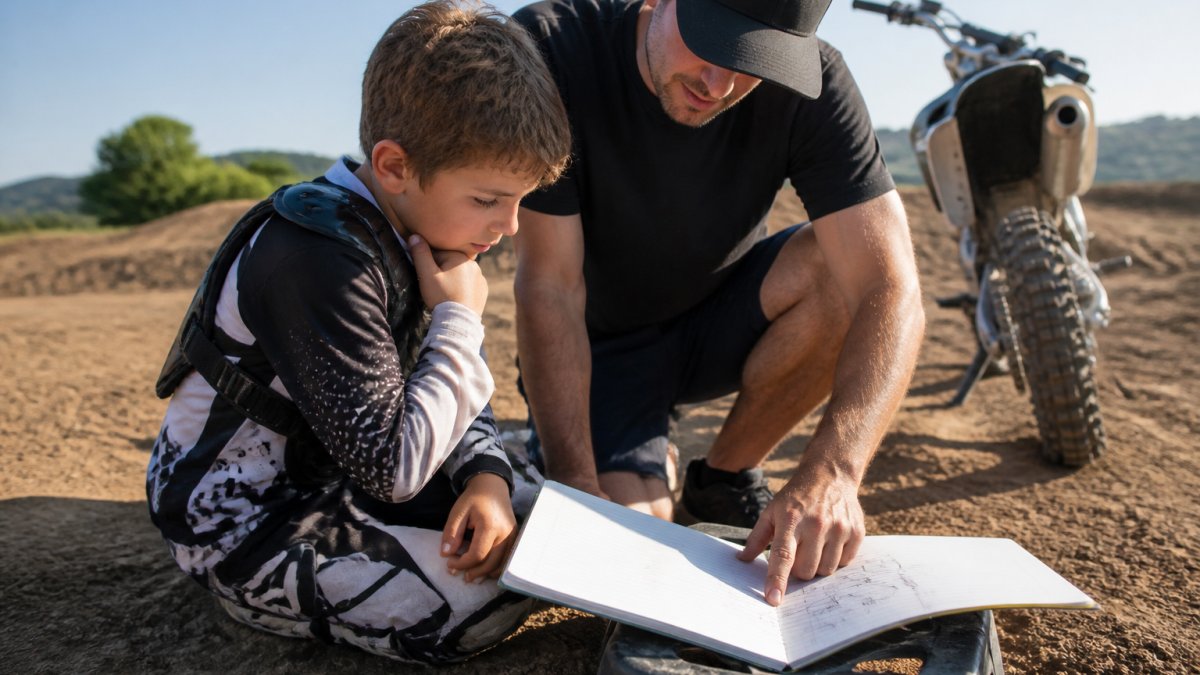
A common pattern among experienced youth coaches is that the debrief matters more than the drill. A child who can name what they struggled with is already solving it. Keep a simple log, date, drill, one win, one challenge, so progress is visible over weeks rather than felt session to session. The Nelmgerian MX Training Journal is built for exactly this purpose.
Teach Track Etiquette and Safety Protocols
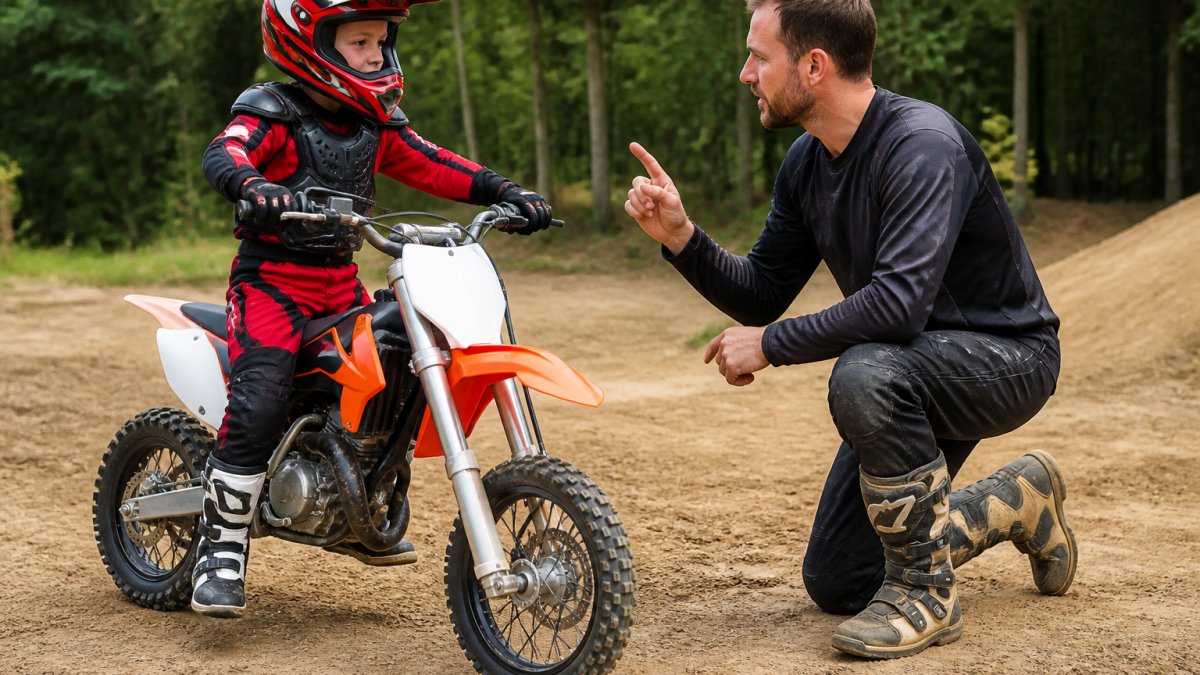
Track etiquette protects your child and everyone around them. Teach it before the first real track day, not during it. Beginner riders should hold a predictable line, signal before slowing, and never cut across the track.
The Four Rules Beginners Must Know Cold
- Hold your line. Pick a side of the track and stay on it. Weaving unpredictably is the most common cause of youth-track collisions.
- Raise a hand before you slow or stop. A raised left hand signals to riders behind that you are decelerating. Teach it as a reflex, not a decision.
- Never stop on the racing line. If you must stop, move to the edge of the track and dismount toward the outside.
- Look where you want to go. Vision and line choice matter more than speed. Teach your child to look through the corner, not at the front wheel. On rut-free terrain and grass field practice areas, this habit forms without the pressure of race traffic.
The Parent's Emergency Protocol
This is the part most guides skip. Before your child ever rides, walk through what happens if they crash. Rehearse it out loud so it is automatic:
- If your child falls and is moving and conscious: Stay where you are. Signal to other riders with a raised hand and wait for the session to be stopped by a track official. Do not run onto a live track.
- If your child is not moving or is unresponsive: Signal urgently, get the nearest adult's attention, and call 911. Do not move them unless there is immediate danger, spinal injuries are worsened by movement.
- If your child is conscious but hurt: Approach only after the track is stopped. Check helmet, limbs, and responsiveness before helping them up. If they cannot bear weight, do not lift them.
What to Carry Every Session
Keep a small kit in your vehicle or gear bag: a first-aid kit with gauze, tape, and antiseptic; a charged phone with emergency contacts saved; a printed list of the nearest medical facility for each track you visit; and a spare helmet strap or zip ties for quick gear fixes. Know the address of the nearest urgent care before you need it, not after.
Nelmgerian MX Training Journal →
Coaching Without Causing Frustration
Etiquette and safety are easier to teach when you coach calmly. Ask questions instead of issuing corrections. "What did you notice on that corner?" builds self-awareness far better than "You braked too late." After each ride, run the three-question debrief from the practice plan: one thing that went well, one thing that was hard, and one thing to work on next time.
Transition from Balance Bike to Motorized Riding
Balance bikes are the best head start in the sport.
Make the switch in stages. First, let them sit on the powered bike with the engine off and practice the controls.
Our storybooks help here. Ryder and Wheelie's Big Ride lets young riders see the transition in a character they recognize, which turns a nervous first ride into something familiar.
How to Start Motocross Racing for Kids
Racing comes after skills, not before. When your child can ride a full practice session without prompting, hold a line, and stop reliably, they are ready for a beginner class.
Look for local amateur events with novice divisions and low-pressure formats. Walk the track together before the first moto. Explain that every rider out there started exactly where they are.
How to start motocross racing for kids comes down to preparation and attitude.
The Nelmgerian MX Training Journal gives young riders a place to log practice, set goals, and track race progress, which turns racing into a learning process rather than a single nerve-wracking day.
Psychological Coaching and Emergency Protocol for Parents
Two things separate prepared motocross parents from anxious ones: how they coach and how they respond when something goes wrong.
For coaching, ask questions instead of issuing corrections.
Know your emergency protocol before you need it. Carry a first-aid kit, keep emergency contacts on hand, and know where the nearest medical facility is at every track you visit. Helmet safety and protective gear reduce risk, but preparation handles the rest.
For nervous young riders, Ryder's First Motocross Race is a gentle way to rehearse race-day nerves before the real thing. Shaun Nelms built Nelmgerian MX around exactly this idea: kids learn faster when the sport feels like a story they belong to.
Frequently Asked Questions
What age can a child start riding a dirt bike?
Most children can start on a small electric or 50cc dirt bike around age 3 to 5, once they can balance a bicycle and follow basic instructions. Focus on proper kids dirt bike safety gear and a bike that fits: your child should be able to touch the ground with both feet while seated. Starting early with a balance bike or push bike builds the coordination needed for throttle and brake control later.
What safety gear does a child need for motocross?
At minimum, a child needs a properly fitted full-face helmet, eye protection, chest protector, riding gloves, long pants, and motocross boots. Knee and elbow pads add protection for beginners. Look for gear certified for youth riders and check the fit every few months as your child grows. Never let a child ride without a helmet, even in the backyard.
How long should a beginner child practice riding a dirt bike?
Keep sessions short and fun: 15 to 20 minutes of focused practice for ages 3 to 5, and 30 to 45 minutes for ages 6 to 9. A beginner dirt bike practice plan for kids should include warm-up drills, a new skill, and free ride time. Stop before your child gets tired or frustrated. Short, frequent sessions build skill faster than long, exhausting ones.
Can a parent with no motocross experience teach a child to ride?
Yes. You do not need to be a rider to teach kids motocross basics safely. Start with a small bike in a flat, grassy area, focus on balance and braking before speed, and use the drills in this guide. Enroll in a local youth training program or find a mentor if you want extra support. Your main job is supervision, encouragement, and enforcing safety rules.
How can a child get started in motocross racing?
Begin with local amateur events or youth classes at nearby tracks. Ensure your child has mastered basic controls, can ride standing, and understands track etiquette. You will need to join a sanctioning body like the AMA for insurance and race eligibility. Start with practice days before entering a race, and keep the focus on fun and skill-building rather than results.
Teaching motocross basics takes patience, structure, and a safety-first mindset. If you want to keep your young rider learning between practice days, Nelmgerian MX offers training journals, storybooks, and activity resources that build confidence and track progress. Explore the Nelmgerian MX collection and give your rider the tools to grow on and off the track.