 blog
blog
BuddyMX Alternative for Young Beginners: Top Picks
Table of Contents
- Why Parents Look for a BuddyMX Alternative for Young Beginners
- How to Start Motocross Racing Kids: What Young Beginners Actually Need
- Youth Motocross Training Journals: Tracking Progress Without Screens
- Dirt Bike Books for Children: Building Reading Skills Through Motocross
- Gamification vs. Structured Curriculum: Which Approach Fits Young Beginners?
- Safety and Privacy Features for Minors in Motocross Learning Tools
- Age-Appropriate Design: What Makes a Resource Work for Ages 3-9
- Conclusion
- Frequently Asked Questions
Last Updated: September 12, 2026
Why Parents Look for a BuddyMX Alternative for Young Beginners
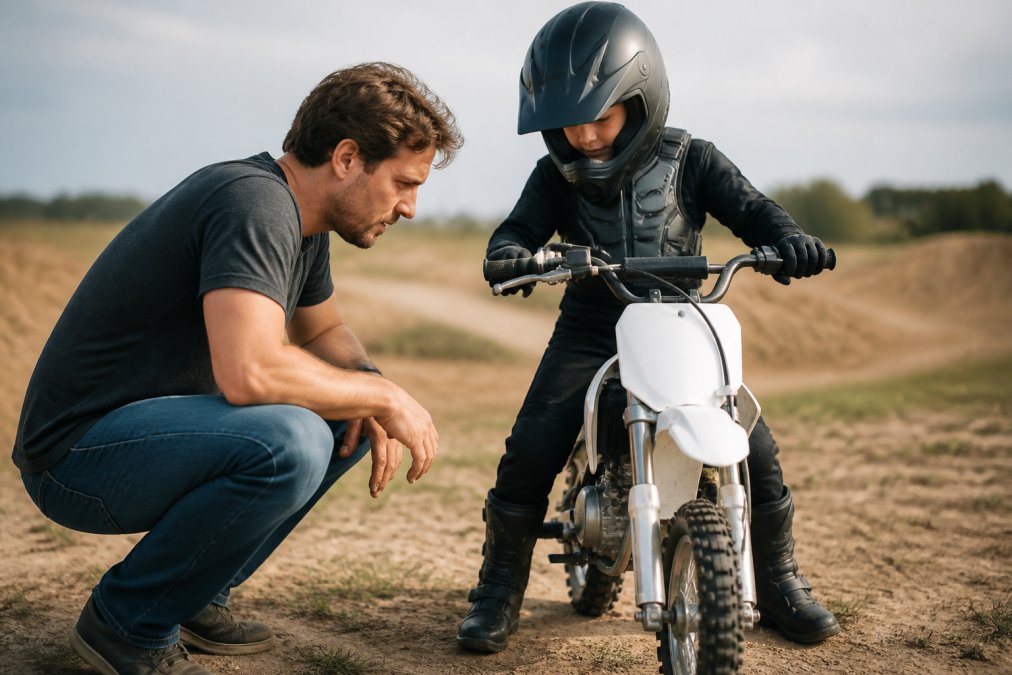
When a five-year-old climbs onto a 50cc bike for the first time, the last thing that child needs is a training tool built for teenagers. That mismatch is the single biggest reason parents start hunting for a BuddyMX alternative for young beginners. The programs and apps that dominate youth motocross were designed with older riders in mind.
At Nelmgerian MX, we hear this constantly from parents whose kids just want to ride. They are not looking for a race academy. They want something that builds confidence, teaches the basics, and keeps a young rider engaged between practice days.
What parents are actually comparing
When families ask us what to use instead, the honest answer is that there is no single app that replaces a comprehensive training program for a four-year-old. The realistic alternatives fall into four buckets:
- Screen-free journals and workbooks. A physical training log where a young rider records practice sessions, goals, and race results by hand. No account, no data collection, no screen time negotiation. This is the option most families of 3-6 year olds land on.
- Children's motocross storybooks and early readers. Books that borrow the child's existing obsession and redirect it toward reading. A kid who resists a generic early-reader book will often tear through a story about a rider learning the same things they are.
- Activity and coloring books. Low-cost, low-pressure, and useful for building vocabulary around gear, track flags, and rider signals before a child ever lines up at a gate.
- General youth fitness and balance programs. Off-bike work that builds the coordination and core strength a young rider needs, without any motocross-specific software at all.
Why the screen-free route wins for ages 3-9
The core problem with app-based training for this age group is not the app. It is the age. A four-year-old cannot reliably navigate a login screen, cannot read a dashboard, and cannot self-regulate screen time. Every app session becomes a parent session.
A journal or a book does not have that problem. The child can pick it up, use it, and put it down without a device, an account, or a parent hovering to prevent accidental purchases. Progress becomes something the child can see and touch, a filled page, a finished chapter, a sticker for a goal met.
For ages 3-9, the best alternative is usually not another app. It is a journal, a storybook, or both, tools that build familiarity with the sport off the track, at the child's own pace, with zero screen time.
What to look for in any alternative
Whichever route you choose, the same three questions separate a good fit from a bad one:
- Does it match the child's reading level, not their riding level? A confident six-year-old rider may still be a beginning reader.
- Does it build vocabulary and familiarity with the sport? Gear names, track flags, rider signals, basic rules.
- Does it require a screen or an account? If yes, apply the safety and privacy checklist in the next section before you commit.
The good news: a BuddyMX alternative for young beginners does not have to mean a complicated app. Often the better answer is screen-free. Below, we break down what actually works for ages 3-9, from journals to storybooks to structured practice.
How to Start Motocross Racing Kids: What Young Beginners Actually Need
The best way to start motocross racing kids is to separate riding skill from everything else. A young beginner needs three things before racing ever enters the picture: proper safety gear, a bike sized to their body, and a way to build familiarity with the sport off the track.
Most parents get the first two right and skip the third. That gap is where confidence gets lost. A child who only ever encounters motocross at full speed on a bike has no low-pressure way to learn the vocabulary, the rules, or the culture of the sport.
A common approach that works well:
- Start with a properly fitted helmet, boots, and chest protection
- Match bike size to inseam and weight, not age alone
- Build off-bike familiarity through books, journals, and practice tracking
- Introduce structured riding sessions only once basic comfort is established
The American Motorcyclist Association's youth rider resources outline gear and age considerations that parents should review before a child's first ride.
Youth Motocross Training Journals: Tracking Progress Without Screens
A youth motocross training journal is a physical log where a young rider records practice sessions, goals, and race results by hand. For ages 3-9, this beats a screen-based tracker for one simple reason: it turns progress into something a child can see and touch.
Here is what a useful journal captures:
- Date and location of each practice or race
- One skill worked on that day
- One thing that felt better than last time
- A goal for the next session
Parents tell us the real value is not the data. It is the conversation. Sitting down to fill in a journal gives a young rider a moment to reflect, and gives a parent a window into what their child is actually thinking about the sport.

Dirt Bike Books for Children: Building Reading Skills Through Motocross
Dirt bike books for children work because they borrow the child's existing obsession and redirect it toward reading. A kid who resists a generic early-reader book will often tear through a story about a rider named Ryder who is learning the same things they are.
The trick is matching the book to the reading level, not the riding level. A confident six-year-old rider might still be a beginning reader. Choosing a book that is too advanced kills the momentum.
What to look for:
- Simple vocabulary and short sentences for early readers
- Characters who model perseverance, responsibility, and sportsmanship
- Illustrations that reward a child's existing knowledge of the sport
- Stories that stand alone, so a child can pick any book in a series
This is the approach Nelmgerian MX takes with characters like Ryder, Pepper, and Wheelie. The stories carry real motocross detail, but the reading level stays honest to where a young beginner actually is.
Gamification vs. Structured Curriculum: Which Approach Fits Young Beginners?
For ages 3-9, a structured curriculum with light gamified elements can be more effective than a heavily gamified app. Gamification keeps attention short-term, but young beginners need repetition and predictability to build real skills.
Here is the trade-off in plain terms:
| Approach | Strength | Weakness for Ages 3-9 | Best For |
|---|---|---|---|
| Heavily gamified app | Immediate engagement | Rewards points over skill, screen-dependent | Older kids who need motivation |
| Structured curriculum | Builds fundamentals | Can feel repetitive | Ages 3-9 learning basics |
| Hybrid (journal + stories) | Off-screen, low-pressure | Requires parent involvement | Families wanting screen-free tools |
The hybrid model can be effective for young beginners because it removes the screen entirely while still giving kids a sense of progress. A journal entry, a finished chapter, a sticker for a goal met. That is gamification without a device.
Safety and Privacy Features for Minors in Motocross Learning Tools
Any digital tool aimed at minors should be evaluated on safety and privacy before anything else. For ages 3-9, the safest option is often no app at all. When a screen is involved, parents should know which federal rules actually apply, because most "kid-safe" marketing does not tell you.
The rules that actually govern tools for young riders
If a tool is directed at children under 13, or if the operator knows it is collecting data from a child under 13, the Children's Online Privacy Protection Act (COPPA) applies (the FTC). The Federal Trade Commission (FTC) enforces it, and the FTC's COPPA Rule requires operators to:
- Give parents direct notice of what data is collected and how it is used
- Obtain verifiable parental consent before collecting personal information from a child under 13 (the FTC)
- Let parents review and delete their child's data
- Retain personal information only as long as reasonably necessary
- Establish and maintain reasonable security procedures
A tool that asks a seven-year-old to create an account with a name, email, and birthdate is collecting personal information. If that tool cannot show you a parental consent flow and a deletion path, it may not be compliant for this age group regardless of what the app store listing says.
What to check before you commit
A practical checklist for any digital training tool aimed at a young rider:
- Does it require a child account, and what personal information does it collect?
- Is there a verifiable parental consent step, or does the child self-register?
- Are parental controls built in, or bolted on after the fact?
- Can the child use it without an internet connection?
- Is there a privacy policy written in plain language, not legalese?
- Does it collect precise geolocation, and can that be turned off?
- Can you delete your child's data without emailing support and waiting?
A tool that collects a child's name, birthdate, and location without verifiable parental consent is a COPPA problem, not just a preference issue. The FTC has brought enforcement actions against apps and platforms that skipped this step.
Why screen-free sidesteps the whole problem
For many families, the answer is to skip the app and use a physical journal and printed books. No account, no data collection, no COPPA analysis, no screen time negotiation. A paperback does not have a privacy policy because it does not need one.
That is not a knock on every app. It is a recognition that for ages 3-9, the compliance burden falls on the parent, and the simplest way to carry zero burden is to choose a format that never triggers the rules in the first place.
Age-Appropriate Design: What Makes a Resource Work for Ages 3-9
Age-appropriate design for young beginners comes down to three things: large clear visuals, simple language, and a low barrier to entry. A resource that assumes prior knowledge will lose a five-year-old in the first page.
What most guides miss is that "age-appropriate" is not just about difficulty. It is about respect. A four-year-old can tell when something is talking down to them. The best motocross resources for young kids treat them as real riders, just early in the journey.
Design signals that work:
- Big, uncluttered illustrations
- One idea per page
- Language that assumes interest, not expertise
- Physical formats a child can hold and return to
This is also where screen-free tools have an edge. A book or journal does not need a tutorial, a login, or a parent hovering to prevent accidental purchases.
Conclusion
Finding the right fit for a young beginner is less about picking the most advanced tool and more about matching the resource to where your child actually is. A five-year-old on a 50cc bike does not need a race academy app. They need stories, a journal, and a low-pressure way to fall in love with the sport.
That is exactly what Nelmgerian MX builds. Our children's motocross storybooks, learn-to-read books, activity and coloring books, and rider training journals are made for ages 3-9, created by motocross enthusiast Shaun Nelms. They keep kids engaged and learning even when they are not riding, and they build the confidence and knowledge that carry onto the track. Get started with Nelmgerian MX and give your young rider the tools to succeed on and off the bike.
Frequently Asked Questions
What is the best BuddyMX alternative for a 5-year-old just starting on a 50cc?
For a 5-year-old beginner, look for resources that combine simple reading practice with basic riding concepts. Children's motocross books featuring relatable characters and training journals with picture-based goal tracking work well. Nelmgerian MX offers storybooks and rider journals designed for ages 3-9, focusing on confidence and skill progression without requiring advanced reading skills.
How do youth motocross training journals help young riders improve?
Training journals give kids a way to track practice sessions, set small goals, and see progress over time. For young beginners, this builds discipline and confidence. Journals also keep kids engaged with motocross between ride days. Look for journals with simple prompts, space for stickers or drawings, and sections for celebrating small wins.
Are dirt bike books for children actually educational, or just entertainment?
Quality dirt bike books blend both. Storybooks build vocabulary and reading skills while teaching lessons about perseverance, sportsmanship, and responsibility. Activity books reinforce learning through puzzles and coloring. For young beginners, this combination keeps them connected to motocross while developing literacy and social-emotional skills that carry over to the track.
How can I tell if a motocross resource is age-appropriate for my child?
Check the recommended age range and preview the content. For ages 3-9, look for simple language, large illustrations, and topics like friendship, trying again after falling, and listening to parents or coaches. Avoid materials that assume prior racing knowledge or use complex terminology. A good resource meets your child where they are and grows with them.