 how-to
How to Teach a 5-Year-Old Motocross: A Parent's Guide
Table of Contents
- Is Your 5-Year-Old Ready for Motocross?
- Choosing the Best Dirt Bike for a 5-Year-Old
- Youth Motocross Safety Gear Requirements Every Parent Must Know
- Step-by-Step: How to Teach Your Child the Fundamentals
- How to Start Motocross Racing Kids: Practice Structure and Progression
- How Long Should a Child Practice Dirt Biking Each Week?
- Building Confidence and Overcoming Fear
- Common Mistakes Parents Make When Teaching Young Riders
Last Updated: August 30, 2026
Is Your 5-Year-Old Ready for Motocross?
Before buying a dirt bike or signing up for lessons, assess three things honestly. First, can your child follow multi-step directions? Riding requires listening, remembering, and executing. Second, does your child want this, or are you pushing them? Forced riders develop resentment, not passion. Third, is your child physically coordinated enough to pedal a bicycle without constant falls? A motorized bike adds complexity they're not ready for yet.
Psychological readiness matters as much as physical. Some kids are fearless; others are cautious. Both can succeed with different teaching approaches. Fearless kids need firm safety rules enforced consistently. Cautious kids need gradual exposure and encouragement.
At Nelmgerian MX, we've worked with families starting their kids in motocross, and the ones who succeed spent time on this assessment first.
Choosing the Best Dirt Bike for a 5-Year-Old
The wrong bike kills progress. Too big, and your child can't touch the ground or reach controls. Too small, and they outgrow it in months. A 50cc dirt bike is the standard starting point for most 5-year-olds (ama.org).
Start with inseam measurement. Have your child stand barefoot with legs straight and measure from crotch to floor. Most 5-year-olds have a 16-20 inch inseam (the CDC). A 50cc bike with a 20-22 inch seat height lets them sit with both feet flat or on tiptoes. If they can't touch the ground, they can't stop themselves if something goes wrong.
Weight is the second factor. A lighter bike is easier to control. Most 50cc bikes weigh 120-150 pounds. Your child should feel like they're managing it, not fighting it.
Electric bikes are quieter, lighter, and have more predictable throttle response for beginners. Gas bikes have more power and range but require more throttle control. For a first bike, electric is often easier to learn on.
Look for automatic or semi-automatic transmissions. Manual clutch control is advanced and adds complexity a 5-year-old doesn't need yet.
Youth Motocross Safety Gear Requirements Every Parent Must Know
Safety gear isn't optional. It's the difference between a scraped knee and a broken bone, between a minor tumble and serious head injury. A 5-year-old should never ride without full protective equipment.
A helmet rated for motocross (DOT or Snell certified) is non-negotiable (nhtsa.gov). It should fit snugly, covering the forehead and back of the head.
A chest protector and spine guard distribute impact across a larger area and protect vital organs. A 5-year-old's frame is still developing, and these prevent rib fractures and internal injuries.
Protective boots are critical. Regular sneakers don't protect ankles or feet. Motocross boots have reinforced ankles, oil-resistant soles, and protection for toes and heel.
Gloves protect hands during falls. A child's instinct is to put hands down when falling, so gloves absorb impact and prevent road rash and broken fingers.
Goggles protect eyes from dirt and debris. Make sure they fit securely and don't fog up.
Long sleeves and long pants are standard. Motocross-specific jerseys and pants have reinforced areas and better mobility than regular clothing.
Step-by-Step: How to Teach Your Child the Fundamentals
Teaching a 5-year-old to ride isn't about speed or tricks. It's about building muscle memory, confidence, and understanding how the bike responds. Break it into manageable steps and don't rush.
Step 1: Master Body Positioning and Riding Posture
Before your child touches the throttle, they need to understand proper body positioning. It determines control, balance, and confidence.
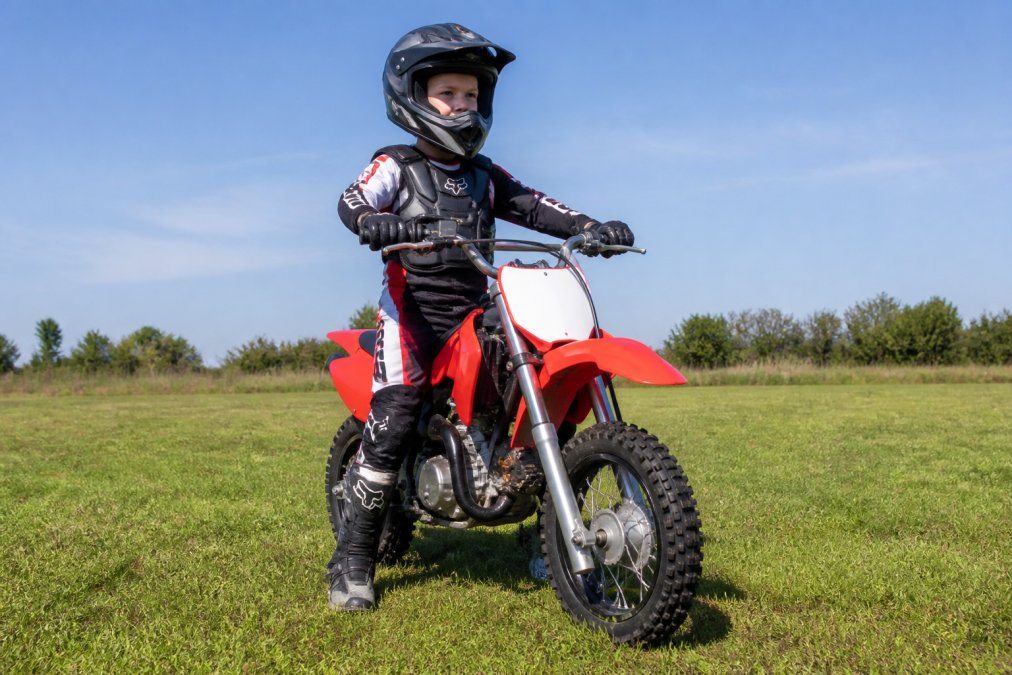
Have your child sit on the bike with both feet flat on the ground. Their back should be slightly forward, not slouched. Elbows should be bent and relaxed. Hands grip the handlebars firmly but not white-knuckle tight. Knees should grip the seat. This keeps the center of gravity centered and allows quick weight shifts for turning.
Feet placement on the pegs is foundational. Teach your child to rest the balls of their feet on the pegs, not heels or toes. This gives control and lets them move feet quickly if needed.
Practice this posture without the engine running first. Have your child sit on the bike in your yard and hold the position for a few minutes. Repetition builds muscle memory. When they can hold proper posture for several minutes without thinking about it, they're ready to move forward.
Step 2: Build Brake Control and Muscle Memory
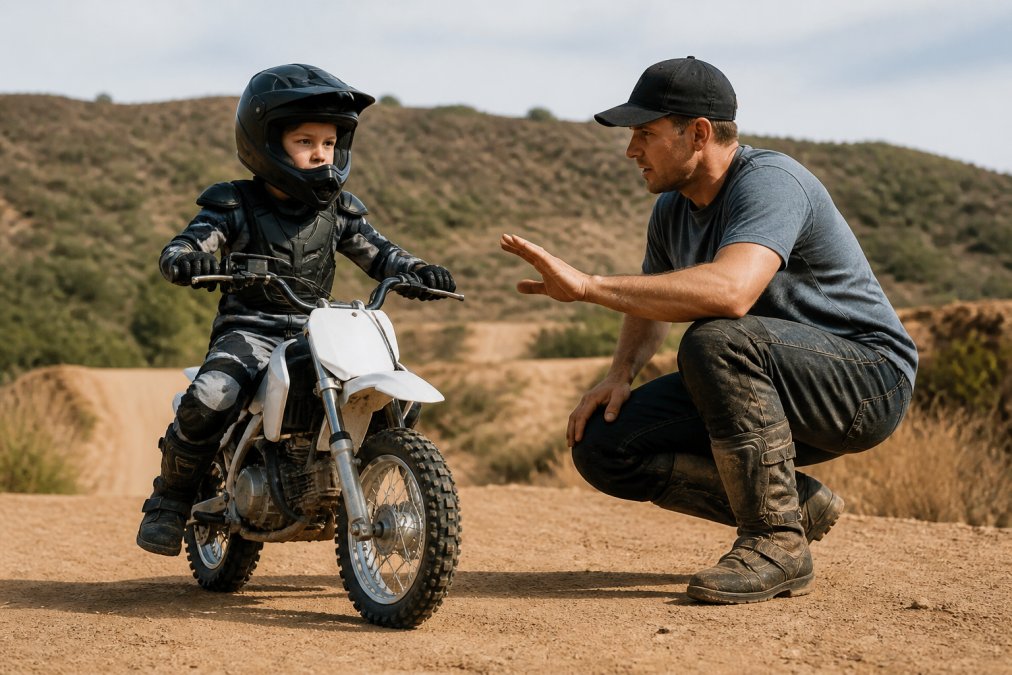
Braking is more important than throttle control. A child who can brake smoothly and confidently will stay safe.
Start with the bike stationary. Show your child where the brake lever is (front brake on the right handlebar) and the foot brake pedal (rear brake on the right side). Have them practice squeezing and pressing without the bike moving.
Move to a flat, wide-open space with no obstacles. Have your child ride slowly in a straight line, then practice light brake application. The goal is smooth braking, not emergency stops. Repeat daily for a week. Once braking is smooth at low speed, introduce slightly higher speeds and longer braking distances.
Step 3: Develop Throttle Control and Speed Management
Throttle control is harder than braking. A small twist produces a big change in power, and children often twist too hard too fast. Start with minimal throttle input.
In the same flat, open space, have your child practice gentle throttle application. A quarter-twist is enough for a beginner. The bike should accelerate smoothly, not jerk.
Practice throttle control at a standstill first. Have your child sit on the bike and twist the throttle gently. When comfortable, have them ride slowly and practice small throttle inputs. Accelerate for 5 seconds, coast, brake lightly. Repeat.
Speed is fun, but control is survival.
Step 4: Practice Cornering Drills and Turning Techniques
Cornering is where body positioning and throttle control come together. A child who can brake, accelerate, and position their body correctly can handle a turn.
Set up cone drills in your practice area. Place cones 30 feet apart in a large circle. Have your child ride slowly around the cones, focusing on smooth turns, not speed. Their body should lean slightly into the turn, and their outside leg should grip the seat.
Handlebars should turn gently. The lean comes from body weight, not steering input. Teach your child to look through the turn, not down at the cones.
Practice figure-eight patterns with the cones. This teaches left and right turns equally. After a week of cone drills, most 5-year-olds can navigate simple turns smoothly.
How to Start Motocross Racing Kids: Practice Structure and Progression
Teaching a 5-year-old motocross isn't random. It's structured, progressive, and builds on previous skills. A good practice session has a warm-up, focused drills, and a cool-down.
Start each session with 10-15 minutes of easy riding to warm up the bike and get your child comfortable. Move into focused drills for 20-30 minutes. Work on one skill per session: braking, throttle control, or cornering. Repetition builds muscle memory better than doing multiple drills once each.
Finish with 10 minutes of free riding where your child can just ride for fun. This reminds them why they love motocross and ends the session positively.
Track progress in a journal. Note what drills you did, how long your child practiced, and what improved. Many parents find that tracking practice with tools like the Nelmgerian MX Training Journal helps them stay organized and shows their child how far they've come.
Progression should be gradual. Spend at least two weeks on body positioning before moving to braking. Spend two weeks on braking before introducing throttle.
How Long Should a Child Practice Dirt Biking Each Week?
More practice isn't always better. A 5-year-old has limited attention span, gets tired quickly, and needs recovery time. Quality practice beats quantity.
Start with two 30-minute sessions per week. That's enough to build muscle memory without causing fatigue or burnout. Each session should be focused and structured.
After a month of consistent practice, increase to three sessions per week if your child is progressing well and staying engaged. If they're tired or losing interest, stick with two sessions and focus on making them count.
A 30-minute practice session is enough. Fifteen minutes of focused drills plus 10 minutes of warm-up and cool-down equals a productive session. Attention fades after 30 minutes.
Rest days matter. Muscles grow and adapt during rest, not during activity. A child who practices Monday, Wednesday, and Friday with rest days in between will progress faster than one who practices every day.
Watch for signs of overtraining: complaints of pain, loss of interest, declining performance, or irritability. These signal to dial back frequency or duration.
Building Confidence and Overcoming Fear
Fear is normal. Even confident kids get nervous on a bike. The goal isn't eliminating fear. It's teaching your child to manage it and ride despite it.
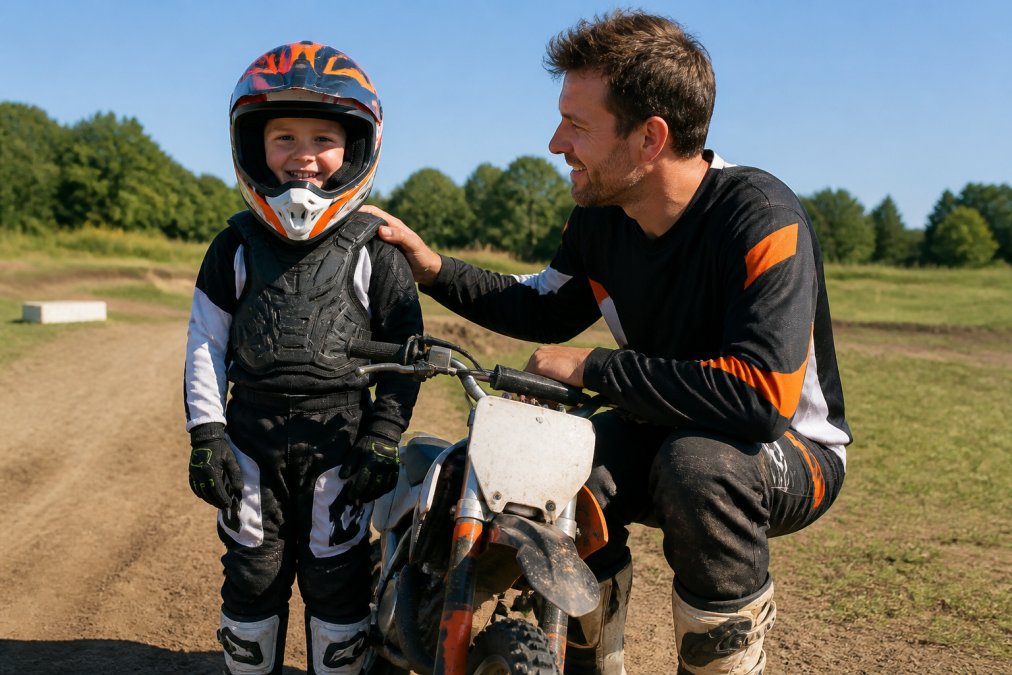
Start by acknowledging fear. Don't dismiss it with "you'll be fine." Instead, say "I know you're nervous. That's normal. Let's take it slow." Validation builds trust.
Break scary situations into smaller steps. If your child is afraid of speed, practice at 2 miles per hour until comfortable, then 3 miles per hour. Gradual exposure works better than forcing them into the deep end.
Celebrate small wins. Did your child ride 100 feet without stopping? That's a win. Did they brake smoothly once? That's progress. Positive reinforcement builds confidence faster than criticism.
Let your child see you take risks and handle them calmly. If you're calm and controlled, they'll mirror that confidence.
Many families find that reading motocross stories together helps normalize the sport and build excitement. Stories featuring young riders learning and progressing show your child that other kids have done this before and succeeded. Stories available through Nelmgerian MX can be part of your child's confidence-building routine between practice sessions.
Set realistic expectations. Your child won't be comfortable on a bike in a week. Progress takes months. But consistent practice with patience and encouragement creates steady improvement and genuine confidence.
Common Mistakes Parents Make When Teaching Young Riders
Parents mean well, but good intentions don't always translate to good teaching. Watch out for these pitfalls.
Pushing too hard too fast. The biggest mistake is accelerating progression because you're excited or impatient. Your child needs time to master each skill. Rushing creates frustration and crashes.
Skipping safety gear. Some parents let kids ride without a helmet or chest protector "just for a quick ride." That quick ride is when accidents happen. Full gear every time, no exceptions.
Comparing your child to others. Every child progresses at their own pace. Comparison breeds insecurity and kills joy.
Not giving enough feedback. Children need to know what they did right and what needs improvement. Specific feedback helps them understand what works.
Practicing when tired or frustrated. A tired or frustrated child won't learn. If your child is cranky or losing focus, end the session. A short, positive session beats a long, negative one.
Ignoring signs of fear or pain. If your child says they're scared or hurt, listen. Pushing through real pain or genuine fear creates trauma, not toughness.
Not practicing consistently. One session every two weeks won't build muscle memory. Consistent practice, even 30 minutes twice a week, creates real progress.
Forgetting to have fun. Motocross is supposed to be fun. If every session is serious drills with no joy, your child will lose interest. End on a positive note and keep the spark alive.
Teaching a 5-year-old to ride a dirt bike is a journey, not a destination. It takes patience, consistency, and genuine interest in your child's progress. The goal isn't creating a professional racer. It's building a child who's confident, safe, and in love with a sport that will give them joy for years.
At Nelmgerian MX, we've created resources specifically for families like yours. Our training journals help you track progress and celebrate milestones. Our storybooks featuring young riders like Ryder and Pepper show your child that other kids are learning too, building excitement between practice days. These tools keep your child engaged with motocross even when they're not on the bike, deepening their connection to the sport and their commitment to improvement.
Start with readiness assessment. Choose the right bike. Get proper safety gear. Build skills systematically. Practice consistently. Every expert rider started exactly where your child is now, nervous and uncertain. With your support and the right approach, your 5-year-old will find confidence, build real skills, and discover a passion that lasts.
Frequently Asked Questions
What age should kids start motocross?
Most children can begin learning on a 50cc dirt bike between ages 4 and 6, depending on their physical size, coordination, and maturity level. A 5-year-old is an ideal age to start, as they typically have enough balance and body awareness to learn throttle control and brake application. Always assess your individual child's readiness before beginning, psychological readiness matters as much as physical ability.
How often should my 5-year-old practice dirt biking?
Begin with 2-3 practice sessions per week, each lasting 20-30 minutes. Young riders have limited attention spans and tire quickly, so shorter, frequent sessions build muscle memory and rider confidence more effectively than one long session. Increase duration and frequency gradually as your child develops skill and endurance. Track progress using a training journal to celebrate milestones and identify areas needing more work.
What safety gear does a young motocross rider absolutely need?
Essential protective gear includes a DOT-approved helmet, chest protector, goggles, gloves, protective boots, and padded pants. A helmet is non-negotiable and must fit snugly. Protective boots protect ankles during shifts and falls, while goggles shield eyes from dust and debris. Off-road safety gear is designed specifically for dirt bike riding, so avoid standard bicycle helmets or casual clothing. Replace gear as your child grows.
This article was written using GrandRanker
Frequently Asked Questions
What age should kids start motocross?
Most children can begin learning on a 50cc dirt bike between ages 4 and 6, depending on their physical size, coordination, and maturity level. A 5-year-old is an ideal age to start, as they typically have enough balance and body awareness to learn throttle control and brake application. Always assess your individual child's readiness before beginning—psychological readiness matters as much as physical ability.
What's the best dirt bike for a 5-year-old rider?
How often should my 5-year-old practice dirt biking?
Begin with 2–3 practice sessions per week, each lasting 20–30 minutes. Young riders have limited attention spans and tire quickly, so shorter, frequent sessions build muscle memory and rider confidence more effectively than one long session. Increase duration and frequency gradually as your child develops skill and endurance. Track progress using a training journal to celebrate milestones and identify areas needing more work.
What safety gear does a young motocross rider absolutely need?
Essential protective gear includes a DOT-approved helmet, chest protector, goggles, gloves, protective boots, and padded pants. A helmet is non-negotiable and must fit snugly. Protective boots protect ankles during shifts and falls, while goggles shield eyes from dust and debris. Off-road safety gear is designed specifically for dirt bike riding, so avoid standard bicycle helmets or casual clothing. Replace gear as your child grows.