 how-to
Build Confidence in Young Riders: A Step-by-Step Guide
Table of Contents
- Why Confidence Matters for Young Riders
- Start With Groundwork and Leading Exercises
- Motocross Training Drills for Kids That Build Skills
- How to Overcome Fear in Motocross
- Gradual Exposure and Small Wins
- Youth Motocross Goal Setting for Progression
- Finding a Dirt Bike Class Near Me
- Keeping Riding Sessions Fun and Engaging
Last Updated: August 23, 2026
Why Confidence Matters for Young Riders
Building confidence in young riders is the foundation for everything else in motocross. A rider who trusts themselves tackles new challenges, recovers from falls faster, and stays engaged with the sport long-term. Confidence builds through small, repeated successes, when a young rider completes a drill, masters a technique, or stays calm during a challenging ride, they internalize proof that they can do hard things.
At Nelmgerian MX, we are dedicated to inspiring the next generation of motocross riders. The shift in a rider's confidence isn't about raw talent but structured progression, patience, and celebrating small wins. Parents often underestimate how much their own confidence and encouragement matter; kids pick up on that energy immediately. Young riders face real challenges, controlling a fast machine, balancing on uneven surfaces, and managing fear simultaneously. Acknowledging this difficulty while building their belief that they can handle it creates the psychological foundation for long-term success.
Start With Groundwork and Leading Exercises
Groundwork is where confidence begins. Before a young rider sits on a bike, they need to understand how it moves, how to control it from the ground, and how to handle it safely. This removes mystery and builds familiarity.
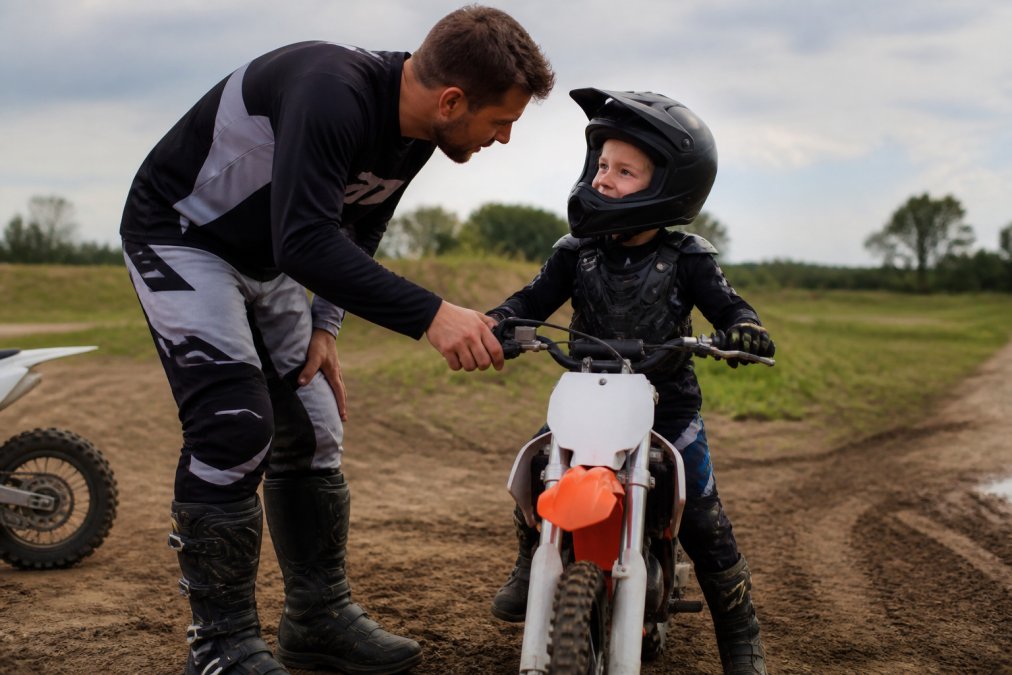
Leading exercises teach kids to guide the bike without the pressure of riding. A young rider holds the handlebars while walking alongside the bike, feeling how it responds to subtle shifts in their grip and body position. They learn that small movements create big changes and that they have control.
Start with the bike stationary. Have your child sit on it, feel the weight distribution, practice gripping the handlebars, and get comfortable with the basic position. Then move to walking the bike forward slowly while they sit on it. Next, practice mounting and dismounting on the ground, not while moving. Do this drill 10-15 times in a session until it feels routine, this removes friction from the process and builds automaticity.
Lunge line work is another essential exercise. With the bike on a lunge line (a long rope attached to the saddle), your child rides in circles while you control the line from the center. This gives them freedom to focus on balance and position while you manage their safety and direction. Start at a walk, then gradually increase speed as confidence builds.
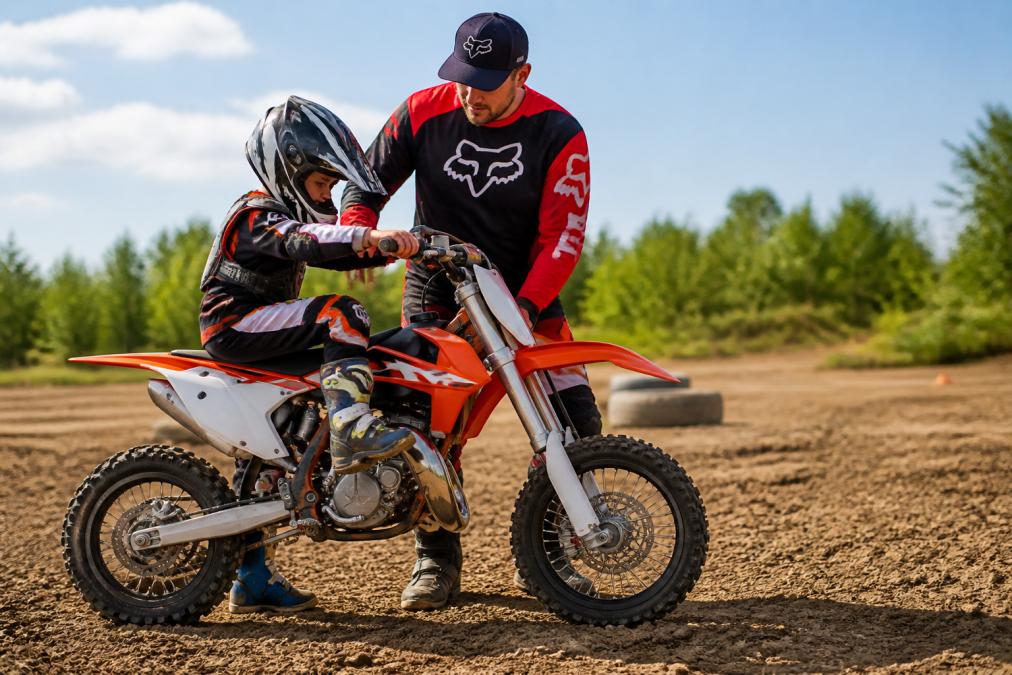
Kids who spend time on solid groundwork often progress faster once they're riding independently. They're not fighting basic mechanics; they're refining technique.
Motocross Training Drills for Kids That Build Skills
Targeted drills transform confidence from a feeling into demonstrated ability. When a young rider completes a specific drill, they have proof they can do it.
Balance and Body Awareness Drills
Balance is the first skill young riders struggle with, and it unlocks everything else. A rider with good balance can handle terrain variations, recover from small mistakes, and stay calm.
The two-point drill teaches kids to rise slightly out of the saddle and balance their weight over the center of the bike. Have them practice this at a walk first, holding the balance position for 10-15 seconds. Progress to doing it at a trot, then at faster speeds.
The serpentine drill involves riding in an S-pattern through cones or markers. This forces the rider to shift their weight side to side while maintaining balance. Start with wide curves and gradually tighten them. The stop-and-start drill, ride forward, stop, stand still for 5 seconds, then move again, repeated 8-10 times, teaches young riders to stay centered and balanced even when stationary, building confidence that they can control the bike at any speed.
Rein Control and Coordination Work
Rein control drills teach young riders to guide the bike smoothly without jerking or oversteering. Many young riders use too much hand pressure because they're nervous, which makes the bike less responsive.
The figure-eight drill uses two cones set about 20 feet apart. The rider rides a figure-eight pattern around them, focusing on smooth, gentle steering inputs. The straight-line drill, ride a perfectly straight line for 50-100 feet without steering input, reveals whether a rider is making unconscious corrections and helps them develop a lighter touch. The weaving drill places cones in a straight line about 10 feet apart; the rider weaves between them at controlled speed, focusing on smooth transitions and consistent spacing.
These drills can be a valuable part of training sessions. Consistency matters more than intensity.
How to Overcome Fear in Motocross
Fear is normal. Every young rider experiences it. The difference between riders who progress and those who stall is how they process that fear.
Fear usually shows up as hesitation, tension, or avoidance of specific challenges. Talk to your child about what they're actually afraid of, "I'm scared I'll fall" is different from "I'm scared the bike will go too fast." Once you know the specific fear, you can address it directly.
Gradual exposure is an effective tool. If a rider is afraid of speed, don't force them to gallop. Instead, have them trot for 20 seconds, walk for 10, trot again. Repeat this pattern 5-6 times. Each time they complete it, they prove to themselves that they can handle that speed and stop safely.
Breathing work helps manage the physical response to fear. Teach your child to take slow, deep breaths: breathe in for 4 counts, hold for 4, exhale for 4. This activates the parasympathetic nervous system and reduces the stress response (peer-reviewed research). Normalize falls by talking about them openly, falls happen and are part of the sport. Many young riders are more afraid of disappointing their parents than of the fall itself. Make it clear that trying and falling is better than not trying.
Gradual Exposure and Small Wins
Progression works when it's intentional and visible. Map out a progression plan by breaking goals into steps. If the goal is to ride independently without stirrups, the steps might be: walk without stirrups for 30 seconds, walk for 60 seconds, trot for 20 seconds, trot for 45 seconds, and so on. Each step is a small win.
Celebrate these wins explicitly. When they complete 45 seconds of trotting without stirrups, that's worth acknowledging. Take a photo, tell them specifically what they did well, and move on to the next step. Track progress visually, a training journal helps. Young riders can record what they worked on, how it went, and what they want to focus on next. Seeing weeks of progress written down is powerful.
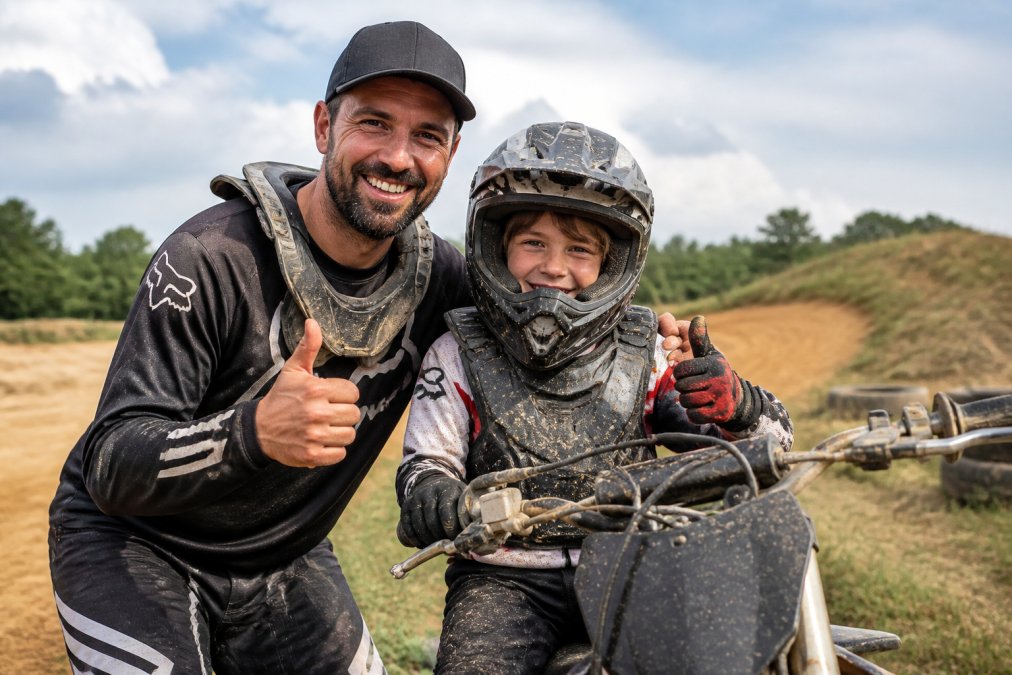
Avoid comparing your child to other riders. Every child progresses at a different pace. Focus on your child's own progress instead.
Youth Motocross Goal Setting for Progression
Goals give young riders direction and something concrete to work toward. A good goal is specific ("ride a trot without stirrups"), measurable ("for 60 seconds"), and realistic ("by the end of 8 weeks").
Involve your child in setting these goals. A goal they help create is one they're invested in. Short-term goals (2-4 weeks) keep motivation high; long-term goals (3-6 months) give direction. Write goals down, young riders are more likely to remember and work toward goals they've written themselves. Review goals regularly. If a goal isn't being achieved after 4 weeks, it might be too ambitious or the approach might need adjustment. Adjust and keep moving.
Finding a Dirt Bike Class Near Me
Formal instruction accelerates progress. An experienced instructor can identify issues a parent might miss and correct them efficiently.
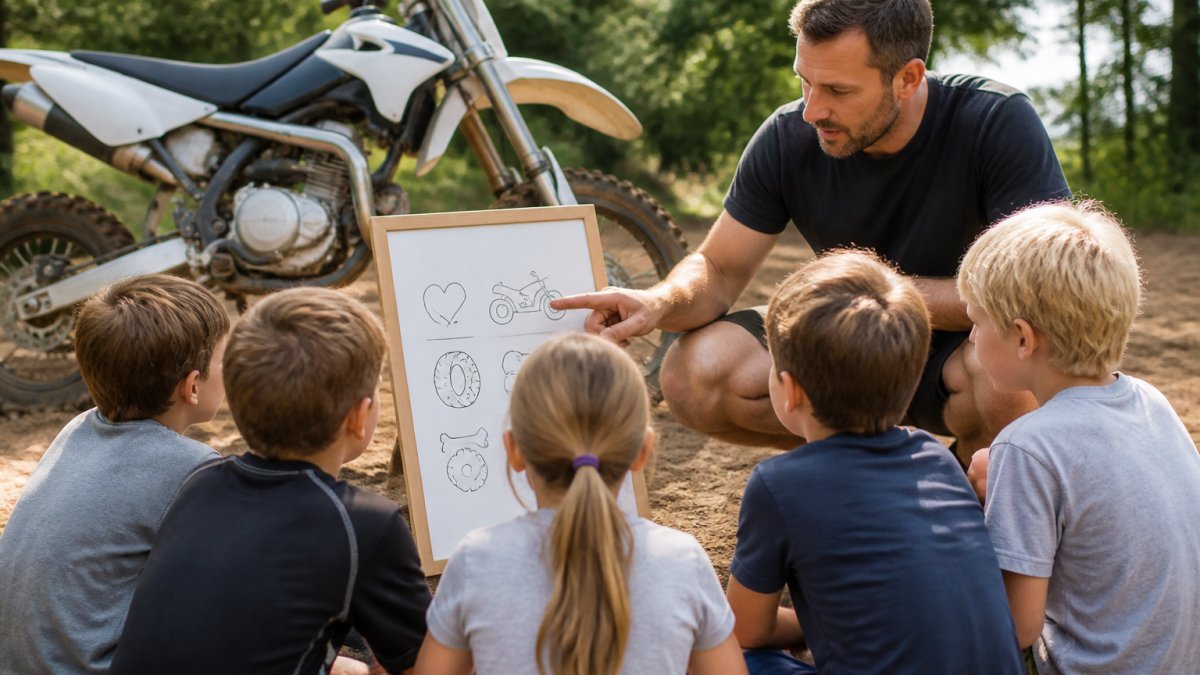
When looking for motocross training, ask about the instructor's experience with young riders specifically. Look for someone who has worked with your child's age group and has a track record of building confidence. Ask about class size, small groups (3-5 riders) allow for more individual attention (the NIH). Visit the facility before committing. Watch a class if possible. Does the instructor engage with the kids? Do the riders look happy or stressed? Is the equipment well-maintained? Ask about progression, a good program has a clear path from beginner to intermediate to advanced.
Nelmgerian MX is expanding its offerings to include a private motocross track in Crossville, Alabama, designed specifically for families and young riders. The facility will offer structured training programs alongside a destination experience for families who want to combine training with a weekend getaway. For families outside that area, look for local programs that prioritize small-group instruction, clear progression, and a focus on building confidence alongside skill.
Keeping Riding Sessions Fun and Engaging
Confidence grows faster when a young rider is having fun. Mix structured drills with free riding. Spend 15-20 minutes on focused work, then let your child ride for pleasure.
Include games, cone weaving races, stop-and-start competitions, or riding patterns that look like letters or numbers make drills feel less like drills. Vary the terrain and environment when possible. Keep sessions shorter for younger riders, a 20-30 minute focused session is better than an hour of unfocused riding (peer-reviewed research). Involve your child in planning by asking what they want to work on or what game they want to play.
Celebrate effort, not just results. If your child tried hard, gave good focus, and pushed themselves, that's worth acknowledging even if they didn't nail the drill. Take breaks when energy dips. A short break, some water, and a moment of connection often reset their mood.
Building confidence in young riders is a process requiring consistency, patience, and genuine celebration of progress. The drills and techniques matter, but the foundation is your belief in your child's ability to improve and your willingness to show up week after week.
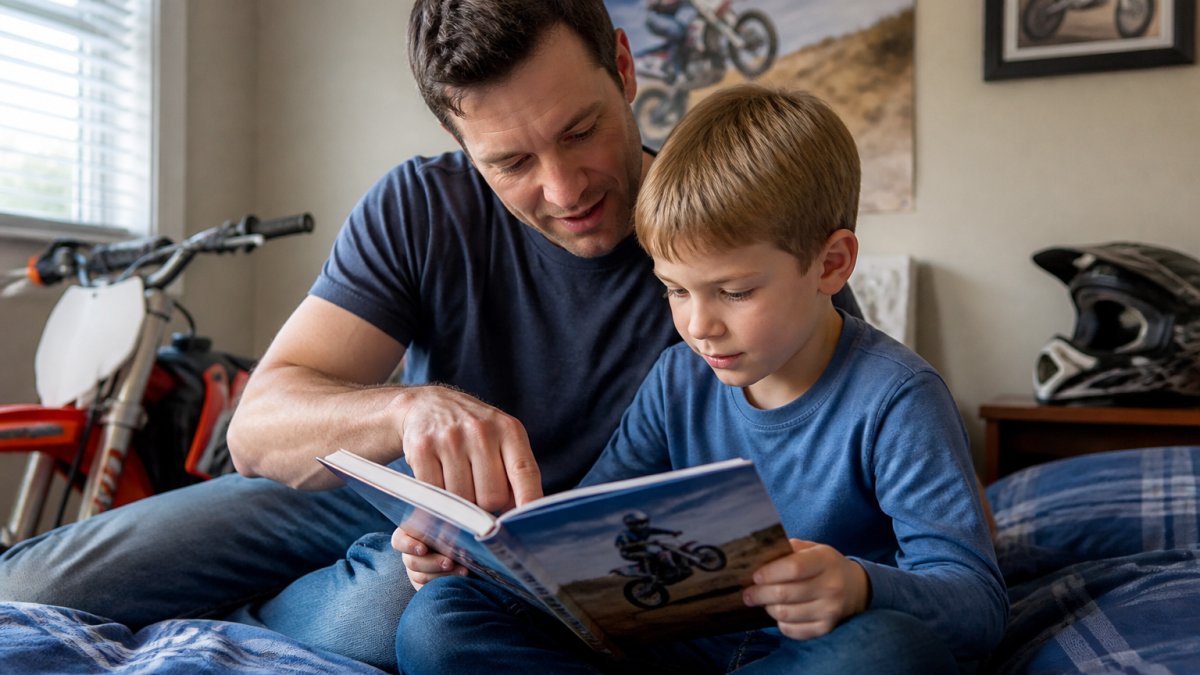
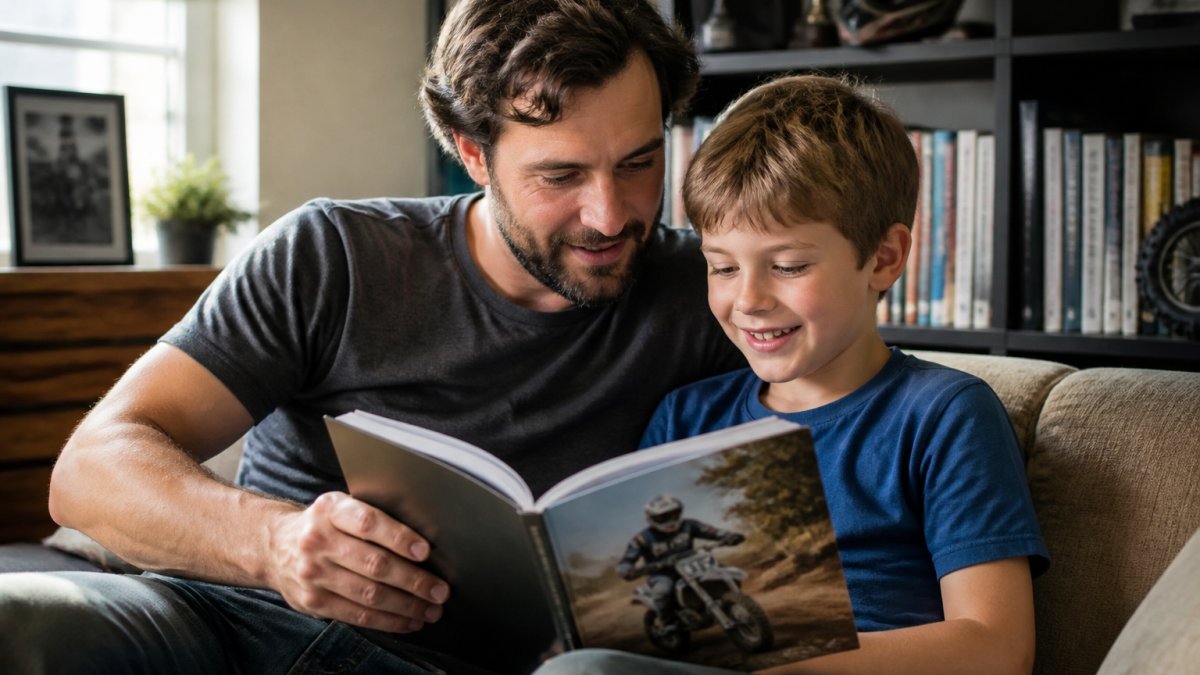
Nelmgerian MX was created by motocross enthusiast Shaun Nelms to support families on this journey. Through children's storybooks, coloring books, and rider training journals, the brand keeps young riders connected to the sport and motivated between rides. These tools complement hands-on training by reinforcing skills, building confidence through visualization, and creating a record of progress that young riders can see and feel proud of. Whether you're working with a local instructor or managing training on your own, having resources designed specifically for young riders makes the process clearer and more rewarding.
Frequently Asked Questions
Q: How do you help a nervous child rider gain confidence?
A: Start with groundwork away from the bike, leading exercises, grooming, and tacking up build familiarity. Progress gradually to mounting and dismounting on a stationary bike, then short walks. Use positive reinforcement for every small win. Keep early sessions short and fun. Consistency matters more than intensity; regular 20-30 minute sessions build confidence faster than occasional long rides. Never force progression; let your child set the pace.
Q: What are the best motocross training drills for kids?
A: Balance drills on a stationary bike or lunge line teach body awareness and independent seat position. Rein control exercises using poles or markers improve coordination and gentle encouragement response. Arena work with low obstacles builds skill acquisition without fear. Desensitization drills, like riding near different sounds or textures, reduce anxiety. Always start on flat, contained ground before introducing terrain changes. Progress drills only when your child masters the previous step.
Q: How can parents support young riders without adding pressure?
A: Focus on effort and consistency, not performance. Celebrate small wins and skill improvements rather than speed or competition. Ask open questions: 'What did you learn today?' instead of 'Why didn't you do better?' Avoid comparing your child to other riders. Be present but let instruction come from the trainer. Recognize when your child is tired or frustrated, stopping early prevents burnout. Your calm, encouraging presence is the biggest confidence booster.
Q: What's the difference between rider burnout and lack of confidence?
A: Lack of confidence shows as hesitation, fear responses, or reluctance to try new skills, but your child still enjoys riding. Burnout appears as loss of interest in motocross entirely, resistance to attending sessions, or emotional withdrawal even during activities they once loved. Burnout often follows pressure, too-frequent training, or forced progression. If you see burnout signs, reduce frequency, remove pressure, and reconnect your child with why they loved riding. Lack of confidence responds to groundwork and small wins; burnout requires rest and rediscovery.
This article was written using GrandRanker