 blog
blog
Buying First Dirt Bike for Child: Complete 2026 Guide
Table of Contents
- Understanding Your Child's Readiness for a First Dirt Bike
- Engine Displacement and Bike Type: 50cc vs. Electric Options
- Critical Measurements: Seat Height, Ground Clearance, and Rider Weight
- Top Beginner-Friendly Dirt Bikes for Kids
- Essential Safety Gear and Legal Requirements
- Budgeting for Your Child's First Dirt Bike
- Transport, Storage, and Maintenance Basics
- How to Choose the Right First Dirt Bike: A Decision Framework
- Frequently Asked Questions
Buying First Dirt Bike for Child: Complete 2026 Guide
Last Updated: July 20, 2026
Buying a first dirt bike for a child is exciting and overwhelming. According to American Academy of Pediatrics safety recommendations, proper equipment and age-appropriate selection dramatically reduce injury risk. This guide covers everything you need to know: assessing readiness, selecting the right displacement, budgeting, and avoiding common mistakes.
Understanding Your Child's Readiness for a First Dirt Bike
Not every child is ready at the same age. Physical conditioning, attention span, and genuine interest all factor into whether now is the right time.
Age and Physical Conditioning Considerations
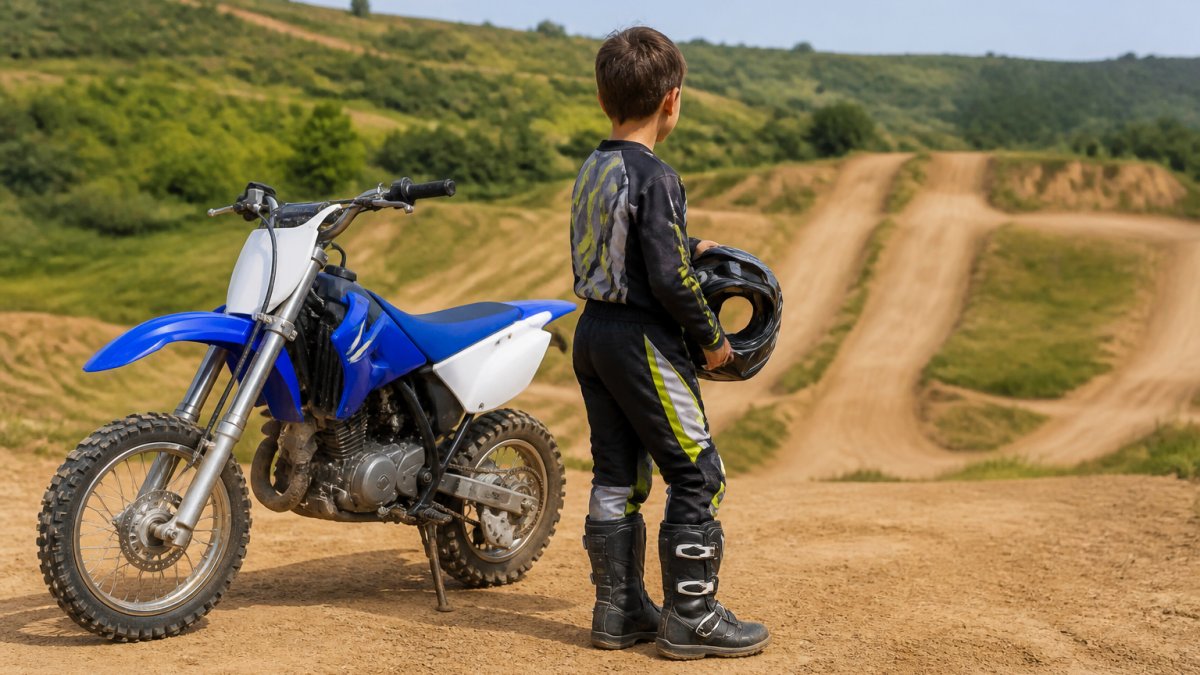
Most children can safely start riding between ages 4 and 7, depending on physical development and coordination. Height matters more than age: your child needs to touch the ground with their toes when seated, not flat-footed, but with enough contact to feel stable.
Physical conditioning is critical. Riding requires core strength, grip strength, and leg endurance. A child with no athletic background will fatigue quickly and develop bad habits. Consider starting with balance exercises, light strength work, or skateboarding to build foundational fitness before introducing a motorized bike.
Skill Level and Prior Experience
A child who's ridden bicycles confidently will progress faster on a motorized bike, though the skills don't transfer completely. Throttle control and braking feel different than pedaling.
Watch for readiness signals: Can your child follow instructions? Stay calm when things go wrong? Show genuine interest rather than reluctance? Start with short sessions of 15 to 20 minutes maximum. Fatigue is when accidents happen.
Engine Displacement and Bike Type: 50cc vs. Electric Options
The choice between 50cc gas-powered bikes and electric options is the first major decision.
Two-Stroke vs. Four-Stroke Engines
Four-stroke engines are more forgiving for beginners. They produce power smoothly and predictably, making throttle control easier to learn. Maintenance is straightforward: standard oil changes, no fuel mixing. Popular beginner models include the Honda CRF50F, Yamaha TT-R50E, and Suzuki JR50.
Two-stroke engines are lighter but deliver power more aggressively. The throttle response is immediate and unforgiving. Two-strokes require fuel-oil mixture preparation, adding complexity most beginners don't need.
Gas-Powered vs. Electric Dirt Bikes
Electric bikes offer quiet operation, instant torque, and zero emissions, perfect for residential areas. The trade-off is range: most electric beginner bikes run 45 minutes to an hour before needing a recharge. Gas bikes run as long as you have fuel, which is cheaper per riding hour.
Electric bikes also have lower top speeds (15 to 20 mph versus 25 to 35 mph for 50cc gas bikes). For absolute beginners, this is a benefit. Lower speeds mean lower consequences for mistakes.
Cost: quality electric beginner bikes run $400 to $800. Comparable 50cc gas bikes run $600 to $1,200. Over time, gas bikes are cheaper to operate, but upfront cost is higher.
| Bike Type | Top Speed | Run Time | Noise Level | Best For |
|---|---|---|---|---|
| 50cc Four-Stroke Gas | 25-35 mph | 2-3 hours | Moderate | Longer sessions, trail riding |
| 50cc Two-Stroke Gas | 30-40 mph | 2-3 hours | Loud | Advanced beginners only |
| Electric (Razor MX350) | 15-20 mph | 45-60 min | Very quiet | Residential areas, short sessions |
| Clutchless Automatic | 20-30 mph | 1-2 hours | Moderate | Kids who struggle with manual clutch |
Critical Measurements: Seat Height, Ground Clearance, and Rider Weight
Fit determines whether your child can control the bike safely. Seat height is most important: when seated with both feet flat on the ground, there should be a one to two inch gap between their bottom and the seat. This provides stability without forcing legs to stretch.
Ground clearance matters less for beginners but becomes important as they progress to technical terrain. Most 50cc beginner bikes handle riders up to 150 pounds comfortably. Check the manual before purchasing.
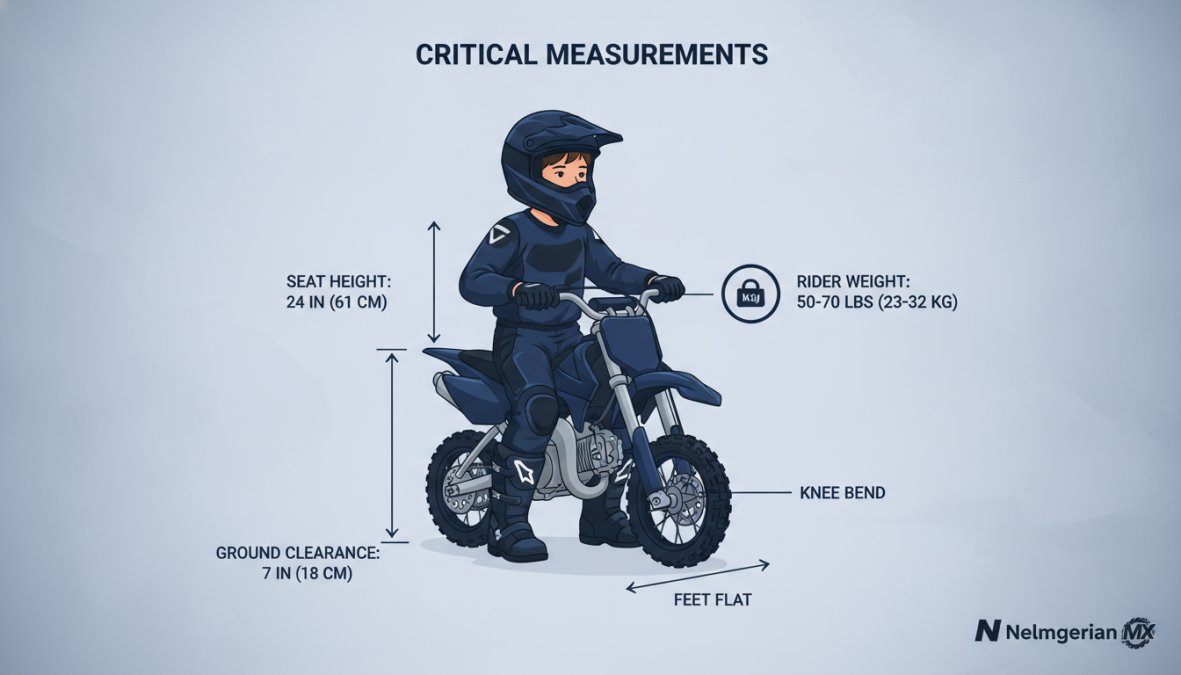
Visit a dealer and have your child sit on multiple options before deciding. A bike that doesn't fit won't be ridden.
Top Beginner-Friendly Dirt Bikes for Kids
Popular 50cc Gas-Powered Models
The Honda CRF50F is the gold standard. It's reliable, easy to maintain, and forgiving enough for absolute beginners but capable enough to grow with your child for a year or two. The four-stroke engine is predictable, seat height is reasonable for kids ages 4 to 8, and parts are widely available. Used CRF50Fs hold their value well.
The Yamaha TT-R50E offers similar reliability with slightly better suspension, useful for rougher terrain. The Suzuki JR50 is less common but equally capable and often cheaper, though parts availability is more limited.
For kids struggling with manual clutch operation, consider clutchless automatic options like the Yamaha PW50 or Honda CRF50F automatic transmission variant.
Electric and Clutchless Alternatives
The Razor MX350 dominates the electric beginner market. It's affordable, durable, and genuinely fun for kids ages 5 to 9. The 15 mph top speed feels fast to beginners but is forgiving enough to build confidence. Battery life is adequate for 45-minute sessions, and replacement batteries are reasonably priced.
For a middle ground between electric and gas, clutchless automatic 50cc models eliminate manual clutch complexity while offering the range and durability of gas engines.
Essential Safety Gear and Legal Requirements
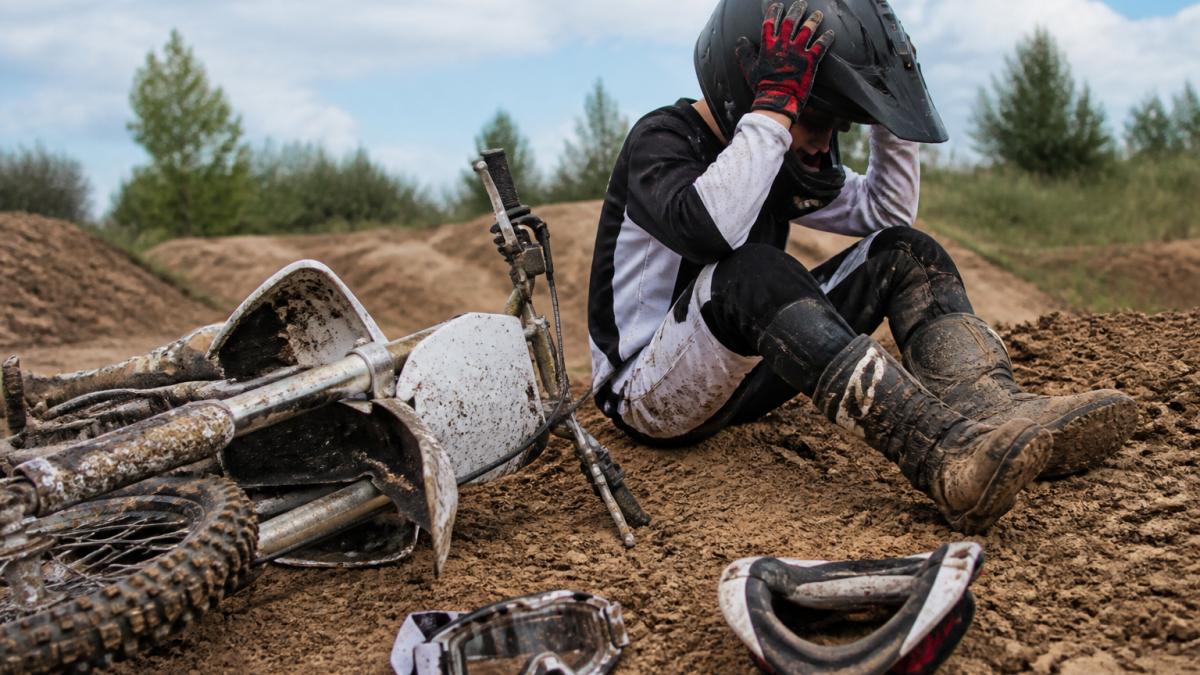
A dirt bike without proper safety gear is a liability. Gear is the difference between a scraped knee and an emergency room visit.
Required Protective Equipment
A DOT-certified full-face helmet is non-negotiable. Your child will fall, and their face will be inches from the ground. Budget $100 to $200 for a quality helmet that fits properly.
Goggles protect eyes from roost, dust, and branches. Look for anti-fog lenses and good ventilation.
Boots protect ankles and feet. Motocross-specific boots with ankle support run $60 to $100 and beat sneakers every time.
Gloves protect hands from abrasion and impact. Kids instinctively put hands out when falling. Quality motocross gloves with reinforced palms run $30 to $50.
A chest protector is optional for trail riding but recommended for track use. A basic roost deflector runs $40 to $80.
Long pants and long-sleeved shirts are minimum. Specialized motocross jerseys and pants offer better protection and ventilation. Budget $80 to $150 for a decent combo.
| Gear Item | Purpose | Budget | Priority |
|---|---|---|---|
| Full-face helmet | Head and face protection | $100-200 | Essential |
| Goggles | Eye protection from roost | $20-40 | Essential |
| Motocross boots | Ankle and foot support | $60-100 | Essential |
| Gloves | Hand and wrist protection | $30-50 | Essential |
| Chest protector | Rib and organ protection | $40-80 | Recommended |
| Jersey and pants | Body abrasion protection | $80-150 | Essential |
Understanding Local Riding Laws and Land Access
Before buying, know where you're legally allowed to ride. Some states allow off-road bikes on designated trails and public land. Others restrict riding to private property or private tracks. Check your state's Department of Natural Resources or Parks and Recreation website for specific rules.
Private property is always an option if you have land or know someone who does. Many communities have private motocross tracks that rent time by the hour, providing a controlled environment perfect for learning.
Budgeting for Your Child's First Dirt Bike
The bike itself is only part of the cost. Smart budgeting accounts for gear, maintenance, fuel, and storage.
Initial Purchase and Hidden Costs
A beginner 50cc gas bike costs $600 to $1,200 new, or $400 to $800 used. Electric bikes run $400 to $800 new. Budget an additional $300 to $500 for basic safety gear.
Hidden costs appear quickly. Fuel costs $3 to $5 per hour of riding. Maintenance includes oil changes, air filter replacements, and spark plug changes, roughly $50 to $100 per season for a gas bike. Tire replacement runs $100 to $150 per pair. A dropped bike might need plastic part replacements ($50 to $150 per part).
Storage requires a dry, weather-protected place. A weatherproof storage box runs $150 to $300.
Transport to the track or trail requires a truck bed, trailer, or hitch-mounted carrier. A basic hitch carrier runs $200 to $400. A small trailer costs $500 to $1,500.
Insurance and Liability Considerations
Most homeowner's insurance doesn't cover dirt bike injuries or damage. You need separate liability coverage if your child will be riding on property you don't own or where other kids might ride. A basic liability policy runs $100 to $300 per year.
If you're riding at a private track, the track usually requires liability insurance or offers day-pass coverage. Understand your legal exposure: if your child injures another child while riding, you could be liable for medical costs. This risk alone justifies carrying liability insurance.
Transport, Storage, and Maintenance Basics
Getting the bike to the track and keeping it running are practical challenges many parents underestimate.
Getting Your Bike to the Track or Trail
A truck bed is the simplest solution if you have one. Secure the bike with ratchet straps to prevent shifting. A hitch-mounted carrier works for smaller bikes and fits most vehicles. A small trailer gives you storage space for gear and fuel.
For families without transport, some tracks offer rental bikes or have partnerships with dealers who provide transport. Ask before you buy.
Beginner-Friendly Maintenance and Care
Basic maintenance keeps the bike running and prevents expensive repairs. For a four-stroke beginner bike:
Oil changes every 10 to 15 hours of riding. This is a 15-minute job that costs under $10 in oil.
Air filter cleaning every 5 to 10 hours. A dirty air filter reduces performance and damages the engine. Cleaning takes five minutes.
Spark plug replacement every 30 to 50 hours. A new spark plug costs $5 to $10.
Tire pressure checks before every ride. Check the sidewall for the recommended PSI.
Chain maintenance (if applicable) involves cleaning and lubing every few rides.
Most tasks are manageable for a parent with basic mechanical aptitude. YouTube videos walk you through each step. For anything beyond these basics, dealer service is worth the cost.
How to Choose the Right First Dirt Bike: A Decision Framework
The best bike for your child matches their size, skill level, and your realistic use case.
Start with these questions:
Where will your child ride? Trail riding demands different bikes than motocross tracks. Trails benefit from better suspension and ground clearance.
How often will you ride? Once a month suggests an electric or used gas bike. Three times per week justifies investing in a reliable four-stroke.
What's your child's size and strength? A smaller child needs a smaller bike. Don't buy one they'll "grow into", they'll crash learning on something too big.
Does your child have prior riding experience? A kid who's never ridden anything needs a forgiving bike.
What's your budget? A $400 used Honda CRF50F beats an $800 new bike you can't afford to maintain.
Common Mistakes Parents Make When Buying First Bikes
The biggest mistake is buying too much bike. A parent sees a 110cc or 125cc and thinks "my kid will grow into it." That kid will crash, get scared, and quit. A smaller bike that fits is always better.
The second mistake is skipping the test ride. Your child needs to sit on the actual bike.
The third mistake is underestimating maintenance. A neglected bike develops problems quickly.
The fourth mistake is ignoring the transport problem. Solve this before buying, not after.
The fifth mistake is buying new when used makes more sense. A well-maintained used bike is almost always the smarter financial choice for a first bike.
Buying your child's first dirt bike is an investment in confidence, physical fitness, and a lifelong skill. The right choice depends on honest assessment of your child's readiness, realistic riding frequency, and budget constraints. Start with a bike that fits, prioritize safety gear without compromise, and commit to regular maintenance. The bike is just the beginning.
Frequently Asked Questions
What age should a child be before buying their first dirt bike?
Most children can safely start on a beginner-friendly 50cc dirt bike between ages 5 and 7, though readiness depends more on physical size, coordination, and maturity than age alone. Ensure your child can touch the ground with both feet while seated and has the strength to control the throttle and clutch (or automatic transmission for easier models). Younger riders benefit from electric or 49cc models with lower seat heights and reduced power.
Should I buy a gas-powered or electric dirt bike for my child's first bike?
Gas-powered 50cc bikes like the Yamaha TT-R50E and Honda CRF50F offer proven reliability, longer ride times, and lower upfront costs, making them ideal for trail riding and motocross training. Electric models like the Razor MX350 provide quieter operation, zero emissions, and lower maintenance, but have limited battery range. Choose gas-powered for serious skill development; choose electric for casual recreational riding or noise-sensitive areas.
What safety gear is absolutely required when buying a first dirt bike?
Essential safety gear includes a DOT-approved helmet, off-road boots with ankle protection, goggles, gloves, and a chest protector. Many riding areas and tracks require this minimum equipment. Add long pants and a jersey for additional abrasion protection. Before purchasing a dirt bike, check local regulations and your intended riding venue's requirements, as some private tracks and trails have stricter safety mandates.
How much should I budget for a child's first dirt bike including gear and maintenance?
A beginner 50cc dirt bike typically costs between $1,000-$2,500. Add $300-$800 for quality safety gear (helmet, boots, protective wear), and budget $200-$500 annually for basic maintenance like oil changes and air filter replacements. Don't forget transport costs (trailer or truck), insurance, and potential track fees. Consider these expenses before purchasing to avoid unexpected financial strain during your child's first riding season.
This article was written using GrandRanker