 blog
blog
Motocross Training Journals for Kids: Build Skills & Confidence
Table of Contents
- Why Motocross Training Journals Matter for Young Riders
- What to Track in a Dirt Bike Practice Log for Kids
- Motocross Goal Setting for Kids: Creating a Path Forward
- Using Motocross Journal Prompts for Kids to Reflect and Improve
- Motocross Practice Drills for Kids: Training Activities to Log
- How Parents and Coaches Can Support Training Journal Use
- Getting Started: Choosing the Right Training Journal Format
- Common Mistakes Young Riders Make With Training Journals
- Frequently Asked Questions
Last Updated: October 10, 2026
Why Motocross Training Journals Matter for Young Riders
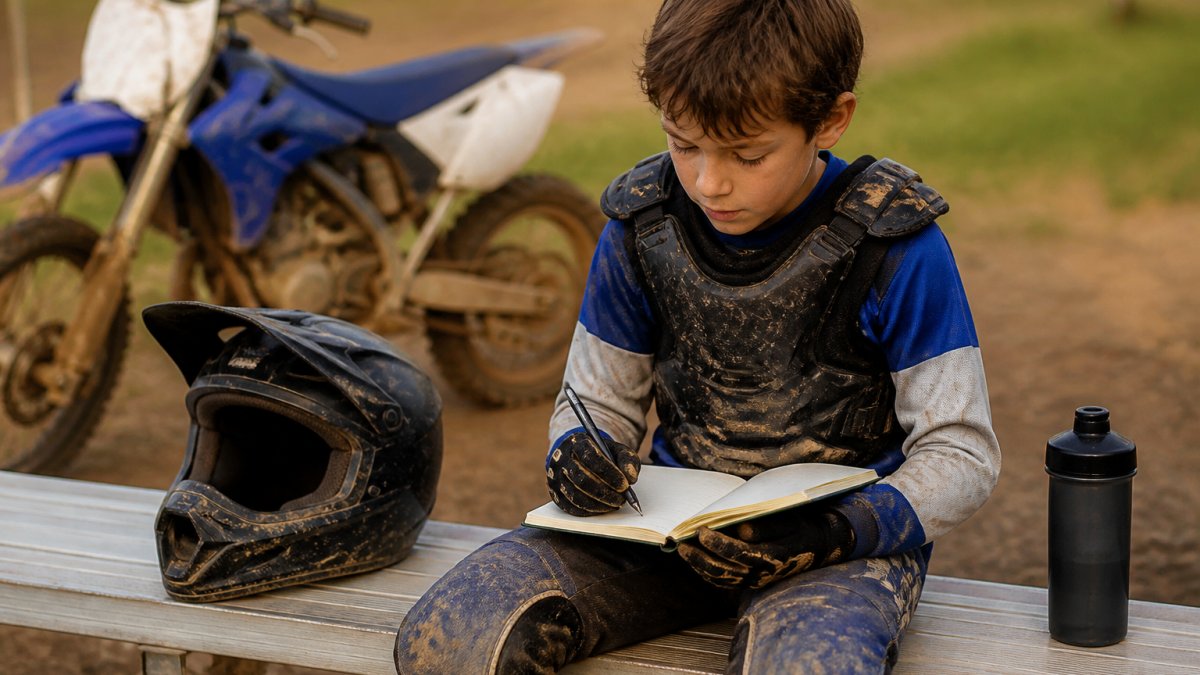
Motocross training journals for kids are written records where young riders log their practice sessions, skills, and progress on dirt bikes. It's a tool that turns riding time into measurable improvement.
Most young riders just want to ride without reflecting. But the fastest improvers reflect, notice patterns, set goals, and see progress. That's where a training journal changes everything.
Writing down what happened during practice, what felt good, what was hard, where they crashed, helps the brain process the experience differently. Research in sports psychology shows reflection builds confidence faster than repetition alone.
A training journal keeps kids engaged between practice days, gives them ownership of their progress, and builds discipline. It requires only consistency and honesty, no expensive coaching or equipment.
What to Track in a Dirt Bike Practice Log for Kids
Your child's dirt bike practice log should capture four key areas: riding skills, physical condition, safety checks, and mental notes.
Riding Skills and Techniques
Focus on specific techniques. Don't write "practiced cornering." Write "worked on right-hand turns at the track, felt rushed entering, slowed throttle input, felt more in control on lap five." Specific details show exactly what changed and when.
Track these riding elements:
- Throttle control and smoothness
- Cornering speed and line selection
- Balance and body position
- Jumping and landing technique
- Starts and acceleration
- Braking and deceleration
Physical Condition and Fitness
Young riders often don't realize how much fitness affects riding. Log how your child felt physically:
- Energy level at start and end of session
- Any sore muscles or tight areas
- How many laps or minutes they rode
- Whether they felt strong in the final laps
This teaches kids that riding is physical work and why off-bike training matters.
Safety Checks and Equipment
Before logging, record what was checked before every ride:
- Tire pressure and condition
- Chain tension and lubrication
- Brake function
- Helmet condition and fit
- Protective gear worn
- Any damage or concerns
This builds a safety habit. Kids learn that protecting themselves starts before they leave the house.
Motocross Goal Setting for Kids: Creating a Path Forward
Goals transform a journal from a diary into a training plan. A good goal is specific, achievable, and measurable: "nail three clean right-hand turns in a row without slowing down" rather than "get better at riding." Help your child set 2-3 weekly goals and review them together on Sunday. Short-term goals keep motivation high; long-term goals (by end of season) give direction.
Using Motocross Journal Prompts for Kids to Reflect and Improve
Motocross training journals for kids use prompts that give young writers a starting point and turn reflection into a simple routine.
Sample Prompts for Self-Reflection
Use these questions to guide your child's writing after each practice:
- What was the best thing that happened today?
- What was the hardest part, and why?
- What felt different from last week?
- If you could redo one moment, what would you change?
- What will you work on next time?
- Did you stay safe today? How do you know?
- How did your body feel? Were you strong at the end?
- What did you learn about yourself as a rider?
These prompts push kids to think critically, moving beyond "I rode the bike" to "I understand why I rode it better."
Building Confidence Through Writing
Confidence grows when kids see proof of progress. When a child rereads entries, they see skills mastered, mistakes fixed, goals achieved, and how much stronger they've become. This is evidence they wrote themselves, not a coach telling them they're good. Encourage rereading to celebrate wins and see progress.
Motocross Practice Drills for Kids: Training Activities to Log
Structured drills make practice time count and give the journal concrete entries.
Beginner Drills for Throttle Control and Balance
Throttle control is the foundation.
Drill 1: Smooth Acceleration, Ride a straight line, accelerate smoothly from stop to half-throttle, and log how many times you felt smooth and whether it improved.
Drill 2: Balance and Posture, Ride slow circles with eyes up and body centered, then log whether you felt the bike respond to weight shifts.
Drill 3: Braking Practice, Ride toward a marker and brake smoothly to a stop, repeating with different distances. Log whether stopping distance improved.
Intermediate Drills for Cornering and Line Selection
Drill 1: Line Selection, Mark a corner with cones, practice entering from different points, and log which entry point worked best.
Drill 2: Speed and Lean, Increase corner speed gradually, feel when the tire starts to slip, and log how much faster you were by session end.
Drill 3: Transitions, Practice turning left then right quickly, work on weight shifts, and log whether transitions felt smoother.
The journal records progress; over weeks, improvement becomes visible.
How Parents and Coaches Can Support Training Journal Use
A journal works best when it's part of your routine. Set aside 10 minutes after every ride to write. Read what your child writes (don't correct spelling), ask good questions ("What's one thing you did better today than last week?"), and celebrate goals hit. Review progress together monthly. Parents who stay involved see faster progress because they're paying attention, a journal makes that visible.
Getting Started: Choosing the Right Training Journal Format
The best journals match your child's age, writing ability, riding experience, and your family's lifestyle.
Journal Format Options and Trade-Offs
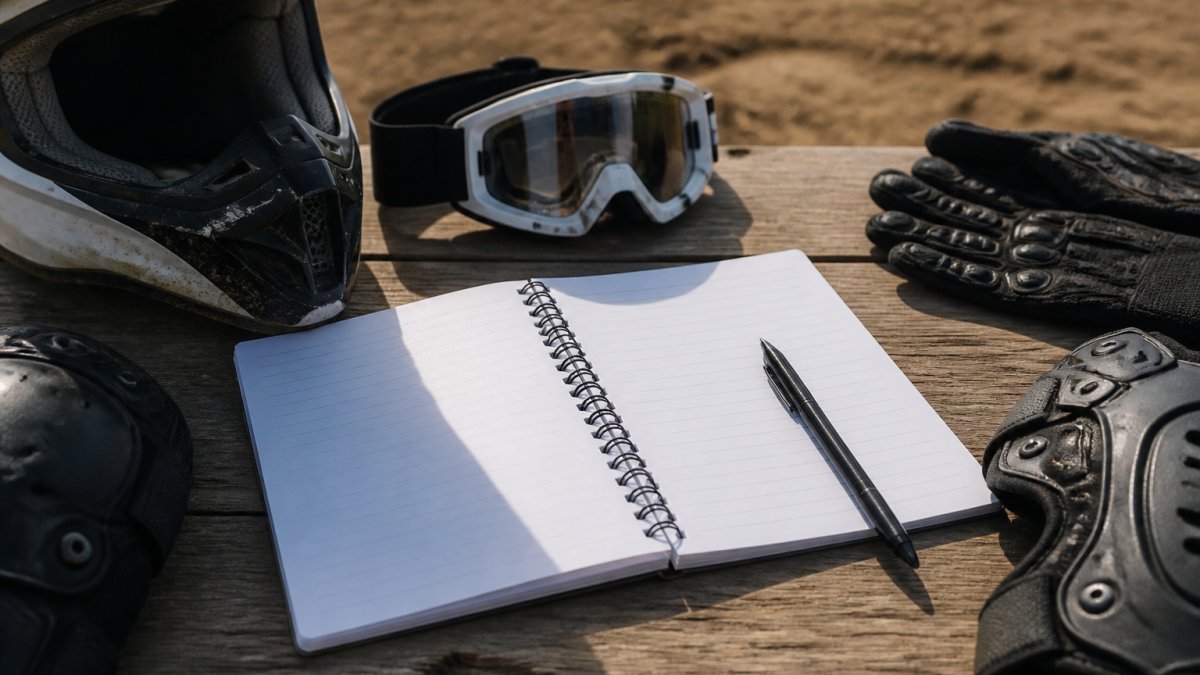
Physical Composition Books and Notebooks, Affordable and portable, handwriting improves retention. Downsides: no search function, no backup if lost, and blank pages can overwhelm young writers.
Nelmgerian MX Training Journal →
Specialized Motocross Training Journals, Purpose-built journals include pre-printed prompts, skill-tracking charts, goal-setting templates, equipment logs, and durable bindings. They cost more than blank notebooks but save time and reduce the blank-page problem, especially for ages 6-10.
Digital Logs and Apps Google Docs, note-taking apps (Apple Notes, OneNote), or spreadsheets let kids type entries and add photos or video clips from practice. Digital logs are searchable, easy to organize by date or skill, and can sync across devices.
Hybrid Approach Many families use both: kids write quick notes in a physical journal immediately after riding (while memory is fresh), then type a longer reflection in a digital log later that week.
Age-Appropriate Journal Features
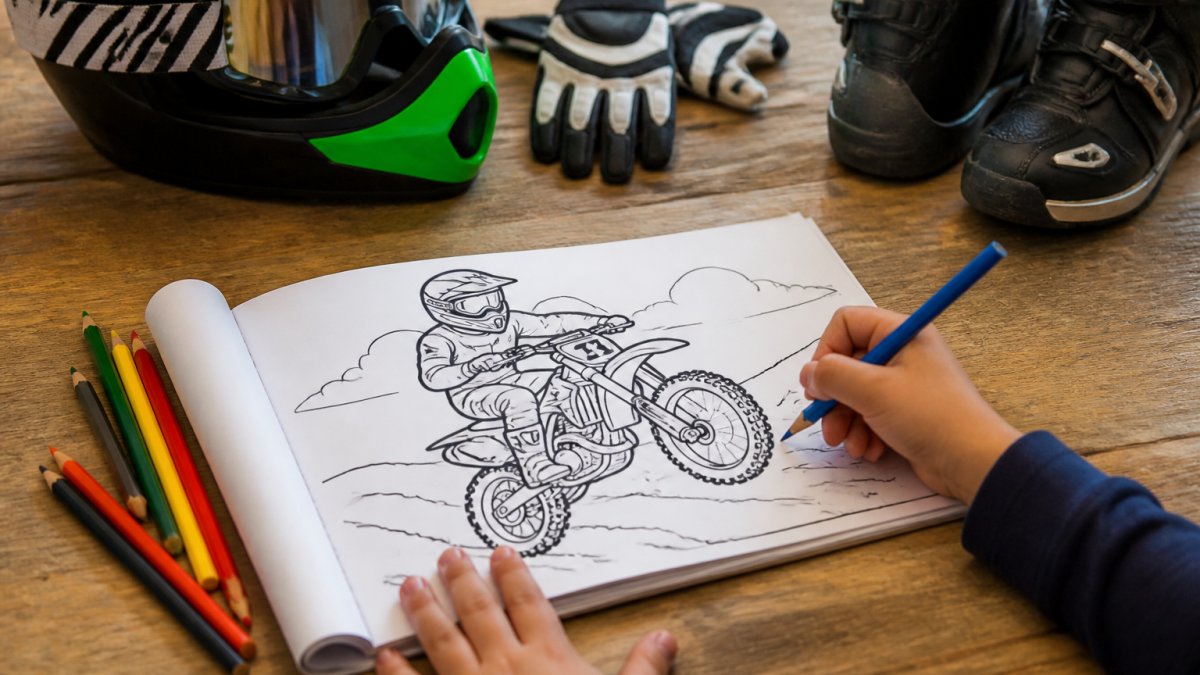
Ages 5-7: Picture-Heavy, Minimal Writing At this age, fine motor skills are still developing. Choose journals with:
- Large blank spaces for drawing
- Simple fill-in-the-blank prompts ("I felt ___ today" or "My best moment was ___")
- Stickers or stamps to mark achievements
- Pictures or illustrations of motocross riders and bikes
- Minimal text, one or two sentences per entry is enough Consistent practice with these simple writing tasks serves as a natural foundation for improving motor skills while fostering a deeper connection to the sport.
Example prompt: "Draw yourself riding today. Circle the part you did best."
Ages 8-10: Balanced Writing and Drawing Kids this age can write short paragraphs but still benefit from structure. Look for:
- Pre-printed sections (Skills Worked On, How I Felt, What's Next)
- Checkboxes for skills practiced (throttle control, cornering, jumping, etc.)
- Simple rating scales (1-5 stars for confidence or difficulty)
- Space for sketches alongside written notes
- Weekly goal-tracking with a review section
Example prompt: "What was one thing you did better today than last week? Why do you think it went better?"
Ages 11+: Open-Ended Reflection and Strategy Older kids can handle longer entries and more complex thinking. Choose journals with:
- Open-ended prompts that require analysis ("What did you learn about your riding style today?")
- Space to plan weekly and monthly goals
- Sections for tracking specific metrics (lap times, number of clean runs, endurance)
- Room for sketching track layouts or technique notes
- Progress-tracking charts (skills mastered, goals achieved, confidence growth)
Example prompt: "If you had to teach a younger rider one thing you learned today, what would it be and why?"
Evaluating Journal Quality
Before buying or committing to a format, ask:
-
Does it have templates or prompts? Blank pages intimidate young writers. Pre-printed prompts guide reflection without being too rigid.
-
Is the binding durable? A journal that falls apart after two months won't last a season. Look for spiral binding, comb binding, or sewn spines if your child will carry it in a gear bag.
-
Does it match your child's writing level? If prompts are too advanced, your child will skip them. If they're too simple, your child will get bored.
-
Is there room for personalization? Kids are more likely to use a journal they feel ownership of. Space to decorate the cover, add stickers, or write their name matters.
-
Can you add to it? Even specialized journals sometimes need custom pages. Make sure you can print and insert extra sheets if needed.
-
Is it portable? If your child won't carry it to the track, it won't get used. Smaller formats (5" × 8" or A5) fit in gear bags better than full-size notebooks.
Sample Journal Entry Formats by Age
Age 6 Example:
Common Mistakes Young Riders Make With Training Journals
The most common mistake is treating the journal like homework. Your child writes what they think you want to read.
The fix is simple: tell them the journal is for them, not for you. They're the only reader who matters. Honesty is the only rule.
Another mistake is vague entries. "I rode good" doesn't teach anything. Push your child toward specifics. What felt good? What changed? Why?
A third mistake is quitting after two weeks. Journals only work if they're consistent. The first month feels pointless.
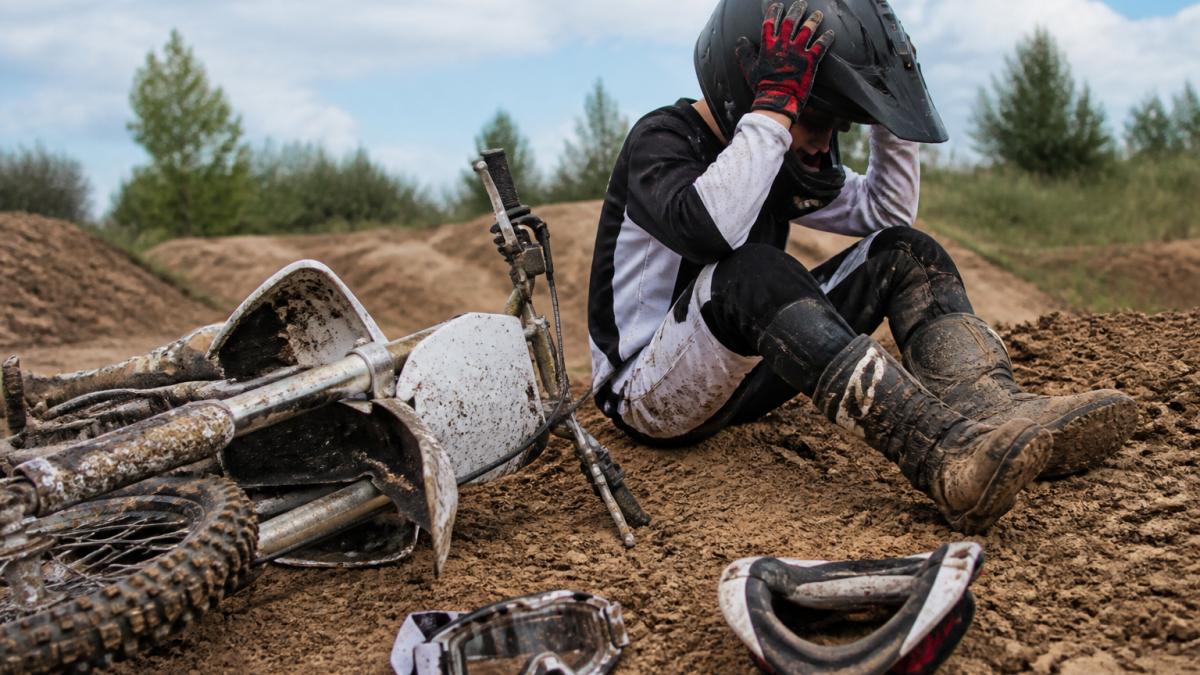
Finally, parents sometimes use the journal to find problems. They read an entry about a crash and immediately blame their child or the coach.
A training journal works when it's honest, specific, consistent, and supported. They'll also build confidence that carries beyond the track.
Building a strong young rider takes more than practice time. It takes reflection, goal-setting, and consistent tracking.
Frequently Asked Questions
What should kids track in a motocross training journal?
Young riders should record riding techniques practiced (cornering, throttle control, balance), physical condition and energy levels, safety checks completed before practice, goals for the session and progress toward them, what went well and what needs improvement, and time spent practicing. For younger children ages 5-7, simple sketches or checkboxes work better than lengthy notes. Older kids can write detailed reflections on specific drills and how their performance compared to previous sessions.
How can a motocross training journal help kids improve their skills?
Training journals create accountability and awareness. When young riders write down what they practiced and how it went, they develop focus and intentionality instead of just riding. Reviewing past entries shows measurable progress, which builds confidence. Journaling also helps kids identify patterns, like struggling with left-hand turns or losing focus after 20 minutes, so they can target specific areas in future practice sessions. Parents and coaches can use these records to provide better feedback and adjust training plans.
How often should kids write in a dirt bike training journal?
Ideally, young riders should write in their journal immediately after each practice session or race, while details are fresh. For kids who practice 2-3 times per week, that means 2-3 journal entries weekly. Even brief 5-minute entries, a few sentences and checkboxes, are more valuable than skipping days. Consistency matters more than length. Establishing a routine (journal time right after practice, before snacks) makes it a natural part of the training habit rather than a chore.
What age is a motocross training journal appropriate for?
Children as young as 5-6 can start with picture-based or checkbox journals that require minimal writing. Kids ages 7-9 can handle short-form prompts with sentence starters and simple reflection questions. Older children and pre-teens benefit from more detailed goal-setting and skill-analysis sections. The key is matching the journal format to your child's reading and writing level.