 blog
blog
Best Places to Ride Dirt Bikes for Beginners
Table of Contents
- What Makes a Dirt Bike Riding Area Beginner-Friendly
- Beginner Dirt Bike Trails to Explore Across Regions
- Beginner Motocross Tracks vs. Off-Road Trails
- Finding Dirt Bike Riding Areas Near You
- Dirt Bike Riding Tips for Beginners
- Planning Your First Riding Trip
- Building Confidence Through Structured Practice
- Frequently Asked Questions
Last Updated: October 10, 2026
What Makes a Dirt Bike Riding Area Beginner-Friendly
Finding the right place to ride is half the battle when you're just starting out. The best places to ride dirt bikes for beginners share common features that separate them from advanced terrain: wide trails, gentle slopes, and minimal obstacles that provide space to make mistakes and recover safely.
Terrain and Trail Width
Wide, open trails (at least 8-10 feet) are non-negotiable for beginners. Sand and hard-packed dirt are forgiving when riders fall; avoid rocky ground, which catches tires and causes crashes. Gentle slopes matter, steep hills drain confidence fast. Beginner trails need gradual elevation changes, not sharp drops or climbs.
Skill-Level Separation
The best riding areas separate beginner trails from intermediate and advanced routes, letting you focus on fundamentals without traffic. Look for clear trail marking: green circles (easy), blue (intermediate), black (advanced).
Access and Navigation
Smooth access roads and clear signage keep you riding, not searching or exhausting yourself before you start.
Beginner Dirt Bike Trails to Explore Across Regions
The best places to ride dirt bikes for beginners exist in every region. Verify current access rules before planning your trip.
Southwest Desert Riding
Terrain and Difficulty: Desert areas offer wide-open spaces and predictable terrain ideal for beginners. Sand dunes and flat floors let riders practice throttle control without tight technical sections. Difficulty rating: Green (Beginner).
Specific Locations and Access: The Bureau of Land Management (BLM) manages millions of acres across Arizona, Nevada, California, and Utah designated for OHV use. Popular beginner-friendly areas include:
- Imperial Sand Dunes Recreation Area (California): Open year-round; day-use fees apply. Check Imperial Sand Dunes current conditions for seasonal updates.
- Jawbone Off-Highway Vehicle Recreation Area (California): Free access; open daily. Flat terrain suitable for first-time riders.
- Arizona State Parks OHV areas: Many state parks maintain beginner loops. Verify permits and fees at Arizona State Parks OHV guide.
Conditions and Considerations: Water crossings are minimal and visibility is excellent. Main challenges are dust and heat, not technical difficulty. Ride early morning or late afternoon; bring 2-3 liters of water per hour.
Seasonal Access: Most desert areas remain open year-round, but summer temperatures often exceed 100°F. Spring (March-April) and fall (October-November) offer ideal conditions.
Pacific Northwest Forest Trails
Terrain and Difficulty: Forest trails offer wider paths and fewer obstacles in beginner areas. Moderate elevation changes build fitness without exhaustion. Difficulty rating: Green to Light Blue (Beginner to Early Intermediate).
Specific Locations and Access: State forests in Washington, Oregon, and Northern California maintain OHV trails with beginner sections:
- Tillamook State Forest (Oregon): Free access; well-maintained beginner loops. Maps available at Tillamook State Forest OHV trails.
- Gifford Pinchot National Forest (Washington): Designated OHV areas with beginner trails. Requires Northwest Forest Pass ($5 per day or $30 annual). Verify trail status at Gifford Pinchot National Forest.
- Mendocino National Forest (California): Free OHV use in designated areas. Check seasonal closures, many trails close May-June for wildlife protection.
Conditions and Considerations: Moisture creates slippery conditions; most areas have good drainage. Call ahead or check trail reports before riding after heavy rain.
Seasonal Access: Spring (April-May) and fall (September-October) offer ideal conditions. Many forest areas close trails during wet seasons (November-March) to prevent damage.
Midwest and Eastern Options
Terrain and Difficulty: Midwest and Eastern areas feature rolling hills and beginner loops with natural berms and flowing trail design. Difficulty rating: Green (Beginner).
Specific Locations and Access:
- Badlands Off-Road Vehicle Recreation Area (South Dakota): Free access; open year-round. Rolling terrain ideal for beginners. Check Badlands OHV area for current conditions.
- Moto parks in Ohio and Pennsylvania: Private facilities like Malvern Motocross Park (Pennsylvania) and Buckeye MX (Ohio) offer beginner-focused trails and instruction. Day-use fees typically range $25-$40. Many offer bike rentals ($60-$100 per day).
- State forests in Michigan and Wisconsin: Free or low-cost access. Michigan's state forests maintain over 2,000 miles of OHV trails; beginner sections are clearly marked. Check Michigan Department of Natural Resources OHV guide.
Conditions and Considerations: Spring and fall offer ideal conditions. Seasonal mud is common in spring; check trail conditions before driving out.
Seasonal Access: Most Midwest and Eastern areas operate April-October. Some private parks remain open year-round.
Beginner Motocross Tracks vs. Off-Road Trails
Beginners often ask whether to start on a motocross track or hit natural trails. Both have value but teach different skills.
Controlled Track Environment
Motocross tracks provide a controlled, predictable environment where you know exactly what's coming, letting you focus on technique. Tracks are ideal for learning throttle control and body positioning with professional instruction. The downside is cost and limited availability.
Open Trail Experience
Off-road trails teach real-world riding skills. Every ride is different, and you learn to adapt on the fly. Trails are more accessible and usually free or low-cost, but offer less structured learning. The best approach combines both: start on a track to build fundamentals, then move to beginner trails.
Finding Dirt Bike Riding Areas Near You
Locating beginner-friendly riding areas takes research, but resources exist.
Public Land and OHV Parks
The Bureau of Land Management (BLM) manages millions of acres open to off-road riding. Most BLM lands have designated OHV areas with trails suitable for all skill levels. Check BLM's OHV recreation guide for areas near you.
State forests maintain dirt bike trails with better maintenance than private land. National Forests allow OHV use in designated areas. Verify current access before planning trips, as many have seasonal closures.
OHV parks are privately operated facilities with trails separated by skill level and provide the most beginner-focused experience but charge day-use fees.
Private Riding Facilities
Private motocross tracks offer structured environments with beginner classes and rental bikes, ideal if you don't own a bike yet. Riding clubs maintain private trail systems and organize group rides, providing social motivation and safety.
Dirt Bike Riding Tips for Beginners
Success comes from combining proper preparation with smart practice.
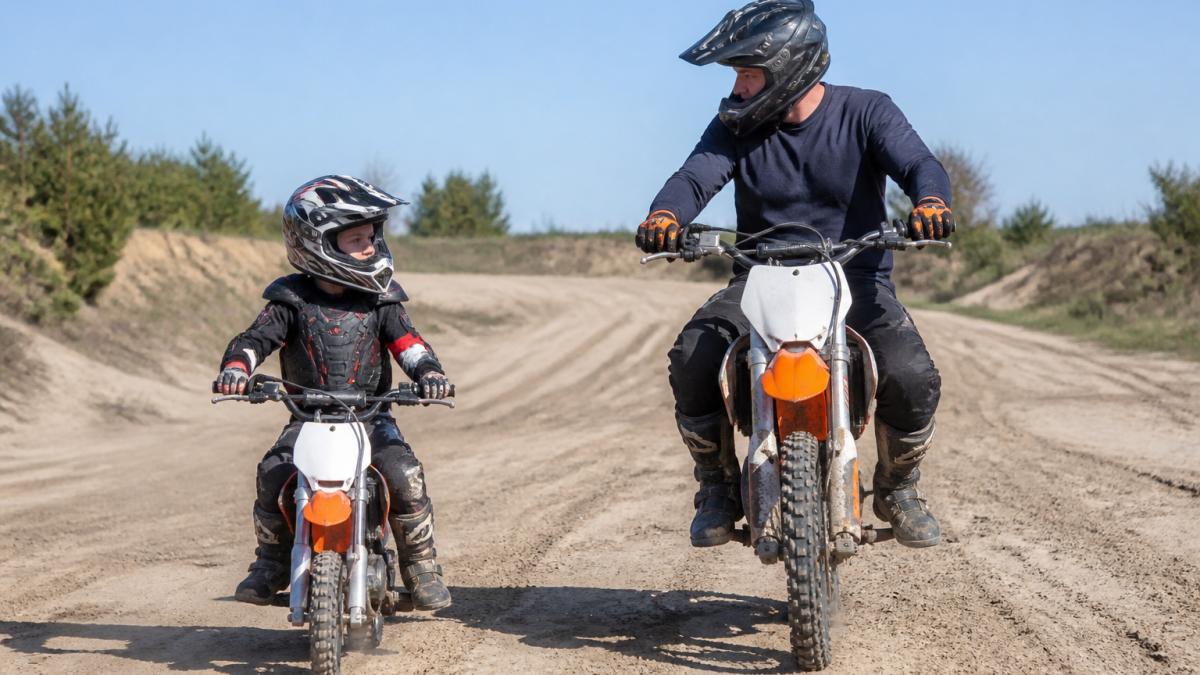
Start with Proper Gear and Bike Selection
Protective Gear (Non-Negotiable): Never ride without full protective gear. A helmet is non-negotiable, it's the difference between a bump and a tragedy.
Minimum gear checklist:
- Helmet: DOT or Snell-certified motocross helmet ($150-$400).
- Chest protector: Absorbs impact and prevents rib injuries ($80-$200).
- Gloves: Protects hands and improves grip ($40-$100).
- Boots: Ankle support and shift-lever protection ($100-$250).
- Riding pants: Reinforced fabric or leather prevents abrasion ($100-$300).
- Jersey: Moisture-wicking and durable ($40-$80).
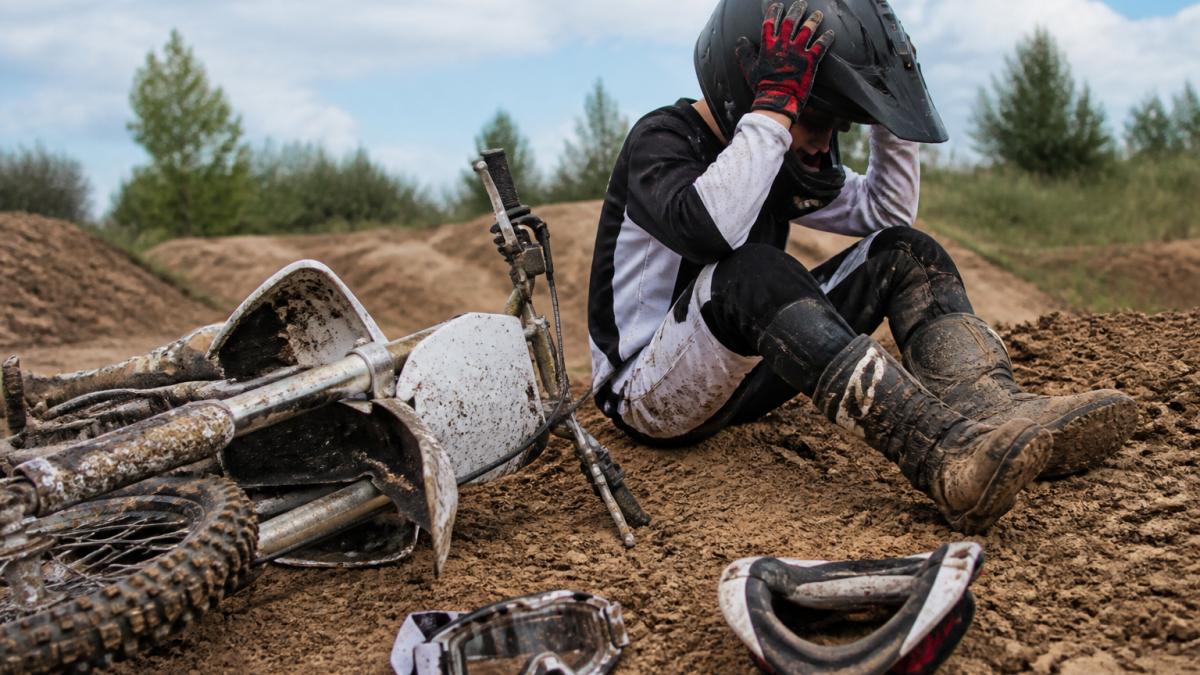
Injuries without proper gear are far more expensive and life-altering.
Bike Size and Selection: Bike size matters enormously for beginners. Match bike displacement to your age, height, and weight:
- Ages 4-7, under 3'6": 50cc bikes. Examples: Honda CRF50F, Yamaha PW50. Cost: $1,500-$2,500 new; $800-$1,500 used.
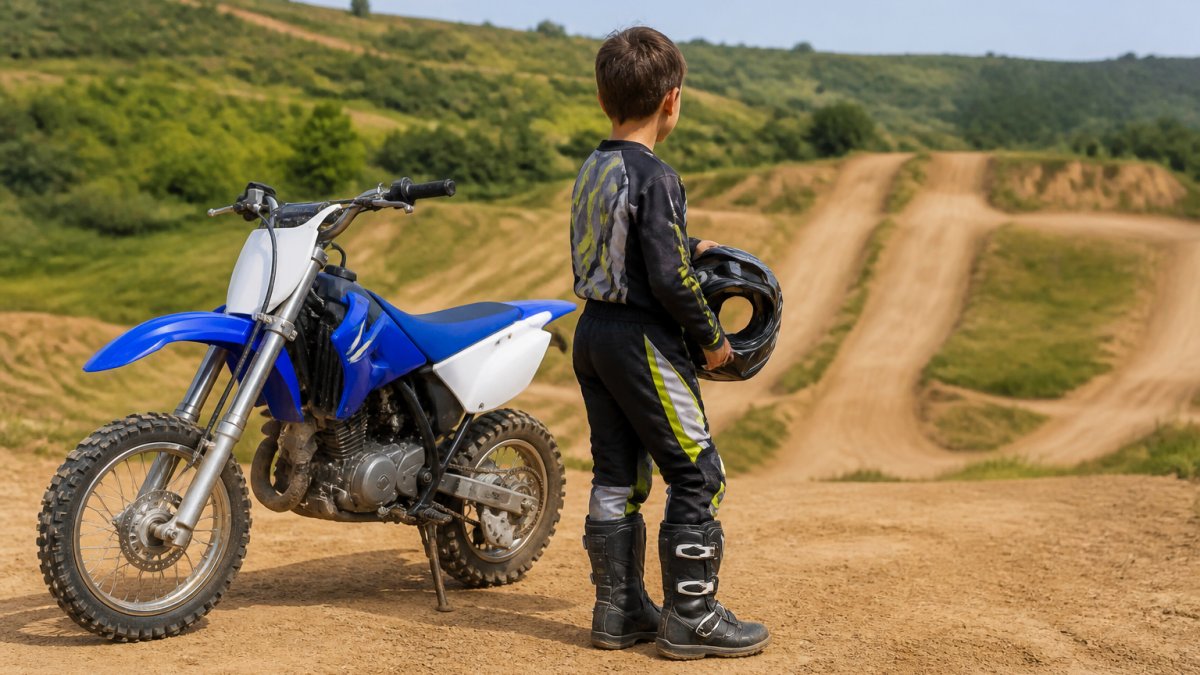
- Ages 7-12, 3'6"-5': 70cc to 110cc bikes. Examples: Honda CRF110F, Yamaha TTR110E. Cost: $2,000-$3,500 new; $1,200-$2,200 used.
- Ages 12+, 5'-5'6": 125cc bikes with manual clutch. Examples: Honda CRF125F, Kawasaki KLX140. Cost: $2,500-$4,000 new; $1,500-$2,800 used.
- Ages 16+, 5'6"+: 250cc bikes or larger. Examples: Honda CRF250F, Yamaha WR250F. Cost: $4,000-$6,000 new; $2,500-$4,000 used.
Many beginner-friendly riding areas offer rentals with helmets and basic gear included, an excellent way to test whether dirt biking fits your interests before investing in a purchase.
Proper Bike Maintenance: Before every session, check tire pressure (typically 12-15 PSI), chain tension (1-1.5 inches of play), brake function, oil level, and air filter condition.
Build Skills Progressively and Match Routes to Your Ability
Progressive Skill Building: Master throttle control before adding turns. Learn turns before adding jumps. Each skill builds on the previous one.
Structured progression:
- Week 1-2: Flat, open terrain. Focus on starting, stopping, and throttle control.
- Week 3-4: Gentle turns on wide trails. Practice body positioning and line selection.
- Week 5-6: Small elevation changes and gentle hills. Learn how weight transfer affects climbing and descending.
- Week 7-8: Introduce small obstacles (rocks, roots) one at a time.
- Week 9+: Combine skills on more complex terrain.
Ride the same beginner trail multiple times. Repetition builds muscle memory.
Matching Routes to Your Ability: Use the standard trail difficulty rating system:
- Green circle (Beginner): Wide trails, minimal obstacles, gentle slopes. Ideal for first 10-20 rides.
- Blue square (Intermediate): Narrower trails, some obstacles, moderate elevation changes. Attempt after mastering green trails.
- Black diamond (Advanced): Technical terrain, steep climbs/descents. Not for beginners.
If a green trail feels overwhelming, ride it at off-peak hours when traffic is minimal. If a green trail feels easy after 5 rides, progress to blue terrain, but only if you can complete the green trail without walking sections.
Understand Trail Conditions, Obstacles, and Riding with a Partner
Reading Terrain and Obstacles: Different trail conditions demand different techniques. Sand requires smooth throttle control. Mud needs momentum management.
Face obstacles progressively: master small rocks before roots, roots before logs, logs before water crossings.
Weather and Seasonal Conditions: Wet trails are slippery and technical. Avoid riding immediately after heavy rain when trails are saturated and muddy.
Riding with a Partner (Safety Essential): Never ride alone, especially as a beginner.
Trail Etiquette: Yield to uphill riders. Stay on marked trails. Close gates behind you. Pack out all trash. Ride during designated hours.
Planning Your First Riding Trip
A successful first ride requires more than just showing up with a bike.
Check Access Rules and Operating Hours
Every riding area has specific rules. Some require permits. Others charge day-use fees. Many have seasonal closures. Check before you go. Weather closures are common after heavy rain. Check trail conditions online before driving out.
Prepare Support and Safety Equipment
Bring a first-aid kit and basic tools: a spare tube, tire levers, pump, and small socket set. Tell someone where you're going and when you'll return. Bring plenty of water and snacks. Dehydration kills decision-making ability.
Building Confidence Through Structured Practice
Confidence comes from consistent practice on appropriate terrain. Structured practice means focused sessions with specific goals: master throttle control one day, practice turns the next.
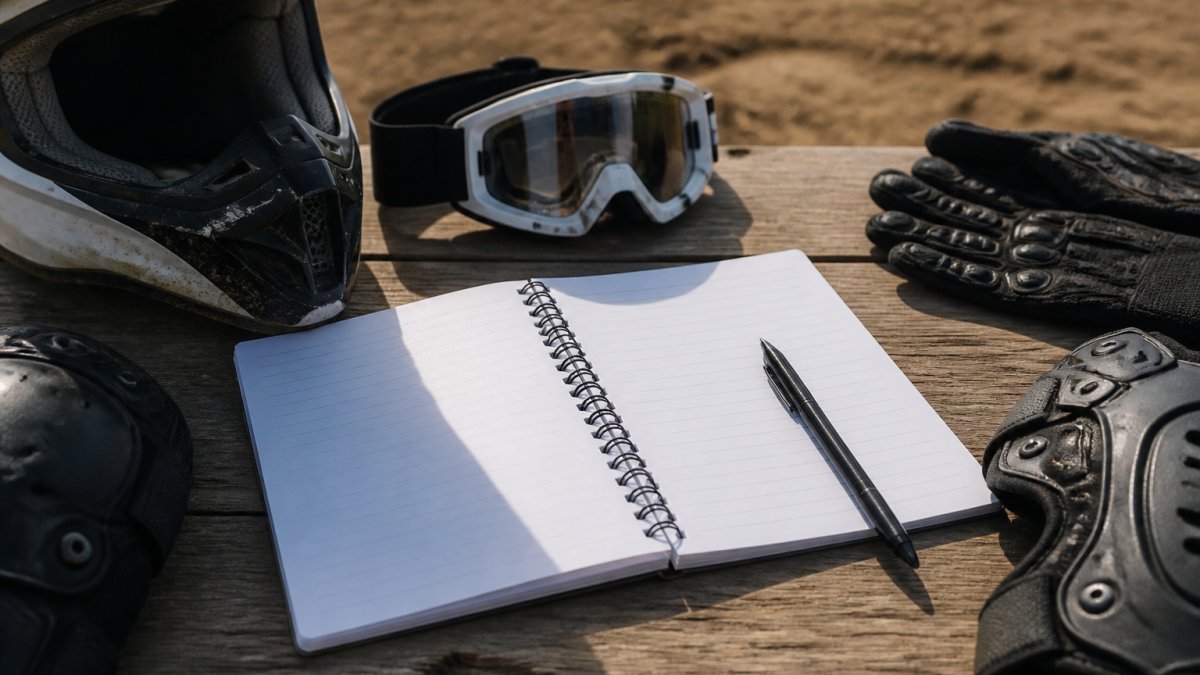
Keep a riding journal to track progress. Riding with other beginners builds confidence through community. The key to long-term success is consistency. Short, regular rides beat occasional marathon sessions. Aim for weekly rides.
Finding the best places to ride dirt bikes for beginners is the foundation for lifelong riding enjoyment. Visit Nelmgerian MX to explore training resources and rider journals designed to build confidence and skills.
Frequently Asked Questions
What makes a dirt bike trail beginner-friendly?
Beginner-friendly trails feature wide riding surfaces that give you room to maneuver, minimal obstacles like rocks or roots, and gentle terrain with gradual slopes. Look for trails marked as easy or beginner level, areas with clear navigation, and separated skill-level zones so you're not riding alongside advanced riders. Sand or loamy soil is more forgiving than hardpack when you're learning balance and control.
Where can beginners ride dirt bikes legally?
Beginners can ride at designated OHV parks, public off-highway vehicle areas on national forests and state forests, and private motocross tracks. Many states manage specific riding areas with marked trails and skill-level designations. Check your state's forestry or parks department website for off-road vehicle area maps, permits, and operating hours. Private facilities often offer beginner-focused instruction and controlled environments ideal for learning.
Is a motocross track or an off-road trail better for a beginner?
Motocross tracks are ideal for beginners because they're controlled, predictable, and designed for learning. You avoid navigation challenges and can focus on technique. Off-road trails build real-world skills like reading terrain and managing obstacles, but they're better after you've mastered basics. Many beginners start at a track for 4-6 weeks, then progress to easier trail systems to develop confidence in natural settings.
What should a beginner look for in a dirt bike riding area?
Look for areas with easy trails clearly marked by skill level, wide riding surfaces without tight technical sections, minimal obstacles, and good support infrastructure like parking and pit areas. Check that the location allows young riders and offers beginner-appropriate terrain. Verify access rules, whether permits are required, and operating hours. Areas with onsite instruction or coaching are excellent for first-time riders building confidence and learning proper technique.