 ultimate-guide
Dirt Bike Classes for Beginners: A Parent's Guide
Table of Contents
- What to Expect in a Dirt Bike Class
- Youth Motocross Training Programs: Finding the Right Fit
- Essential Dirt Bike Riding Tips for Beginners
- Safety Gear and Equipment Requirements
- Motocross Training Journal Benefits for Tracking Progress
- Preparing Your Child Physically and Mentally
- Booking Your First Class and What Comes Next
- Frequently Asked Questions
Last Updated: September 3, 2026
What to Expect in a Dirt Bike Class
A dirt bike class near me introduces young riders to motorcycle control fundamentals in a safe, supervised environment. Most beginner programs start with basic safety, proper riding posture, and throttle and clutch operation before riders touch the bike's controls.
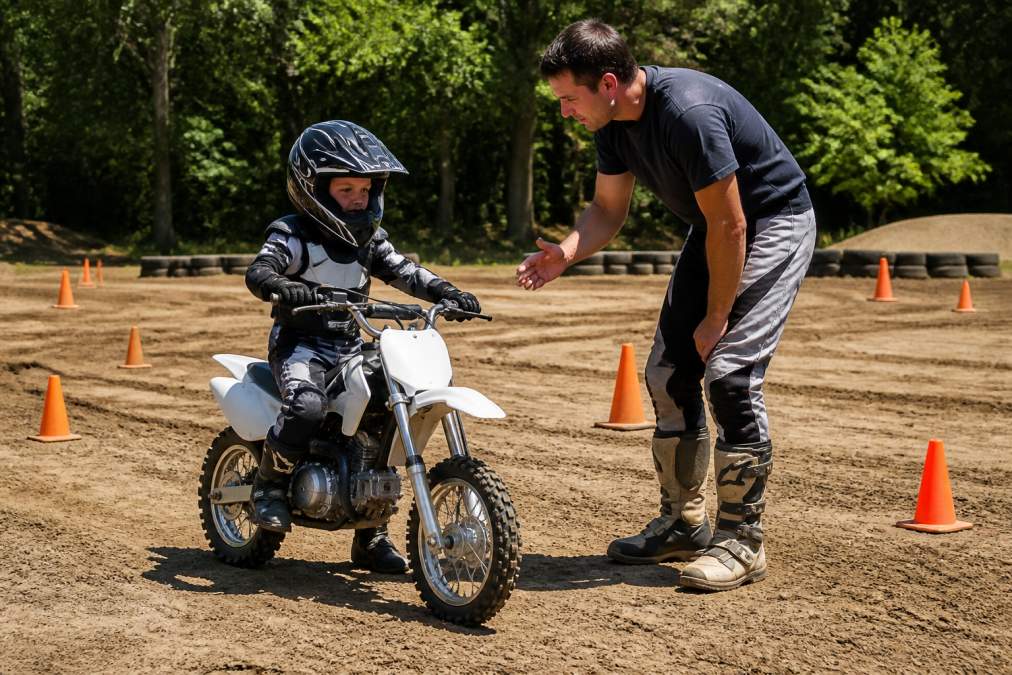
On day one, instructors cover helmet fitting, gear inspection, body positioning, and throttle control exercises in a controlled environment. By mid-class, riders practice straight-line riding, gentle turns, and stopping techniques on a closed course, building muscle memory and confidence. Instructors immediately correct common mistakes like gripping handlebars too tightly or shifting weight incorrectly.
Quality dirt bike classes near me prioritize instructor-to-student ratio. Smaller groups mean more personalized feedback. A good program caps classes at 6-8 riders per instructor, with experienced instructors demonstrating techniques first, then having riders replicate the movement (ama.org). Classes wrap with a cool-down where instructors discuss progress and next steps, giving parents feedback on their child's development.
Youth Motocross Training Programs: Finding the Right Fit
Youth motocross training programs vary widely in structure and philosophy. Some focus purely on skill development, while others blend riding instruction with character-building. The best program depends on your child's age, experience level, and goals.
A 5-year-old on their first 50cc bike requires a completely different program than a 9-year-old with two years of experience. Beginner programs emphasize confidence-building and foundational skills using smaller bikes and shorter sessions. Advanced programs focus on terrain navigation and competitive preparation.
Look for programs that teach balance and coordination explicitly. Quality youth motocross training includes balance exercises, body positioning drills, and progression-based skill development. Consider the facility: a closed-course training environment is safer for beginners than open trails, with forgiving ground and separate beginner sections.
Ask about instructor qualifications. Are they certified? How long have they taught young riders specifically? Look for instructors who can build confidence systematically rather than just demonstrate techniques.
Essential Dirt Bike Riding Tips for Beginners
Learning dirt bike riding tips for beginners starts with understanding that motorcycles respond to weight distribution and smooth inputs. The first tip is counterintuitive: relax your grip on the handlebars. A death grip makes steering harder and tires you out faster.
Throttle control is foundational. Practice rolling the throttle open slowly in a straight line, then releasing it smoothly. This develops the muscle memory your hands need for real riding.
Braking maneuvers come next. Most riders brake too hard with the front wheel, causing slides. Teach your child to use both brakes evenly and gently, squeezing rather than grabbing. On dirt, the rear brake does more work than on pavement.
Body positioning determines balance. The rider should sit toward the back of the seat, keep elbows up and out, and look where they want to go, not at the front wheel. When turning, the rider leans the bike but keeps their body more upright, opposite to street riding.
Clutch operation is essential. Smooth clutch engagement prevents wheel spin and keeps the bike stable. Jerky clutch work causes lurching or stalling.
Safety Gear and Equipment Requirements
Every dirt bike class near me requires proper protective gear. A helmet must be DOT-certified, fit snugly without movement, and be replaced after any significant impact (nhtsa.gov). For young riders, a full-face helmet offers more protection than an open-face.
Body armor protects the chest, shoulders, and back. A quality chest protector absorbs impact and distributes force across a wider area. Gloves protect hands and wrists with reinforced palms and knuckle protection. Boots provide essential ankle support and toe protection. Motocross pants have reinforced areas at knees and hips where crashes typically happen.
Check whether your dirt bike class near me provides rental gear or requires purchase. Rental gear is convenient for one-off classes but gets expensive for ongoing training. If your child shows genuine interest, investing in quality gear makes sense.
Motocross Training Journal Benefits for Tracking Progress
A motocross training journal benefits young riders by creating a record of skill development and building accountability. When your child writes down what they practiced, how it went, and what felt difficult, they develop metacognitive awareness about their own learning.
Tracking progress is motivating. A child who sees "couldn't hold a turn last week, smooth turns this week" gets tangible proof that effort produces results. The journal becomes a visual record of improvement that both parent and child can reference.
Nelmgerian MX training journals are designed specifically for young riders with guided prompts, space for observations, and goal-setting sections. The journal format keeps kids thinking about motocross between practice days, extending learning beyond class time.
Using a training journal also helps identify patterns. You might notice your child struggles with left turns but not right turns, or that confidence drops on certain terrain. This information helps you target practice and communicate with instructors about specific concerns.
Preparing Your Child Physically and Mentally
Physical fitness preparation directly impacts performance and safety. Dirt bike riding requires core strength, leg endurance, and grip strength (peer-reviewed research). Start building fitness weeks before your child's first class with planks, dead bugs, and bird dogs for core work. Leg strengthening through squats or climbing stairs improves endurance. Grip strength training can be as simple as squeezing a tennis ball.
Cardiovascular fitness matters too. Running, cycling, or swimming builds the aerobic base that makes riding less physically demanding.
Mental preparation is equally important. Many children feel nervous before their first class. Help your child manage nervousness by visiting the facility before class, watching videos of other riders, and talking through what to expect. Set realistic expectations that confidence builds over weeks and months.
Teach your child to view mistakes as learning opportunities, not failures. A child who crashed but got back up learned more than a child who never crashed. This mindset transfers to all areas of life.
Booking Your First Class and What Comes Next
Finding a dirt bike class near me requires searching online for "dirt bike classes near me" or "youth motocross training," checking local motorcycle shops, and asking in local motocross communities. When evaluating options, ask about instructor-to-student ratio, age and skill levels served, facility type, gear requirements, class length, and cancellation policy.
Schedule a visit to the facility before committing. Watch a class in progress and notice whether instructors are patient and explain why corrections are needed. Observe whether the facility is clean, well-maintained, and organized.
After booking, prepare your child mentally and physically. Practice the exercises mentioned above. Get proper gear fitted correctly. Arrive early on class day so your child isn't rushed.
After the first class, ask your child what they learned and what felt hard. Let the instructor's feedback guide what you emphasize at home. If your child wants to continue, consider a motocross training journal to track progress and keep engagement high between classes.
Resources like those from Nelmgerian MX help bridge the gap between formal instruction and home practice, keeping young riders mentally engaged with motocross on days they're not riding.
Finding the right dirt bike class near me is about matching your child's age, skill level, and personality with a program that teaches systematically and safely. The best programs combine hands-on instruction, small class sizes, and a focus on building confidence alongside skills.
At Nelmgerian MX, we understand that young riders need more than just seat time. They need mentorship, resources to track their progress, and stories that inspire them to believe in themselves. Our training journals and children's books keep your child connected to motocross between classes, building the mental toughness and passion that turns casual riders into committed athletes. Start with a quality dirt bike class, then supplement with resources that keep the momentum going.
Frequently Asked Questions
What age should a child start dirt bike classes?
Most dirt bike classes accept children as young as 4-5 years old on small-displacement bikes like 50cc models. Age requirements depend on the program and bike size. Younger children benefit from beginner-friendly instruction focused on balance, throttle control, and confidence-building. Always check with your local training program for their specific age and height requirements before enrolling.
How long does it take to learn basic dirt bike riding skills?
Beginners typically grasp fundamental skills like throttle control, braking, and body positioning within 2-4 hours of hands-on instruction. Full competence in trail riding, terrain navigation, and advanced techniques takes weeks or months of consistent practice. Using a motocross training journal to track progress helps young riders see improvement and stay motivated between lessons.
What gear do I need to buy before my child's first dirt bike class?
Most classes provide helmets and basic protective gear, but many parents invest in a personal helmet, gloves, goggles, jersey, and boots for comfort and fit. A certified helmet meeting DOT standards is essential. Check with your chosen program about what they provide and what you should bring. Quality riding gear improves confidence and safety on the bike.
How can a motocross training journal help my young rider improve?
A training journal lets riders document each session, track skills learned, note mistakes, and set goals. This hands-on approach builds accountability, helps identify patterns in performance, and keeps young riders engaged between classes. Many beginning riders see faster skill development when they actively record their progress and reflect on what they've learned.
This article was written using GrandRanker