 ultimate-guide
Dirt Bike Riding Techniques for Trails: Master the Fundamentals
Table of Contents
- Dirt Bike Riding Techniques for Trails: Core Fundamentals
- Dirt Bike Body Position for Beginners
- Throttle Control and Power Management
- Dirt Bike Clutch Control Techniques
- Braking Techniques and Deceleration
- How to Ride Over Obstacles on a Dirt Bike
- Cornering, Line Selection, and Trail Scanning
- Mental Preparation and Trail Psychology
- Frequently Asked Questions
Last Updated: September 2, 2026
Dirt Bike Riding Techniques for Trails: Core Fundamentals
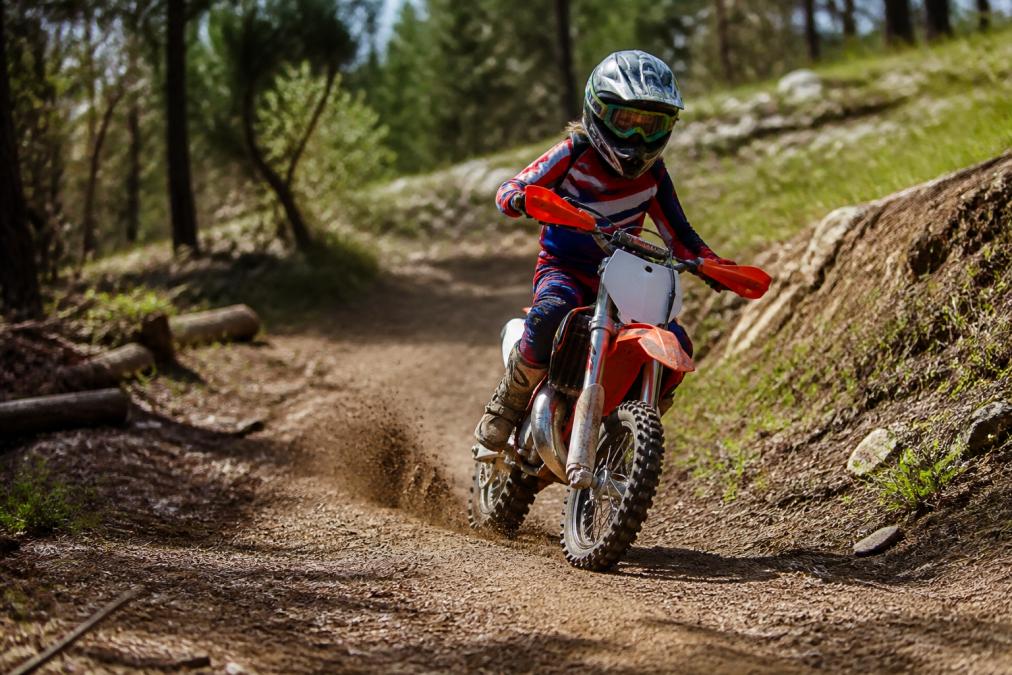
Mastering dirt bike riding techniques for trails separates confident riders from those who struggle with control, speed, and safety. The difference isn't raw power or expensive equipment, it's technique, body control, and understanding how your bike responds to trail conditions.
Trail riding demands precision. Unlike open motocross tracks, trails throw ruts, rocks, steep climbs, and blind corners at you constantly. Your body position, throttle control, braking approach, and line selection determine whether you navigate obstacles smoothly or fight the bike the entire ride.
This guide covers core dirt bike riding techniques for trails that every rider needs to develop: body positioning, clutch and throttle management, braking strategy, obstacle navigation, cornering fundamentals, and the mental side of trail riding. Whether you're a parent helping a young rider build confidence or a beginner working on your own skills, these techniques apply across all skill levels.
Dirt Bike Body Position for Beginners
Your body position is the foundation of everything else. Get this wrong, and even perfect throttle control won't save you. Get it right, and the bike becomes an extension of your body.
Standing vs. Sitting Technique
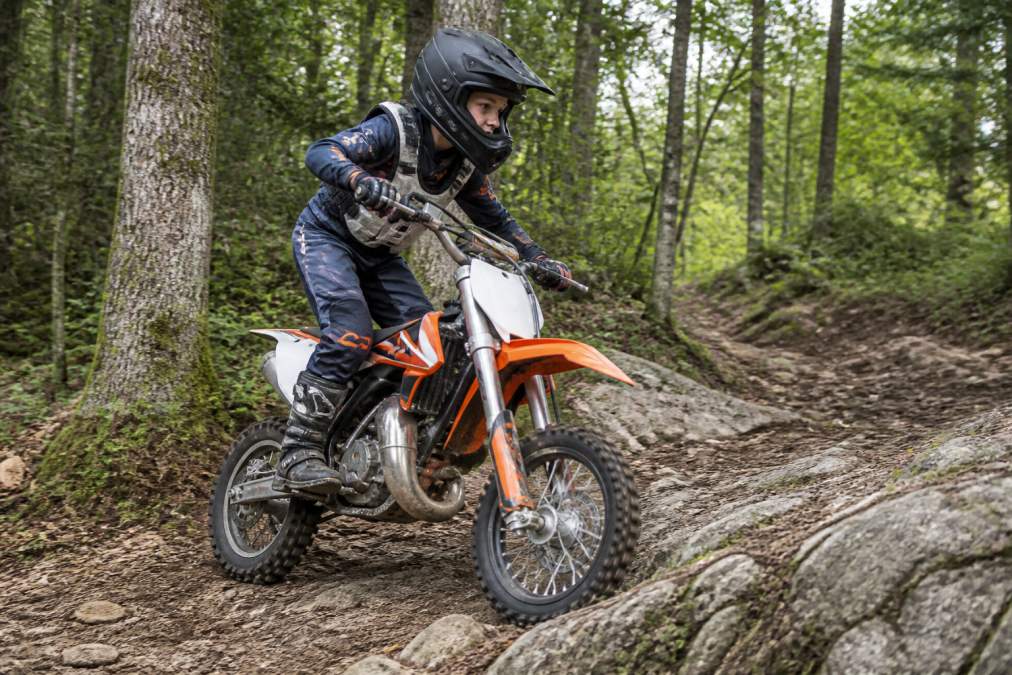
Standing on the foot pegs is where most trail riding happens. When you stand, your body absorbs impacts through your legs and arms, keeping the bike stable beneath you. Your weight transfers more efficiently to the foot pegs, and you gain better control over the bike's direction and lean angle. Sitting is useful for specific situations: climbing steep inclines where you need traction, navigating slow technical sections where precision matters, or cruising on smooth terrain. Most newer riders sit too much. Standing gives you better body control and reduces fatigue because your legs do the work instead of your arms and back.
Weight Distribution and Center of Gravity
Standing correctly means your weight sits over the foot pegs, not forward on the seat or back toward the rear wheel. When you lean into a turn, your inside leg stays bent while your outside leg extends, shifting your weight toward the outside of the turn.
Counter-balancing is essential for maintaining control. As the bike leans into a corner, your upper body leans slightly out, creating balance. Your head position matters, keep your head up and look through the turn, not down at the obstacle in front of you. Elbows should stay up, not tucked against your body. High elbows give you better use of the handlebars and let you react quickly if the bike moves unexpectedly. Your grip should be firm but not tense.
Throttle Control and Power Management
Throttle control separates smooth riders from jerky ones. Smooth, progressive throttle application keeps the rear wheel hooked up and the bike moving forward predictably. Abrupt throttle inputs cause the rear wheel to spin or the front wheel to wash out in corners.
On trails, you're constantly modulating throttle based on terrain. Rough sections need gentler throttle. Climbs might require more aggressive throttle to maintain momentum. Descents often require minimal throttle or engine braking.
Practice rolling on the throttle gradually. Instead of twisting it open abruptly, increase throttle smoothly over a full second. This gives the tire time to find traction and the engine time to deliver power progressively. Beginners often ride too cautiously or too aggressively. Gear selection affects throttle management, lower gears let you use more throttle without wheel spin, while higher gears require more precise throttle control.
Dirt Bike Clutch Control Techniques
The clutch is your connection between engine power and wheel traction. Master clutch control, and you'll navigate tight spots, maintain momentum on climbs, and control speed on descents with precision.
Finding the Friction Zone
The friction zone is the middle point where the clutch is neither fully engaged nor fully disengaged. Pull the clutch lever fully in, then slowly release it until you feel the engine start to grab the rear wheel. This is the friction zone. The bike will want to move forward gently at this point. Most beginners either engage the clutch too quickly or stay in the friction zone too long. Practice finding the friction zone in a parking lot before hitting trails to build comfort with how the bike responds.
Modulation for Trail Conditions
Modulating the clutch means adjusting your position in the friction zone based on what the trail demands. Steep climbs need more clutch engagement to prevent wheel spin. Loose, rocky sections need less engagement to keep traction. Tight turns need clutch control to slow the bike without using brakes excessively. The clutch lever should move smoothly, not abruptly. One common mistake is using the clutch as a substitute for brakes, use the clutch to manage traction and power delivery, and use brakes to slow down.
Braking Techniques and Deceleration
Braking on trails is different from braking on roads. Panic braking locks wheels and sends you over the bars or into a slide. Controlled braking lets you slow down while maintaining traction and control.
The front brake provides roughly 70% of your stopping power but is most likely to cause you to go over the bars if you grab it too hard (peer-reviewed research). Progressive front brake application is critical, squeeze the lever gradually, then hold steady pressure as you slow. The rear brake prevents the rear wheel from locking and gives you stability during deceleration. Use it in conjunction with the front brake. Braking before a turn is better than braking during a turn. Engine braking (downshifting to a lower gear) helps slow you down without using brakes, which is useful on long descents where continuous brake use would overheat the brakes.
How to Ride Over Obstacles on a Dirt Bike
Obstacles define trail riding. Rocks, ruts, roots, and rough ground separate smooth sections from technical ones. Your approach to obstacles determines whether you float over them or get bounced around.
Navigating Ruts and Rocky Terrain
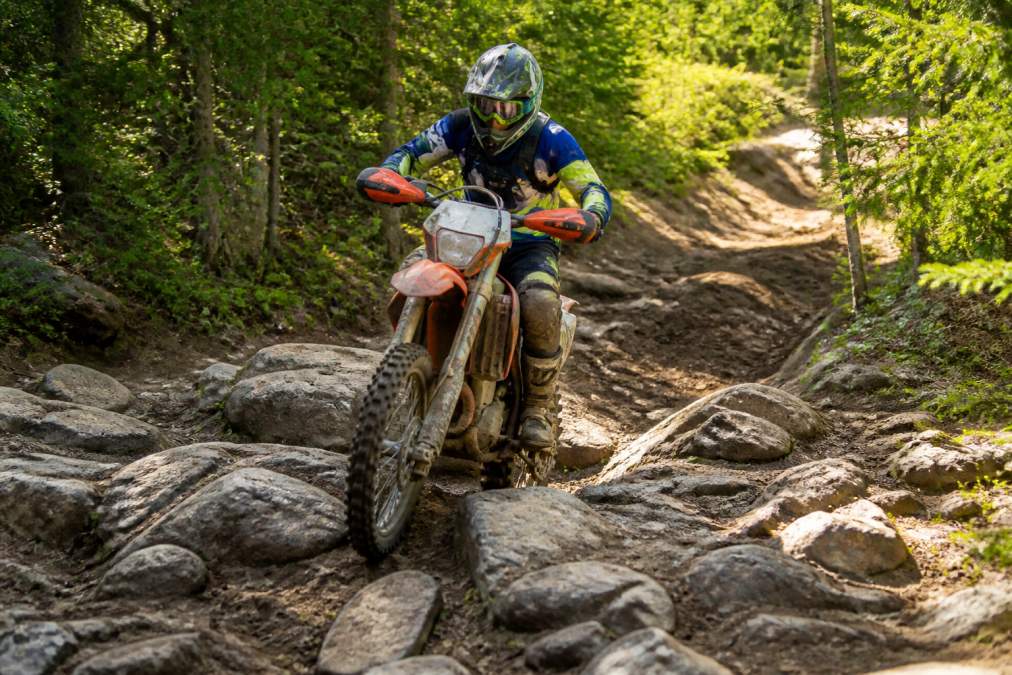
Ruts are grooves worn into the trail by previous riders. Shallow ruts guide your tire and provide traction. Deep ruts can trap your wheel and force you in a direction you didn't choose. The key is maintaining momentum and line selection. Enter the rut with enough speed to carry through. Keep your body centered over the bike and let the suspension absorb impacts. Your legs and arms act as shock absorbers, keep them slightly bent, not rigid.
Rocky terrain requires a different approach. Scan ahead and choose your line before you reach the rocks. Look for the smoothest path through, typically where previous riders have worn a line. Weight distribution changes over obstacles, as you approach a rock or rut, shift your weight slightly back to prevent the front wheel from diving into it. As you're over the obstacle, move your weight forward to keep traction on the rear wheel.
Handling Steep Inclines and Declines
Steep climbs demand momentum and clutch control. Build momentum before the climb, then maintain it with smooth throttle and clutch modulation. Sitting down on steep climbs improves traction because your weight transfers to the rear wheel (peer-reviewed research). Keep your body centered on the bike, not leaning too far forward.
Descents are about control, not speed. Steep descents pull your weight forward, which overloads the front wheel. Shift your weight back by moving your hips toward the rear of the seat. Use light, progressive braking to control speed. The biggest mistake on descents is grabbing the front brake too hard. Light, steady front brake pressure combined with rear brake gives you control.
Cornering, Line Selection, and Trail Scanning
Cornering on trails is about choosing the right line and executing it smoothly. A good line is smooth, predictable, and uses the trail's natural features to your advantage. Line selection starts before you reach the corner. Scan ahead and identify where the corner begins, where it tightens, and where it exits. Enter the corner wider than the apex, brake before the turn, then accelerate through the exit.
Your body position in corners determines your lean angle and traction. Lean the bike, counter-balance with your upper body, and keep your inside leg bent while your outside leg extends. Your head should be looking through the corner. Trail scanning is the most underrated skill. Your eyes should be constantly moving ahead, looking 10-20 feet in front of the bike (the CDC). Scanning gives your brain time to process and your body time to react. Momentum through corners comes from smooth throttle application, as you approach the apex, start rolling on throttle gradually.
Mental Preparation and Trail Psychology
Technical trail riding isn't just physical, it's mental. Fear, overthinking, and lack of confidence cause more crashes than poor technique.
Confidence comes from practice and incremental progression. Ride easier trails repeatedly until the fundamentals become automatic, then progress to slightly harder trails. Mental preparation before a ride matters, visualize yourself riding smoothly through technical sections. Fear is normal, but acknowledge it without letting it control your decisions. Ride within your ability. If a section feels beyond your skill level, walk it or find an easier line.
Trail psychology also includes understanding your bike's feedback. As you ride more, you'll feel when the tires are losing traction and when the suspension is bottoming out. Recovery from mistakes is a mental skill, if you lose traction or nearly crash, stay calm. Panic causes the actual crash.
Mastering dirt bike riding techniques for trails is a journey, not a destination. Every ride teaches you something new about how your body, the bike, and the terrain interact. Focus on the fundamentals, body position, throttle control, braking, and line selection, and the technical skills will develop naturally.
Young riders benefit from structured practice and encouragement. Nelmgerian MX's motocross training journals help riders track their progress, set goals, and build confidence through consistent practice. Pairing hands-on trail time with reflection through a training journal accelerates skill development and keeps young riders motivated between rides.
| Technique | Purpose | When to Use |
|---|---|---|
| Standing on pegs | Shock absorption and control | Rough terrain, fast sections |
| Sitting | Traction and precision | Climbs, slow technical sections |
| Throttle modulation | Maintain traction and momentum | All terrain, constant adjustment |
| Clutch friction zone | Control power delivery | Climbs, tight turns, slow sections |
| Progressive braking | Controlled deceleration | Approach to turns, descents |
| Weight shifting | Balance through obstacles | Ruts, rocks, climbs, descents |
| Line selection | Smooth, efficient path | Every corner and technical section |
| Trail scanning | Early obstacle identification | Constant, 10-20 feet ahead |
Start with easier trails where you can focus on technique without fear. Build the fundamentals until they're automatic. Then progress to more technical terrain. This approach, deliberate practice on manageable challenges, develops riders who are smooth, confident, and genuinely skilled.
Frequently Asked Questions
What is the best body position for riding a dirt bike on trails?
The best body position combines standing on the foot pegs with elbows up and out, keeping your head centered over the bike. Your weight should be forward on technical climbs and slightly back on descents. This positioning gives you better control, absorbs bumps through your legs, and improves traction. Young riders should practice transitioning between sitting and standing as trail conditions change.
How do you master dirt bike clutch control techniques for smooth trail riding?
Find the friction zone, the point where the clutch begins to engage, and practice feathering it smoothly. Gradually release the clutch while adding throttle to move forward without jerking or stalling. On trails, modulate the clutch to manage power delivery over obstacles and steep sections. This technique prevents wheel spin on loose terrain and gives you precise control in technical areas.
What techniques help young riders build confidence on technical trail sections?
Start with progressive skill-building drills: practice body positioning on flat ground, then tackle small obstacles, then move to steeper or rockier sections. Mental preparation is key: visualize the section before riding it, focus on smooth inputs, and celebrate small improvements. Training journals help track progress and build confidence over time.
How do you safely handle steep, rocky, or rutted trails?
For steep climbs, shift your weight forward, use steady throttle control, and avoid sudden brake inputs. On descents, keep your weight back, use engine braking, and apply gentle rear brake pressure. In ruts and rocky terrain, choose a clean line, maintain momentum, and let your suspension do the work by staying loose on the bike. Practice these techniques on easier terrain before tackling more challenging sections.
This article was written using GrandRanker
Frequently Asked Questions
What is the best body position for riding a dirt bike on trails?
The best body position combines standing on the foot pegs with elbows up and out, keeping your head centered over the bike. Your weight should be forward on technical climbs and slightly back on descents. This positioning gives you better control, absorbs bumps through your legs, and improves traction. Young riders should practice transitioning between sitting and standing as trail conditions change.
How do you master dirt bike clutch control techniques for smooth trail riding?
Find the friction zone—the point where the clutch begins to engage—and practice feathering it smoothly. Gradually release the clutch while adding throttle to move forward without jerking or stalling. On trails, modulate the clutch to manage power delivery over obstacles and steep sections. This technique prevents wheel spin on loose terrain and gives you precise control in technical areas.
What techniques help young riders build confidence on technical trail sections?
Start with progressive skill-building drills: practice body positioning on flat ground, then tackle small obstacles, then move to steeper or rockier sections. Mental preparation is key: visualize the section before riding it, focus on smooth inputs, and celebrate small improvements. Training journals help track progress and build confidence over time.
How do you safely handle steep, rocky, or rutted trails?
For steep climbs, shift your weight forward, use steady throttle control, and avoid sudden brake inputs. On descents, keep your weight back, use engine braking, and apply gentle rear brake pressure. In ruts and rocky terrain, choose a clean line, maintain momentum, and let your suspension do the work by staying loose on the bike. Practice these techniques on easier terrain before tackling more challenging sections.