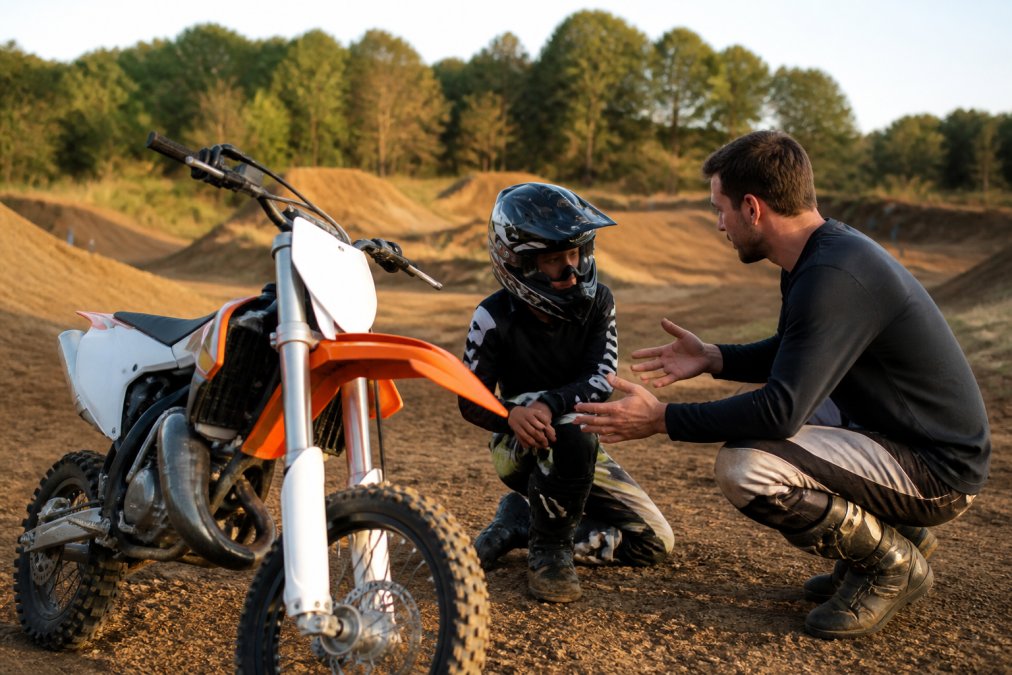
 ultimate-guide
Dirt Biking Fundamentals: A 2026 Beginner's Guide
Table of Contents
- Start Here: How to Learn to Ride a Dirt Bike Safely
- Essential Dirt Bike Safety Gear You Should Never Skip
- Dirt Bike Body Positioning Techniques for New Riders
- Throttle, Clutch, and Shifting: The Core Controls
- Braking and Cornering Fundamentals: Front vs. Rear Brake
- Common Beginner Mistakes and How to Avoid Them
- Building Skills Beyond the Basics: Maintenance, Mental Prep, and More
- Frequently Asked Questions
Last Updated: September 16, 2026
Start Here: How to Learn to Ride a Dirt Bike Safely
The dirt biking fundamentals come down to five skills: body positioning, throttle control, clutch modulation, braking, and cornering. This guide from Nelmgerian MX walks through each in the order a new rider should learn them.
Dirt biking fundamentals are the core physical and mental skills that let a rider control a motorcycle on loose, uneven ground. Get those right and the bike stops feeling unpredictable.
The order matters: riders who skip straight to speed spend months fighting habits picked up in their first hour.
Essential Dirt Bike Safety Gear You Should Never Skip
Essential dirt bike safety gear includes a certified helmet, purpose-built riding boots, goggles, gloves, and chest protection. No ride is short enough to skip it.
The U.S. Consumer Product Safety Commission sets federal standards for motorcycle helmets, and any helmet you buy should carry a DOT certification at minimum. Many riders also look for Snell or ECE ratings, which test for higher-impact scenarios.
Helmet, Boots, and Chest Protection
A full-face motocross helmet with a visor protects your head and face from roost, branches, and impact. Replace any helmet that has taken a hard hit, even if it looks fine.
Riding boots support your ankles, protect your shins from the footpegs, and give you a stable platform for standing on the pegs.
Chest protection and a neck brace are worth it for anyone riding at speed or on trails with trees. Goggles keep dust out of your eyes, and gloves protect your hands and improve grip.
Dirt Bike Body Positioning Techniques for New Riders
Proper body positioning is the biggest difference between a rider who looks comfortable and one who fights the bike. Your stance controls weight distribution, which controls traction.
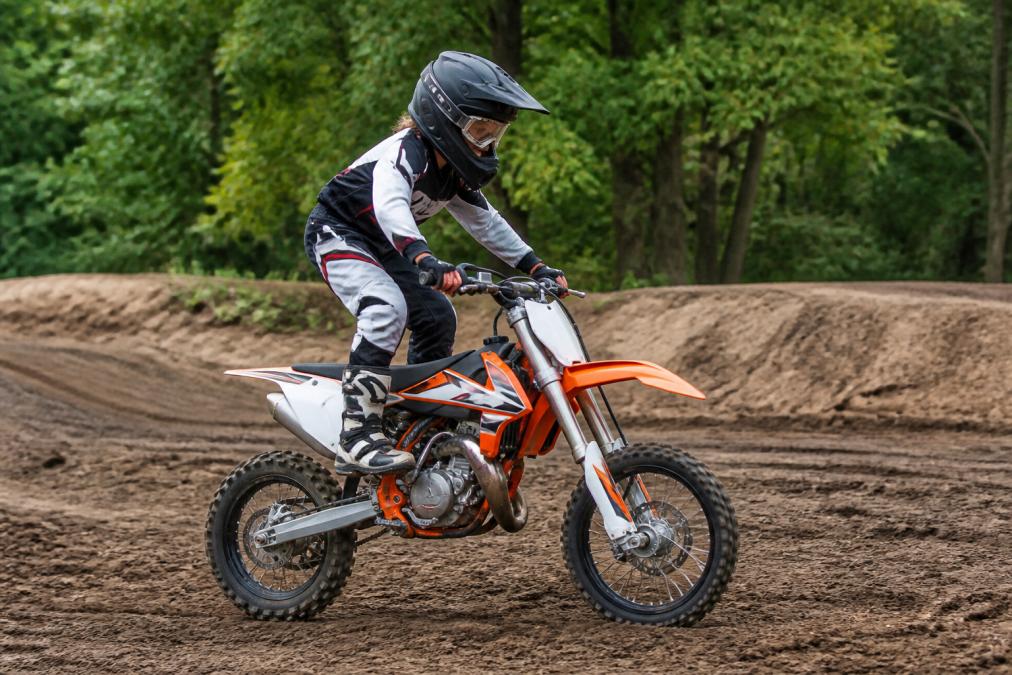
The fundamentals of dirt bike body positioning techniques start with the attack stance: feet on the footpegs, knees bent, elbows up and out, head over the bars, eyes ahead. This lowers your center of gravity and lets you absorb bumps with your legs instead of your spine.
Standing vs. Sitting: When to Use Each Stance
Standing gives you the most control. Use it for rough terrain, steep descents, and anywhere you need to shift weight quickly; your knees act as extra suspension.
Sitting lowers your center of gravity and works for smooth sections, tight corners, and long straightaways where you conserve energy. Even when sitting, keep your feet on the pegs and elbows up.
A common mistake is gripping the bars too tightly. A relaxed grip on the handlebar lets the bike move underneath you without dragging you around.
Throttle, Clutch, and Shifting: The Core Controls
Throttle, clutch, and shifter control how power reaches the rear wheel. Learning to modulate each smoothly separates a rider who stalls constantly from one who flows through a section. These three work as a system, not separate skills.
Throttle Control and Clutch Modulation
Throttle control is about smooth, gradual input. Roll the throttle on progressively; snapping it open breaks traction and can loop the bike out from under you.
Here is the mechanism most beginners miss: the throttle controls how much power the engine makes, and the clutch controls how much reaches the rear wheel. On a dirt bike, the clutch is a wet multi-plate design you slip deliberately, not a switch. That slip lets you crawl up a technical climb at walking pace without stalling.
The friction zone is the narrow range of clutch lever travel where the clutch is partially engaged. Find it by sitting in neutral, pulling the lever in, clicking into first, and slowly releasing until the bike creeps forward. Everything in slow-speed technical riding happens inside that zone.
A second drill: on a gentle incline, practice starting from a dead stop without rolling backward. This forces you to coordinate throttle, clutch, and rear brake together, the exact skill you need on a stalled hill climb.
Shifting Gears and Using Engine Braking
Shifting keeps the engine in its power band.
The Coordination Sequence
New riders often try to operate throttle, clutch, and shifter independently.
Braking and Cornering Fundamentals: Front vs. Rear Brake
The front brake provides most of your stopping power; the rear adds stability and control, especially in loose or steep conditions.
Braking Zones and Weight Distribution
Cornering Apex, Lean Angle, and Counter-Steering
The cornering apex is the point closest to the inside of the turn.
Braking and Cornering Together
The hardest skill is braking into a corner and getting back on the throttle smoothly.
Common Beginner Mistakes and How to Avoid Them
Building Skills Beyond the Basics: Maintenance, Mental Prep, and More
Skill growth in dirt biking happens off the bike as much as on it.
Basic Maintenance Every Beginner Should Know
Check tire pressure before every ride; low pressure causes pinch flats and poor handling.
Mental Preparation and Managing Fear
Fear on a dirt bike is normal and useful; it keeps you from genuinely dangerous moves.
Terrain-Specific Skills: Trail Riding vs. Motocross
Trail riding rewards smooth, steady inputs, good clutch control, and reading terrain ahead.
Post-Ride Recovery and Stretching
Dirt biking works your forearms, shoulders, back, and legs hard.
Frequently Asked Questions
Is dirt biking hard to learn for a complete beginner?
Dirt biking has a learning curve, but the fundamentals are accessible to most beginners. The hardest part is coordinating the clutch, throttle, and brakes while maintaining balance. Starting on flat, open terrain with a small-displacement bike helps. Most new riders can ride confidently in first and second gear within a few practice sessions. Focus on body positioning and throttle control before attempting hills or tight trails.
What are the essential dirt bike safety gear requirements for new riders?
At minimum, you need a DOT-approved helmet, goggles, gloves, motocross boots, and a chest protector. Knee and elbow pads add valuable protection during falls. Many tracks and public riding areas require a helmet, boots, and long sleeves regardless of skill level. Replace any helmet involved in a hard crash, even if it looks undamaged, because the internal foam may be compromised.
How do you properly balance and shift on a dirt bike?
Balance starts with gripping the bike with your knees and keeping your upper body relaxed. For shifting, roll off the throttle slightly, pull the clutch lever, shift with your left foot, then release the clutch smoothly while reapplying throttle. Practice shifting in a flat, open area before tackling hills. Body positioning techniques like standing on the footpegs improve balance and weight distribution.
What is the best way to practice dirt bike body positioning techniques?
Start with slow-speed drills in a flat field. Practice standing on the footpegs with knees bent and elbows up, shifting your weight forward for turns and back for acceleration. Set up cones to practice leaning the bike while keeping your body upright. Ten to fifteen minutes of focused positioning drills per session builds muscle memory faster than long, unstructured rides.
What should beginners know about throttle and clutch control?
Throttle control is about smooth, gradual inputs, not sudden twists. The clutch lever controls power delivery to the rear wheel. At low speeds, use the friction zone (where the clutch partially engages) to modulate power without stalling. Practice starting and stopping in a straight line, then add gentle turns. Mastering throttle response and clutch modulation prevents most beginner crashes.
How do you safely start and stop a dirt bike?
To start, sit on the bike with the front brake held, shift into neutral, and press the electric start or kick lever. Pull the clutch, shift into first, then slowly release the clutch while applying gentle throttle. To stop, roll off the throttle, apply both brakes evenly, and pull the clutch before the bike comes to a complete stop. Practice in an open area until the sequence feels natural.
Learning dirt biking fundamentals takes time, and the riders who improve fastest are the ones who practice deliberately rather than just riding hard. At Nelmgerian MX, we build tools that help young riders develop that discipline early, from storybooks that make the sport fun to training journals that track real progress. If you want to give a young rider a head start, explore the Nelmgerian MX training journal and see how a simple log can turn practice days into measurable gains.