 ultimate-guide
Good Age to Start Motocross: A Parent's Guide
Table of Contents
- The Best Age to Start Motocross
- How to Start Motocross Racing Kids
- Youth Motocross Safety Gear Requirements
- Best Beginner Dirt Bikes for Kids
- AMA Motocross Youth Racing Rules and Classes
- Fun vs. Competitive Pressure: Building Confidence
- Common Mistakes Parents Make When Starting Young Riders
- Frequently Asked Questions
Last Updated: September 27, 2026
The Best Age to Start Motocross
The ideal age to start motocross depends on your child's physical development, coordination, and emotional readiness rather than a fixed birthday. Most children between ages 4 and 7 show the motor skills and balance needed to begin on small-displacement bikes, though some younger riders thrive with proper supervision and training. At Nelmgerian MX, we believe that readiness matters far more than age alone.
Physical and Mental Readiness Indicators
Your child needs to reach the footpegs comfortably, touch the ground with toes while seated, and hold the handlebars without strain. Watch for coordination signals: can they ride a bicycle without training wheels and balance on one foot? These predict how quickly they'll progress on a dirt bike.
Mental readiness is equally important. A child who panics easily, resists instruction, or shows extreme fear of falling may need more time. Look for focus: can they follow instructions, understand cause and effect (twist throttle, bike goes faster), and absorb safety rules?
Choosing the Right Bike Size by Age
Bike size is where age becomes genuinely useful, as a rough guide only. A 50cc four-stroke is the standard entry point for most 4- to 7-year-olds, but the actual fit matters more than the displacement number.
Sit your child on the bike. Their feet should touch the ground flatly when the suspension is compressed, not on tippy-toes or with legs extended. Proper fit determines whether they control the bike or fight it.
Two-stroke bikes accelerate faster and require more throttle finesse, better for experienced riders. Four-stroke bikes deliver power gradually, offering a gentler learning curve. A four-stroke 50cc is the smarter first choice for beginners.
How to Start Motocross Racing Kids
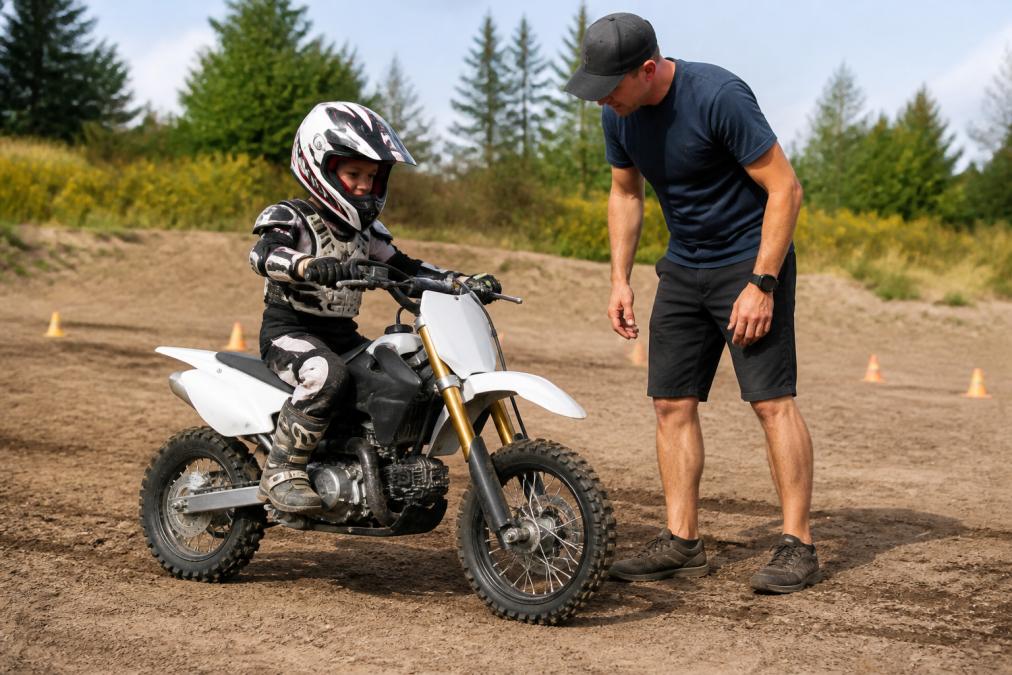
Master throttle control and basic body positioning first. Spend the first weeks on flat, open ground. Keep sessions to 20-30 minutes; young riders tire quickly, and fatigue breeds mistakes.
Invest in proper instruction early. A few lessons from a qualified coach accelerates learning and corrects bad habits before they stick. Many local tracks offer beginner classes designed for young riders.
Building Throttle Control and Clutch Operation
Throttle control separates confident riders from nervous ones. Smooth, predictable input lets riders modulate speed and stay calm. Jerky input or wide-open throttle wastes energy and creates frustration.
Start with the throttle barely cracked open. Have your child ride circles or figure-eights at walking speed, focusing on smooth, deliberate input until it becomes automatic.
For manual clutch bikes, explain that smooth, gradual clutch release combined with gentle throttle starts the bike smoothly. Jerky release or sudden throttle creates bucking and stalling.
Many trainers recommend automatic or semi-automatic bikes to eliminate clutch complexity until throttle control is mastered, master one skill before layering in another.
Developing Balance, Coordination, and Body Positioning
Balance develops through repetition. Let your child find their center of gravity through practice rather than over-coaching early.
Once comfortable at moderate speeds, teach body positioning: standing on pegs for bumpy terrain and jumps improves control; sitting centered keeps the bike planted; leaning into corners prevents tipping.
These techniques develop gradually over dozens of sessions. A training journal tracks progress and keeps young riders motivated.
Youth Motocross Safety Gear Requirements
A full-face helmet is non-negotiable. It protects the entire head, jaw, and face from impact and debris. Half helmets or open-face designs leave vulnerable areas exposed.
Look for helmets certified by DOT or Snell Memorial Foundation standards, which ensure rigorous impact testing and safety minimums.
Full-Face Helmet and Protective Equipment Essentials
A full-face helmet should fit snugly, one finger between cheek pad and face. Too loose and it shifts; too tight and your child will remove it.
Replace helmets after any significant impact. Internal foam degrades, and a compromised helmet won't protect as well on the next impact.
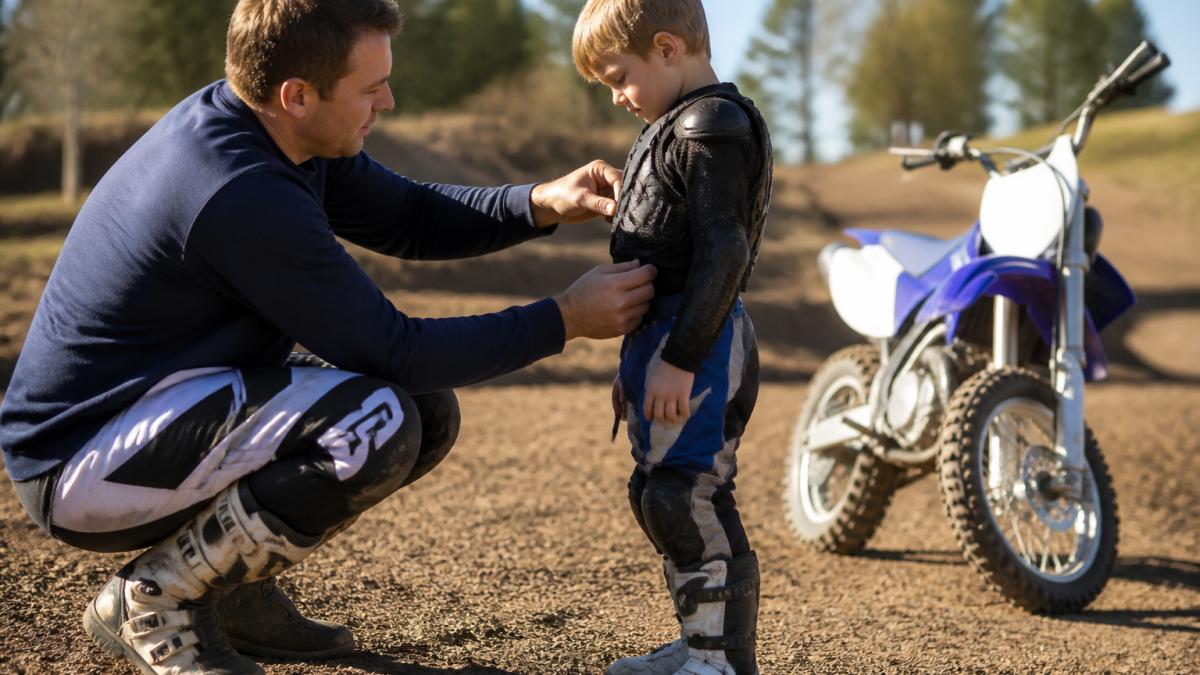
Protective gear includes a chest protector (shields ribs and organs), knee braces (stabilize joint and prevent hyperextension), elbow pads, gloves, and riding boots (protect ankles and provide support).
Chest Protectors, Knee Braces, and Riding Boots
A chest protector should cover the sternum, ribs, and upper abdomen, snug enough to stay in place but not so tight it restricts breathing.
Knee braces are essential for young riders. Growing knees are vulnerable to twisting injuries. Pair braces with protective pants that have built-in knee padding.
Nelmgerian MX Training Journal →
Riding boots protect ankles during shifts and impacts. Proper motocross boots have reinforced ankles, oil-resistant soles, and shifter pads, standard sneakers don't provide enough protection.
Gear up completely, every single ride, even short practice sessions. The crash that happens on a "quick loop" around the yard is just as dangerous as the one at the track.
Best Beginner Dirt Bikes for Kids
The right first bike sets your child up for success. Too large and they'll struggle with control; too small and they'll outgrow it quickly; too powerful and they'll fight the bike instead of learning.
A 50cc four-stroke is the gold standard starting point for most 4- to 7-year-olds. Four-strokes deliver power smoothly, making throttle control intuitive. They're also more forgiving of mistakes, which young riders will make plenty of.
Two-Stroke vs. Four-Stroke and CC Ratings
Two-stroke engines are lighter and more powerful for their size, making them popular with experienced riders. However, they're harder to control and require more precise throttle input. A beginner on a two-stroke is fighting the bike's power delivery instead of learning fundamentals.
Four-stroke engines are heavier but deliver power progressively. A child can twist the throttle more aggressively without the bike suddenly accelerating wildly. This forgiving power delivery accelerates learning and builds confidence.
CC (cubic centimeters) measures engine displacement. A larger displacement typically means more power. For young beginners, 50cc is the sweet spot, enough power to ride comfortably but not so much that it overwhelms new riders. Some manufacturers offer 70cc or 110cc four-strokes for slightly older or larger children, but don't jump up in displacement just because your child is tall. Proper fit matters more than engine size.
Beginner-Friendly Models and Training Wheels
Several manufacturers make purpose-built beginner bikes. Look for models with automatic or semi-automatic transmissions (no manual clutch), low seat heights, and smooth power delivery. Training wheels aren't common on dirt bikes, but some manufacturers offer stabilizer bars that attach to the frame and prevent tipping, useful for very young or extremely cautious riders, though most kids outgrow them quickly.
Used bikes can save money, but inspect carefully. Check for frame cracks, bent forks, and worn suspension. A bent frame or cracked suspension is a safety issue. A well-maintained used 50cc four-stroke from a reputable manufacturer is a solid choice if you're budget-conscious.
AMA Motocross Youth Racing Rules and Classes
The American Motorcyclist Association (AMA) governs motocross racing in the United States and organizes youth classes by age and skill level. Understanding these classes helps you plan your child's progression and set realistic expectations.
Youth Motocross Classes and Progression Pathways
The AMA organizes youth classes into age brackets: 4-6 years old (50cc), 7-8 years old (50cc or 65cc), 9-11 years old (65cc or 85cc), and 12-15 years old (85cc or 125cc). Within each age bracket, riders are further divided by skill level: Beginner, Intermediate, and Advanced.
Starting in the Beginner class is normal and expected, even if your child has been riding at home for months. Beginner classes move slower, have shorter races, and focus on fundamentals. Your child will progress through skill levels as they improve, eventually moving up in displacement as they age and grow stronger.
Each class has specific rules about bike modifications, safety equipment, and race procedures. The AMA website provides detailed rulebooks for each region. Before entering your first race, read the rules for your local class to understand what's required and what's prohibited.
Racing License Requirements and Track Etiquette
Most AMA-sanctioned tracks require a racing license to compete. Your child can obtain a youth racing license through the AMA. The process involves registering with the AMA, paying a fee, and receiving an official license card.
Track etiquette matters from day one.
Fun vs. Competitive Pressure: Building Confidence
The biggest mistake parents make is pushing competition before their child is ready. A 6-year-old should be riding for fun, not for trophies. The moment racing becomes about winning instead of improving and enjoying the sport, you've lost the plot.
Common Mistakes Parents Make When Starting Young Riders
Parents with the best intentions often make predictable mistakes that slow their child's progress or damage confidence.
Frequently Asked Questions
What is the youngest age a child can safely start motocross?
Most children can begin on small, beginner-friendly dirt bikes between ages 3 and 5, starting with 50cc models and training wheels. Physical readiness matters more than age, your child should be able to sit on the seat with feet touching the ground, hold the handlebars comfortably, and follow basic safety instructions. Always prioritize protective gear and supervised practice in safe environments before advancing to track riding.
What youth motocross safety gear requirements must my child have?
Essential safety gear includes a full-face helmet (DOT-certified), chest protector, knee braces, riding boots, and gloves. Many tracks and AMA youth racing rules mandate this equipment. Proper gear reduces injury risk significantly during falls and collisions. Invest in quality, age-appropriate protective equipment that fits correctly, ill-fitting gear reduces protection and comfort, making kids less likely to wear it consistently.
How do I know if my child is physically ready for a dirt bike?
Physical readiness includes adequate height to reach the ground while seated, strength to hold the handlebars and control the throttle, and coordination to manage balance on two wheels. Mental readiness is equally important: your child should show interest in riding, follow safety instructions, stay calm under pressure, and demonstrate focus during practice. Watch for signs of frustration or fear, these may indicate your child needs more time before advancing.
What are the best beginner dirt bikes for kids starting motocross?
Entry-level models typically feature 50cc four-stroke engines, lightweight frames, automatic clutches, and training wheels for stability. Four-stroke bikes are generally easier for beginners to control than two-stroke models. Look for bikes with adjustable seat heights and beginner-friendly throttle response. Always test-fit your child on the bike to ensure proper positioning.