 how-to
How Often to Replace Youth Helmet: Safety Guide
Table of Contents
- The 3-5 Year Replacement Rule for Youth Helmets
- Signs of Helmet Damage That Require Immediate Replacement
- When to Replace a Helmet After a Crash or Impact
- How to Check Helmet Fit for Kids
- Environmental Storage Impact on Helmet Lifespan
- Youth Growth vs. Safety: When Size Matters More Than Age
- Visual Inspection Checklist for Youth Helmet Safety
- Conclusion
Last Updated: August 13, 2026
The 3-5 Year Replacement Rule for Youth Helmets
How often to replace youth helmet is one of the most important safety decisions a parent can make. The standard recommendation across the industry is to replace a youth helmet every 3 to 5 years, regardless of visible damage. This timeline accounts for the natural degradation of foam padding and shell materials that occurs even when a helmet sits unused in storage.
Manufacturers establish this timeframe because expanded polystyrene (EPS) foam, the primary cushioning material in most youth helmets, gradually loses its ability to absorb impact energy over time. The materials experience molecular breakdown from exposure to air, temperature fluctuations, and humidity. A helmet that looks fine on the outside may have lost significant protective capability on the inside.
The 3-5 year window isn't arbitrary. It reflects the point at which material fatigue becomes substantial enough to compromise safety performance. For kids who ride frequently, the lower end of that range (3 years) is safer. For occasional riders, 5 years may be acceptable if the helmet shows no signs of wear and tear. However, if your child has experienced even a minor crash, the replacement clock restarts immediately, more on that below.
Signs of Helmet Damage That Require Immediate Replacement
Some damage is visible. Some isn't. The moment you spot any of these issues, your youth helmet needs to be replaced, don't wait for the 3-5 year mark.
Visible Shell Cracks and Delamination
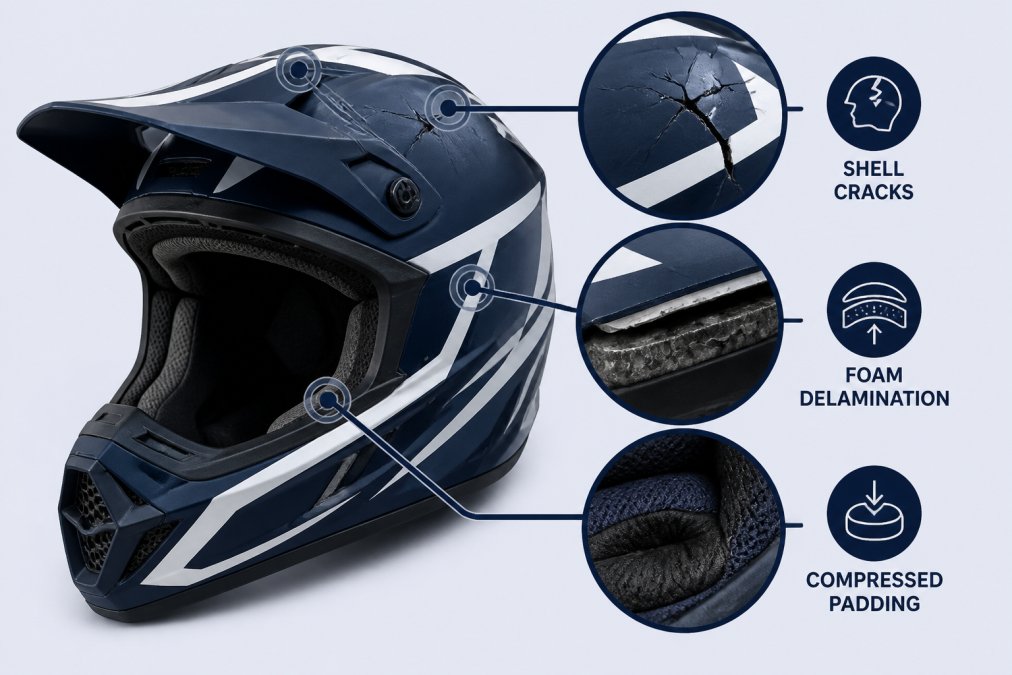
The polycarbonate shell is your helmet's first line of defense. Cracks, even small ones, compromise the structural integrity of the entire helmet. Micro-cracks that start small can spread, especially if the helmet experiences another impact.
Shell delamination, where the outer polycarbonate layer separates from the EPS foam underneath, is equally serious. You'll notice this as a visible gap, bubbling, or peeling. Delamination means the shell can no longer properly distribute impact energy to the foam. A helmet with delamination has lost a critical protective layer.
Run your fingers carefully over the entire exterior of the helmet, paying special attention to the sides, back, and areas around the chin strap attachment points. These areas experience the most stress during impacts. If you feel any cracks, see any discoloration that suggests internal damage, or notice any separation between layers, replace the helmet immediately.
Padding Compression and Internal Degradation
The EPS foam inside does the real work of protecting your child's head. Over time, this foam compresses, the cells collapse and never fully re-expand. Compressed padding absorbs less impact energy, which means less protection.
Press your thumb firmly into the padding at several spots inside the helmet. Quality padding should feel firm but have some give. If it feels hard and doesn't spring back, or if you can easily compress it with minimal pressure, the padding has degraded. Padding compression often happens invisibly, the helmet may look fine from the outside while the interior protection has deteriorated significantly.
Look for any visible damage inside: cracks in the foam, chunks missing, or areas where the foam has turned yellow or brown. These are all signs of chemical degradation. Sweat, sunscreen, and even chlorine from pool days can break down foam faster than time alone. If you notice any discoloration or deterioration inside, replace the helmet.
When to Replace a Helmet After a Crash or Impact
This is non-negotiable: replace the helmet after any significant impact, even if it looks undamaged.
A crash is exactly what a helmet is designed for, it absorbs the energy of that impact by crushing the EPS foam. Once the foam has been compressed by an impact, it cannot return to its original state. The structural integrity is permanently compromised. Your child's next crash will receive less protection because the foam has already absorbed one impact's worth of energy.
Many parents don't realize this. They see their child take a tumble, check the helmet for visible cracks, find none, and assume the helmet is still safe. This is the most dangerous assumption you can make. The damage is internal. The foam may have crushed in ways that don't create visible cracks in the shell.
The only exception is a very minor bump, a low-speed collision at walking speed where the helmet barely makes contact. But if there's any doubt, replace it. The cost of a new helmet is minimal compared to the risk of inadequate protection.
After a crash, set the old helmet aside and get a new one before your child rides again. Understanding the risks and replacing equipment promptly is part of building a safety-conscious culture around the sport. Your child learns that protection matters and that we don't compromise on it.
How to Check Helmet Fit for Kids
A helmet that doesn't fit properly won't stay in place during a crash. Even the best helmet loses effectiveness if it shifts on impact.
Measuring Head Size and Adjusting Retention Systems
Start by measuring your child's head circumference with a soft measuring tape. Measure around the forehead, just above the eyebrows, and around the back of the head at its widest point. Write this number down, you'll need it when buying a replacement helmet.
Youth helmets come in size ranges: small (typically 48-52 cm circumference), medium (52-56 cm), and large (56-60 cm). Measure your child every 6 months if they're growing quickly. A helmet that fit perfectly 6 months ago may now be too loose or too tight.
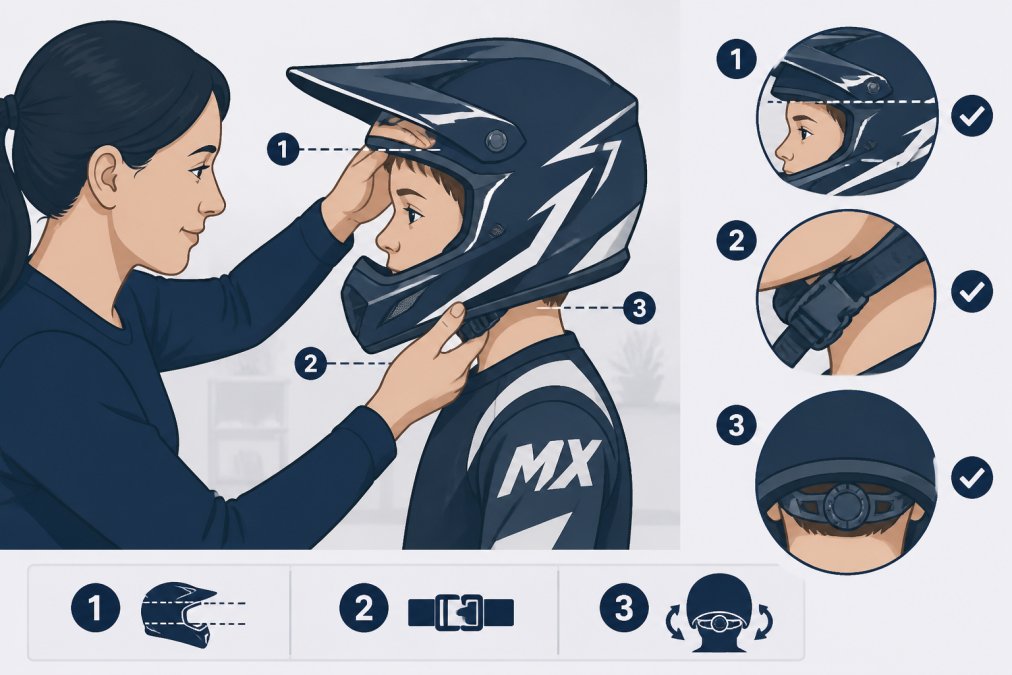
The retention system, the straps and adjustment mechanism inside the helmet, allows you to fine-tune fit. Most youth helmets have adjustable pads or a dial system that lets you customize the fit around the crown and sides of the head. Tighten the retention system so the helmet sits level on your child's head without tilting forward or backward.
A properly fitting helmet should sit low on the forehead, about one finger's width above the eyebrows. It should not rock side to side or front to back when you gently push on it with your child wearing it. If it moves, tighten the retention system further or consider sizing down if the helmet is simply too large.
Testing Chin Strap Functionality and Buckle Security
The chin strap keeps the helmet from flying off during a crash. A broken or loose chin strap defeats the entire purpose of wearing a helmet.
Have your child put on the helmet and fasten the chin strap. The strap should fit snugly under the chin with about one finger's width of space, tight enough that you can't slide the helmet off, but loose enough that your child can open their mouth and breathe comfortably. If the strap is too tight, your child will remove the helmet. If it's too loose, the helmet will shift during riding.
Check the buckle or fastening mechanism. Some helmets use a simple click-buckle, others use a ratchet system. Whatever the design, it should be secure and not come loose during normal head movement. Have your child move their head side to side and up and down. The helmet should stay in place without sliding.
Inspect the chin strap material for cracks, fraying, or signs of wear. If the strap is damaged, it can be replaced on some helmets, but often it's more practical to replace the entire helmet. The strap is under constant stress and degrades faster than other parts.
Environmental Storage Impact on Helmet Lifespan
Where you store the helmet matters more than many parents realize. Poor storage conditions accelerate the degradation of both the shell and foam.
Store the helmet in a cool, dry place away from direct sunlight. UV radiation breaks down polycarbonate and foam much faster than indoor storage. A helmet left in a hot car, garage, or shed in direct sun will degrade significantly faster than one kept in a climate-controlled closet. If your child's helmet sits in a sunny spot for weeks at a time, you're actively shortening its lifespan.
Temperature fluctuations also cause degradation. Helmets stored in an unheated garage that experiences 40-degree temperature swings between seasons will experience material stress. The foam and shell expand and contract, creating micro-cracks and weakening the structural integrity.
Humidity and moisture are equally damaging. A damp basement or a garage with high humidity will cause the foam to absorb water, which degrades its protective properties and can lead to mold growth inside the helmet. Always store the helmet in a dry environment.
Keep the helmet away from chemical exposure. Gasoline fumes, paint thinner, and other volatile compounds can break down the foam and shell materials. Don't store the helmet near a workbench where these chemicals are used.
The best storage location is a closet or cabinet in a temperature-controlled room, away from sunlight and moisture. Simple, but it extends the helmet's safe lifespan significantly.
Youth Growth vs. Safety: When Size Matters More Than Age
Kids grow fast. A helmet that fit perfectly at age 6 may be dangerously loose by age 7 or 8. Growth, not age, should drive your replacement decisions.
A loose helmet is nearly as dangerous as a damaged one. It won't stay in position during a crash, and the fit adjustment system can only compensate so much. If your child's head has grown beyond the helmet's size range, a new helmet is necessary, even if the old one is only a year old and shows no damage.
Check the fit every 3 months if your child is in a growth phase. Have them put on the helmet and assess how snugly the retention system fits at its tightest setting. If you're maxing out all the adjustments and the helmet still feels loose, it's time to size up.
Conversely, don't buy a helmet that's too large expecting your child to "grow into it." An oversized helmet won't protect properly now, and the safety risk isn't worth the savings. Buy the size that fits today. When your child outgrows it, replace it.
This is where an educational approach becomes valuable, teaching young riders that proper equipment maintenance and replacement is part of being a responsible rider. Kids who understand why safety gear matters are more likely to wear it consistently and take care of it.
Visual Inspection Checklist for Youth Helmet Safety
Use this checklist every month to assess your child's helmet condition. If any item fails, replace the helmet.
| Inspection Item | What to Check | Pass Criteria |
|---|---|---|
| Manufacture Date | Check interior label for age | Less than 5 years old |
| Shell Integrity | Feel entire exterior for cracks | No cracks, smooth surface |
| Delamination | Look for separation between layers | No gaps or bubbling |
| Padding Condition | Press padding with thumb | Firm with slight give, no compression |
| Padding Discoloration | Check interior for yellow/brown spots | Clean white or gray foam |
| Chin Strap | Test fastening and movement | Secure buckle, no fraying |
| Fit | Put helmet on child's head | Level position, no rocking |
| Retention System | Tighten all adjustment points | Snug fit without gaps |
| Storage Condition | Assess where helmet is kept | Cool, dry, dark location |
| Post-Crash Status | Evaluate after any impact | No visible or suspected damage |
Run through this checklist before each riding session. It takes two minutes and could prevent a serious injury. Make it part of your pre-ride routine, just like checking the bike's tire pressure.
Keeping your child safe on a motocross bike starts with understanding how often to replace youth helmet and recognizing when replacement can't wait. The 3-5 year rule is your baseline, but growth, crashes, and storage conditions may require more frequent replacement. Regular visual inspection and a commitment to replacing damaged helmets, even when they look fine, are what separate cautious parents from those taking unnecessary risks.
At Nelmgerian MX, we believe that safety education is as important as skill training. When young riders understand why their gear matters and see parents taking protection seriously, they develop a mindset that keeps them safer throughout their riding career. Start with the helmet. Make it non-negotiable. Your child's confidence will grow when they know you've got their protection covered.
Frequently Asked Questions
Do helmets expire after 5 years?
Most manufacturers recommend replacing youth helmets every 3-5 years, even without visible damage. Expanded polystyrene (EPS) foam and protective liners degrade over time due to UV exposure, sweat, and environmental factors. After 5 years, material fatigue and cushioning compression reduce impact absorption effectiveness, compromising safety. Check your helmet's manufacturer guidelines for specific recommendations, as some brands may have shorter or longer replacement windows based on their safety standards.
How can I tell if a child's helmet has sustained internal damage?
Internal damage isn't always visible from the outside. Look for micro-cracks in the EPS foam by gently pressing the helmet's interior, checking for soft spots or compressed areas. If the padding feels uneven or the protective liner shows cracks, replacement is necessary. After any significant impact or crash, replace the helmet immediately, internal structural integrity may be compromised even if the exterior shell looks fine. Trust your instinct: if you suspect damage, replace it.
Should I replace a helmet after a minor fall?
Yes, replace your youth helmet after any crash or significant impact, even minor ones. Impact energy can create micro-cracks and internal damage that aren't visible but reduce the helmet's ability to absorb future impacts. The polycarbonate shell and EPS foam are designed to absorb one major impact. After that impact occurs, the material's protective properties are compromised. Safety certification standards assume a helmet protects for only one crash event.
What should I do with an old helmet when replacing it?
Many youth helmets can be recycled or donated if they're still structurally sound. Contact local recycling centers to ask about EPS foam and polycarbonate shell disposal options. Some organizations accept used protective gear for lower-income young riders. Never reuse a damaged helmet, and never pass down a helmet that's been in a crash to another child. Document when you replaced it and why, this helps track safety patterns in your family's riding.
This article was written using GrandRanker