 ultimate-guide
How to Build Motocross Confidence: A Rider's Guide
Table of Contents
- Understanding Motocross Confidence and Why It Matters
- Master Motocross Mental Training Techniques
- Progressive Dirt Bike Riding Drills for Skill Development
- Overcoming Fear of Motocross Jumps: A Step-by-Step Approach
- Practical Strategies to Build Motocross Confidence On the Track
- The Role of Proper Gear and Safety in Building Confidence
- Common Confidence Killers and How to Overcome Them
- Conclusion: Your Path to Confident Riding
- Frequently Asked Questions
Last Updated: July 2, 2026
Understanding Motocross Confidence and Why It Matters
Confidence on the track directly determines how well you execute every skill you've learned. A rider with perfect technique but low confidence will hesitate at jumps, brake too early, and second-guess their lines. Your mind controls throttle input, body positioning, and decision-making speed. When fear creeps in, your body tenses, reactions slow, and mistakes multiply. A confident rider flows naturally through the track, making split-second adjustments without overthinking them.
The Connection Between Confidence and Riding Performance
When you feel confident, your body stays relaxed, your breathing remains steady, and your decision-making improves. Fear triggers the fight-or-flight response, causing tension in your grip, stiffness in your core, and jerky throttle control. Research shows that athletes who practice mental skills alongside physical training perform significantly better under pressure than those who focus on technique alone.
How Fear and Self-Doubt Impact Your Riding
Self-doubt creates a vicious cycle: you doubt your ability, ride tentatively, produce poor results, and reinforce the doubt. Fear of specific obstacles causes you to brake early or take inefficient lines, preventing you from building the muscle memory needed to master those features. Every confident rider has experienced crashes and failures. The difference is they've learned to process those experiences without letting them define their capabilities.
Master Motocross Mental Training Techniques
Mental training is a skill you develop through consistent practice, just like throttle control or body positioning.
Visualization and Mental Rehearsal
Visualization is one of the most powerful tools in sports psychology. Before you hit the track, your brain can practice the perfect line through a section by vividly imagining it. This mental rehearsal creates neural pathways similar to actual practice.
Effective visualization requires specificity. Visualize yourself entering a specific jump at the correct speed, feeling your body position shift, experiencing the weightless moment at the peak, and landing smoothly. Include sensory details: the sound of the engine, the feel of the bike, even the smell of the track. Spend five minutes before each session visualizing two or three key sections you want to improve.
Building a Pre-Ride Confidence Routine
A consistent pre-ride routine signals to your nervous system that you're ready to perform. Your routine might include:
- Five minutes of focused breathing (4-count inhale, 6-count exhale)
- Two minutes of positive self-talk specific to your goals
- Three minutes of visualization of key sections
- A physical activation like shaking out your arms or light jogging
- One final statement of commitment
Use the same routine before every session so your brain learns to associate it with peak performance.
Progressive Dirt Bike Riding Drills for Skill Development
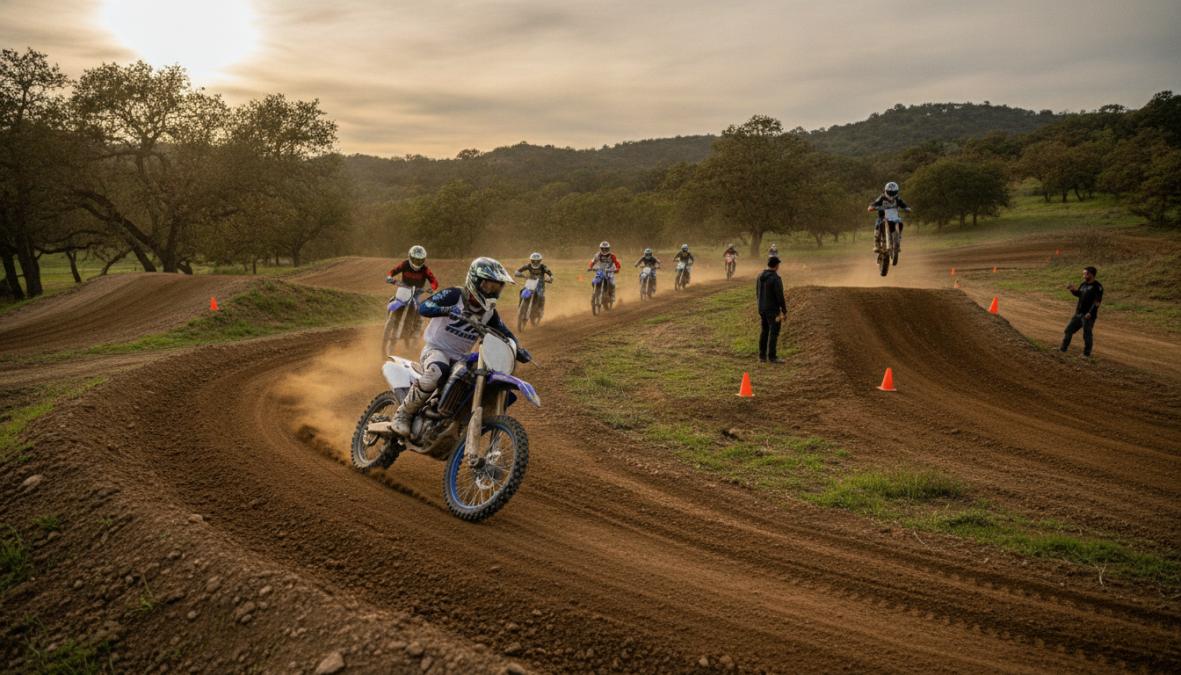
Building confidence requires progressive skill development. Each drill builds on the previous one, gradually expanding your comfort zone and capability.
Throttle Control and Balance Exercises
Throttle control is the foundation of confident riding. Start on flat, open terrain with no obstacles. Accelerate smoothly to moderate speed, then practice feathering the throttle with small, deliberate adjustments. Spend five minutes practicing smooth acceleration and deceleration.
Next, practice the same drill while maintaining a straight line through cones spaced thirty feet apart. This teaches you to separate throttle control from steering input. Balance exercises should include standing on the pegs at low speed, gradually increasing speed while standing. This develops proper weight distribution and riding posture.
Body Positioning and Riding Posture Drills
Correct body positioning gives you more control over the bike. The fundamental position has your outside leg extended down the side of the bike, your inside leg bent with your knee off the seat, and your upper body leaned forward slightly. Your head should be positioned ahead of the handlebars so you're looking through the turn.
Practice this position at low speed in a figure-eight pattern. Gradually increase speed as the position becomes natural. A common mistake is gripping the handlebars too tightly. Practice riding with a light grip, just enough pressure to maintain control but not so much that your forearms fatigue quickly.
Braking Techniques and Line Selection Practice
Confident braking is essential for safe, fast riding. Practice braking drills on a straight section of track. Start at moderate speed and apply brake pressure smoothly until you stop. Repeat at progressively higher speeds to develop muscle memory for smooth, progressive braking.
Line selection determines how much speed you can carry. The most efficient line through a corner uses the widest possible arc. Practice identifying the optimal line before entering a corner, then executing it consistently.
| Drill | Duration | Focus |
|---|---|---|
| Throttle feathering | 5-10 minutes | Smooth, progressive input |
| Balance at speed | 5-10 minutes | Weight distribution |
| Body positioning | 10-15 minutes | Correct posture through turns |
| Progressive braking | 5-10 minutes | Smooth pressure application |
| Line selection | 10-15 minutes | Optimal arc and speed |
Overcoming Fear of Motocross Jumps: A Step-by-Step Approach
Jumps are where many riders' confidence falters. With a systematic approach, you can overcome jump anxiety and develop genuine confidence in the air.
Start Small and Progress Gradually
The biggest mistake riders make with jumps is attempting them before they're ready. Start with the smallest jump available and master it completely before progressing.
Begin by riding over the jump without launching. Ride slowly enough that your wheels stay on the ground. This lets you practice your approach speed, body position, and line without the pressure of launching. Spend several sessions doing this until it feels comfortable.
Next, increase your speed slightly so the bike leaves the ground for just a moment. Land in the middle of the landing hill. Only after multiple sessions should you attempt to clear the jump completely. Progress gradually to landing near the end of the landing hill.
Understanding Jump Mechanics and Technique
Jumps work because of physics. When you ride up the lip at the correct speed, your wheels leave the ground and gravity pulls you down. The landing hill is angled to catch you safely.
The key variable is approach speed. Too slow and you don't generate enough momentum to clear the jump. Too fast and you overshoot the landing. Generally, approach jumps at the same speed you'd use on a flat section of track.
Body position over jumps is similar to ground position, but more centered over the bike. As you approach the lip, shift your weight slightly forward. As you leave the ground, move your weight back toward center. This prevents the front wheel from dropping and keeps the bike level in the air.
Managing Anxiety Before Taking Flight
Anxiety before jumps is normal, even for experienced riders. Use your pre-ride confidence routine before attempting jumps. Take three deep breaths, visualize yourself clearing the jump smoothly, and remind yourself that you've trained for this.
As you approach the jump, focus on your approach speed and line rather than the fear. If you feel hesitation, circle back and try again. Forcing a jump you're not ready for creates crashes and reinforces fear.
Practical Strategies to Build Motocross Confidence On the Track
Confidence builds gradually through consistent practice, strategic goal-setting, and learning from mistakes productively.
Set Achievable Milestones and Track Progress
Vague goals like "get better at jumps" don't build confidence because you can't measure progress. Set specific, measurable milestones like "land the three-foot jump cleanly five times in a row" or "complete the rhythm section without touching the brakes."
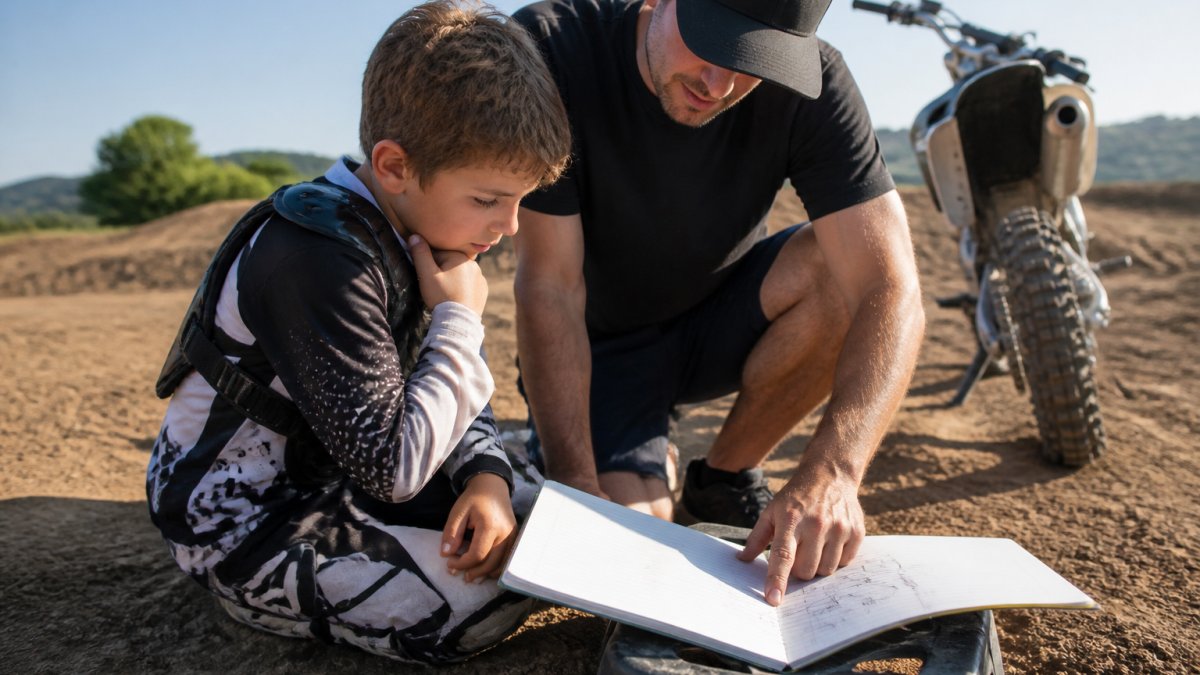
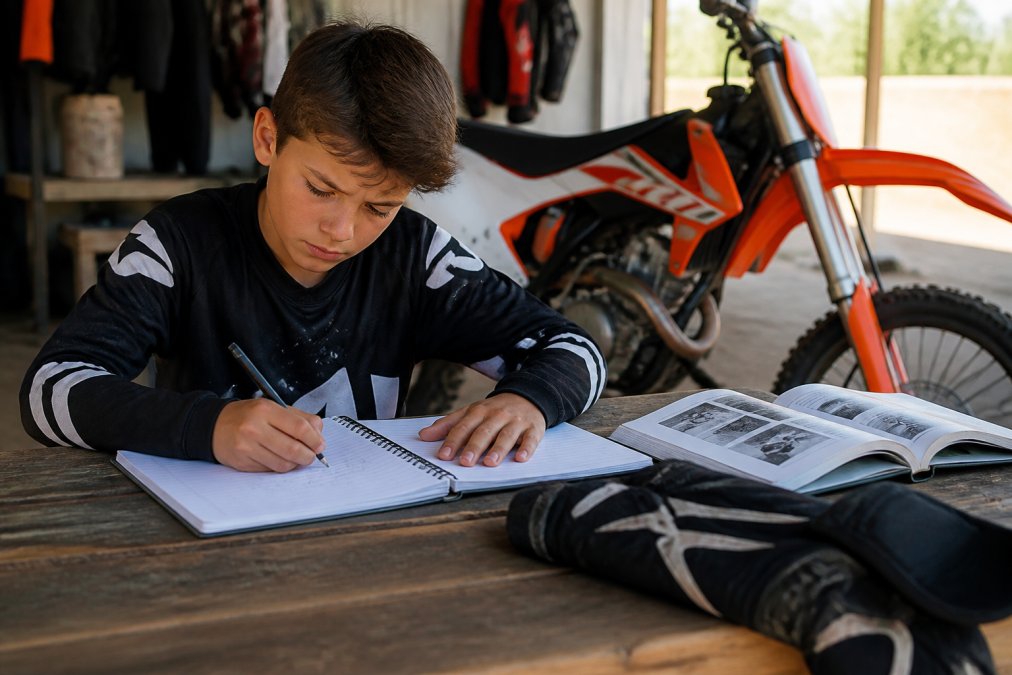
Write down your goals and track your progress. Each time you achieve a milestone, acknowledge the accomplishment. Recognizing progress reinforces confidence. Set both short-term goals (this session) and longer-term goals (this month).
Learn from Mistakes Without Self-Criticism
Every rider crashes and makes mistakes. The difference between riders who build confidence and those who don't is how they respond. Analyze what went wrong and adjust. If you crashed because you carried too much speed into a corner, brake earlier. Each mistake contains information that helps you improve.
Avoid perfectionism. A 70% execution rate that's improving is far better than sporadic perfect moments.
Ride with Supportive Peers and Mentors
Your environment significantly influences your confidence. Riding with supportive peers who encourage your progress builds confidence far more effectively than riding alone. Find a mentor, someone slightly faster or more experienced who can offer constructive feedback and encourage you to progress at your own pace.
The Role of Proper Gear and Safety in Building Confidence
Confidence is easier to access when you feel physically protected. Quality protective equipment isn't just about injury prevention, it's about psychological security that allows you to push your limits safely.
Choosing Quality Protective Equipment
Your protective gear includes a helmet, goggles, jersey, pants, gloves, boots, and body armor. Quality matters significantly. A quality helmet absorbs impact better than a cheap one. Look for DOT or Snell certification. Replace your helmet if you've had a significant impact, even if it doesn't look damaged.
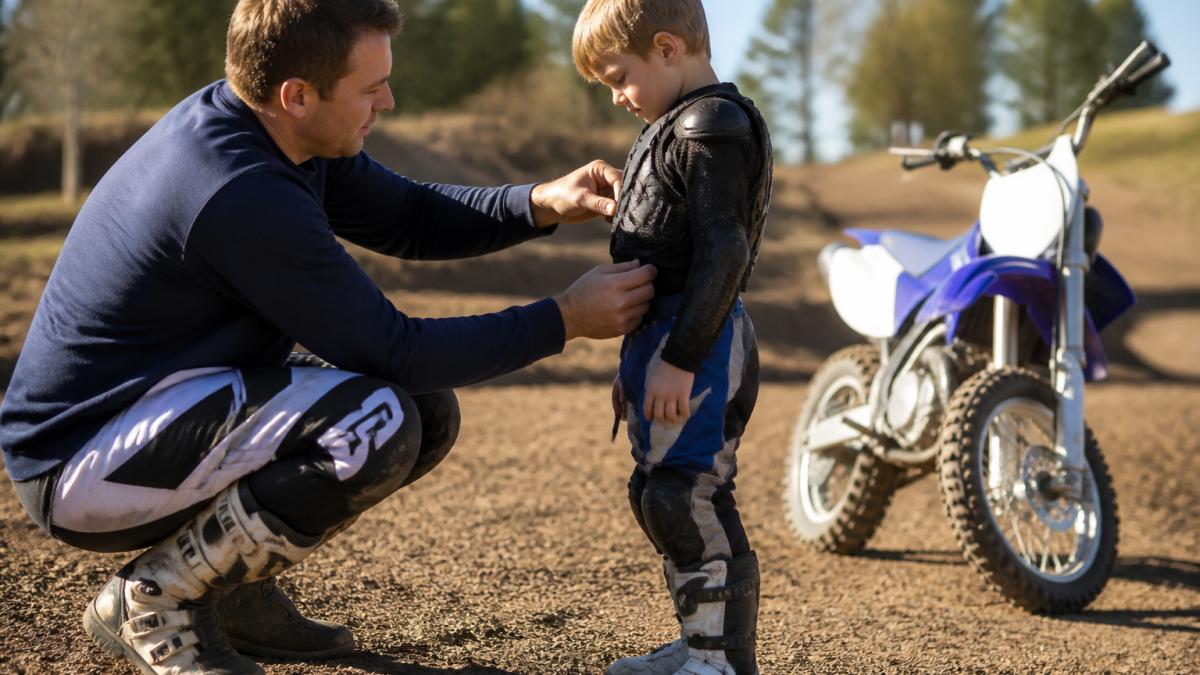
Quality body armor protects your chest, back, and shoulders and makes a significant difference in confidence. Riding gear should fit properly: snugly without restricting your range of motion.
Pre-Ride Inspection and Equipment Checks
Before every session, inspect your bike and gear. Check your tire pressure, brake fluid level, and chain tension. Verify that your handlebars are tight, your seat is secure, and your controls function smoothly. This takes minimal time but significantly improves your confidence by confirming that your equipment is ready.
Common Confidence Killers and How to Overcome Them
Certain patterns commonly undermine confidence. Recognizing these patterns helps you address them before they derail your progress.
Recovering from Crashes and Building Resilience
Crashes are inevitable in motocross. How you respond determines whether they build resilience or undermine confidence. Immediately after a crash, assess your physical condition. If you're not seriously injured, get up and return to the track within a few minutes. Waiting too long allows fear to build.
Analyze what caused the crash. Understanding the cause helps you prevent similar crashes and gives you a sense of control. Many riders benefit from returning to an easier section of track after a crash to restore their mental state before attempting the section where they crashed.
Comparing Yourself to Other Riders
Comparison is a confidence killer. You see faster riders and assume they're naturally gifted. Everyone progresses at their own pace. Your timeline is your timeline.
Instead of comparing yourself to others, compare yourself to your past self. Are you faster than you were three months ago? Can you clear jumps you couldn't before? These comparisons matter because they're accurate measures of your progress.
Conclusion: Your Path to Confident Riding
Building genuine motocross confidence requires consistent mental training alongside physical skill development. Visualization, progressive skill building, goal setting, and resilience training are the same methods used by professional riders to manage pressure and perform at their peak.
Your confidence journey doesn't happen overnight, but with intentional practice, it accelerates significantly. Start with small, achievable milestones, celebrate your progress consistently, and trust the process. Within weeks, you'll notice yourself riding smoother, faster, and with genuine confidence in your abilities.
Frequently Asked Questions
How do you overcome fear when learning motocross jumps?
Start with small jumps and progress gradually, don't rush to bigger features. Focus on understanding jump mechanics: proper throttle control, body positioning, and landing technique. Use visualization to mentally rehearse successful jumps before attempting them. Practice on a closed course where you feel safe, and remember that fear is normal. Break the jump into manageable steps: first nail the approach, then the takeoff, then the landing. Each small success builds confidence for the next level.
What motocross mental training techniques actually work?
Visualization is highly effective, mentally rehearse yourself riding smoothly through sections before you ride them. Develop a pre-ride confidence routine with breathing exercises or positive self-talk. Set specific, achievable goals for each session rather than vague targets. Practice mindfulness to stay present during rides instead of worrying about crashes. Keep a riding journal to track progress and celebrate small wins. These mental strategies complement physical practice and help you build lasting confidence on the off-road motorcycle.
What dirt bike riding drills improve confidence fastest?
Focus on fundamental drills: throttle control exercises at slow speeds, balance drills on flat ground, and body positioning practice. Progress to braking technique drills and line selection practice on easier sections. Repeat drills consistently, mastery of basics builds confidence more than attempting advanced skills. Closed course training is ideal because you can focus on technique without pressure. Track your improvement in specific drills (e.g., smoother shifts, better throttle modulation) to see tangible progress that reinforces confidence.
How does proper protective equipment affect riding confidence?
Quality riding gear, helmet, chest protector, gloves, boots, provides both physical protection and psychological security. Knowing your protective equipment is reliable allows you to focus on riding technique rather than worrying about injury. A well-fitting helmet improves visibility and hearing, which enhances your ability to control the off-pavement motorcycle. Regular pre-ride inspection of your gear and bike ensures everything functions properly, eliminating doubt. This combination of safety fundamentals and equipment confidence lets you ride more aggressively and progressively improve your skills.
This article was written using GrandRanker