 how-to
How to Choose Your First Beginner Motocross Bike
Last Updated: November 8, 2026
Quick Summary
Choose your first beginner motocross bike by matching it to the rider's skill level, body size and riding goals. Confirm the rider can touch the ground while seated and reach the controls, then pick a smooth, forgiving engine over the biggest power available.
- Brand new riders need a forgiving, low-power bike with smooth throttle response.
- Check that the rider can get both feet flat or nearly flat on the ground while seated.
- A 125cc two-stroke or 230cc to 250cc four-stroke suits average adult riders.
- Four-strokes deliver smoother, more predictable power, which suits most new riders.
- Inspect a used bike with a cold start, then check suspension, frame and service history.
Table of Contents
- Start With Your Rider's Experience and Skill Level
- What Dirt Bike Should I Get for My Height and Weight
- Engine Size, Two-Stroke vs Four-Stroke, and Power Delivery
- Motocross Bike or Trail Bike: Matching the Bike to the Riding Style
- Best Beginner Dirt Bike for Adults: Models and What to Compare
- First Dirt Bike for Kids: Sizing, Age and Safety Gear
- Used Dirt Bike Buying Checklist and Your Next Step
- Frequently Asked Questions
Start With Your Rider's Experience and Skill Level
Choosing your first beginner motocross bike starts with honest answers about the rider. Every good choice begins with the skill level of the person who will actually ride.
Most new riders fall into one of three groups. Some have never ridden at all. Others have done some trail riding on a small bike. A few have raced before and just need a new machine.
- Brand new riders need a forgiving, low-power bike with smooth throttle response.
- Early learners can handle a little more power but still benefit from easy handling.
- Experienced beginners may want a bike with room to grow into.
A common mistake is buying for the rider you hope to become, not the one you are today.
What Dirt Bike Should I Get for My Height and Weight
Rider size matters more than most buyers expect.
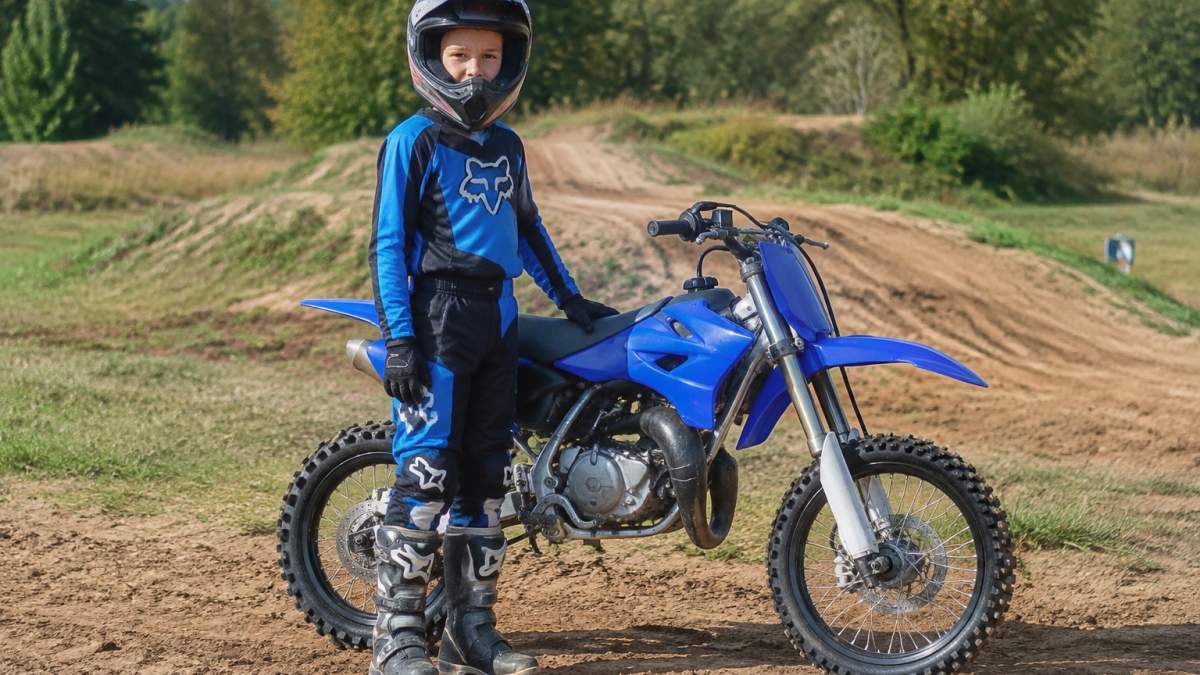
The most important check is seat height and reach to the ground.
Weight matters too. A lighter bike is easier to pick up after a tip-over and easier to control on hills.
Before you buy, ask yourself these questions:
- Can the rider touch the ground while seated?
- Can the rider reach the handlebars and controls without stretching?
- Can the rider lift and move the bike with some ease?
If the answer to any of these is no, look at a smaller model.
Watch out: a bike that is too big rarely feels "safe." It usually makes the rider slower to react, not more secure.
Engine Size, Two-Stroke vs Four-Stroke, and Power Delivery
Engine size is the number shoppers compare first, but displacement alone does not tell you whether a bike is beginner-friendly. What matters is how much power the engine makes, how that power arrives at the rear wheel, and how much maintenance the design demands.
A practical starting point by rider size and experience:
- Youth riders under roughly 100 lb typically start on 50cc to 65cc two-strokes or 70cc to 110cc four-stroke trail bikes, depending on inseam and strength.
- Teens and lighter adults often fit a 85cc two-stroke or a 125cc to 140cc four-stroke. An 85cc two-stroke is a race-class bike and can be sharp; a 125cc four-stroke trail bike is gentler.
- Average-to-larger adults usually land on a 125cc two-stroke motocross bike, a 230cc to 250cc four-stroke trail bike, or a 250cc four-stroke motocross bike if they have prior experience.
These are starting ranges, not rules. Seat height and reach often eliminate a bike before engine size does.
How two-stroke and four-stroke power actually differ
A two-stroke engine fires on every revolution of the crankshaft, so it makes power in a narrow, punchy band and relies on the rider to keep the engine in that band. That is why a 125cc two-stroke can feel tame at low rpm and then hit hard when the power valve opens. A four-stroke fires every other revolution, uses valves and a camshaft, and delivers torque lower in the rev range.
The trade-offs go beyond feel:
- Two-strokes are lighter, simpler in construction, and cheaper to rebuild top-end, but they require more frequent piston and ring service and demand more clutch and throttle finesse.
- Four-strokes are heavier, quieter, and easier to ride smoothly, but valve checks, oil changes, and top-end work cost more when they come due.
Power delivery is the real beginner filter
Look for a bike with a linear throttle and, if available, a milder map or a throttle stop.
Best for: new riders who want smooth, forgiving power and easy control. Skip if: the rider is already comfortable on a larger bike and wants more top-end speed.
Watch out: buying a 250cc two-stroke or a 450cc four-stroke because the rider is tall or heavy is the most common beginner mistake, those bikes reward experienced throttle and clutch control and punish mistakes with abrupt power.
If racing is the goal, check class rules first
Displacement also determines which class a rider can enter. Youth classes are organized around engine size and age, for example, 50cc, 65cc, and 85cc classes for younger riders, and adult classes typically separate 125cc two-strokes, 250cc four-strokes, and open classes. Before buying, check the rulebook of the sanctioning body that runs your local track, because age and displacement limits vary by organization and can rule out a bike you were about to purchase.
Motocross Bike or Trail Bike: Matching the Bike to the Riding Style
Motocross bikes are built for closed tracks with jumps, corners and fast laps. Trail bikes and dual-sport bikes are designed for woods, open land and street-legal riding.
A motocross bike has stiffer suspension, a higher seat and a lighter frame. It rewards aggressive riding on a track.
Think about where the rider will ride most. If the plan is track practice or racing, a motocross bike fits best.
Best Beginner Dirt Bike for Adults: Models and What to Compare
Adult beginners have different needs than kids. Adults often weigh more, reach higher and may want a bike that handles bigger jumps and longer rides.
When comparing models, focus on these points:
- Seat height and how easily you can touch the ground
- Weight and how it feels when you lift or steer it
- Engine power and how smooth the throttle is
We recommend making a short list of three bikes, then test-riding each one if possible. Sitting on a bike in a shop tells you more than a spec sheet ever will.
Please check current prices and availability directly with a dealer or manufacturer, since costs vary by model and condition.
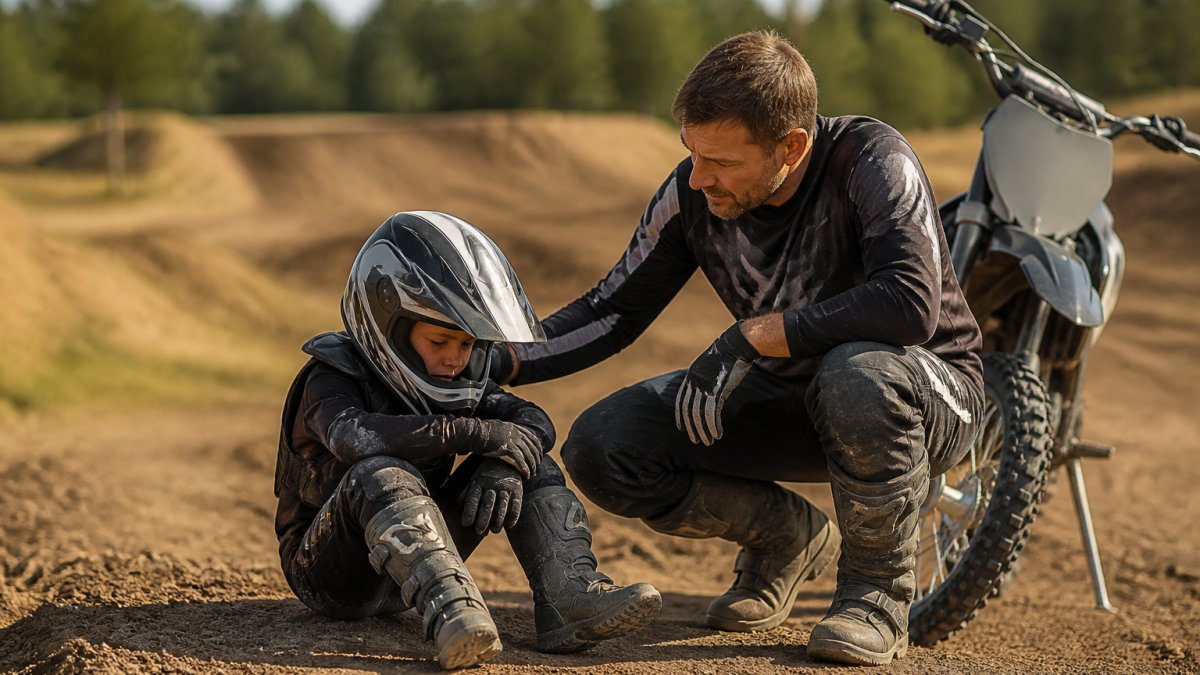
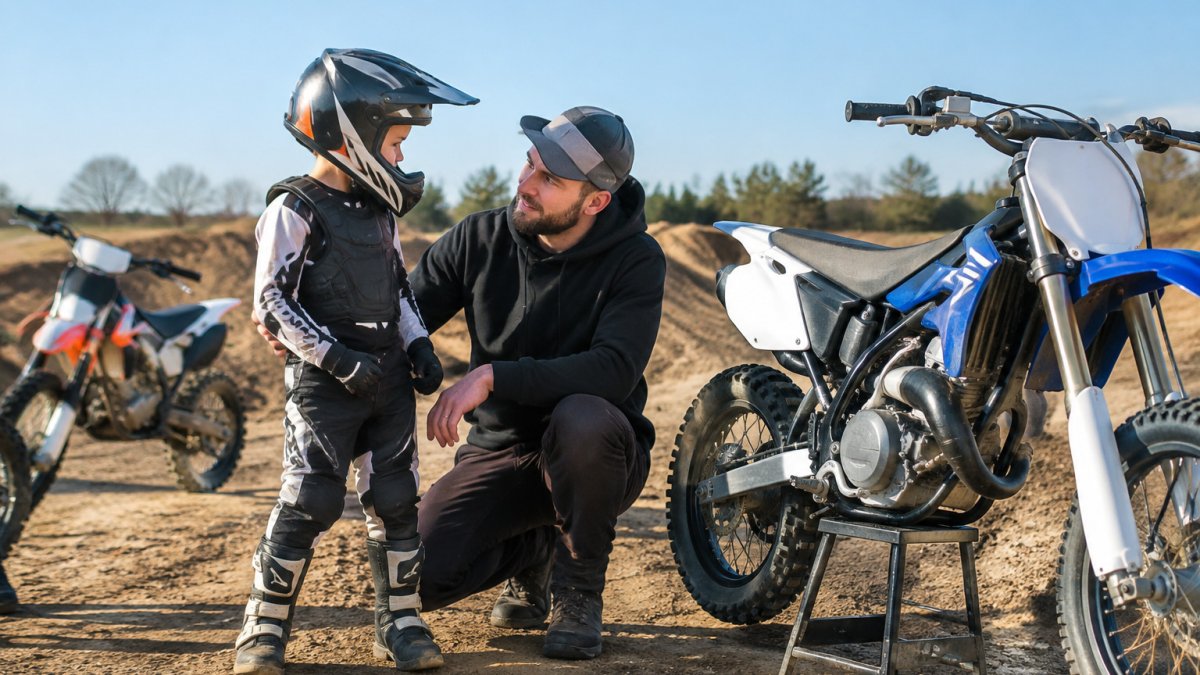
First Dirt Bike for Kids: Sizing, Age and Safety Gear
Kids' bikes are sized by age and height more than by engine number alone.
Safety gear comes first. To learn how to pick the right motocross protective gear before the first ride, see how to choose motocross protective gear.
Parents often ask about training. Start in a large, open, flat area with no obstacles.
Nelmgerian MX books and training journals are designed to help kids stay connected to motocross between practice days.
Used Dirt Bike Buying Checklist and Your Next Step
A used bike can be the smartest first purchase, but only if you inspect it in a repeatable order and budget for what comes after the sale. Work through the bike in this sequence so you do not miss the expensive items while distracted by cosmetics.
A repeatable used-bike inspection process
- Cold start first. Ask the seller not to warm the bike before you arrive. A cold engine reveals hard starting, rough idle, and smoke that a warm engine hides. Listen for knocking, ticking, or an erratic idle.
- Engine and exhaust. Check for oil or coolant leaks at the cases, seals, and head gasket. Look at the exhaust header for blueing or cracks and smell for a rich or burning-oil condition. Ask when the top end was last serviced and who did the work.
- Airbox and filter. Open the airbox. A dirty or missing filter is a sign of neglected maintenance and a risk of ingested dirt.
- Suspension. Wipe the fork tubes and cycle the forks, oil rings on the stanchions mean leaking seals. Check the shock shaft for scoring and the linkage and swingarm bearings for play by lifting the rear wheel.
- Frame and steering. Look for cracks and rewelds near the head tube, footpeg mounts, and shock tower. With the front wheel off the ground, check the steering head bearings for notchiness.
- Wheels, brakes, and drivetrain. Spin both wheels for wobble, check spoke tension, measure brake pad thickness, and inspect the chain for tight spots and the sprocket teeth for hooking.
- Controls and electrics. Test the clutch pull, throttle snap, brake feel, and, on electric-start models, the battery and starter. Check that the kill switch works.
- Service history and paperwork. Ask for receipts, a title or bill of sale, and the VIN. A bike with no history is not automatically bad, but price it accordingly.
Watch out: a bike that starts easily when warm but is hard to start cold often has valve or top-end issues that will cost more than the price difference between it and a better-maintained example.
Budget beyond the purchase price
The sale price is only the first line item. A realistic first-year budget for a beginner includes:
- Protective gear: helmet, goggles, gloves, boots, chest protector, knee guards, and pants/jersey.
- Maintenance: oil and filters, air filter cleaner and oil, chain lube, coolant, and a top-end or valve service interval depending on engine type.
- Tires and wear items: knobby tires, tubes, brake pads, and chain and sprockets.
A cheap bike that needs a top end, tires, and suspension service can easily cost more in the first season than a better-maintained bike at a higher asking price. Price the known work before you negotiate.
Your next step
Measure the rider, decide on riding style, and shortlist two or three bikes that fit. Then inspect each one in the order above, ask for service records, and price the work it needs before you make an offer. Sitting on a bike and starting it cold tells you more than any spec sheet.
For parents shopping for kids' riding gifts or reading that builds the same excitement for the sport, explore the Nelmgerian MX children's motocross book collection alongside your bike search.
Before making an offer, work through the bike's key inspection points and budget for the costs that follow the purchase.
| Inspection step | What to check | Why it matters |
|---|---|---|
| Cold start | Hard starting, rough idle, smoke | Warm engines can hide problems |
| Engine and exhaust | Oil or coolant leaks, blueing | Signals top-end or seal issues |
| Suspension | Oil rings on fork tubes, shock scoring | Indicates leaking seals |
| Frame and steering | Cracks near head tube, steering play | Structural and safety concerns |
| Wheels and drivetrain | Wobble, spoke tension, chain tight spots | Affects handling and reliability |
| Controls and electrics | Clutch, throttle, brakes, kill switch | Confirms the bike is safe to ride |
| Service history | Receipts, title, VIN | Shows how well it was maintained |
Frequently Asked Questions
What's the best beginner dirt bike to start on?
There is no single best model for everyone. The right beginner bike depends on the rider's age, height, weight and experience. Start by confirming the rider can comfortably touch the ground at the seat, then compare engine size, weight and suspension. Many new riders begin on a smaller-displacement bike with manageable power delivery so they can build throttle control and confidence before moving up. Pricing varies by model, condition and dealer, so check current listings or contact a dealer for an accurate figure.
Is a 450 dirt bike too big for a beginner?
For most true beginners, a 450cc four-stroke is more power than they need at first. These bikes deliver strong, fast power that can overwhelm someone still learning clutch, throttle and braking control. A smaller-displacement bike such as a 125cc two-stroke or a 250cc four-stroke usually gives a gentler learning curve. Riders who are adult-sized and already have some experience may handle a 450 with proper training, but it is generally better to earn that step up.
Should a beginner start with a two-stroke or four-stroke motocross bike?
Two-stroke bikes are lighter and have a snappier, more abrupt power band, which can feel demanding for new riders. Four-stroke bikes produce smoother, more linear power and are generally easier to control at low speeds, which suits many beginners. Maintenance differs too: two-strokes require premix and regular top-end service, while four-strokes need oil changes and valve checks. Compare the specific models you are considering and ask a dealer which engine type matches your rider's skill level.
What should I check when buying a used motocross bike?
Inspect the frame and swingarm for cracks or bends, check fork seals and shock leakage, and look for loose or worn bearings in the wheels and steering head. Start the bike cold, check compression, and make sure the clutch engages smoothly. Review the service history and ask when the top end, coolant and air filter were last serviced. Confirm the title and that the bike is not stolen. Factor in the cost of any needed repairs when comparing asking prices.