 how-to
How Do You Manage Motocross Performance Anxiety?
Last Updated: November 1, 2026
Quick Summary
You manage motocross performance anxiety by building an identical race-day routine from wake-up to gate drop, so fewer decisions leave less room for nerves to spiral. Add slow breathing with a longer exhale, short true self-talk statements, and one or two process goals you fully control.
- A 2024 PubMed study found arousal, anxiety, and mood measures were lower after the race than before it.
- Walk or bicycle the track 90 minutes before the gate to note the start straight, first turn, and changed jumps.
- Breathe in through the nose for four counts, hold for four, and out through the mouth for six, five times.
- Keep visualization short: two to three minutes the night before and again before the gate.
- Ask young riders did you ride the way you planned instead of did you win.
Table of Contents
- Why Motocross Performance Anxiety Hits Hard at the Starting Gate
- How to Build a Motocross Race-Day Routine That Steadies Nerves
- Pre-Race Breathing Exercises for Athletes Who Need to Settle Fast
- Positive Self-Talk for Athletes: Turning Nerves Into Focus
- Visualization Techniques for Motocross Riders Before the Gate Drops
- Process Goals and Controllable Actions That Beat Outcome Pressure
- How Parents Can Help Young Riders Manage Motocross Performance Anxiety
- Practice These Mental Skills With Your Young Rider This Week
- Frequently Asked Questions
Why Motocross Performance Anxiety Hits Hard at the Starting Gate
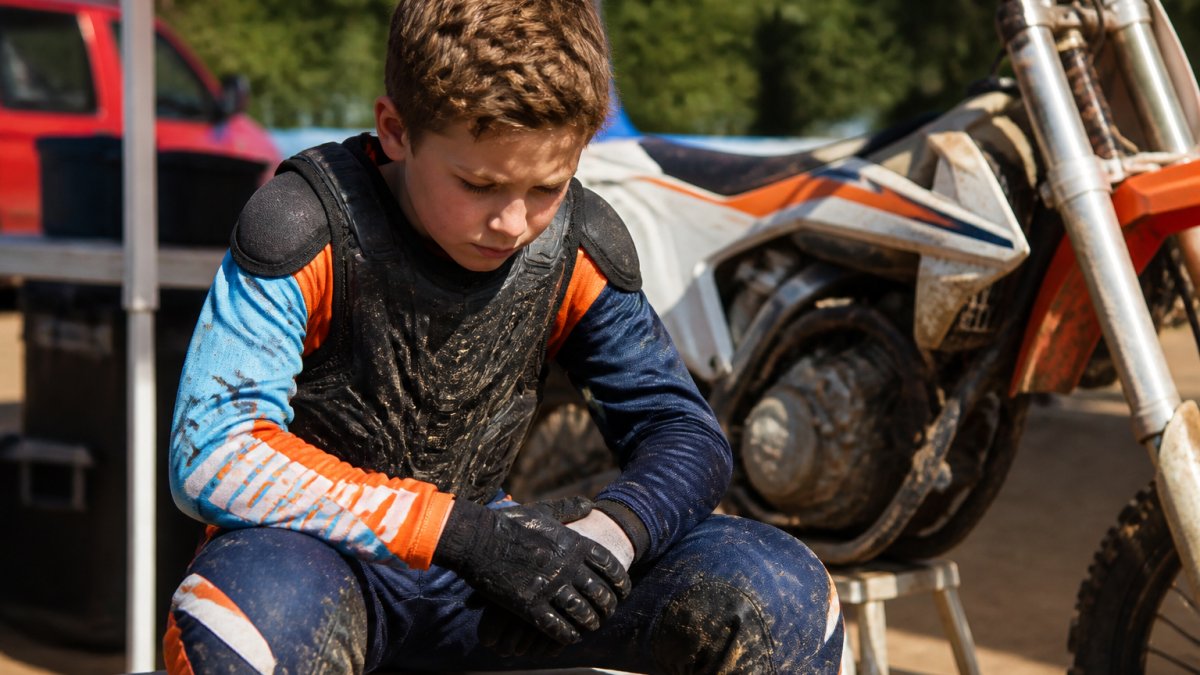
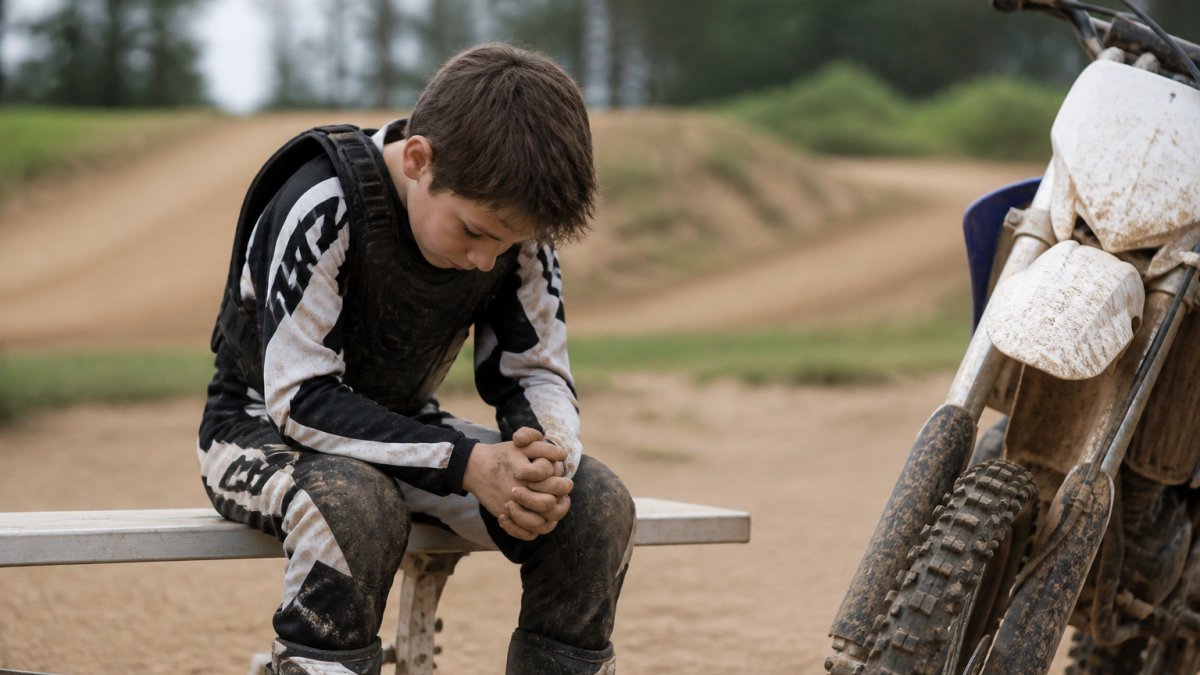
Motocross performance anxiety is the mix of nerves, racing heart, and self-doubt a rider feels before the gate drops.
At Nelmgerian MX, we talk with racing families every week about this exact moment. The gate is loud.
A 2024 study in PubMed on the psychology of motocross racing looked at arousal, anxiety, and mood around races.
Here is the core problem most guides miss: nerves do not disappear when the gate drops. They change shape.
Common Anxiety Triggers Riders Face on Race Day
- Track conditions: Mud, ruts, or a jump that changed since practice
- Gate position: A bad pick or a stacked gate line
- Crowds and noise: Spectators, announcers, and engines revving
How to Build a Motocross Race-Day Routine That Steadies Nerves
A motocross race-day routine is a set of repeated actions a rider follows from wake-up to gate drop. The routine works because it removes decisions.
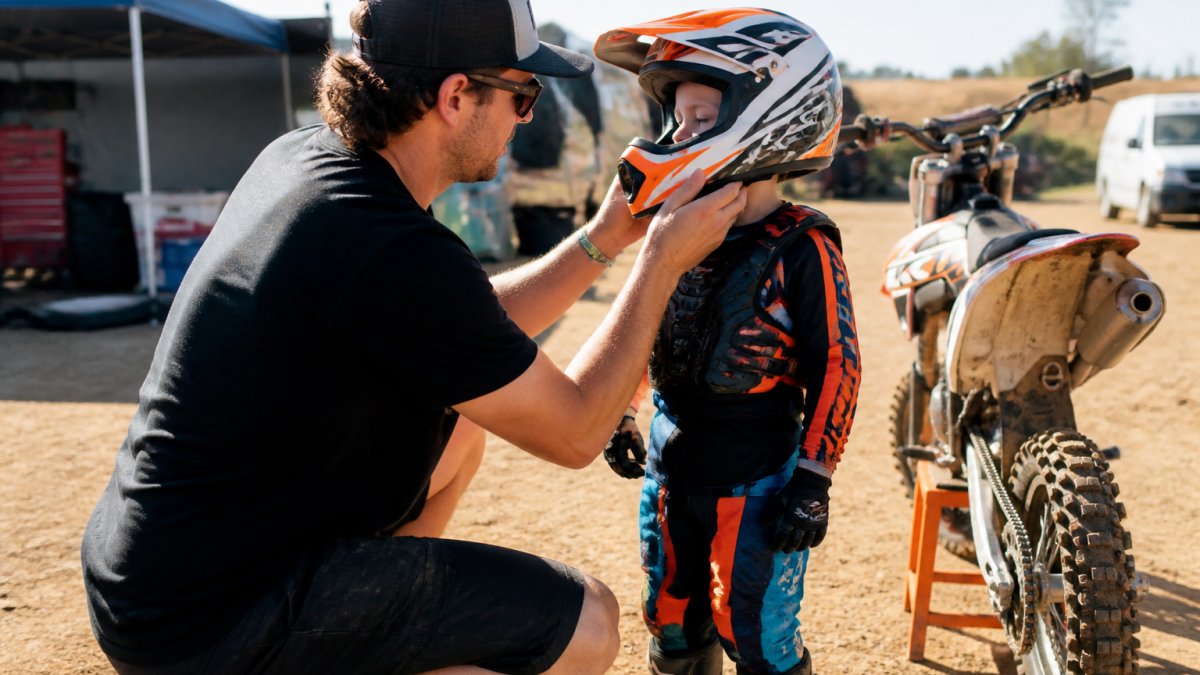
Motocross is different from many other sports: the gate drop is a hard start, the track changes between motos, and the first turn is often the most crowded part of the day.
Build the routine around the four motocross pressure points: the track walk, the start, the first turn, and the wait between motos. First-time racers can follow a full guide on how to prepare for your first dirt bike race to structure the day.
- Night before: Pack gear, fuel the bike, check the weather, confirm gate pick and moto schedule, and write the start plan on a note card.
- Morning: Eat the same simple meal, load up, and review the note card once, not five times.
- Arrival: Sign in, then walk or bicycle the track before the dirt changes. Look at the start straight, first-turn entry, and any jump whose face or landing changed.
- Practice: Ride smooth, not fast. Confirm lines and feel the dirt; riders who try to prove speed in practice arrive at the gate drained.
- Between motos: Rest, hydrate, eat a small snack, and repeat one calming habit. Re-check only the sections that changed.
- Before the gate: Helmet on, three slow breaths, one clear plan for the start and first turn.
Keep the routine identical every race. The sameness signals the brain that today is normal.
A Simple Race-Day Timeline for Riders and Parents
Timing matters more than most families realize. Rushed riders get anxious riders. The timeline below is built around a typical amateur race day, where moto order and staging times can shift. Treat the clock as a guide, not a rule, and confirm the actual staging call with the promoter.
| Time Before Gate | Action | Motocross-Specific Purpose |
|---|---|---|
| Night before | Pack gear, fuel bike, confirm gate pick and moto order | Remove morning decisions |
| 3 hours | Eat and load up | Steady energy for a long day |
| 2 hours | Arrive and sign in | Avoid rushing through registration |
| 90 minutes | Walk or bicycle the track; note start straight, first turn, and changed jumps | Build familiarity with the dirt you will actually race |
| 60 minutes | Gear up and warm up off the bike | Loosen the body without draining it |
| 30 minutes | Quiet time, slow breathing, review the start plan | Settle the mind before staging |
| 10 minutes | Final bike check: levers, grips, goggles, fuel, tire pressure | Remove doubt at the gate |
| Staging | One start plan, one first-turn plan, one breath | Full focus on the only seconds you control |
| Gate drop | Commit to the plan; ride the first turn within your limits | Avoid the rushed, tight start that causes crashes |
Two motocross-specific notes. First, the track walk is not a formality: dirt changes as the day warms and classes run, so a rut from practice may be gone by your moto, walk it again briefly before staging if you can. Second, the ten minutes before staging are not for learning anything new.
Pre-Race Breathing Exercises for Athletes Who Need to Settle Fast
Pre-race breathing exercises for athletes are simple patterns that slow the heart rate and release muscle tension.
- Sit or stand still with feet flat
- Breathe in through the nose for four counts
- Hold gently for four counts
- Breathe out through the mouth for six counts
- Repeat five times
A longer exhale is a commonly used pattern for slowing the body down.
Another option is box breathing: in for four, hold for four, out for four, hold for four.
That sense of control matters as much as the calm itself.
Riders who want more than breathing can explore mental preparation exercises for beginners and build a small toolkit before the next race.
Positive Self-Talk for Athletes: Turning Nerves Into Focus
Positive self-talk for athletes is the habit of replacing negative thoughts with short, true statements.
Start with thought tracking. Have the rider name the negative thought out loud.
- "I always mess up the start" becomes "I have practiced this start"
- "Everyone is faster" becomes "I race my own moto"
- "I might crash" becomes "I ride within my limits"
The second statement must be true. Empty cheerleading backfires.
Do a reality check with your rider.
Nerves are not the enemy. Some activation sharpens focus, as endurance coaching guidance on race-day nerves points out.
Once the mind is steady, riders can carry that focus into the moto with tips on staying focused during a race.
Visualization Techniques for Motocross Riders Before the Gate Drops
Visualization techniques for motocross riders are mental rehearsal routines where the rider pictures the race in detail before it happens.
- Close the eyes and picture the gate
- See the start straight and pick the line
- Feel the first turn and the ruts
- Picture each jump at a steady pace
- See a clean finish and a calm cool-down
Keep the rehearsal realistic. Riders whose nerves trace back to a crash can first work through how to rebuild confidence after a motocross crash.
Do this the night before and again in the ten minutes before the gate. Keep it short: two to three minutes is enough.
Process Goals and Controllable Actions That Beat Outcome Pressure
Outcome focus is the habit of measuring the race by the result. It is the fastest route to anxiety.
A rider cannot control who else shows up, the weather, or the gate pick.
Process goals flip this. They measure actions the rider fully controls.
- Hit the same start routine every moto
- Brake later into one specific corner
- Keep the elbows up for a full lap
A training journal can be a place to write process goals before the race and check them afterward.
How Parents Can Help Young Riders Manage Motocross Performance Anxiety
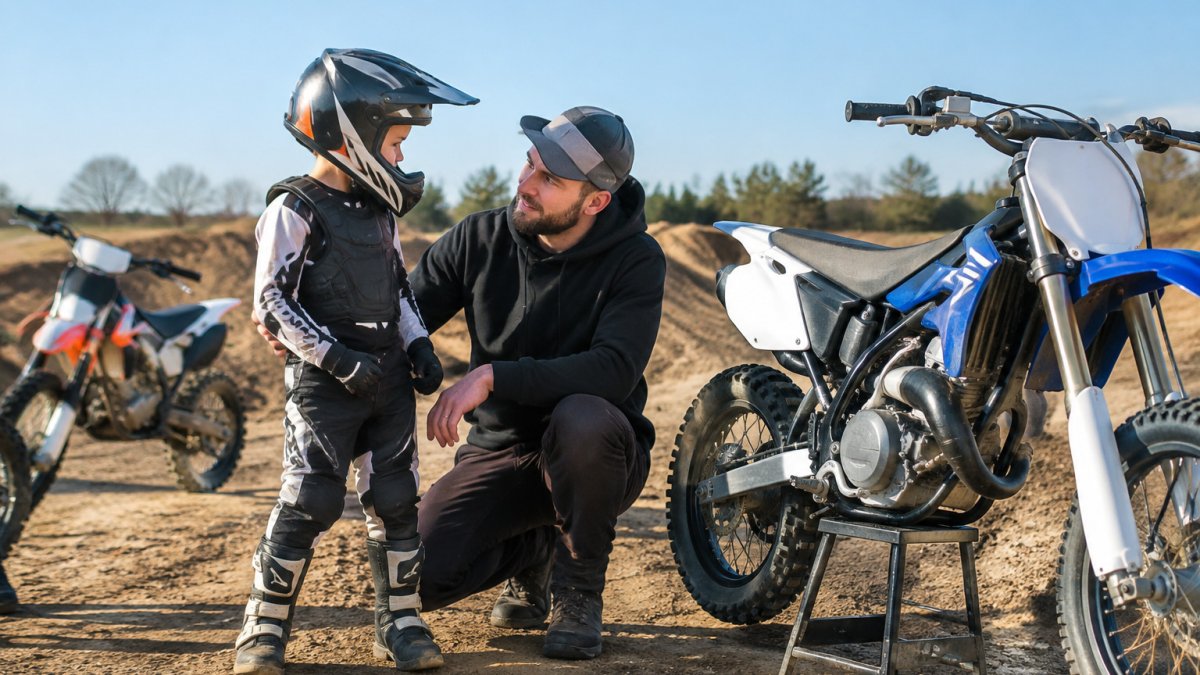
Parents carry more influence over a young rider's nerves than anyone at the track. The tone you set in the pits travels straight to the gate.
Try these habits:
- Ask "did you ride the way you planned?" instead of "did you win?"
- Keep your own nerves quiet and body language calm
- Let the rider own the routine, even if it is slow
Those habits are a useful foundation. How you apply them can vary, since younger and older riders often need different support.
Match the Support to the Rider's Age and Experience
Youth riders (roughly 4-8, small-displacement classes). The goal is fun and routine, not race strategy.
Beginners of any age. Beginners are usually anxious about the unknown, not the outcome.
Experienced racers. Older, faster riders often carry outcome pressure, points, sponsors, family expectations. Ask before offering advice, and accept "not now." Maintaining this level of composure under the intense scrutiny of a final moto requires the same mental toughness tips that help riders navigate the high-stakes pressure of a tiebreaker.
Coaches and team parents. Give each rider the same routine structure but let them fill in their own start plan and process goals.
Nelmgerian MX offers motocross training journals that give kids a place to log practice and goals.
When Anxiety May Need More Than a Routine
Nerves before a race are normal. Anxiety that is persistent, out of proportion to the situation, or that interferes with riding, school, sleep, or eating is a different matter. Watch for these signs:
- Anxiety that starts days before a race and does not ease after the gate drops
- Repeated physical symptoms, stomach pain, headaches, trouble sleeping, a doctor has not tied to a medical cause
- Avoidance that grows: skipping races, practices, or entire weekends
- Panic at the gate that does not respond to breathing, routine, or visualization
If you see these patterns, talk with the rider's pediatrician or a qualified mental-health professional. A sports psychologist or licensed counselor who works with young athletes can teach skills beyond what a parent or coach can provide.
Practice These Mental Skills With Your Young Rider This Week
Pick one skill and repeat it all week. That beats trying everything at once.
Here is a simple plan:
- Monday: Name three anxiety triggers together
- Tuesday: Practice the four-six breathing pattern
- Wednesday: Write two positive self-talk statements
- Thursday: Do a two-minute visualization
Repeat the same week after the next race. Progress shows up in small steps.
At Nelmgerian MX, we build tools that make this practice part of the sport kids already love.
Visit the Nelmgerian MX website to explore books, activities, and training journals for young riders.
Frequently Asked Questions
How can parents help a child manage motocross race-day nerves?
Keep your own energy calm and steady. Before the gate, focus on what your child can control: a good start, smooth corners, staying relaxed on the bike. Skip talk about results or podium finishes. A consistent motocross race-day routine, like the same warm-up, snack, and short breathing drill, gives young riders a familiar anchor. Many riders find that nerves peak before the gate and ease once riding starts. Remind your rider of that.
What breathing exercises can help with pre-race anxiety?
Try box breathing: inhale for four counts, hold for four, exhale for four, hold for four. Repeat five to ten times. A longer-exhale pattern also works well: breathe in for four seconds and out for six. These pre-race breathing exercises for athletes slow the heart rate and reduce muscle tension. Practice them at home and during practice days so the pattern feels automatic on race day. Do them while waiting at the gate or during staging, not while the bike is moving.
Is it normal to feel nervous before a motocross race?
Yes, and it happens to riders at every level. Pre-race nerves are a normal part of the sport. The goal isn't to eliminate nerves. Some activation sharpens focus and prepares the body for effort. What matters is having a routine, breathing tools, and positive self-talk so nerves don't turn into panic at the starting gate.
What should a young rider do when they feel nervous at the starting gate?
Give them three quick actions: one slow breath out, one short phrase like 'smooth start,' and one look at the first turn. This keeps attention on controllable actions instead of the outcome. Visualization techniques for motocross riders help here too. If your rider has rehearsed the start line in their head all week, the gate feels familiar rather than frightening. Keep the moment short and calm, and avoid last-second coaching that adds pressure.