 how-to
How to Handle Race Day Nerves for Kids: 7 Proven Strategies
Table of Contents
- Understanding Race Day Nerves in Young Riders
- Signs of Sports Anxiety in Children to Watch For
- Pre-Race Breathing Exercises for Kids That Actually Work
- What to Say to a Nervous Child Before a Competition
- Building Mental Toughness Through Race-Day Routines
- Nutrition and Hydration: The Overlooked Nerve Manager
- Managing Race Day Nerves: Focus on What Your Child Controls
- Post-Race Emotional Regulation: What Comes After
- Frequently Asked Questions
Last Updated: August 4, 2026
Understanding Race Day Nerves in Young Riders
Performance jitters are normal in competitive sports. When young riders line up at the gate, their bodies release adrenaline and cortisol, stress hormones that can fuel focus or create anxiety. At Nelmgerian MX, we understand that helping children manage these emotions is one of the most powerful tools a parent can offer.
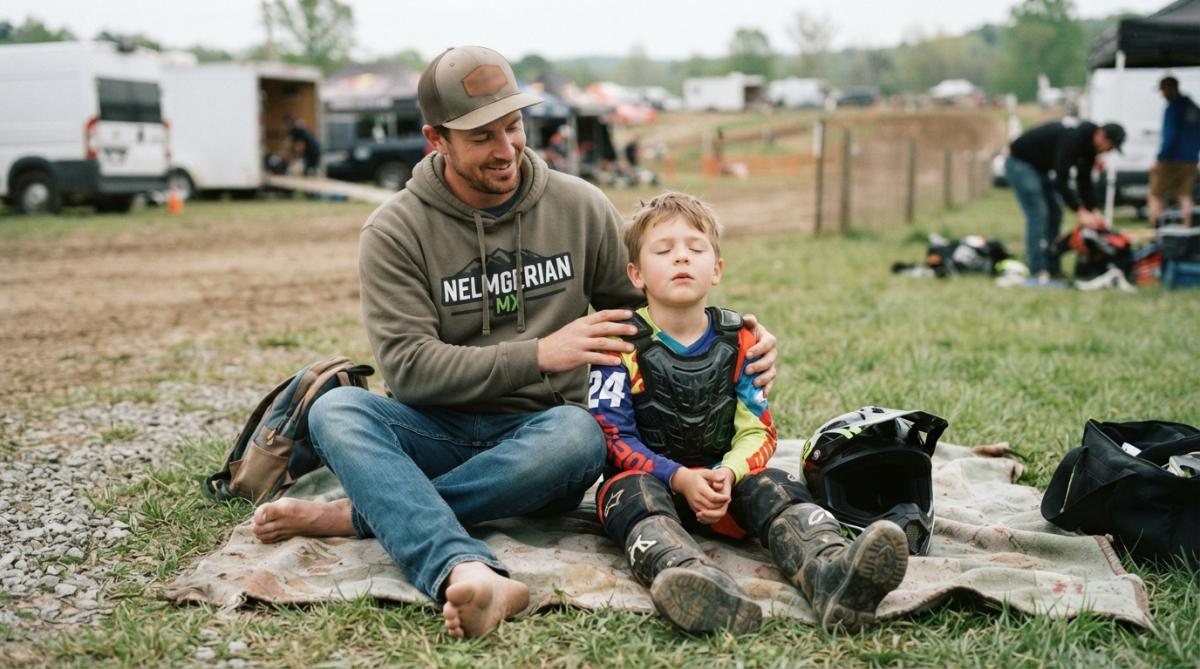
Most parents assume nerves should be eliminated entirely. That's the mistake. A child with zero nerves often lacks the mental sharpness needed to stay focused. The goal isn't to remove anxiety, it's to teach kids to recognize it and use it productively.
Why performance jitters happen
Your child's nervous system doesn't distinguish between real threats and competitive challenges. When a young rider thinks about race day, their brain activates the same fight-or-flight response triggered by actual danger. This is why nerves feel so intense and physical: racing heart, shallow breathing, and muscle tension are automatic responses designed to prepare the body for action.
Anxiety typically peaks 24-48 hours before the race, then again in the hour before the gate drops. Understanding this timeline helps you anticipate when your child needs the most support.
Age-appropriate anxiety responses
A 5-year-old on a 50cc expresses nerves very differently than a 9-year-old on a bigger bike. Younger children often lack the language to describe their feelings, so anxiety emerges as whining, clinginess, or refusal to cooperate. Older children tend to become withdrawn or overly focused on worst-case scenarios.
Validate the feeling without reinforcing the fear. Instead of "You'll be fine, don't worry," try "I notice you're feeling nervous. That's normal. Let's talk about what you'll do when you get to the first turn."
Signs of Sports Anxiety in Children to Watch For
Recognizing anxiety early gives you time to intervene with breathing exercises, positive self-talk, and grounding techniques.
Physical signs before race day
Anxiety often shows up in the body before behavior. A child might complain of stomachaches, headaches, or muscle tension in the days before competition. Some experience appetite changes or sleep disruption. Pay attention to repetitive physical behaviors: picking at nails, bouncing legs, or fidgeting. Rapid or shallow breathing during quiet moments signals a heightened nervous state.
Behavioral changes and what they mean
Anxiety often manifests as unexpected behavioral shifts. A normally confident child might become unusually quiet. An easygoing kid might become irritable. Some children regress, wanting to sleep in your room or becoming clingy. Others show increased talkativeness or obsessive focus on race details.
Watch for avoidance behaviors: sudden loss of interest in practicing or requests to skip training sessions. Name what you're observing without judgment: "I notice you've been quieter than usual this week. I'm wondering if you're feeling nervous about the race."
Pre-Race Breathing Exercises for Kids That Actually Work
Teaching your child how to handle race day nerves includes giving them a concrete tool they can use anywhere. Breathing exercises directly calm the nervous system. Practice these techniques weeks before race day, not the night before. A child who learns breathing patterns during calm moments will access them under pressure.
The 4-4-4 breathing technique
This is the simplest pattern for young children: breathe in for four counts, hold for four, exhale for four. Teach it by counting aloud together. Have your child sit comfortably, place one hand on their chest, and breathe in while you count: "One, two, three, four." Then hold and exhale the same way. Repeat for five to ten cycles.
Practice daily for two weeks before the race so it becomes muscle memory. On race morning, guide them through two or three rounds in a quiet moment before heading to the track.
Box breathing for focus and calm
Box breathing is slightly more advanced but works beautifully for children 7 and older: inhale for four, hold for four, exhale for four, hold for four. The double hold extends the calming effect and creates a clear structure easier for kids to remember.
Once mastered, use it as a pre-gate ritual. Three rounds takes about two minutes and creates a measurable shift in how grounded and focused your child feels.
Teaching breathing as a daily habit
The most common mistake is treating breathing exercises as something special that only happens before races. Instead, weave them into daily routines so they become as normal as eating breakfast.
Practice 4-4-4 breathing after school during snack time. Do box breathing before bed as part of wind-down. Make it a family practice so it feels collaborative, not remedial.
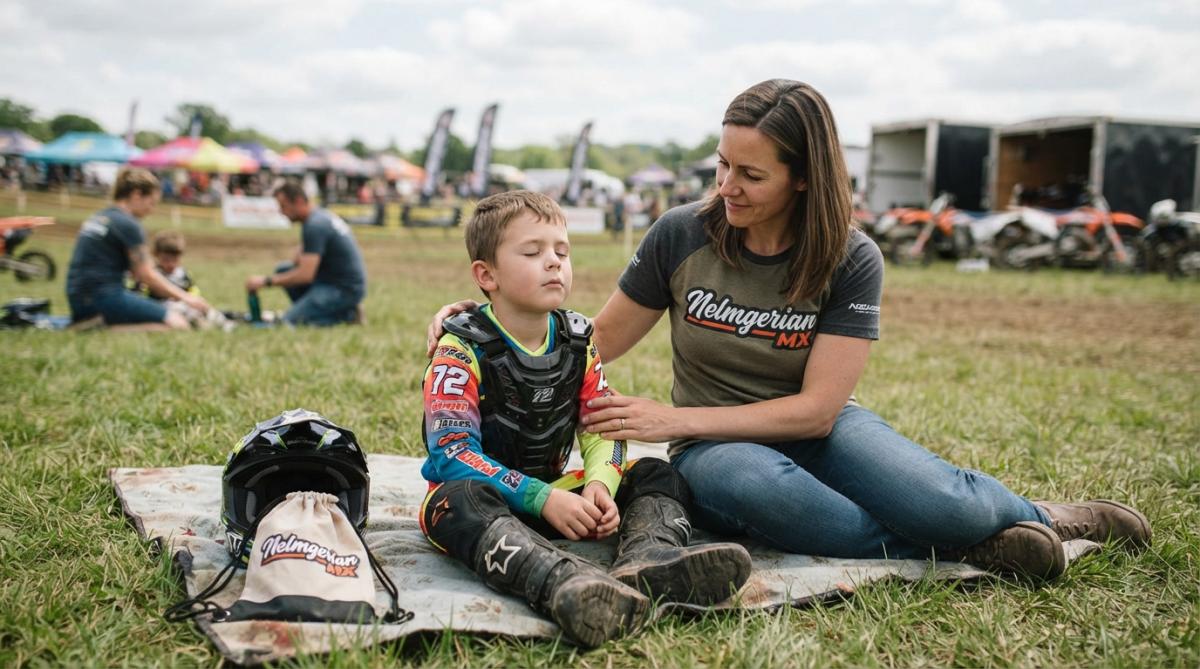
What to Say to a Nervous Child Before a Competition
The words you choose in the hours before a race shape how your child approaches the track. Most parents mean well but accidentally amplify anxiety with phrases like "Don't be nervous" or "You've got this."
The goal is to acknowledge nervousness, normalize it, and redirect focus toward controllable actions rather than outcomes.
Phrases that build confidence without pressure
Start by validating: "I can see you're feeling nervous right now. That's completely normal. Every rider here is probably feeling something similar." Then shift to process, not outcome: "Your job today isn't to win. Your job is to ride smart, stay smooth, and have fun."
Use specific, concrete language tied to what they've practiced: "Remember that corner where we talked about your line? You've nailed that a hundred times. Trust what you've learned."
Avoid comparative language. Instead focus on personal progress: "You've improved so much since last month. I'm proud of how hard you've worked."
Use "and" instead of "but": "You're nervous, and that means you're taking this seriously. That's good."
Avoiding common mistakes in pre-race talk
Don't ask questions that invite catastrophizing. Instead, make observations: "I notice you're quiet this morning. That's okay."
Avoid false reassurance: "You'll definitely win" or "Nothing bad will happen." Children know these aren't true.
Don't minimize their feelings: "It's not a big deal." If it feels like a big deal to your child, it IS a big deal.
Avoid last-minute technique coaching. Pre-race is not the time for new information. Your child's nervous system is already at capacity.
Building Mental Toughness Through Race-Day Routines
Mental toughness is built through consistent routines that teach your child's brain to stay calm and focused under pressure. A race-day routine signals to your child's nervous system: "We've done this before. We know what to expect. We're prepared."
Creating a consistent pre-race ritual
A pre-race routine typically starts the night before and continues through the moment before the gate drops. Start with sleep and nutrition: consistent bedtime, a good breakfast, and hydration. A well-rested, well-fed child has significantly better emotional regulation.
Add a calming activity in the morning: a family breakfast, a short walk, or quiet time together. Then build in the breathing exercise: 4-4-4 or box breathing, done together in a quiet moment before heading to the track.
At the track, before gear-up, spend five minutes together doing something grounding. Some families walk the track. Others sit quietly and visualize. The specific activity matters less than consistency.
Finally, the moment before the gate: one more round of breathing, a specific phrase you always say, and a consistent physical gesture (hand squeeze, fist bump, or hug). This becomes the launch point.
Visualization and self-talk strategies for kids
Visualization is mental practice. Your child closes their eyes and imagines themselves successfully completing the race, riding smoothly, making good decisions, and staying calm. Walk through the entire race moment by moment: "You're at the gate. You can feel the bike beneath you. You hear the gate beeping. You see the first turn ahead. You're smooth and calm."
Do this visualization practice weekly for three weeks before a major race.
Self-talk is the running commentary in your child's head during the race. Teaching positive self-talk replaces unhelpful thoughts with productive ones. Make self-talk specific and honest, not generic cheerleading. Instead of "You're amazing," try "You've practiced this corner. Trust your line."
Develop 2-3 self-talk phrases that your child practices saying aloud during training rides. By race day, these phrases become automatic.
Nutrition and Hydration: The Overlooked Nerve Manager
What your child eats and drinks in the 24 hours before a race directly impacts their ability to manage anxiety and stay focused. Blood sugar crashes, dehydration, and caffeine can all amplify nervousness.
How food choices affect anxiety and focus
The brain's primary fuel is glucose. When blood sugar drops, the brain can't regulate emotions effectively, and anxiety intensifies. Stable blood sugar comes from combining protein, healthy fats, and complex carbohydrates. A breakfast of eggs, whole-grain toast, and fruit provides steady fuel for hours.
Hydration matters equally. Even mild dehydration impairs cognitive function and increases anxiety symptoms. Avoid caffeine and high-sugar foods in the 24 hours before a race. These create a stimulated state that mimics anxiety symptoms.
Instead, focus on calm, nourishing foods: lean proteins, vegetables, whole grains, and plenty of water.
Pre-race meal timing and hydration strategy
The night before the race, serve a balanced dinner with protein, vegetables, and whole grains. That morning, serve breakfast 2-3 hours before riding: protein (eggs, yogurt, or turkey sausage), complex carbs (oatmeal or whole-grain toast), and fruit.
Two hours before riding, offer water, plenty of it. 30-45 minutes before the gate, offer a light snack: a banana, handful of nuts, or small yogurt.
After the race, prioritize rehydration and a balanced snack with protein and carbs.
Managing Race Day Nerves: Focus on What Your Child Controls
The most powerful anxiety-reduction tool is shifting your child's focus from uncontrollable outcomes to controllable actions. A child who worries about winning, crashing, or what other riders will do is focused on things outside their control. A child who focuses on their breathing, their line, and their pace is focused on things they can actually influence.
Identifying controllable versus uncontrollable factors
Uncontrollable factors include: race position, other riders' performance, track conditions, bike mechanical issues, judge decisions, and race outcomes.
Controllable factors include: effort level, focus, breathing, line choice, pace, body position, and attitude. These are things your child can actually influence.
Help your child identify their personal controllables. Ask: "What's something you can do in this race that you have complete control over?" Write these down and review them before the race.
Breaking the race into manageable mental sections
A full race can feel overwhelming. Breaking it into smaller mental chunks makes it manageable and reduces anxiety. Instead of "I have to ride twelve laps," the mental frame becomes: "I have to nail the first turn. Then I have to get through lap one smoothly."
Help your child identify 3-4 key mental sections:
- The gate drop and first turn: Focus on breathing and staying smooth.
- Laps 1-3: Settling into rhythm, finding your pace, staying focused.
- Mid-race: Maintaining consistency, staying calm, avoiding mental fatigue.
- Final laps: Mental push, staying strong, finishing smooth.
Before the race, walk through these sections: "Your first job is to breathe and nail that first turn. That's it."
Post-Race Emotional Regulation: What Comes After
How you respond to your child after the race matters as much as how you prepare them before it. The post-race moment is when your child's nervous system is still elevated and emotions are intense.
Processing emotions after the race
First, separate the child from the race. Your child is not their performance or placement. Before discussing the race, address the emotional state. If your child is excited, celebrate. If they're disappointed or frustrated, validate those feelings first: "I can see you're upset. That makes sense. You worked hard and had a different outcome than you wanted."
Then wait. Let your child process for a few minutes. Some kids need quiet. Some need a hug. Some need to talk. Follow your child's lead.
Once they've settled, ask open-ended questions: "How did that feel?" or "What was going through your mind out there?" Listen to their perspective without correcting or explaining.
Only after they've expressed themselves should you add perspective: "You worked really hard. I saw you stay smooth through that section. That's what matters."
Building resilience for the next race
Resilience is built in how you respond to disappointment. Help your child identify one specific thing they did well, one thing they'd like to improve, and one thing they learned. This frame prevents rumination and builds forward momentum.
Schedule the next race or practice session within a week or two if possible. This prevents dwelling on disappointment and gives them something to work toward. Most importantly, maintain the same love and support regardless of race outcome. Your child needs to know that your pride in them, your belief in them, and your love for them are not conditional on winning.
| Strategy | When to Use | Duration | Frequency |
|---|---|---|---|
| 4-4-4 Breathing | Daily practice + race morning | 2-3 minutes | Daily for 2 weeks before race |
| Box Breathing | Advanced practice + pre-gate | 2-3 minutes | Daily for 1 week before race |
| Visualization | Weekly mental rehearsal | 5-10 minutes | 1-2x per week for 3 weeks |
| Pre-Race Routine | Night before through gate drop | 30 minutes total | Consistent every race day |
| Nutrition Strategy | 24 hours before race | Meal planning | Every race |
| Controllables Focus | Throughout race preparation | Ongoing | Daily conversations |
| Post-Race Processing | Immediately after race | 10-15 minutes | Every race |
Learning how to handle race day nerves for kids isn't about eliminating anxiety, it's about teaching your child to recognize it and use it productively. The strategies in this guide, breathing exercises, visualization, positive self-talk, nutrition, and focus on controllables, work together to build emotional resilience that serves your young rider both on and off the track.
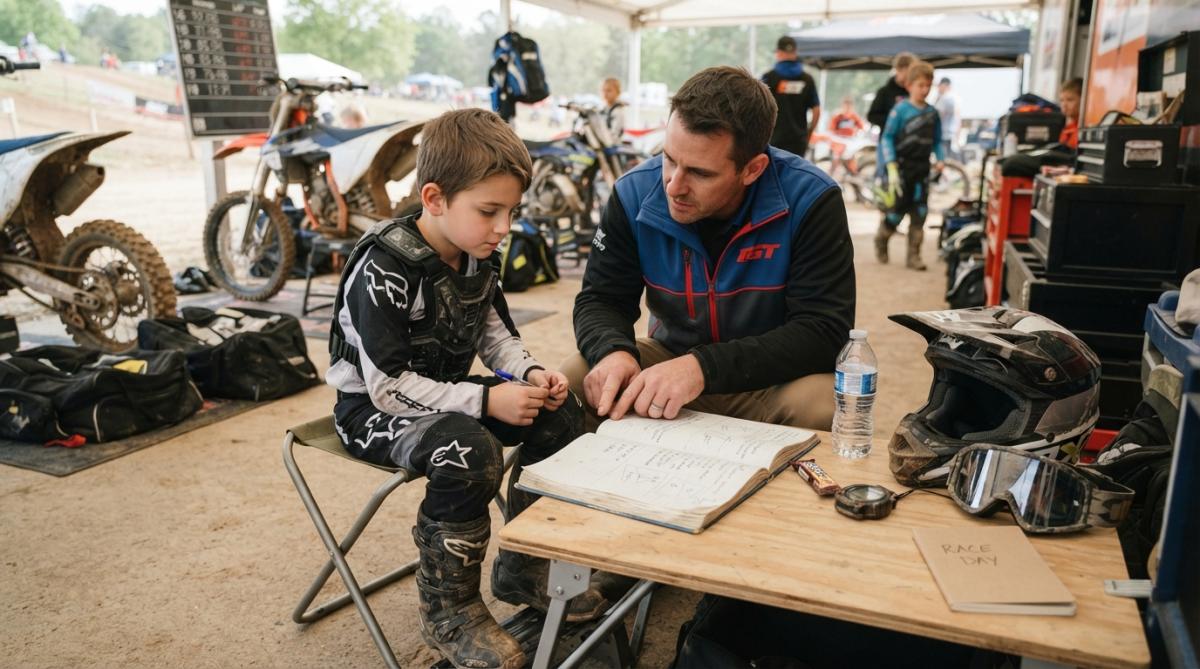
At Nelmgerian MX, we believe that mental preparation is as important as physical training. Our rider training journals and educational resources help young riders develop the confidence and discipline that turn performance pressure into performance fuel. Start implementing these strategies now, weeks before your child's next race. By race day, these tools will be automatic, part of your child's mental toolkit for managing any high-pressure situation they face, whether on the track or in life.
Frequently Asked Questions
What are the normal signs my child is experiencing race day nerves?
Common signs include stomach complaints, difficulty sleeping the night before, asking repeated questions about the race, or becoming unusually quiet. Some children experience restlessness or irritability. These responses are developmentally normal and don't indicate a problem. Most young riders aged 5-9 experience some level of pre-race jitters. The key is helping them manage these feelings rather than trying to eliminate them completely. Nervousness can actually sharpen focus when channeled correctly.
How do pre-race breathing exercises for kids help reduce anxiety?
Breathing exercises activate your child's parasympathetic nervous system, which calms the body's stress response. When a child takes slow, controlled breaths, their heart rate slows and their mind becomes clearer. Techniques like 4-4-4 breathing (inhale for 4 counts, hold for 4, exhale for 4) are simple enough for young riders to practice daily. Teaching these weeks before race day means your child can use them automatically when nerves hit. Consistent practice turns breathing into a trusted tool rather than something new and unfamiliar.
What should I say to my nervous child right before their race?
Focus on effort and process, not outcomes. Say things like 'I'm excited to watch you ride' or 'Remember to trust your training.' Avoid phrases like 'Don't be nervous' or 'You have to win,' which add pressure. Keep it brief and calm. Your tone matters as much as your words; children pick up on parental anxiety. A simple 'You've got this' paired with a hug works better than a long pep talk. After the race, discuss what went well regardless of placement.
Can nutrition affect my child's race day nerves?
Yes. A balanced meal 2-3 hours before racing helps stabilize blood sugar and mood. Avoid sugary snacks right before the race, which can spike anxiety and energy crashes. Ensure your child stays hydrated throughout the day; dehydration worsens anxiety symptoms. Simple carbohydrates with protein work well (toast with peanut butter, a banana with nuts). Avoid new foods on race day. Familiar meals help your child feel grounded and in control, which reduces mental sabotage and builds confidence going into the race.
This article was written using GrandRanker