 how-to
How to Prevent Dirt Bike Injuries: A Safety Guide
Table of Contents
- Why Injury Prevention Matters in Motocross
- Essential Dirt Bike Safety Gear and Equipment
- How to Fall Off a Dirt Bike Safely
- Motocross Physical Conditioning Exercises
- Dirt Bike Maintenance Checklist for Safety
- Riding Technique and Decision-Making
- Creating a Safe Riding Environment
- Conclusion
Last Updated: August 19, 2026
Why Injury Prevention Matters in Motocross
Dirt bike riding demands respect. Every time a rider hits the track, they're exposing themselves to significant risk. The difference between a rider who gets hurt and one who doesn't often comes down to a single decision: whether they took prevention seriously before problems started.
Motocross injuries range from minor sprains to severe trauma. Head injuries represent the most serious concern, which is why helmet selection and fit matter more than almost any other safety decision. Preventing dirt bike injuries keeps riders in the sport long enough to develop real skill. A rider sidelined by injury loses weeks or months of progression.
The path to safer riding starts with understanding what actually protects you: gear, physical conditioning, technique, and knowing how to fall safely.
Essential Dirt Bike Safety Gear and Equipment
The right protective equipment is non-negotiable. Gear absorbs impact, reduces abrasion, and protects joints from the sudden forces that cause injuries.
Helmet Selection and Proper Fit
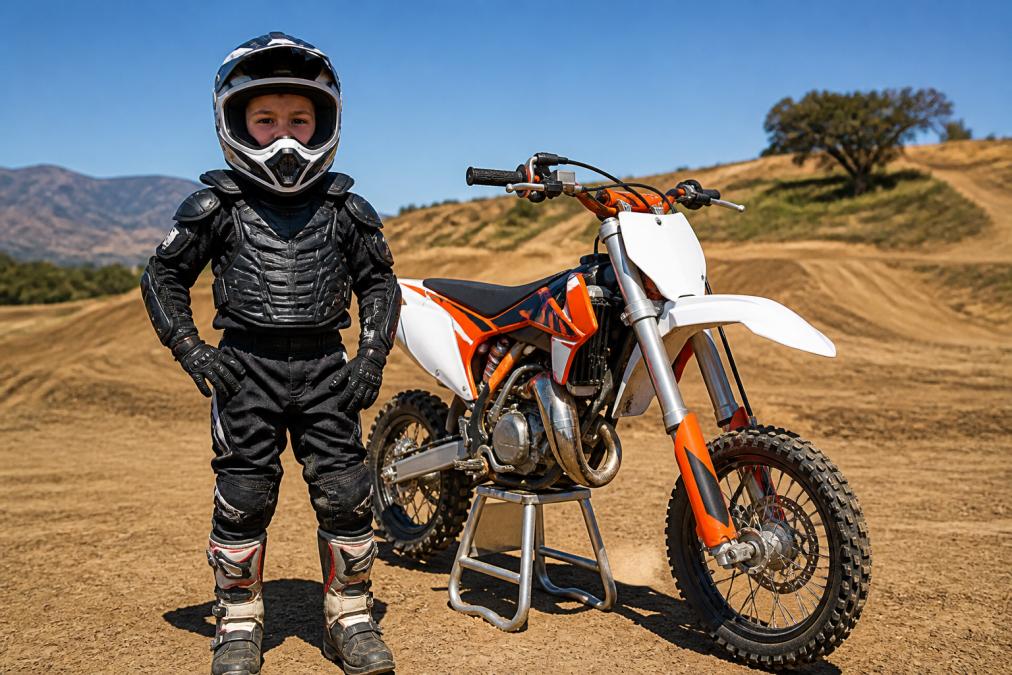
A helmet is the single most critical piece of protective equipment. The right helmet protects against head trauma, concussions, and facial injuries. An ill-fitting helmet offers almost no protection, it shifts during impacts, leaving vulnerable areas exposed.
When selecting a helmet, prioritize fit over brand name. The helmet should feel snug without causing pressure points. The cheek pads should compress slightly but not painfully. The helmet shouldn't rock side to side when you shake your head. A loose helmet will shift during a crash, defeating its purpose entirely.
Look for helmets that meet DOT (Department of Transportation) certification. Some riders prefer helmets with additional Snell certification, which represents a higher standard. The visor protects your face from roost, sun glare, and minor impacts. Replace your helmet every three to five years, even if it hasn't been in a crash. After any significant impact, replace the helmet immediately, internal damage may not be visible, but the protection is compromised.
Body Armor and Joint Protection
Body armor absorbs impact energy that would otherwise transfer directly to your ribs, spine, and organs. A quality chest protector covers your sternum, ribs, and upper back with segmented padding that allows movement while protecting high-impact zones.
Elbow guards and knee guards protect joints that absorb tremendous force during falls. Without elbow and knee protection, even minor crashes can result in fractures or dislocations. Shoulder protection matters too, especially for younger riders whose bones are still developing.
Boots, Gloves, and Ankle Braces
Motocross-specific boots protect your ankles and feet from crushing injuries. Quality motocross boots have reinforced ankle support, oil-resistant soles, and protective shells around the heel and toe. Gloves protect your hands and wrists from abrasion and impact. Choose gloves with reinforced palms and knuckle protection. Ankle braces worn under boots provide additional support and stability, especially valuable for riders who've had previous ankle injuries.
How to Fall Off a Dirt Bike Safely
Most riders will crash. The question isn't whether it happens, it's whether you know how to minimize damage when it does. Learning to fall safely can mean the difference between walking away with minor bruises and suffering a serious injury.
Body Positioning and Impact Absorption
The moment you feel yourself losing control, your instinct is to tense up. Fight that instinct. Tensing increases injury risk because rigid muscles can't absorb impact effectively. Instead, try to relax your body slightly and position yourself to distribute force across larger surface areas.
When you feel a crash coming, try to roll rather than slide. Rolling distributes impact across your back, shoulders, and hips, all areas protected by gear. Keep your limbs slightly bent rather than rigid. Bent joints act like shock absorbers, spreading impact over time and distance.
Post-Crash Assessment and Injury Screening
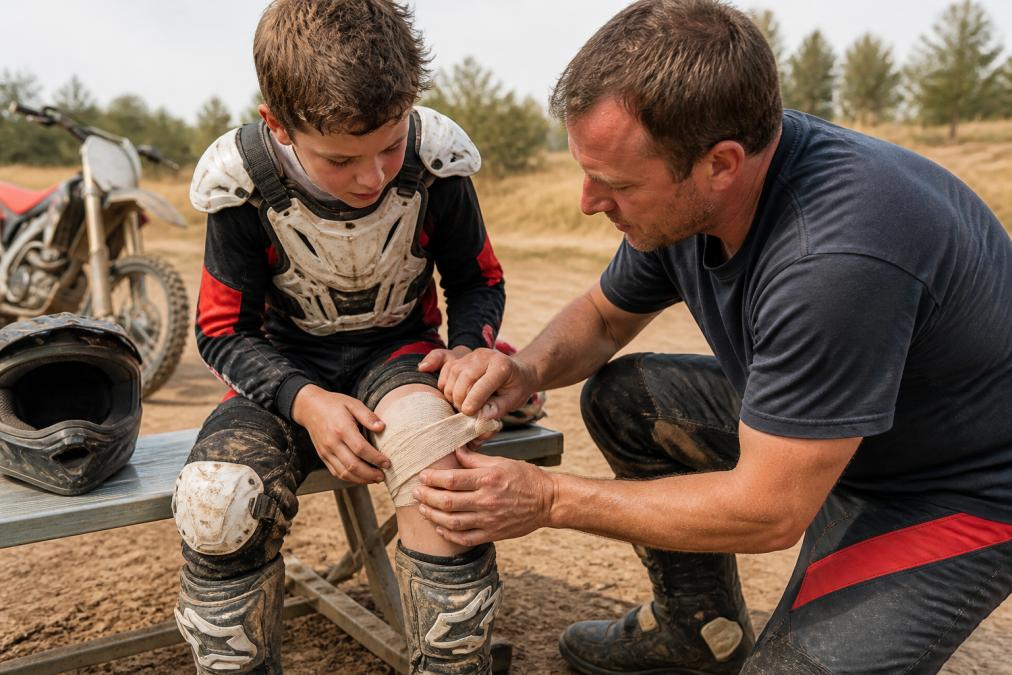
After any crash, take time to assess your condition before getting back on the bike. Check for immediate pain in your head, neck, spine, or joints. Severe pain is a red flag, stop riding and get medical evaluation. If you hit your head, even with a helmet, watch for signs of concussion: dizziness, confusion, headache, or nausea.
Feel along your ribs, spine, and limbs for tender areas. Assess your range of motion in your ankles, knees, hips, shoulders, and neck. If any joint feels unstable or painful through full range of motion, it may be injured. Many riders push through pain to finish a session. This is how minor injuries become serious ones.
Motocross Physical Conditioning Exercises
Motocross demands exceptional physical fitness. Riders need explosive power, sustained endurance, and stability in unstable positions.
Core Strength and Stability Training
Your core is your foundation on the bike. A weak core forces your arms and legs to compensate, increasing fatigue and injury risk. Strong core muscles stabilize your spine, reduce impact shock, and improve control during technical sections.
Planks are foundational. Hold a plank position for 30 seconds to start, building to 60-90 seconds as strength improves. Add variations: side planks, plank rotations, and plank-to-downward dog transitions. Dead bugs develop core stability: lie on your back with arms extended toward the ceiling and knees bent at 90 degrees, then slowly extend your right arm and left leg, alternating sides. Pallof presses build anti-rotation strength using a resistance band anchored at chest height, mimicking the forces you experience during turns.
Neck and Shoulder Conditioning
Neck injuries in motocross are serious. Your neck muscles support your helmet and absorb lateral forces during crashes. Weak neck muscles increase concussion risk and can result in long-term pain.
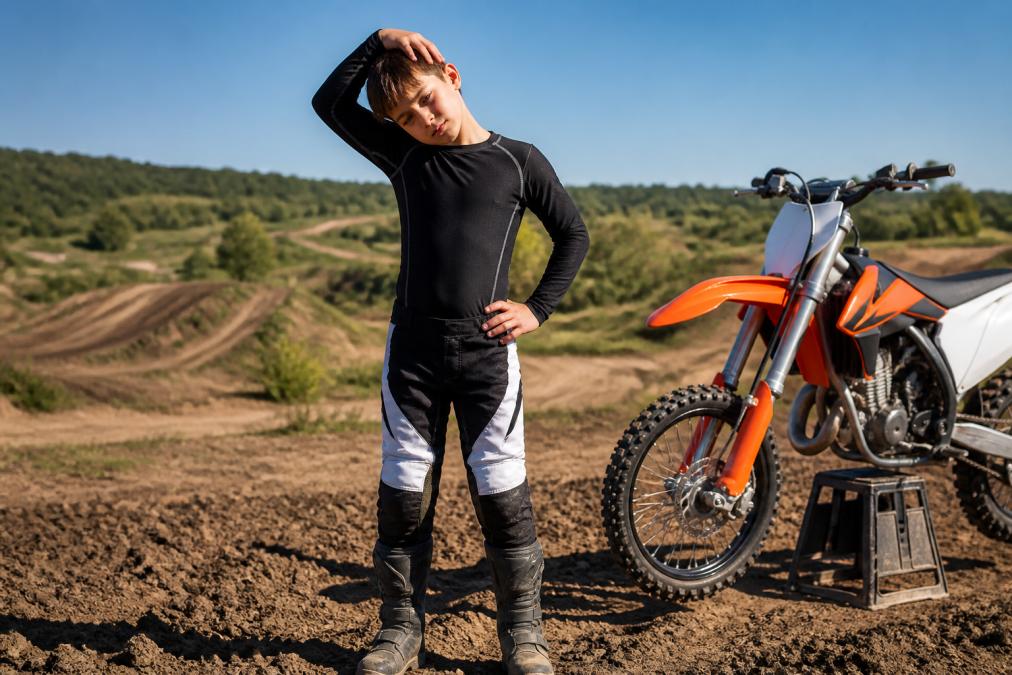
Neck flexion and extension exercises build strength: lie on your back with your head hanging slightly off the edge of a bench, slowly lift your head, hold for two seconds, and lower. Do 12-15 repetitions. For lateral neck flexion, sit upright and slowly tilt your head toward your right shoulder, holding for 15 seconds, then switch sides. Do this 10 times each direction.
Shoulder stability exercises prevent rotator cuff injuries. Band pull-aparts work well: hold a resistance band at arm's length in front of you with straight arms, pull the band apart by moving your hands outward, squeezing your shoulder blades together. Do 15 repetitions.
Warm-Up Routines Before Riding
Never ride cold. A proper warm-up prepares your muscles, increases heart rate, and mentally prepares you for the session ahead. Start with five minutes of light cardio: jogging in place, jumping jacks, or easy cycling. Follow with dynamic stretching: arm circles, leg swings, and torso rotations.
Include motocross-specific warm-up movements. Practice throttle control movements by slowly twisting your wrist as if twisting the throttle. Do hip circles and leg lifts to activate your hip and leg muscles. Perform a few light practice laps at easy pace before pushing harder. A complete warm-up takes 10-15 minutes but prevents injuries and improves performance significantly.
| Warm-Up Component | Duration | Purpose |
|---|---|---|
| Light cardio | 5 minutes | Elevate heart rate, increase blood flow |
| Dynamic stretching | 3-4 minutes | Prepare joints for full range of motion |
| Motocross-specific movements | 3-4 minutes | Activate riding-specific muscles |
| Easy practice laps | 3-5 minutes | Gradual intensity progression |
Dirt Bike Maintenance Checklist for Safety
A poorly maintained bike becomes a safety hazard. Mechanical failure during riding can cause crashes that wouldn't otherwise happen. Regular maintenance prevents failures and keeps your bike performing predictably.
Pre-Ride Inspection Routine
Before every ride, spend five minutes inspecting critical components. Check tire pressure and condition. Underinflated tires reduce control and increase the risk of pinch flats. Look for cuts, cracks, or embedded objects in the tire.
Inspect your brakes. Squeeze the brake levers, they should feel firm and responsive. Soft or spongy brakes indicate air in the brake lines or worn pads. Test both front and rear brakes before riding. Check your chain tension and lubrication. A loose chain can derail, disabling your bike mid-ride. Your chain should have about one inch of vertical play at the midpoint. Examine your controls: throttle, clutch, and brake levers should move smoothly without sticking. Check that your handlebars are tight and aligned straight.
Seasonal Maintenance and Gear Inspection
Change your oil every 10-20 hours of riding, depending on your bike's manual. Fresh oil keeps your engine lubricated and removes contaminants. Inspect your air filter regularly and clean or replace it every few rides in dusty conditions. Check your spark plug condition and gap annually or when you notice starting problems.
Inspect your gear regularly too. Cracks in your helmet, tears in your body armor, or damaged boots reduce protection.
Riding Technique and Decision-Making
How you ride matters as much as what you wear. Poor technique creates unnecessary crashes. Good technique keeps you safe and fast.
Throttle Control and Braking Techniques
Smooth throttle control prevents wheelies, stoppies, and loss of traction. Many beginning riders use an on-off throttle approach. Instead, practice smooth, progressive throttle inputs. Open the throttle gradually, allowing the bike to accelerate smoothly.
Braking requires equal finesse. Squeeze your brakes progressively rather than grabbing them suddenly. Sudden braking transfers weight to the front wheel, potentially causing a stoppie or front-wheel wash-out. Use both brakes together, front brakes provide most stopping power but are prone to locking if overused alone. Rear brakes provide stability.
Terrain Awareness and Skill Progression
The best riders read terrain constantly. They identify ruts, whoops, and obstacles ahead and adjust their line and speed accordingly. Practice looking ahead, not down. Your eyes should be 10-15 feet ahead of your front wheel. This gives you time to adjust your line before you reach obstacles.
Progress your skills systematically. Master basic techniques, throttle control, braking, body positioning, before attempting advanced maneuvers. Trying advanced moves before you're ready creates unnecessary crashes.
Avoiding Fatigue and Impairment
Fatigue is a serious risk factor. Tired riders make poor decisions, have slower reaction times, and lose control more easily. Watch for fatigue signals: difficulty concentrating, slower reaction times, or loss of smooth control. When you notice these signs, take a break. A 10-minute rest can restore your mental clarity and physical capability. Drink water regularly, dehydration accelerates fatigue.
Never ride impaired. Alcohol, drugs, and medications that cause drowsiness all impair judgment and reaction time. Physical conditioning prevents fatigue.
Creating a Safe Riding Environment
Where and how you ride matters significantly. Riding on closed tracks with proper safety infrastructure is fundamentally safer than riding on open terrain or public land.
Designated Tracks and Controlled Areas
Designated motocross tracks are designed with safety in mind. They have proper drainage, groomed surfaces, and maintained berms. They're free of obstacles like rocks and stumps that could cause crashes. Most importantly, they're controlled environments where only authorized riders are present.
Riding on private land or public trails exposes you to unpredictable hazards: other vehicles, pedestrians, unmarked obstacles, and terrain that hasn't been prepared for riding. If you're riding on non-track terrain, ride only in areas you know well. Scout the area on foot first, identifying hazards. Ride with others so help is available if needed.
Emergency Preparedness and Response
Despite your best efforts, crashes happen. Being prepared for emergencies can prevent minor injuries from becoming serious ones. Keep a first aid kit at your track or riding location. Know the location of the nearest hospital or emergency clinic. Learn basic first aid and CPR.
Establish a buddy system: never ride alone. If you crash and are unable to move, a riding partner can call for help and provide immediate assistance. This simple practice prevents minor injuries from becoming life-threatening situations.
How you prepare for dirt biking determines how safely you'll ride. Nelmgerian MX has created educational resources, including rider training journals and children's storybooks, that help young riders build the knowledge and confidence needed to stay safe while progressing in the sport. The combination of proper gear, physical conditioning, good technique, and mental preparation creates riders who enjoy the sport for years without serious injury. Start with the fundamentals covered here, progress systematically, and remember that every session is an opportunity to reinforce safe habits. Your commitment to injury prevention today keeps you riding tomorrow.
Frequently Asked Questions
What is the most common dirt bike injury?
Wrist and ankle fractures are among the most common dirt bike injuries, along with shoulder dislocations and concussions. Young riders are particularly vulnerable because their bones are still developing. Proper protective gear, especially wrist guards, ankle braces, and helmets, significantly reduces the severity of these injuries. Strengthening exercises and correct falling techniques also help protect against these frequent injuries.
How can proper riding technique reduce the risk of injury?
Correct body positioning, throttle control, and braking techniques distribute impact forces more evenly across your body and help you maintain control in challenging terrain. Learning to navigate whoops and ruts with proper posture prevents sudden jolts that cause injuries. Skill progression through designated tracks and controlled environments allows riders to build confidence and decision-making ability before attempting advanced terrain, significantly reducing crash risk and injury severity.
Why is physical conditioning important for injury prevention in motocross?
Motocross demands exceptional strength, endurance, and flexibility. Strong core muscles, neck conditioning, and grip strength help you absorb impact and maintain control during crashes. Physical conditioning also reduces rider fatigue, which is a major factor in preventable injuries. Hydration and proper warm-up exercises prepare your muscles and joints for the intense demands of riding, making your body more resilient to impacts and falls.
What safety equipment is mandatory for young dirt bike riders?
A DOT-approved helmet is essential and legally required in most jurisdictions. Beyond helmets, body armor (chest and back protection), gloves, boots with ankle support, and neck braces provide comprehensive impact absorption and joint protection. Proper gear fitting is critical, ill-fitting equipment reduces protection and can cause discomfort that distracts riders. While not all gear is legally mandatory, these items are industry standards for injury prevention and should be part of every rider's setup.
This article was written using GrandRanker