 ultimate-guide
Is 13 Too Late to Start Motocross? A 2026 Guide
Table of Contents
- Is 13 Too Late to Start Motocross? What the Racing Classes Really Say
- How to Start Motocross Racing for Kids: 7 Steps to Get on the Gate
- Best Beginner Dirt Bikes for 13 Year Olds (65cc, 85cc, and 125cc)
- Motocross Gear for Beginners: What a 13-Year-Old Actually Needs
- Track Safety, Rider Etiquette, and Injury Prevention for New Racers
- From Trails to the Gate: Transitioning to Track Racing
- The Reality of Pro vs. Amateur Goals at 13
- Frequently Asked Questions
Last Updated: September 25, 2026
Is 13 Too Late to Start Motocross? What the Racing Classes Really Say
No, 13 is not too late to start motocross. Youth racing classes exist for nearly every age and skill level, and a 13-year-old beginner typically enters the 85cc or Supermini division before moving up. This guide from Nelmgerian MX covers the classes, bikes, gear, and training that get a new rider onto a starting gate.
How to Start Motocross Racing for Kids: 7 Steps to Get on the Gate
Getting a 13-year-old onto a starting gate follows a predictable sequence: ride first, race later. Families who rush the order end up with a frustrated kid and a bike that doesn't fit.
- Build basic bike control off the track. Time in a field or on easy trails teaches throttle control, clutch feel, and balance before traffic enters the picture.
- Get the right-sized machine. A bike the rider can flat-foot at a standstill is the starting point, not a stretch goal.
- Buy protective equipment before the second ride. Helmet, goggles, boots, and chest protection come first.
- Join a local club. Club membership opens practice days, coaching, and a realistic view of the local racing scene.
- Attend a track day or open practice. This is where trail skills meet gate starts, ruts, and other riders.
- Enter a beginner or novice class. Sanctioned events run entry-level divisions precisely for first-timers.
- Track progress and adjust. Log lap times, skills, and goals so the next step is obvious.
| Step | Focus | Typical Timeline |
|---|---|---|
| 1-3 | Bike control, bike fit, gear | First 1-2 months |
| 4-5 | Club membership, track days | Months 2-6 |
| 6 | First sanctioned race | Month 6-12 |
| 7 | Skill progression and class moves | Ongoing |
Best Beginner Dirt Bikes for 13 Year Olds (65cc, 85cc, and 125cc)
The best beginner dirt bike for a 13-year-old is usually an 85cc two-stroke or comparable four-stroke, with 65cc for smaller or less experienced riders and 125cc for those who've mastered the basics. Displacement, not age, determines the racing class.
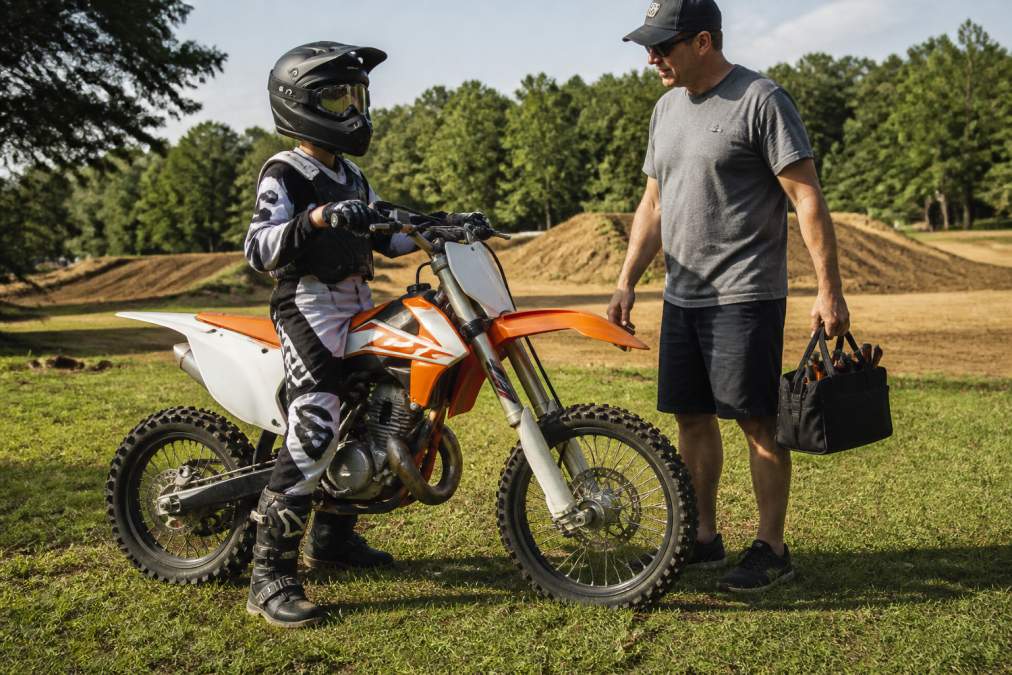
How the three displacements compare:
| Class | Engine Size | Best For | Watch Out For |
|---|---|---|---|
| 65cc | Small two-stroke | Smaller or cautious beginners | Outgrown quickly by taller riders |
| 85cc | Mid-size two-stroke | Most 13-year-old beginners | Power band demands clutch control |
| 125cc | Full-size two-stroke | Riders with prior experience | Too much bike for a true first-timer |
Motocross Gear for Beginners: What a 13-Year-Old Actually Needs
Motocross gear for beginners breaks into two categories: protection you never skip, and comfort items you add later. A helmet, goggles, and boots are non-negotiable before a rider touches a track.
The essentials:
- Helmet with current certification
- Goggles that seal against dust
- Motocross boots with ankle and shin protection
- Chest and back protection
- Gloves for grip and abrasion
- Knee and elbow guards
Track Safety, Rider Etiquette, and Injury Prevention for New Racers
Track safety starts with rider etiquette, but for a 13-year-old the bigger lever is physical preparation. A racer who holds their line, stays predictable, and lets faster riders pass safely is safer than one chasing unearned speed, and a conditioned rider crashes less often.
- Hold your line through corners instead of swerving
- Raise a hand or foot to signal before slowing
- Never cut across the track to rejoin after a fall
- Wait for a marshal's signal before re-entering
- Give faster riders room rather than racing them into a corner
- Look ahead two to three riders, not at the front fender
A Teen-Specific Conditioning Program
A practical weekly base for a 13-year-old beginner, built around three short sessions rather than long grinds:
- Aerobic base (2x per week, 20-30 minutes). Brisk cycling, jogging, or swimming. This builds the engine that keeps form from collapsing late in a moto.
- Core and trunk (2x per week, 10-15 minutes). Planks, dead bugs, bird dogs, and side planks. A weak core is what puts a rider's body position behind on jumps and whoops.
- Grip and forearm (2x per week, 5-10 minutes). Dead hangs, farmer carries with light weight, and wrist curls. Grip endurance is the single biggest limiter for new riders, tired hands cause arm pump and loss of control.
- Mobility and flexibility (daily, 5-10 minutes). Hip, ankle, and shoulder mobility. Ankles and hips absorb landings; stiff joints pass that force up the chain.
- Skill-specific warm-up before every ride. Five minutes of easy riding, then progressive laps before full speed.
Injury Prevention That Actually Applies
- Warm up before riding, not just before racing. Cold muscles and cold tires are a bad combination.
- Hydrate on a schedule, not on thirst. By the time a teen feels thirsty, performance is already dropping.
- Stop when form degrades. Most injuries happen late in a session when reaction time and body position fall apart. Ending a practice 15 minutes early is cheaper than a season-ending crash.
- Respect the growth spurt.
- Never ride through pain. Sore is normal; sharp or joint pain is a signal to stop and get it checked.
Gear and Track Rules Still Apply
Conditioning does not replace protection. Confirm the specific gear list with the sanctioning body and the track before race day, requirements vary, and the AMA amateur competition rulebook outlines minimum equipment standards for sanctioned events. A helmet with current certification, goggles that seal, boots with ankle and shin protection, and chest and back protection are the floor, not the ceiling.
From Trails to the Gate: Transitioning to Track Racing
Trail riding and track racing demand different skills, and the transition is where many new riders struggle. Trails teach you to read terrain; tracks teach you to repeat a line at speed, lap after lap.
Nelmgerian MX Training Journal →
A practical transition plan:
- Ride the same track repeatedly instead of hopping between venues
- Practice one skill per session, such as cornering or starts
- Time your laps to measure skill progression objectively
- Ride open practice before entering a race
- Ask a more experienced rider or coach to watch and give feedback
The Reality of Pro vs. Amateur Goals at 13
Amateur racing is the realistic home for nearly every rider who starts at 13, and that is not a consolation prize. The amateur ranks are where the sport actually lives: local series, club championships, family weekends at the track. But the pro-vs-amateur question is really a resource question, and most guides skip what parents actually need, what a season costs and demands.
What the Pro Path Actually Requires
The professional path is narrow. Factory-supported riders typically started before age 10, trained under pro coaches for years, and raced a national amateur schedule through their early teens. Starting at 13 doesn't make that impossible, but it compresses the timeline and raises the cost of every year: year-round coaching, travel to national events, and training that competes with school. Most families can't sustain that, and most 13-year-olds don't want it once they understand it.
What a Realistic Amateur Season Looks Like
A local amateur season is a different animal. A typical family running a 13-year-old in a regional series can expect the following categories of cost, actual numbers vary widely by region, bike class, and how much travel is involved, so treat these as planning buckets rather than quotes:
| Category | What It Covers | How It Scales |
|---|---|---|
| Bike | Purchase price, plus setup | Bigger displacement and newer model years cost more |
| Safety gear | Helmet, goggles, boots, chest/back protection, knee and elbow guards | Replaced as the rider grows and after hard impacts |
| Maintenance | Tires, chains, sprockets, air filters, oil, brake pads, top-end rebuilds | Rises sharply with practice hours |
| Track and club fees | Practice days, gate fees, club membership, race entries | Rises with number of events |
| Travel | Fuel, lodging, food for race weekends | Rises with distance to sanctioned tracks |
| Coaching (optional) | One-on-one or group instruction | The single biggest optional line item |
A Decision Framework for Parents
- How many weekends per month can we commit? Local amateur racing rewards consistency more than talent at this stage.
- What is our annual budget, all-in? If the answer only covers the bike, the season will end early.
- What does the rider actually want? A 13-year-old who wants to race with friends on weekends has a very different path than one who wants to chase a national number.
Where does Nelmgerian MX fit in? The brand exists for the in-between hours, reading, journaling, and screen-free activities that keep a young rider connected to the sport off the bike. For families building confidence and discipline alongside lap times, that matters.
Frequently Asked Questions
Can a 13-year-old ride a YZ 125?
A 13-year-old can ride a YZ 125, but it depends on size and experience. The YZ 125 is a full-size 125cc two-stroke with a tall seat height, so a smaller teen may struggle to touch the ground. Many 13-year-olds start on an 85cc two-stroke or a 125cc four-stroke trail bike before moving up. If your teen is tall and has trail experience, a YZ 125 can work, but plan for a learning curve on throttle control and clutch use.
What gear does a 13-year-old beginner need for motocross?
At minimum, a 13-year-old needs a DOT-approved helmet, goggles, gloves, a chest protector, elbow pads, knee guards, motocross boots, and long pants and a jersey. A neck brace is optional but recommended for track racing. Buy gear that fits snugly now, not gear to grow into. Ill-fitting boots and helmets cause more crashes than they prevent. Many tracks also require a spark arrestor and a working kill switch.
Is a 250cc dirt bike too big for a 13-year-old?
For most 13-year-olds, a 250cc motocross bike is too much power and too tall. A 250cc four-stroke motocross bike weighs over 220 pounds and makes enough torque to loop out a new rider. A 250cc trail bike with a lower seat and softer power delivery can work for a tall, experienced teen. A better starting point is an 85cc two-stroke or a 125cc four-stroke, then move up as skills and lap times improve.
How do I find local motocross tracks for beginners?
Start by searching for AMA-sanctioned clubs and tracks within driving distance. Call ahead and ask if they have a beginner or peewee track, open practice days, and a youth class in their race schedule. Many tracks run a first-timer orientation. Visit on a practice day before race day so your teen can learn the layout without pressure. Club members are usually happy to point you to the right class and the right gate.