 ultimate-guide
Is Motocross a Good Sport for Kids? Complete Guide
Table of Contents
- Is Motocross a Good Sport for Kids? The Honest Answer
- Benefits of Motocross for Youth Development
- Understanding and Managing Motocross Risks for Young Riders
- Motocross Safety Gear for Kids: Essential Equipment
- Best Starter Dirt Bikes for Kids: Age and Skill Progression
- Importance of Proper Training and Coaching
- Motocross vs. Other Youth Sports: How It Compares
- Family Involvement and the Bonding Experience
- Frequently Asked Questions
Is Motocross a Good Sport for Kids? Complete Guide
Last Updated: July 12, 2026
Is Motocross a Good Sport for Kids? The Honest Answer
Motocross sits at an intersection of tremendous physical and mental development potential and genuine injury risk. The sport builds discipline, confidence, and motor skills in ways few other activities match, but it demands respect, proper training, quality safety equipment, and family commitment.
Motocross is a good sport for kids who are mature enough to take it seriously, supported by parents who understand the risks, and trained by qualified instructors. Success requires informed decision-making about whether your child fits that profile, what the actual risks are, and how to mitigate them.
Why Parents Ask This Question
Parents hesitate because motocross carries a reputation for danger. But most parents asking this question aren't looking for a sport without risk, they're looking for honest information about whether the benefits justify the risks. The real tension isn't between safety and danger, but between overprotection and calculated risk. Every youth sport involves injury potential. Motocross is transparent about that.
Informed parents make better decisions.
The Bottom Line
If your child is at least 7-8 years old, shows interest in learning, has the maturity to follow safety protocols, and your family can commit to proper training and equipment, then yes. The conditions matter more than the activity. A child on a 50cc bike with a certified instructor, full protective gear, and realistic expectations will have a different experience than a child on an oversized bike with minimal training.
Benefits of Motocross for Youth Development
Physical Fitness and Motor Skills
Motocross develops full-body coordination by requiring riders to manage throttle control, body positioning, clutch engagement, and line selection simultaneously. This multitasking builds neural pathways that transfer to other athletic pursuits.
A single 20-minute moto burns 300-400 calories, comparable to running 5 miles. Over a season, young riders build cardiovascular fitness that equals competitive runners while developing core strength, leg endurance, and upper body control through constant body positioning adjustments.
Balance and proprioception improve rapidly. Within weeks of starting, kids develop an intuitive sense of how their body moves in space, translating to better performance in skiing, skateboarding, surfing, and gymnastics. Hand-eye coordination reaches elite levels as riders process visual information at 30+ mph speeds.
Mental Resilience and Confidence Building
Every lap teaches something. Every crash is a lesson. Every race result is immediate and undeniable. This direct feedback loop builds resilience that kids in other sports don't develop until much later.
Motocross doesn't let you blame teammates or coaches. A poor performance is entirely on you. When a child gets back on the bike after a crash, they're learning that failure isn't permanent. Confidence in motocross is earned, not given. A child who finishes last in their first race but improves to middle-of-the-pack by season's end has concrete evidence that effort produces results.
This internal locus of control, the belief that their actions matter, predicts success in school and career.
Discipline and Goal Setting
Motocross demands routine. Bikes need maintenance. Riders need practice. Races require preparation. Young riders learn to set realistic goals, breaking improvement into stages: master first turn, improve cornering speed, work on transitions, build endurance. This progressive goal-setting transfers directly to academic pursuits.
The sport teaches delayed gratification. Results don't come from a single race but from consistent practice, proper nutrition, adequate sleep, and focused training. A 12-year-old who prioritizes sleep before a race to improve performance is learning self-discipline at a level most peers won't experience until college.
Understanding and Managing Motocross Risks for Young Riders
Common Injuries and Accident Statistics
The most common motocross injuries are sprains and fractures to wrists, ankles, and collarbones. Head injuries occur but are far less common with proper helmet use. A young rider on a properly sized bike with full protective gear, proper training, and track safety protocols faces injury risk comparable to football or gymnastics.
The difference between "motocross is dangerous" and "motocross can be managed safely" comes down to preparation. An untrained rider on a 125cc bike will get hurt. A trained rider on a 50cc bike with proper equipment is engaging in calculated risk. Serious injuries are rare in youth motocross when proper protocols are followed.
Risk Mitigation Through Proper Training
Training is the single most important factor in injury prevention. A certified instructor teaches proper body positioning, throttle control, and crash technique. A trained rider avoids many crashes entirely through understanding line selection, speed management, and track conditions. When they do crash, they're moving slower and positioned better.
Quality instruction prevents the slow accumulation of bad habits. A child taught correctly from the start progresses faster and safer.
Track safety matters enormously. A private track with proper barriers, emergency medical personnel, and controlled traffic is fundamentally different from a public area. Proper tracks have turn-out zones, smooth surfaces, and predictable conditions where young riders should spend their first seasons.
Motocross Safety Gear for Kids: Essential Equipment
Helmet and Head Protection
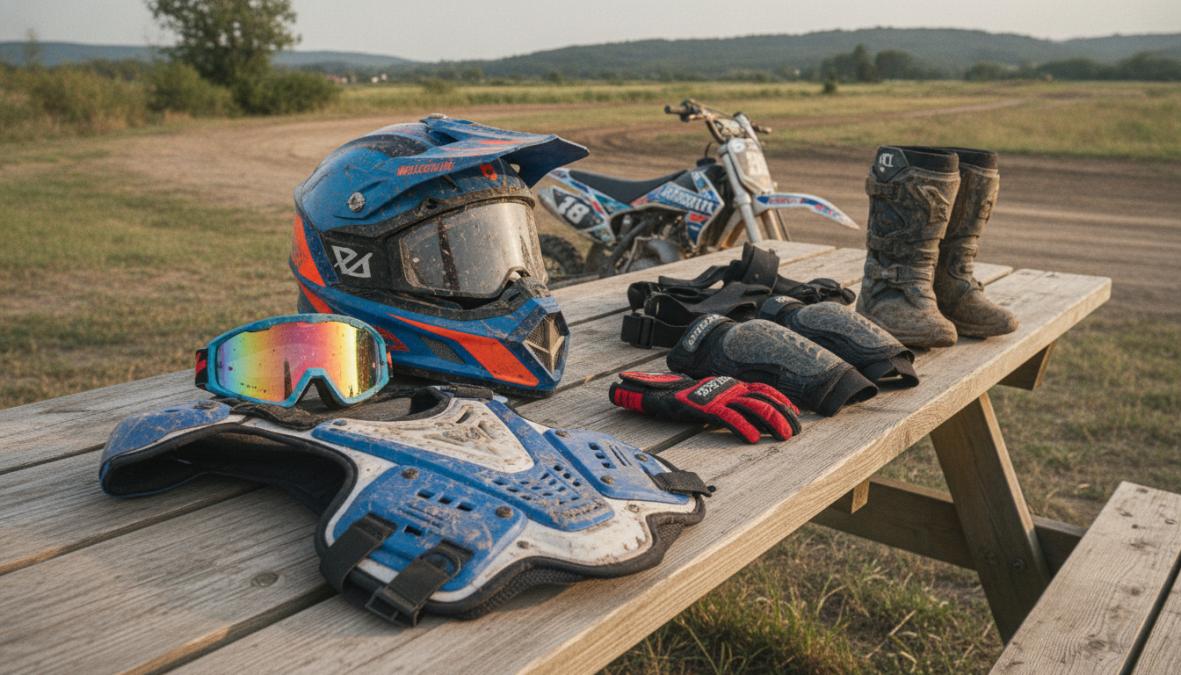
The helmet is non-negotiable. A quality motocross helmet with DOT or Snell certification reduces head injury risk by 70%+. A proper fit is critical, the helmet should sit level on the head with the chin bar aligned properly. Replace helmets after any significant impact.
Body Armor and Protective Clothing
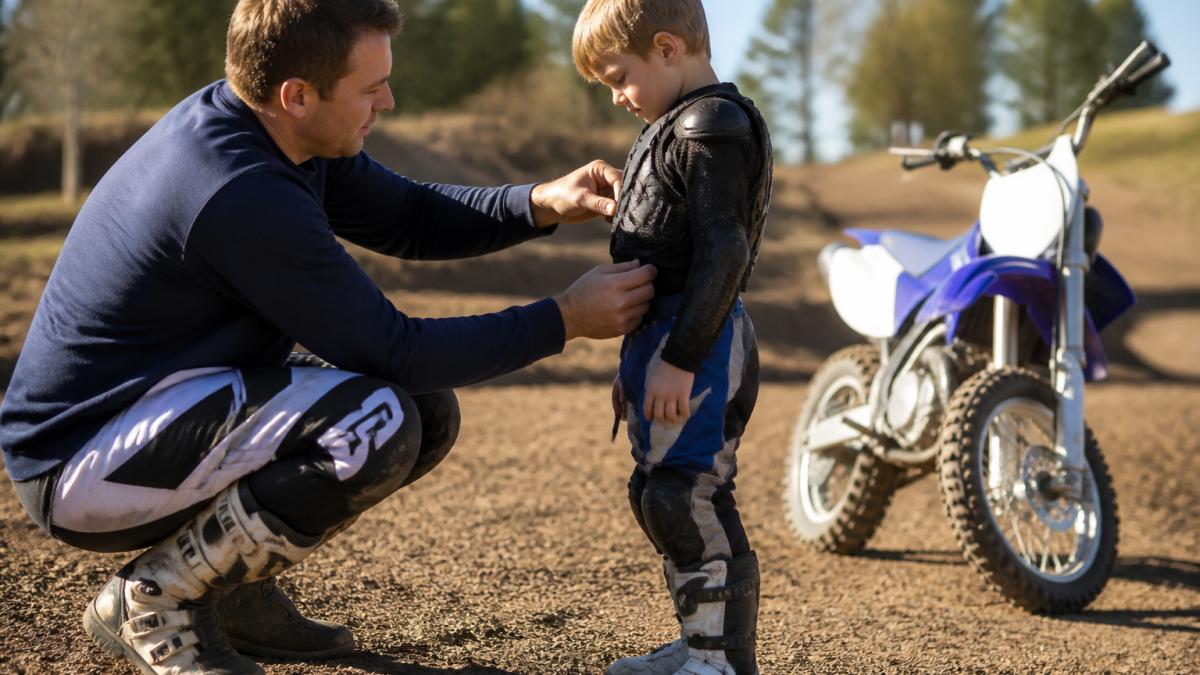
Full protective gear includes jersey and pants designed for motocross, chest protector, elbow and knee guards, gloves, boots, and optional neck brace. The gear must be proper motocross equipment, not regular athletic clothing. Replace gear as kids grow, ill-fitting gear provides false security.
Comprehensive Safety Checklist for Parents
Before your child rides, verify each item:
| Item | Check | Notes |
|---|---|---|
| Helmet (DOT/Snell certified) | ☐ | Proper fit, no damage |
| Chest protector | ☐ | Covers sternum and ribs |
| Elbow guards | ☐ | Rigid protection, not compression sleeves |
| Knee guards | ☐ | Fits snugly, doesn't slide |
| Motocross gloves | ☐ | Proper wrist support |
| Motocross boots | ☐ | Ankle support, not casual shoes |
| Jersey and pants | ☐ | Reinforced areas, proper fit |
| Neck brace (optional) | ☐ | If used, must fit correctly |
| Bike maintenance | ☐ | Brakes, tires, throttle function |
| Track inspection | ☐ | Safe surface, proper barriers |
| Instructor present | ☐ | Certified, experienced with youth |
| Emergency medical | ☐ | On-site or rapid access |
| Proper track | ☐ | Private, controlled environment |
Best Starter Dirt Bikes for Kids: Age and Skill Progression
Age-Appropriate Entry Points
Starting age matters less than maturity and physical size. A 5-year-old can ride a 50cc automatic. A 7-year-old can handle a 50cc clutch bike with instruction. A 10-year-old might progress to an 85cc. The bike should fit the child, feet should touch the ground when seated, and the child should reach the handlebars without stretching.
Automatic transmission bikes are excellent for children under 8, reducing complexity so the child focuses on throttle, braking, and body position without managing clutch engagement. Most kids progress to clutch bikes by age 8-9.
50cc Bikes and Beginner Rider Progression
A 50cc bike is the standard entry point for kids 6-10 years old, producing 5-10 horsepower and reaching speeds of 25-35 mph. Popular options include Honda CRF50F, Yamaha PW50, and Kawasaki KLX110. A beginner rider should spend 3-6 months developing basic skills: throttle control, braking, turning, and crash recovery.
Step-by-Step Progression Roadmap
Months 1-3: Foundation
- Ride 2-3 times per week for 20-30 minutes
- Focus: basic throttle control, braking, balance
- Location: private track, flat sections
Months 4-6: Intermediate Skills
- Increase to 3-4 sessions per week, 30-45 minutes per session
- Focus: turning, line selection, speed management
- Location: private track, introduce small berms and rollers
Months 7-12: Advanced Basics
- 3-4 sessions weekly, 45-60 minutes per session
- Focus: race-pace riding, track reading
- Location: private track, full course
Year 2+: Specialization
- 4-5 sessions weekly, 60+ minutes per session
- Focus: competitive racing, advanced techniques
- Location: local races, organized tracks
Progression depends on frequency and focus, not just time elapsed.
Importance of Proper Training and Coaching
Finding Qualified Instructors
A qualified instructor has formal training credentials, experience teaching youth, and a structured curriculum. Look for instructors certified through the American Motorcyclist Association (AMA) or local motocross associations. The best instructors break skills into components and understand different learning styles.
Track Safety and Riding Technique
Proper technique prevents injuries. Key elements include body position (sit forward during acceleration, move outside the bike during turns), smooth throttle control, progressive braking, and intelligent line selection. Track safety includes environmental awareness, flag signals, and respect for other riders.
Motocross vs. Other Youth Sports: How It Compares
Physical Demands Compared to Football
Football develops explosive power and linear speed. Motocross develops sustained power and multidirectional control. Football involves high-impact collisions; motocross crashes are often unpredictable. Football injuries are cumulative; motocross injuries are typically acute.
Motocross demands longer sustained effort, a 20-30 minute race is continuous, building cardiovascular endurance that football doesn't develop to the same degree. Football is team-dependent; motocross is individual, creating different psychological profiles.
Mental Health and Resilience Coaching
Motocross teaches emotional regulation by forcing kids to process disappointment immediately and decide whether to try again. This develops internal motivation, ultimately, the rider must want to improve. A child who learns to motivate themselves after a poor race develops resilience that transfers to academics and social challenges.
The sport also teaches perspective. A child who crashes in front of spectators learns that public failure isn't catastrophic. Mental health coaching focuses on goal-setting, handling pressure, and managing fear, helping children distinguish between healthy caution and limiting fear.
Family Involvement and the Bonding Experience
Creating a Supportive Motocross Community
Motocross families form tight communities. Parents spend weekends at tracks together. Siblings watch races. Families travel to events. The shared experience of supporting a young rider brings families together while creating mentorship opportunities. Experienced families help newer families avoid mistakes. Young riders learn from older riders.
The social aspect shouldn't be underestimated. A child who feels part of a supportive community develops confidence that extends beyond racing, with friends who understand their passion, mentors who believe in them, and a place where they belong.
Is motocross a good sport for kids? The answer depends on your family's commitment to doing it right. If you're willing to invest in proper training, quality safety equipment, and consistent practice, motocross builds physical capability and mental resilience that few sports match. Your child will develop discipline, confidence, and a growth mindset that transfers to every area of their life.
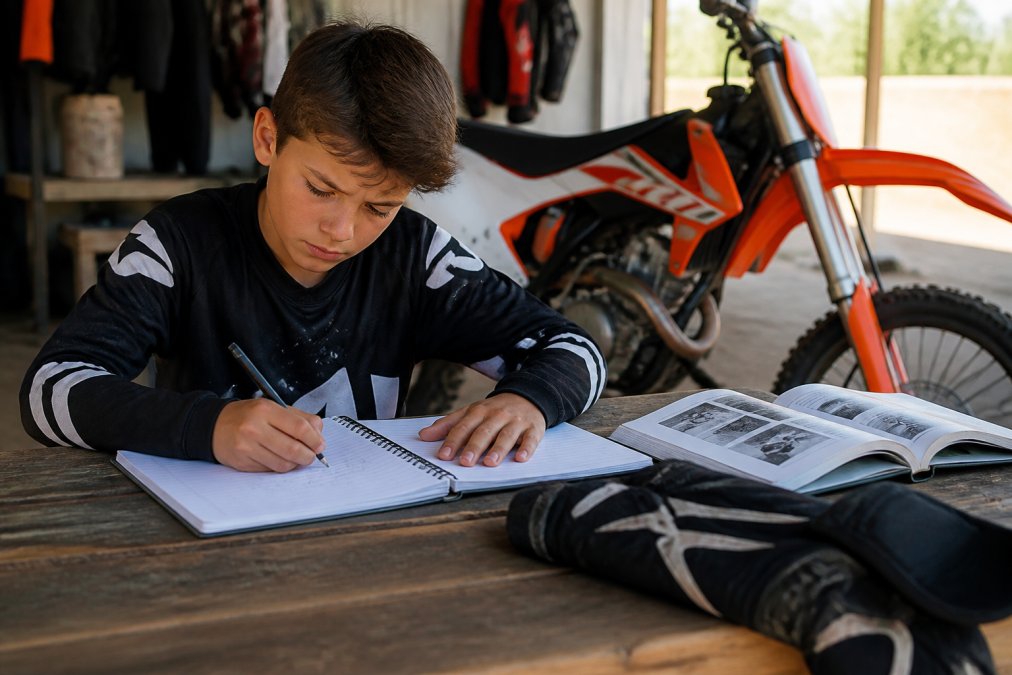
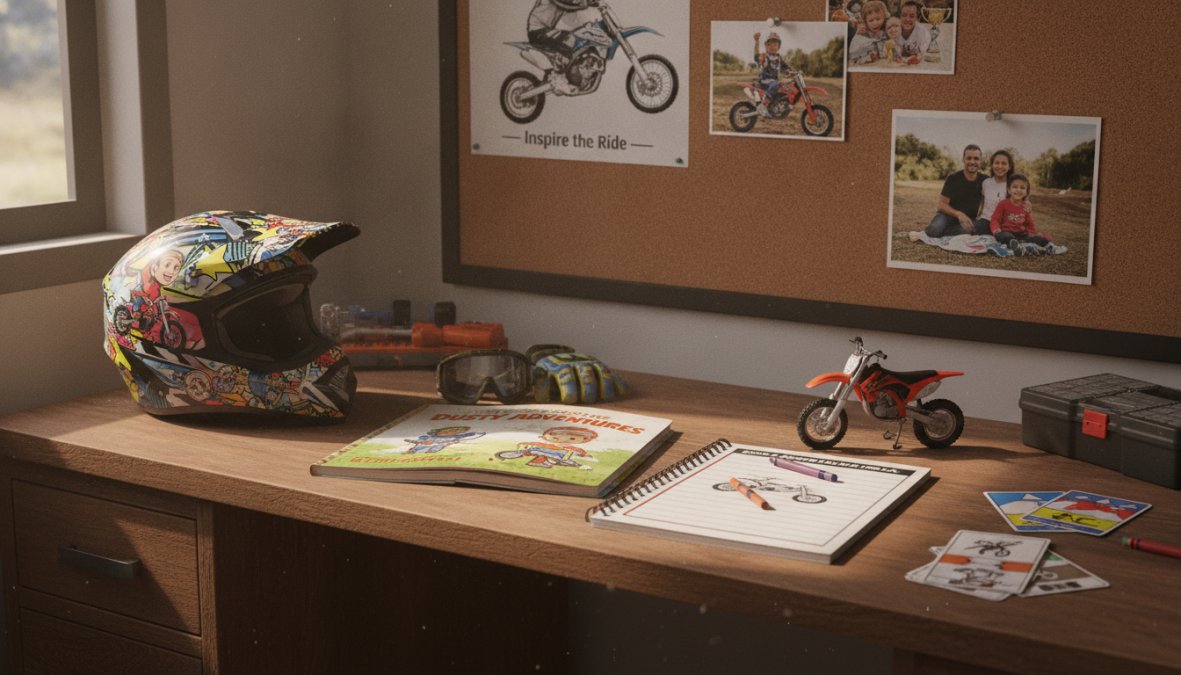
Nelmgerian MX supports families at every stage of this journey through rider training journals, educational materials, and our private track in Crossville, Alabama. Start with the right foundation, proper training, quality equipment, and family support, and your child will thrive in motocross.
Frequently Asked Questions
At what age can a child start motocross?
Children can begin motocross training as early as 4-6 years old on small 50cc bikes with proper supervision and instruction. However, maturity and physical coordination matter more than age. Most beginners start between ages 6-8 when they have better balance and decision-making skills. Always consult with qualified coaching staff to assess your child's readiness for motocross activities.
What motocross safety gear do kids need for motocross?
Essential safety gear includes a DOT-certified helmet, body armor (chest protector), gloves, boots, goggles, and protective jersey and pants. Each piece serves a specific purpose, helmets prevent head injuries, body armor protects vital organs, and quality boots protect ankles during falls. Invest in properly fitting gear designed for children, not hand-me-downs from adults, to ensure maximum protection.
Is motocross dangerous for kids?
Motocross carries inherent risks like any competitive sport, but injury rates decrease significantly with proper training, safety gear, and track regulations. Risk management through qualified coaching, age-appropriate bikes, and adherence to track safety rules substantially reduces accident severity. The key is comprehensive preparation and realistic risk awareness rather than avoidance.
What are the main benefits of motocross for youth?
Motocross develops physical fitness, motor skills, and mental resilience in young riders. It builds confidence, teaches discipline and goal setting, and fosters family bonding through shared passion. The sport also improves focus, decision-making under pressure, and multi-sport discipline. Many youth benefit from the structured progression and personal achievement opportunities motocross provides.
This article was written using GrandRanker