 ultimate-guide
Is Motocross Safe for 5 Year Olds? A Parent's Guide
Table of Contents
- Is Motocross Safe for 5 Year Olds? The Honest Answer
- Minimum Age Requirements and Developmental Readiness
- Youth Motocross Safety Gear Requirements
- Common Injuries in Youth Motocross and Risk Assessment
- Best Dirt Bike for 5 Year Old: Choosing the Right Machine
- AMA Motocross Safety Guidelines and Professional Recommendations
- Getting Started: A Graduated Skill-Building Roadmap
- The Role of Supervision and Closed-Course Training
- Frequently Asked Questions
Last Updated: August 3, 2026
Is Motocross Safe for 5 Year Olds? The Honest Answer
Whether is motocross safe for 5 year olds divides parents and professionals. At Nelmgerian MX, we believe the answer depends entirely on how you approach the sport. A 5-year-old on a properly equipped, throttle-limited 50cc dirt bike in a supervised, closed-course environment with professional instruction faces manageable risks. An unsupervised child on an unrestricted machine faces serious danger. The difference comes down to preparation, equipment, supervision, and graduated skill-building.
This guide covers what evidence shows about youth motocross safety, how to assess developmental readiness, what gear genuinely protects, and how to structure training for safe skill development. Thousands of young riders train safely every year. Others suffer preventable injuries. The difference isn't luck, it's structure, supervision, and honest assessment of readiness.
Minimum Age Requirements and Developmental Readiness
Youth motocross organizations generally recommend age 4 as the earliest entry point, though many programs begin at age 6 or 7. However, recommended age and actual readiness differ significantly. Physical and cognitive development matter far more than calendar age.
Physical and cognitive readiness indicators
Your child needs specific physical capabilities to operate a dirt bike safely. Throttle control requires fine motor coordination and precise hand grip pressure. Braking demands foot strength and timing. Steering requires balance, spatial awareness, and the ability to lean into turns without panicking.
Cognitive readiness is equally critical. Your child must understand cause and effect: throttle twist = acceleration; hard braking = wheel slide. They need to follow multi-step instructions without constant reminders and recognize hazards like ruts, other riders, or steep drop-offs.
Check these specific markers before enrolling:
- Hand strength and grip control: Can your child squeeze a stress ball for 10+ seconds without fatigue?
- Foot coordination: Can they pedal a bicycle smoothly and stand on one leg for 20 seconds?
- Following instructions: Can they execute a three-step instruction without reminders?
- Hazard awareness: Do they understand that running into obstacles causes pain and that staying in one place prevents crashes?
- Attention span: Can they focus on a single task for 15-20 minutes?
If your child meets these markers, they're ready to begin beginner instruction. If not, waiting 6-12 months typically makes the difference between frustration and genuine progress.
Mental and emotional maturity for motorized dirt biking
Mental readiness separates children who thrive from those who develop anxiety. Your child should genuinely want to ride, not ride because you want them to. Children forced into motocross often develop fear responses that persist for years.
Watch for these signs:
- Your child expresses interest in riding without pressure
- They handle losing or making mistakes without excessive frustration
- They accept correction from adults other than parents
- They show curiosity about how things work
- They demonstrate patience during repetitive practice
Children meeting these criteria typically adapt well to structured, incremental learning.
Youth Motocross Safety Gear Requirements
Protective equipment is non-negotiable. The right gear dramatically reduces injury severity. Never compromise on fit to save money.
Helmet safety standards and fit
The helmet is your child's most critical protective equipment. It must meet Department of Transportation (DOT) standards. For youth motocross, choose helmets specifically designed for off-road riding, they have extended visors to protect against roost and better ventilation.
DOT motorcycle helmet safety standards
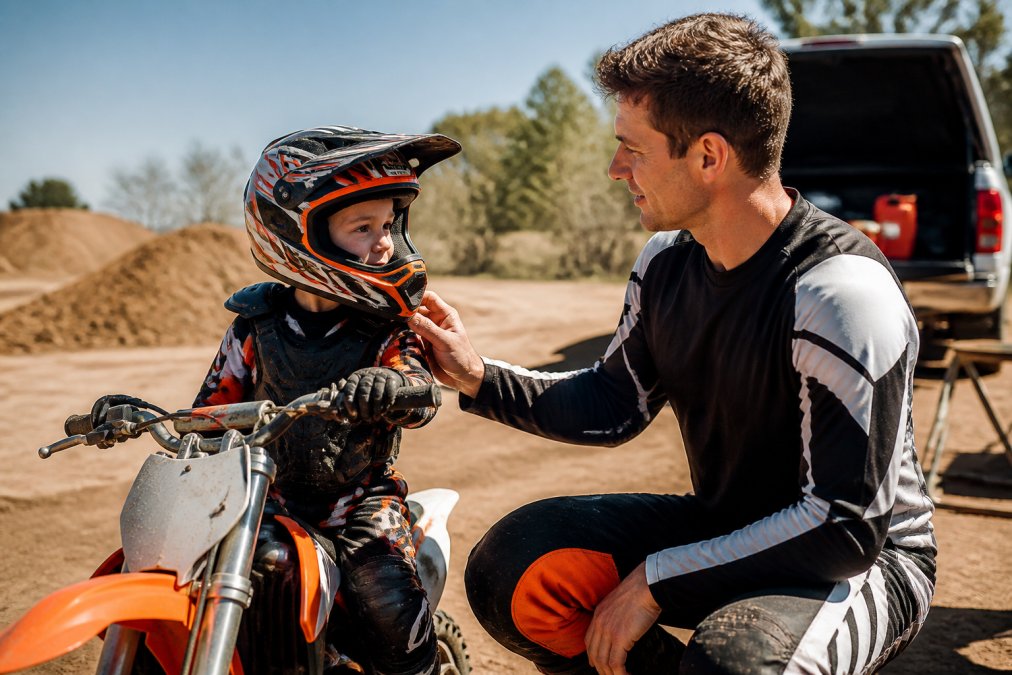
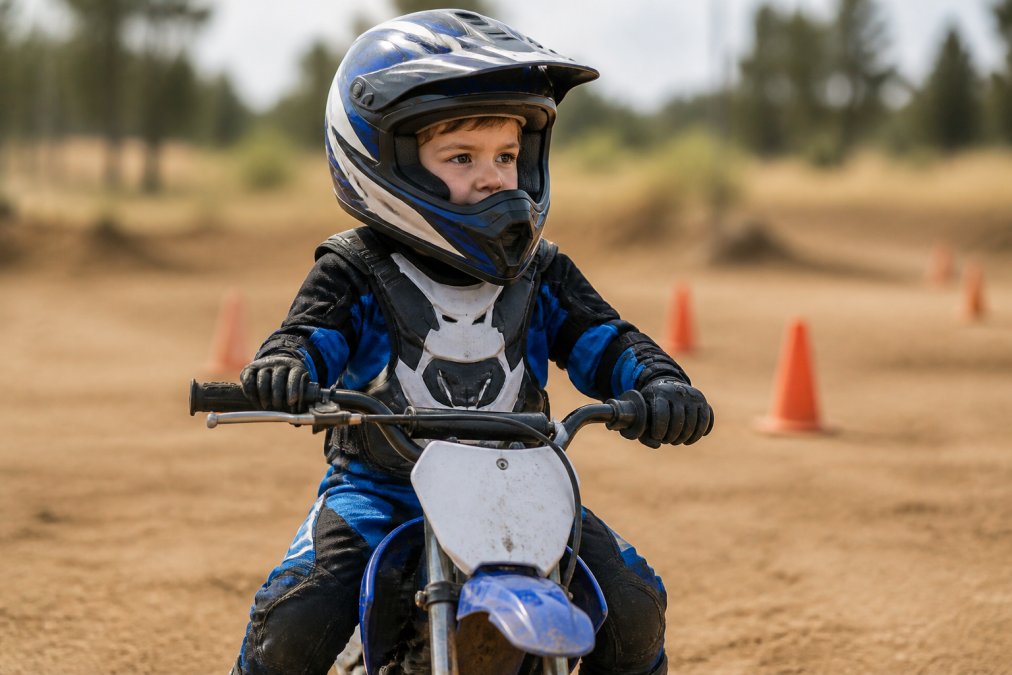
Fit is everything. The helmet should sit level on your child's head, with the front edge one finger-width above the eyebrows. When you gently tug the helmet side-to-side, the skin on their temples should move with it. Chin straps should be snug enough that you can fit one finger between the strap and your child's chin when their mouth is open.
Replace helmets after any significant impact, even if there's no visible damage. Plan to replace your child's helmet annually as they grow.
Body armor, neck braces, and impact protection
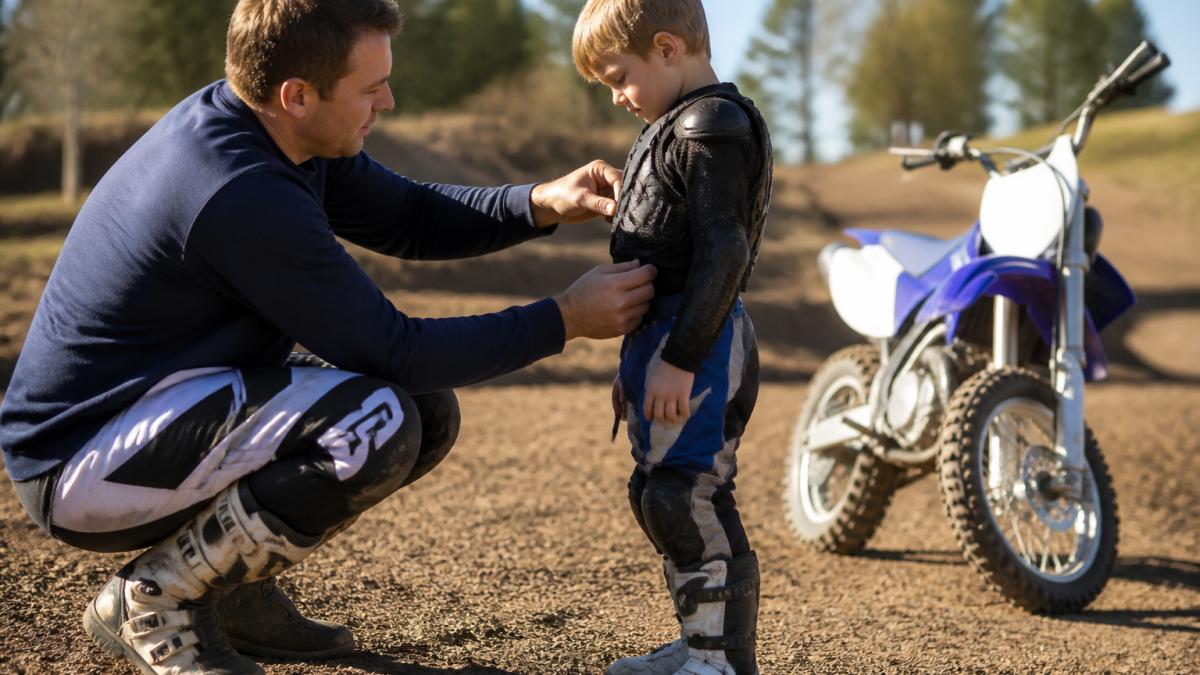
Body armor protects ribs, spine, and shoulders from impact. Youth-sized chest protectors should be part of every young rider's setup, fitting snugly without restricting breathing or arm movement.
Neck braces reduce cervical spine injury risk during crashes by limiting extreme neck flexion and extension. Gloves should be motocross-specific with reinforced palms and knuckle protection. Pants and jerseys should be off-road specific with reinforced areas at knees and hips. Motocross boots provide ankle support and protection against foot injuries.
The complete protective package costs several hundred dollars for entry-level youth gear. This is not an area to cut corners.
Common Injuries in Youth Motocross and Risk Assessment
Youth motocross injuries range from minor (scrapes, bruises) to severe (fractures, head trauma). The most common injuries are fractures, wrists, ankles, and collarbones break more frequently than any other injury type. These typically occur during low-speed crashes when children put their hand down to catch themselves.
Head injuries are less common but more serious. Most occur in uncontrolled environments or without helmets. In supervised programs with mandatory helmets, head injuries are rare.
Abdominal and chest injuries happen when children hit obstacles or get thrown over handlebars. Body armor reduces severity significantly. A child wearing a chest protector who hits a tree at moderate speed typically walks away with bruises. Without armor, the same impact could cause rib fractures or internal injury.
Spinal injuries are the rarest but most consequential outcome, typically occurring during high-speed crashes or falls from height. They're almost entirely preventable through proper supervision, closed-course training, and graduated progression.
According to pediatric sports injury research from the American Academy of Pediatrics, motocross injuries occur at higher rates than many traditional sports, but severity depends heavily on protective equipment and supervision. Your child will likely experience minor injuries if they ride regularly. Serious, life-altering injuries are rare in well-supervised programs but become much more likely in unsupervised or poorly equipped settings.
Best Dirt Bike for 5 Year Old: Choosing the Right Machine
Not all dirt bikes are appropriate for 5-year-olds. Engine size, seat height, and throttle response matter enormously. The 50cc four-stroke engine is the standard entry-level machine for young riders, producing around 4-6 horsepower, enough to move forward and climb gentle hills but not so much that a child loses control easily.
Seat height should allow your child to sit with both feet touching the ground. Ideally, the balls of their feet should touch comfortably while seated. Automatic transmissions are standard for youth bikes. Manual clutches require coordination most 5-year-olds don't possess.
Engine size and throttle limiter considerations
Throttle limiters are essential for young riders. These mechanical or electronic devices restrict how far the throttle can open, capping engine output at a safe level. A 50cc bike with a throttle limiter set to 50% is appropriate for early beginners. As skills improve, the limiter can be gradually increased.
Many modern youth bikes come with adjustable throttle limiters, allowing progression without buying a new machine. Your child starts with the limiter set conservatively and gradually earns increases as they demonstrate consistent control.
Motorcycle maintenance and mechanical safety checklist
Mechanical failures create preventable hazards. Before every riding session, perform this basic safety check:
| Component | Check | Action if Problem |
|---|---|---|
| Brakes | Levers move smoothly, pads have material | Bleed system or replace pads |
| Chain | Tension is correct (½ inch play), no rust | Adjust or replace chain |
| Tires | Correct pressure, no cuts or bulges | Adjust pressure or replace tire |
| Fuel | Tank is full, fuel is fresh | Refill or drain and replace |
| Air filter | Clean and dry | Clean or replace if clogged |
| Fasteners | All bolts and screws are tight | Tighten any loose hardware |
| Throttle | Moves smoothly, returns to idle | Lubricate cable or replace |
| Steering | No play in handlebars or forks | Tighten or service suspension |
Maintenance takes 10-15 minutes before each session. It's the foundation of safe riding.
AMA Motocross Safety Guidelines and Professional Recommendations
The American Motorcyclist Association sets the standard for youth motocross safety in the United States. AMA youth motocross safety standards and age divisions require helmets meeting DOT or Snell standards, long-sleeved jerseys, long pants, gloves, and boots for all riders. Riders under 16 must have parental consent and supervision. Closed-course events are required for all youth racing.
The AMA recommends young riders begin instruction before competition. Skill development in a training environment significantly reduces injury risk compared to racing before mastery of fundamentals. Professional training programs emphasize graduated progression: early sessions focus on starting the bike and basic throttle control; intermediate sessions add turning and body positioning; advanced sessions introduce speed and racing lines.
Most professional instructors recommend 20-40 hours of supervised practice before a young rider should be considered competent.
Getting Started: A Graduated Skill-Building Roadmap
Structure is everything. A child who progresses through clear stages with measurable goals learns faster and stays safer.
Beginner stages and supervised practice protocols
Stage 1: Familiarity (Sessions 1-5)
Goal: Comfort with the machine and basic starting procedures. Your child sits on the bike while it's off, learns where controls are, and practices sitting position. Sessions are 15-20 minutes with the bike moving slowly or not at all.
Safety protocols: Helmet and basic protective gear required. Closed, flat area with no obstacles. Adult within arm's reach at all times.
Stage 2: Basic Control (Sessions 6-20)
Goal: Throttle control, basic braking, and straight-line riding. Your child practices starting the bike independently and riding in straight lines at very low speed.
Safety protocols: Full protective gear required. Closed, flat training area. Throttle limiter set to 50% or lower. Adult supervisor remains visible at all times.
Stage 3: Steering and Turning (Sessions 21-40)
Goal: Basic turning, body positioning, and control at slightly higher speeds. Your child practices wide turns in figure-eight patterns and learns basic body positioning.
Safety protocols: Full protective gear required. Closed training area with gentle terrain. Throttle limiter gradually increased to 75% as skills improve.
Stage 4: Terrain Navigation (Sessions 41-60)
Goal: Riding on varied terrain, managing obstacles, and developing confidence. Your child begins riding on terrain with gentle hills, small ruts, and natural features.
Safety protocols: Full protective gear required. Closed training area with supervised terrain. Throttle limiter at 100% (if progressed smoothly) or 75% (if still developing consistency).
Stage 5: Supervised Independent Riding (Sessions 61+)
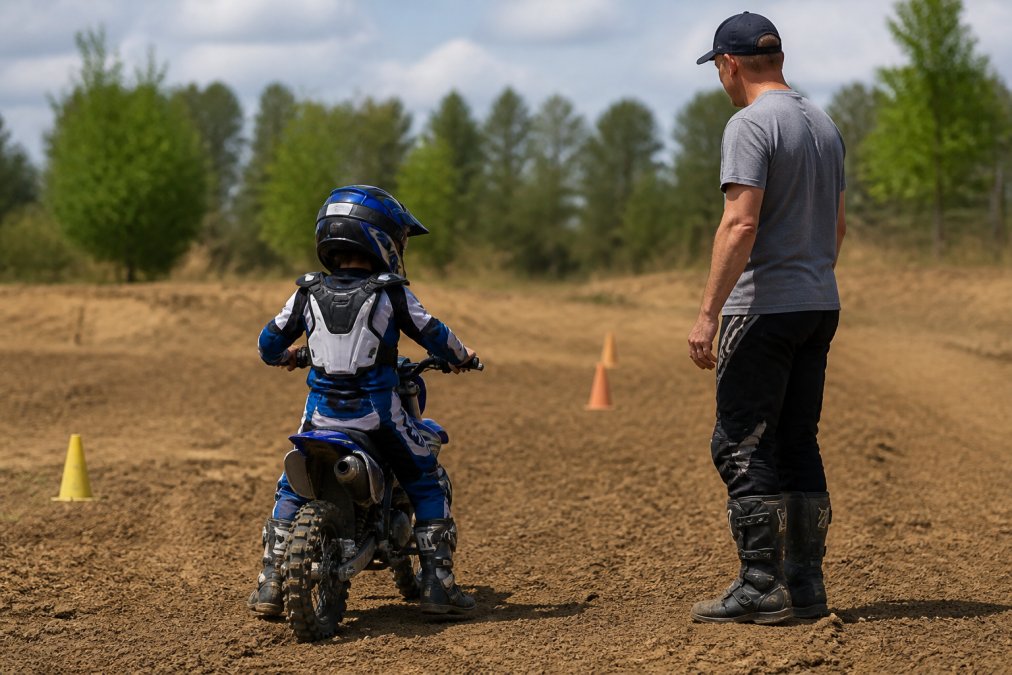
Goal: Confident, controlled riding with minimal instruction. Your child rides independently in a closed training area with supervisor present but not constantly instructing.
Safety protocols: Full protective gear required. Closed training area. Supervisor present and visible.
This progression typically takes 2-4 months of regular practice (1-2 sessions per week). Advancement is based on demonstrated skill, not calendar time.
Building throttle control and braking proficiency
Throttle control is the single most important fundamental skill. A child who can modulate throttle smoothly can handle almost any situation.
Practice throttle control through these exercises:
Throttle Modulation Drill: Ride in a straight line practicing gentle acceleration and deceleration without using brakes for 5-10 minutes per session.
Constant Speed Riding: Ride at a fixed, slow speed for extended periods to build muscle memory for throttle position.
Acceleration Zones: Mark zones on the training area and practice accelerating smoothly from one zone to the next.
Braking proficiency develops through similar practice:
Smooth Braking Drill: Practice gentle braking to a complete stop from low speed, focusing on smooth lever pressure.
Threshold Braking: Practice braking hard enough to feel the bike slow quickly, but not so hard that wheels lock.
Throttle and brake proficiency typically develops over 30-50 hours of practice.
The Role of Supervision and Closed-Course Training
Supervision isn't optional, it's the primary factor determining whether your child rides safely. An unsupervised child on a dirt bike is an accident waiting to happen. A supervised child in a structured environment faces manageable risks.
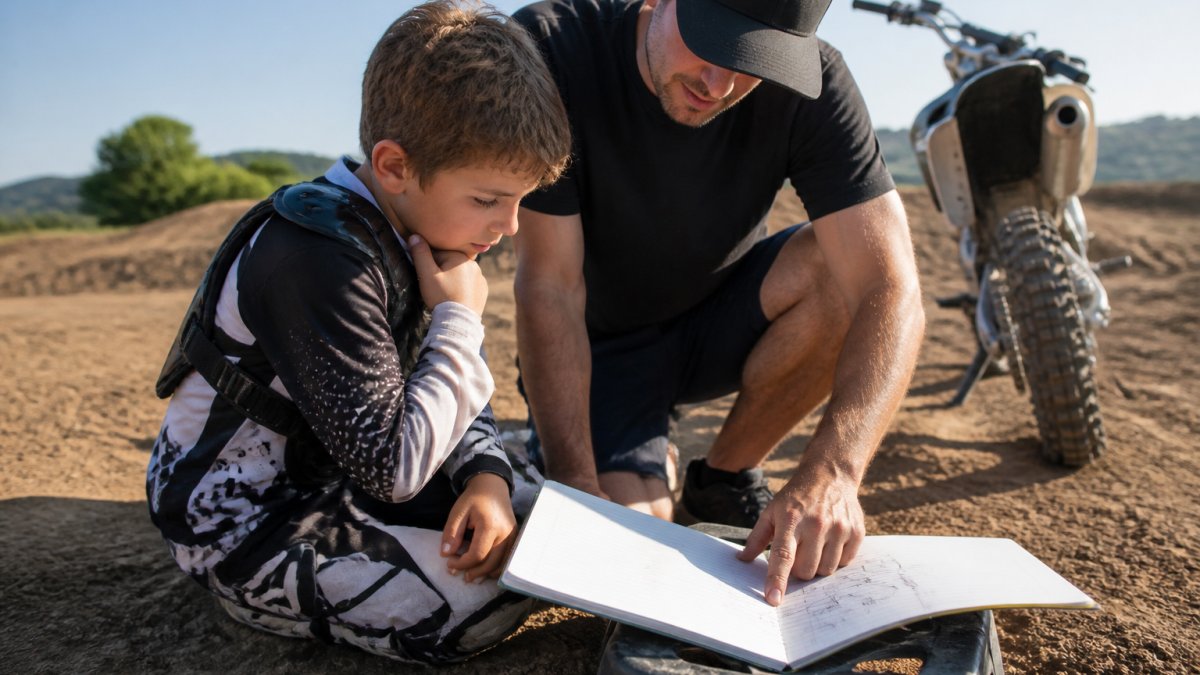
Supervision means an adult who understands motocross, can recognize hazards, can intervene quickly, and can provide instruction. Closed-course training means your child rides in a designated, controlled area with defined boundaries. No open terrain with cliffs, water hazards, or traffic.
The combination of proper supervision and closed-course training makes youth motocross safe. Remove either element, and risk increases dramatically.
Professional training facilities offer this combination. Nelmgerian MX is expanding into real-world training with a private track in Crossville, Alabama, designed specifically for families learning motocross together. Whether you choose a professional facility or create your own supervised practice setup, the principles remain the same: clear boundaries, qualified supervision, and graduated progression.
Is motocross safe for 5 year olds? Yes, when approached systematically. The challenge most parents face isn't whether their child can ride safely, but whether they're willing to invest the time, equipment, and structure required.
If you're committed to building your child's skills through proper progression, equipping them with appropriate protective gear, and maintaining consistent supervision, youth motocross becomes a manageable activity with genuine benefits. Your child develops confidence, discipline, and a lifelong passion for the sport.
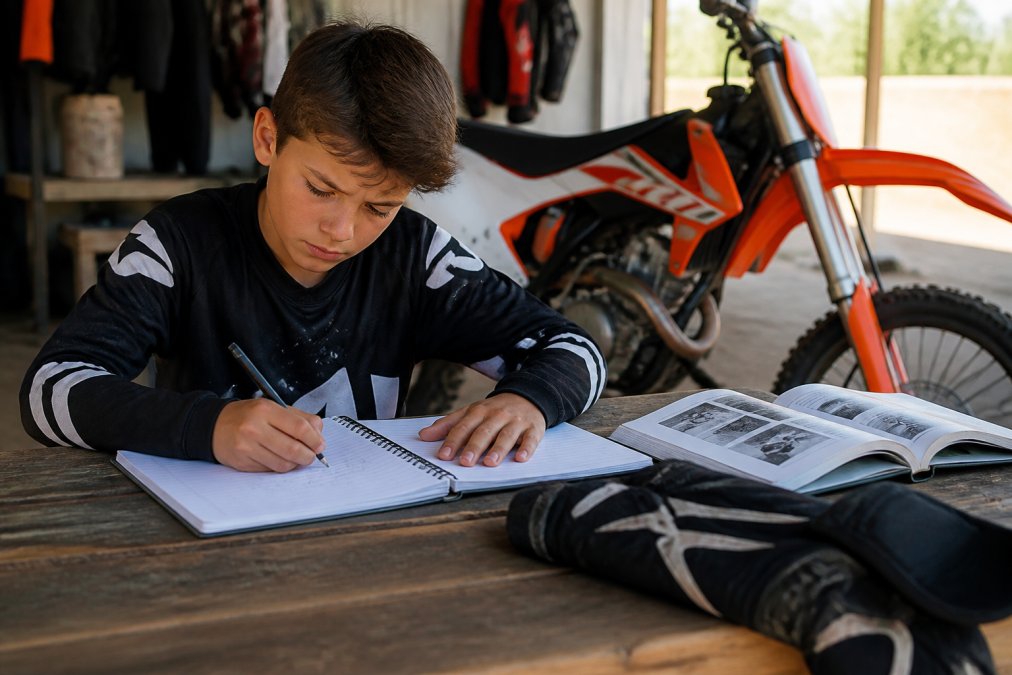
Nelmgerian MX provides educational tools to support this journey, from rider training journals tracking skill progression to children's books building passion for the sport. Combined with structured training and proper equipment, they help ensure your child develops as a confident, capable rider who understands what it means to ride safely.
Frequently Asked Questions
Is motocross safe for 5 year olds, or should I wait until they're older?
Motocross can be introduced safely at age 5 with proper precautions: age-appropriate equipment, professional instruction, full protective gear, and supervised closed-course riding. Many 5 year olds have the physical coordination to handle 50cc bikes with throttle limiters. The key is assessing your child's individual maturity, balance, and ability to follow instructions rather than relying on age alone. Professional medical organizations recommend comprehensive safety protocols and risk mitigation strategies before beginning off-road riding.
What youth motocross safety gear requirements should I meet before my child rides?
Essential protective equipment includes a DOT or Snell-certified helmet with face shield, chest protector and body armor, padded gloves, long pants, boots, and a neck brace. Helmet fit is critical: it should not shift when you move the child's head. All gear must be motocross-specific, not general sports equipment. Inspect gear regularly for damage and replace items that no longer fit as your child grows. Proper gear fitment prevents serious injuries and builds confidence during training sessions.
What is the best dirt bike for a 5 year old beginner?
A 50cc bike with a throttle limiter is ideal for most 5 year olds. Look for models with adjustable seat height (so the child's feet touch the ground), lightweight frames (under 150 pounds), and automatic or semi-automatic transmissions. Throttle limiters restrict engine power, allowing gradual skill development. Ensure the bike has reliable braking and suspension suited to small riders. Have a professional inspect any used bike before purchase. Start with beginner stages on closed courses before progressing to more demanding terrain.
What does the AMA recommend for youth motocross safety?
The American Motorcyclist Association promotes comprehensive safety protocols including mandatory protective equipment, professional instruction, supervised practice on closed courses, and graduated skill-building programs. The AMA emphasizes that riding technique, braking proficiency, and situational awareness are as important as physical protection. Their guidelines recommend starting young riders in controlled environments and progressing only as competency improves. Professional medical organizations also advise orthopedic assessments and injury prevention strategies tailored to developing riders.
This article was written using GrandRanker