 how-to
Keep Kids Motivated in Motocross: 7 Proven Strategies
Table of Contents
- Why Motivation Matters in Youth Motocross
- Set Realistic and Achievable Goals for Young Riders
- Essential Motocross Parenting Tips for Keeping Kids Engaged
- Build Motocross Mental Toughness for Kids
- Keep Motocross Fun: Activities That Build Passion
- Prevent Burnout and Overtraining in Young Riders
- How to Keep Kids Motivated Through Skill Development
- Conclusion: Your Role in Your Child's Motocross Journey
- External Research & Sources
- Frequently Asked Questions
Keep Kids Motivated in Motocross: 7 Proven Strategies
Last Updated: July 24, 2026
Why Motivation Matters in Youth Motocross
How to keep kids motivated in motocross starts with understanding that young riders face unique psychological challenges beyond learning to handle a dirt bike. At Nelmgerian MX, we've worked with hundreds of families and seen firsthand how the difference between a kid who thrives and one who quits often comes down to how well adults manage motivation. Early experiences in competitive sports shape not just athletic ability, but confidence, resilience, and how kids approach challenges for years to come.
Motivation in motocross is built from multiple layers: intrinsic drive to improve, meaningful extrinsic rewards, relationships with coaches and parents, and whether the experience remains fun. When any layer breaks down, kids lose interest fast. A rider with natural talent might quit because practice feels like punishment. Another might be slower but stay engaged because they're part of a community that celebrates small wins.
The good news is that motivation is something you can actively build and protect. It's not luck, and it's not reserved for naturally gifted kids.
Set Realistic and Achievable Goals for Young Riders
Goals give young riders direction and a way to measure progress beyond just "get faster." But goals parents and coaches set often become the first source of burnout. A common mistake is setting goals that feel impossible to the kid holding the handlebars.
Realistic goals should be specific, measurable within a defined timeframe, and achievable with consistent effort, not dependent on beating other competitors. A goal like "finish top 5 at the regional championship" puts the outcome in other people's hands. A goal like "nail the rhythm section without dabbing the rear wheel" puts it in the rider's control.
Breaking Goals into Milestones
Long-term goals matter, but young kids struggle to stay motivated for something six months away. Breaking bigger goals into milestones creates regular wins and keeps momentum going.
If a rider's season goal is to move up a competitive level, the milestones might look like this:
| Milestone | Timeframe | Focus Area |
|---|---|---|
| Master the first turn cleanly | 2 weeks | Line selection and throttle control |
| Consistent lap times within 1 second variance | 4 weeks | Repeatability and focus |
| Complete 3 consecutive laps without mistakes | 6 weeks | Stamina and mental consistency |
| Race simulation: full moto pace without fatigue | 8 weeks | Race-day readiness |
Each milestone gives the rider something concrete to chase. When they hit a milestone, it's a real win, not just a step toward something distant.
Process-Oriented vs. Outcome-Focused Goals
Most youth motocross guidance focuses entirely on outcomes: place in the race, beat this competitor, win the championship. Kids internalize this and start riding scared, afraid of failure rather than excited about improvement.
Process-oriented goals flip this. Instead of "win the moto," the goal becomes "execute the race plan: good start, smooth lines through turns 3-5, manage throttle in the whoops." The rider controls these things. They can execute the plan and still not win because another rider was faster, but they still succeeded at their goal. This approach builds the mental toughness that motocross demands.
Essential Motocross Parenting Tips for Keeping Kids Engaged
The relationship between parent and young rider might be the single most powerful factor in how long a kid stays motivated. It's about understanding the specific ways parents accidentally kill motivation.
Managing Dad-Pressure vs. Coach-Pressure
A coach can tell a kid "that line was sloppy, try again", it's feedback, part of the job. The same words from a parent can feel like judgment, like the kid has disappointed someone they love. Many young riders describe this as the difference between "Dad-pressure" and "Coach-pressure." Dad-pressure is personal and carries emotional weight.
The fix is clear separation of roles. When you're at the track, decide in advance: are you the parent or the coach today? If you're the parent, your job is emotional support and logistics. If you're also the coach, make it clear that's a different conversation, separate from your role as their parent. Many families handle this by having an actual coach deliver technical feedback, which removes the parent from the position of judging their kid's performance.
Post-Race Emotional Debriefing
What happens in the hour after a race matters more than what happens during it. A bad race is emotionally charged. The parent's instinct is often to jump straight to problem-solving, which can feel like blaming the kid.
Instead, start with emotional acknowledgment: "That race was frustrating. I could see you working hard out there." Then, if the kid is ready to talk about it, ask what they noticed. Let them process the experience first. Only after the emotional charge has settled should you move into analysis. Some of the best post-race debriefs happen the next day, when the kid has had time to process.
Build Motocross Mental Toughness for Kids
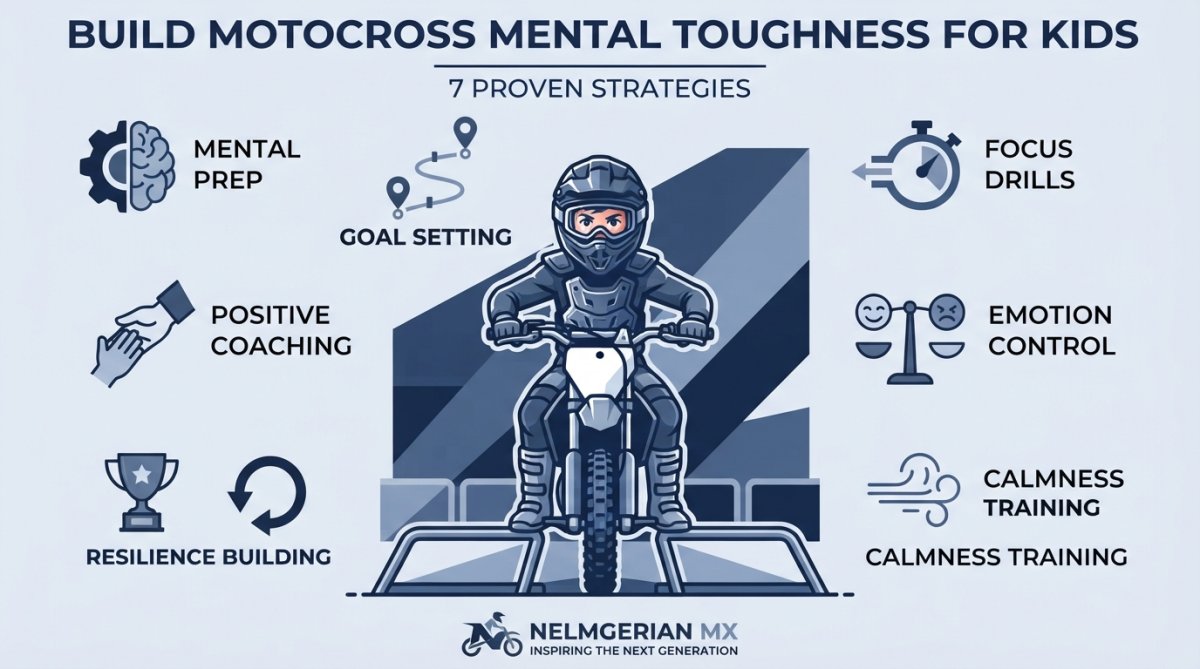
Mental toughness isn't something kids are born with. It's built through specific experiences and reinforced by how adults respond when things get hard. In motocross, mental toughness is the difference between a kid who pushes through fear and one who holds back.
Developing Grit and Accountability
Grit, the ability to persist through difficulty, keeps kids riding when they're tired, scared, or frustrated. Accountability means the kid owns their choices and their effort. If they say they want to improve at a particular skill, they're responsible for the practice it takes.
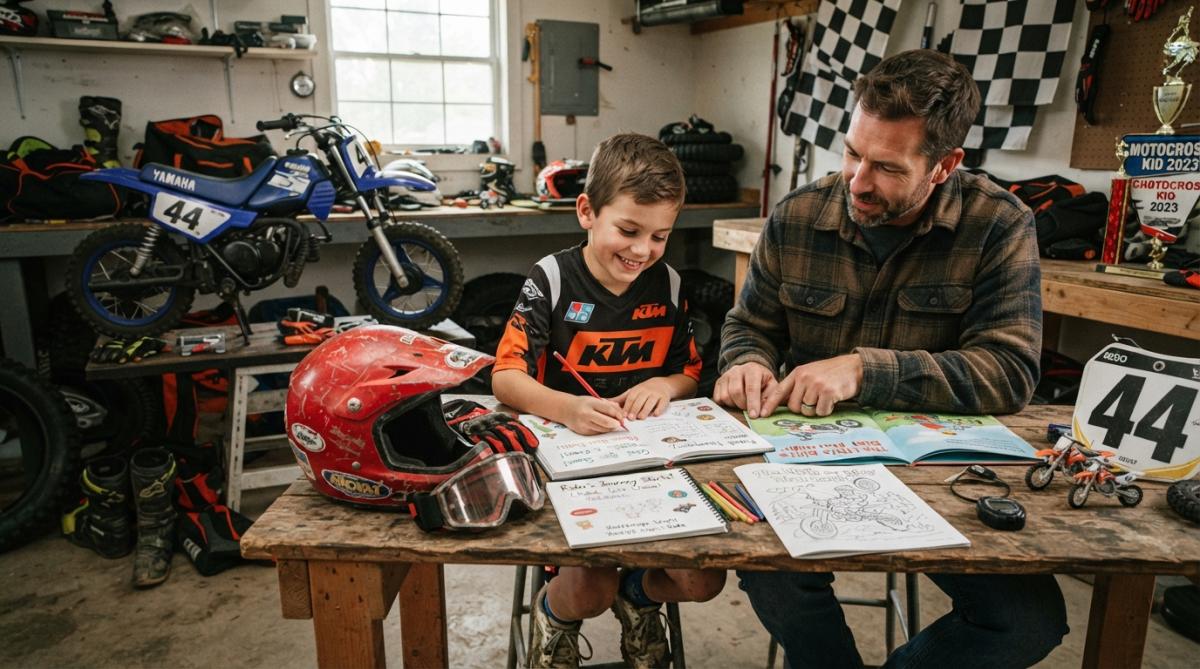
One practical way to build this is through a training journal. Nelmgerian MX has created rider training journals specifically designed for young motocross riders to track their own progress, note what they worked on, and reflect on what they learned. Writing it down forces clarity and builds the accountability that turns effort into real improvement.
Managing Performance Anxiety and Courage
Performance anxiety is real in youth motocross. A kid might be fast in practice but tighten up in a race. Courage isn't the absence of fear, it's doing the thing even though you're scared. The best way to build courage is through graduated exposure. A kid nervous about jumping shouldn't be pushed to jump big immediately. They should jump small, get comfortable, then gradually increase.
Parents often dismiss the fear ("you're fine, just go") or reinforce it ("okay, we don't have to do it"). The middle path is acknowledging the fear while supporting the attempt: "I know that jump looks big. Let's try it at your pace. I'll be right here watching."
Keep Motocross Fun: Activities That Build Passion
Fun isn't a bonus, it's essential. Without it, motocross becomes just another thing kids do because adults told them to.
Organized Rides, Camps, and Club Involvement
One of the most underrated ways to keep kids motivated is getting them into organized group settings with other young riders. A local motocross club, a weekend ride day, or a training camp creates community. Suddenly, motocross isn't something the kid does alone with their parent, it's something they do with friends who are also learning.
Group settings also reduce pressure. When a kid is riding with peers, they're less focused on performance and more focused on the experience. They see other kids struggling with the same things, which normalizes the difficulty. Training camps specifically designed for young riders break the parent-coach dynamic and often emphasize skill development over competition.
Prevent Burnout and Overtraining in Young Riders
Burnout is the silent killer of youth motocross motivation. It builds gradually, a kid rides less enthusiastically, complains more about practice, finds excuses not to go to the track. Burnout happens when the cost of the activity exceeds the reward. Young riders can't regulate this balance themselves. It's the adult's job to protect them.
The Role of Rest Days and Recovery
The instinct for many parents is to increase training when a kid isn't improving fast enough. This is often exactly backward. A kid who's burned out needs less, not more.
Rest days aren't laziness, they're when the body adapts and gets stronger. A young rider training hard should have at least 2-3 days per week completely off from motocross. Recovery also means sleep. Young riders who are training seriously need more sleep than their non-riding peers. A kid who's sleep-deprived will be slower, more frustrated, and more prone to injury.
If a kid is training 4-5 days per week, they need 2-3 complete rest days. Across the season, they need a full 4-6 week break where they're not riding at all. This sounds like lost training time. In reality, it's when kids come back hungry and motivated.
How to Keep Kids Motivated Through Skill Development
Motivation through skill development means celebrating actual progress, not just results. A kid who improves their technique but places lower is still winning. How adults frame these experiences determines whether the kid sees progress or failure.
Celebrating Small Wins and Progression
Extrinsic rewards like trophies and prizes work in the short term but often backfire. Kids start riding for the trophy, not because they love riding. When the trophies stop coming, motivation collapses.
Intrinsic motivation, the satisfaction of getting better, of mastering something hard, of pushing through fear, sustains kids long-term. The way to build intrinsic motivation is to celebrate the progress itself, not the outcome.
A kid who lands a jump they've been afraid of deserves celebration as much as a kid who wins a race. A kid who shaved two seconds off their lap time deserves recognition. Instead of "great job placing third," try "I watched you execute that race plan perfectly in the second moto, that's exactly the focus you've been working on." The first focuses on outcome. The second focuses on effort and improvement.
Tools That Support Learning and Confidence
Young riders benefit from tools that help them track their own progress and stay engaged between track days. Training journals designed specifically for motocross riders allow kids to record what they worked on, how it felt, and what they noticed. Video analysis is another powerful tool, recording practice sessions and reviewing them with a coach helps kids see what they're actually doing and builds confidence through visible improvement.
Nelmgerian MX has created resources including storybooks, coloring books, and training journals designed to keep young riders engaged with the sport even when they're not on the bike.
Conclusion: Your Role in Your Child's Motocross Journey
Keeping kids motivated in motocross isn't about pushing harder or finding the right secret technique. It's about creating an environment where effort is valued, progress is celebrated, and the sport remains fun. Your job is to protect motivation, not manufacture it.
The families whose kids stay passionate about motocross for years are the ones who get this balance right. Nelmgerian MX was created by motocross enthusiast Shaun Nelms specifically to help young riders build confidence and knowledge both on and off the track. Our training journals help kids track their own progression, our storybooks and educational resources keep them connected to the sport between rides, and our approach emphasizes skill development and mental toughness over competition. As we expand to include a private track facility in Crossville, Alabama, we're building a complete destination where families can learn, ride, and grow together. Start with our training resources and see how they help your young rider stay motivated through real progress and genuine passion for motocross.
External Research & Sources
According to American Academy of Pediatrics guidance on youth sports, young athletes perform better and stay engaged longer when they experience autonomy in their training and feel their effort is valued. This aligns with research showing that intrinsic motivation is far more predictive of long-term athletic success than external rewards.
Journal of Sport Psychology research on youth athlete motivation demonstrates that athletes who receive process-focused feedback show 40% higher persistence in challenging situations compared to those receiving outcome-focused feedback.
The importance of recovery in youth athletes is documented in National Strength and Conditioning Association guidelines for young athletes, which emphasizes that rest days and adequate sleep are critical for both physical adaptation and psychological resilience.
Frequently Asked Questions
How do you keep kids motivated in motocross when they want to quit?
Start by listening to why they're losing interest, whether it's performance anxiety, burnout, or lack of fun. Shift focus from winning to progression and skill development. Celebrate small milestones, reduce pressure, and ensure they're getting enough rest days. Reintroduce fun activities like organized rides or camps with peers. Sometimes a short break helps kids return with renewed passion for the sport.
What role do motocross parenting tips play in a child's motivation?
Parents are the primary influence on long-term motivation. Avoid applying excessive pressure or comparing your child to others. Instead, focus on positive reinforcement, ask process-oriented questions about what they learned rather than just results, and debrief emotionally after races. Managing your own expectations and separating your goals from your child's goals is critical to keeping intrinsic motivation alive.
How does motocross goal setting for young riders differ by age?
Younger riders (5-8) need concrete, immediate goals like 'nail that turn' or 'ride without stopping.' Older kids (9-13) can handle multi-week milestones like 'improve lap time by 2 seconds.' Teens benefit from season-long goals tied to competitive level and skill development. Always involve your child in setting goals so they feel ownership and accountability, not just following orders from a parent or coach.
What motocross fun activities for kids actually build long-term passion?
Organized rides with peers, local race camps, and club involvement create community and reduce isolation. Group experiences build camaraderie and show kids they're not alone in their struggles. Mixing competitive track time with casual riding, coloring books, or training journals that celebrate the culture keeps engagement high off the bike too. The key is variety, don't make it all about racing and pressure.
This article was written using GrandRanker