 ultimate-guide
Mental Toughness in Motocross: Why the Sport Builds Champions
Table of Contents
- Why Motocross Builds Mental Toughness: The Core Connection
- Understanding Motocross Physical and Mental Demands
- Visualization and Mental Game Preparation
- How to Improve Mental Focus for Racing Performance
- Benefits of Motocross for Kids: Building Confidence and Resilience
- Post-Injury Psychological Recovery in Motocross
- Developing Mental Stamina for Race Day Success
- Conclusion: The Lasting Impact of Mental Toughness in Motocross
- Frequently Asked Questions
Mental Toughness in Motocross: Why the Sport Builds Champions
Last Updated: July 13, 2026
Why Motocross Builds Mental Toughness: The Core Connection
Motocross builds mental toughness because the sport forces it. Riders face split-second decision-making while exhausted, afraid, and aware that mistakes cause injury. Unlike most sports, there's no teammate to rely on, no coach shouting instructions, no crowd energy to carry you through. That isolation forces genuine internal resilience.
According to American Psychological Association research on sport psychology, athletes in high-risk sports develop measurably stronger stress response systems than the general population. The constant exposure to controlled danger trains the nervous system to remain functional under conditions that would paralyze untrained individuals.

The Unique Demands of Racing
Motocross combines three elements most sports don't demand simultaneously: extreme physical exhaustion, split-second decision-making, and genuine danger. A typical 30-minute moto requires peak cognitive function while operating at 90-95% of maximum heart rate capacity.
The track changes constantly. Ruts develop, lines shift, traction varies. Riders must actively perceive and adjust in real-time, developing what sports psychologists call "dynamic attention," the ability to monitor multiple variables and respond without freezing or overthinking.
How Pressure Creates Resilience
Pressure in motocross is physical and immediate. Riders feel competitors behind them, see dust clouds approaching, hear engines getting closer. When this concrete pressure repeats over months, the body's stress response recalibrates. Riders develop "stress inoculation," where their nervous system learns that elevated cortisol and adrenaline mean performance is required, not that danger is imminent.
Understanding Motocross Physical and Mental Demands
A 30-minute moto burns 600-1000 calories while requiring precise control of a 250-400 pound machine. Unlike running, cognitive load doesn't decrease as the body tires, it often increases, because fatigue makes errors more likely and consequences more severe.
Physical Exhaustion and Cognitive Load
Decision-making deteriorates precisely when decisions become most critical. In final laps, when riders are most fatigued, mistakes are most costly. Research from Journal of Sports Medicine studies on fatigue and cognition shows physical exhaustion impairs executive function and impulse control. Riders compensate by developing "decision automaticity," making critical choices intuitively because patterns have been rehearsed thoroughly.
Many riders experience forearm pump in final laps, where forearm muscles fatigue and lose grip strength. Continuing to race effectively while experiencing this teaches riders to separate physical sensation from mental capability, the forearms fail, but the mind functions.
The Mind-Body Connection in Racing
Mental state directly affects physical performance. A panicked rider grips handlebars too tightly, stiffening suspension and reducing responsiveness. A calm rider maintains relaxed grip pressure, allowing the bike to move naturally. This feedback loop, mental state affects performance, which affects outcomes, which affects future mental state, teaches riders that mental state is controllable.
Visualization and Mental Game Preparation
Visualization in motocross differs from static-environment sports. Rather than visualizing specific sequences, successful riders visualize principles and decision trees: "if the track is rutted here, I'll take this line." This conditional visualization develops flexible mental preparation and resilience when conditions don't match expectations.
Building Track Awareness Through Mental Rehearsal
Riders walk the track before racing, observing rut patterns and identifying fastest lines. During visualization, they mentally rehearse the track, imagining how it will feel at race speed and where they'll need to brake or accelerate. This mental rehearsal activates the same neural pathways as physical practice.
During the race, riders constantly update their mental model. They notice sections that were slippery in practice are now tacky due to cooler temperatures. They see planned lines are blocked by other riders. The ability to update mental models in real-time separates competitive riders from recreational ones.
How to Improve Mental Focus for Racing Performance
Mental focus in motocross is trainable. It's not sustained, meditative focus like chess requires. It's dynamic, shifting focus monitoring throttle position, brake pressure, steering input, competitor position, track conditions, and tire grip simultaneously.
Selective Memory and Composure Under Pressure
One overlooked aspect of mental toughness is selective memory, the ability to forget mistakes immediately and focus on the next section. A rider who crashes on lap 2 of a 15-lap race can either replay the mistake mentally and lose focus, or acknowledge it and move forward. Riders with strong selective memory recover faster and perform better.
Composure under pressure links directly to selective memory. A useful internal dialogue is "I crashed, that's done, focus on the next turn" rather than analyzing why it happened. This skill transfers directly to professional and personal situations.
Discipline and Repetition in Training
Discipline in motocross means practicing the same skills, lines, and decision patterns hundreds of times, knowing they'll need to execute them perfectly once in a real race. This repetition builds "automaticity", when skills move from conscious to automatic processing, freeing cognitive resources for dynamic decision-making.
The discipline required to maintain repetitive practice, especially when progress is slow, builds mental toughness directly. Riders who commit to months of practice develop resilience valuable in any long-term endeavor.
Benefits of Motocross for Kids: Building Confidence and Resilience
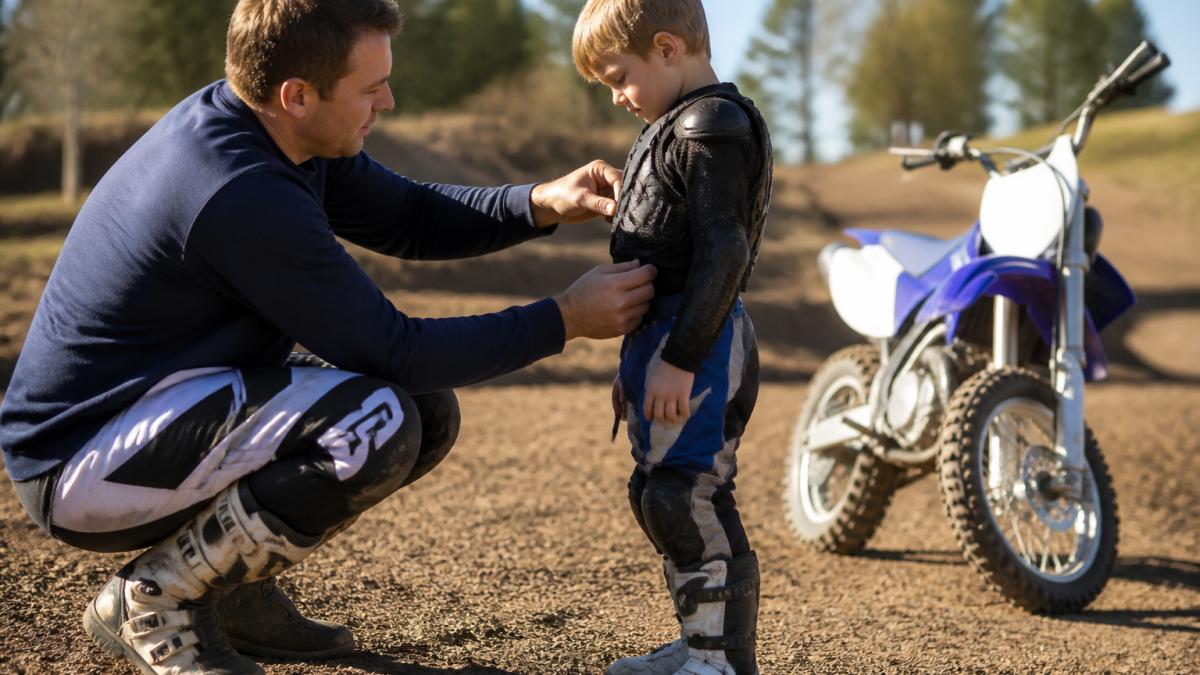
Young riders develop confidence through a process fundamentally different from most childhood activities. In school, kids are compared to other students. In motocross, they're compared to themselves. The only competitor that matters is the version of themselves from last week.
This creates intrinsic motivation. Kids race because they want to improve and can directly measure that improvement through lap times and race results.
Youth Athletes and Goal Setting
Goal setting in motocross is concrete. A young rider can set "finish in the top 5" or "improve lap time by 2 seconds" and measure progress directly. Missing a goal teaches resilience, analyzing what went wrong and adjusting for the next race teaches that failure is information, not judgment.
Experienced young riders set controllable goals like "nail my starts" or "improve cornering speed" rather than "win." This focus on controllable variables develops sophisticated psychological skills through repeated experience.
Overcoming Fear and Error Management
Young riders must confront genuine fear of crashing and getting hurt. A rider who crashes and immediately gets back on the bike learns that fear doesn't prevent action. They learn they can be afraid and still perform, a crucial distinction.
Repeated mistakes throughout a season teach kids that mistakes don't define them. A young rider who makes hundreds of mistakes and continues forward develops genuine mental toughness.
Post-Injury Psychological Recovery in Motocross
Post-injury psychological recovery involves not just physical healing but psychological recovery. Riders often experience "psychological injury" after crashes, they're physically healed but mentally unable to return to previous performance levels, approaching jumps cautiously or avoiding sections where they crashed.
Rebuilding Self-Confidence After a Crash
Rebuilding confidence requires graduated exposure to fear-triggering situations. A rider who crashed on a large jump might practice the approach at slower speeds, gradually increasing speed as confidence returns. This graduated exposure, repeated over weeks, rebuilds disrupted neural pathways.
A rider who successfully returns after serious injury develops resilience difficult to acquire otherwise. They've confronted genuine fear, worked through it systematically, and proven they can overcome it.
Developing Mental Stamina for Race Day Success
Mental stamina is distinct from physical endurance. A rider might have excellent fitness but poor mental stamina, unable to sustain focus for 30 minutes despite physical capability. Mental stamina develops through race experience, each increase in race duration forces riders to sustain focus longer.
Preparation also links to mental stamina. Well-prepared riders who've practiced the track and visualized the race have more mental energy available during racing.
Adrenaline Control and Stress Management
Adrenaline is both beneficial and detrimental. Pre-race adrenaline provides energy and focus, but uncontrolled adrenaline leads to poor decisions and early fatigue. Riders learn to control adrenaline response through repeated exposure to high-stress situations, using breathing techniques or visualization.
Stress management extends beyond race day. Riders who develop effective techniques, mentoring, journaling, relaxation practices, perform better and enjoy the sport more.
| Mental Skill | Development Method | Race Benefit |
|---|---|---|
| Selective Memory | Practicing moving past mistakes | Faster recovery from errors |
| Dynamic Focus | Training with changing conditions | Better adaptability mid-race |
| Adrenaline Control | Breathing techniques and visualization | Sustained performance in final laps |
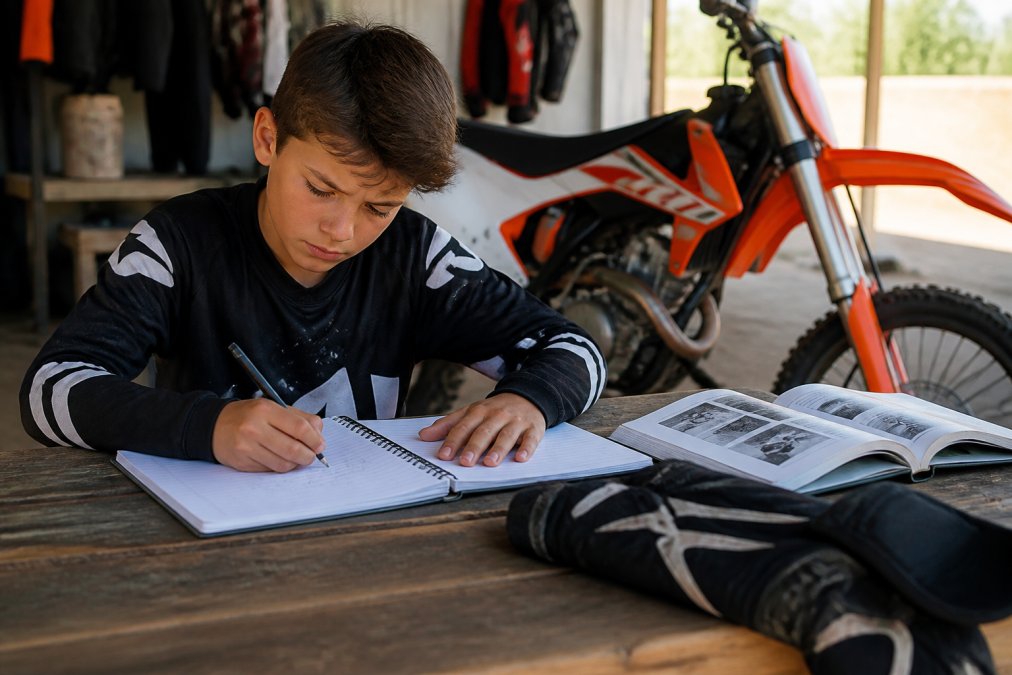
| Goal Setting | Tracking progress in training journal | Clear direction and motivation |
| Stress Management | Pre-race routines and mental preparation | Reduced anxiety and better focus |
| Error Analysis | Post-race review and adjustment | Continuous improvement |
Conclusion: The Lasting Impact of Mental Toughness in Motocross
Mental toughness in motocross builds through months and years of consistent exposure to pressure, failure, recovery, and improvement. Young riders develop resilience extending into academics, relationships, career decisions, and personal challenges.
The psychological skills motocross builds, managing fear, learning from mistakes, maintaining focus under pressure, and persisting through difficulty, are precisely the skills that lead to success in any challenging endeavor. A rider who controls their mental state while racing at 40 mph can control their mental state during difficult job interviews or challenging conversations.
Building mental toughness through motocross requires structured guidance. Nelmgerian MX offers rider training journals and educational resources designed to help young athletes develop mental skills that motocross naturally teaches. These tools guide riders through visualization exercises, goal-setting activities, and performance reflection, the exact practices that accelerate psychological development. With Nelmgerian MX's structured approach, young riders develop mental toughness more deliberately and consistently, translating racing success into life success.
Frequently Asked Questions
Why does motocross build mental toughness more than other sports?
Motocross combines extreme physical demands with constant high-stakes decision-making at speed, forcing riders to manage fear, fatigue, and adrenaline simultaneously. Unlike team sports, riders face individual accountability for every choice, creating intense pressure that builds resilience, composure, and self-reliance. The sport's unpredictability, terrain changes, weather, competitor moves, demands rapid mental adaptation, strengthening the ability to stay focused under extreme stress.
How does motocross improve mental focus for racing and everyday life?
Racing requires selective attention: filtering distractions, tracking multiple variables (throttle, braking points, competitors), and maintaining composure during physical exhaustion. This develops laser-sharp concentration and decision-making speed. Riders learn to compartmentalize fear and error, focusing only on the next gate or section. These cognitive skills transfer off-track, improved ability to stay calm under pressure, manage stress, and maintain discipline in training and personal goals.
What are the key benefits of motocross for kids' mental development?
Motocross teaches youth athletes goal setting, accountability, and how to handle failure constructively. Kids learn that mistakes are learning opportunities, not defeats. The sport builds self-confidence through progressive skill mastery, teaches discipline through repetitive training, and develops emotional regulation by requiring composure during high-stress moments. Young riders also gain resilience by overcoming fear after crashes and understanding that persistence leads to improvement, lessons that strengthen mental toughness in all life areas.
How do riders recover mentally after a serious crash or injury?
Post-injury psychological recovery requires rebuilding self-confidence gradually through controlled exposure and visualization. Riders benefit from breaking skill progression into smaller, achievable goals, celebrating small wins, and working with experienced mentors who understand fear management. Mental training, including visualization of successful runs and positive self-talk, helps rewire the brain's fear response. Many riders find that discussing the crash, understanding what went wrong, and planning how to prevent it again reduces anxiety and restores trust in their abilities.
This article was written using GrandRanker