 blog
blog
The Moto Academy vs BuddyMX: Which Fits Your Rider?
Table of Contents
- The Moto Academy vs BuddyMX: Quick Comparison
- Training Methodology and Coaching Approach
- Online Motocross Training for Kids: Platform Features
- Skill Level Suitability and Rider Development
- Motocross Rider Development Tools and Resources
- Value for Money and Long-Term ROI
- Making Your Choice
- Frequently Asked Questions
Last Updated: September 17, 2026
The Moto Academy vs BuddyMX: Quick Comparison
When parents search for training resources to develop their young rider's skills, they're often caught between the two leading platforms in a moto academy vs buddymx comparison. Both platforms offer online motocross training for kids, but they approach rider development differently. At Nelmgerian MX, we understand that choosing the right training resource shapes how your child builds confidence, learns proper technique, and stays engaged with the sport between practice days and races. Our brand is dedicated to inspiring the next generation of riders through books, educational resources, activities, and rider-development tools.
The choice between these platforms depends on your child's current skill level, your budget, and whether you want screen-based instruction or supplemental resources that keep kids connected to motocross without constant screen time. This comparison breaks down the key differences so you can make an informed decision.
| Feature | The Moto Academy | BuddyMX |
|---|---|---|
| Training Format | Video-based online courses | Interactive app with video lessons |
| Skill Level Focus | Beginner to intermediate | Beginner to advanced |
| Rider Development Tools | Instructional videos, technique guides | App-based tracking, progress monitoring |
| Age Range | Typically 6+ | 5+ |
| Learning Style | Self-paced video instruction | Interactive app with visual cues |
| Supplemental Resources | Limited extras | Includes community features |
Training Methodology and Coaching Approach
The Moto Academy emphasizes structured video instruction covering fundamental riding technique, throttle control, body positioning, and braking points. Their coaching curriculum focuses on visual cues and repetition, teaching riders to understand the mechanics of cornering speed and line selection through demonstration.
BuddyMX takes a different approach. Their platform integrates coaching feedback directly into an interactive app, allowing young riders to track their progression through skill assessments. This methodology emphasizes immediate feedback and personalized coaching rather than passive video watching.
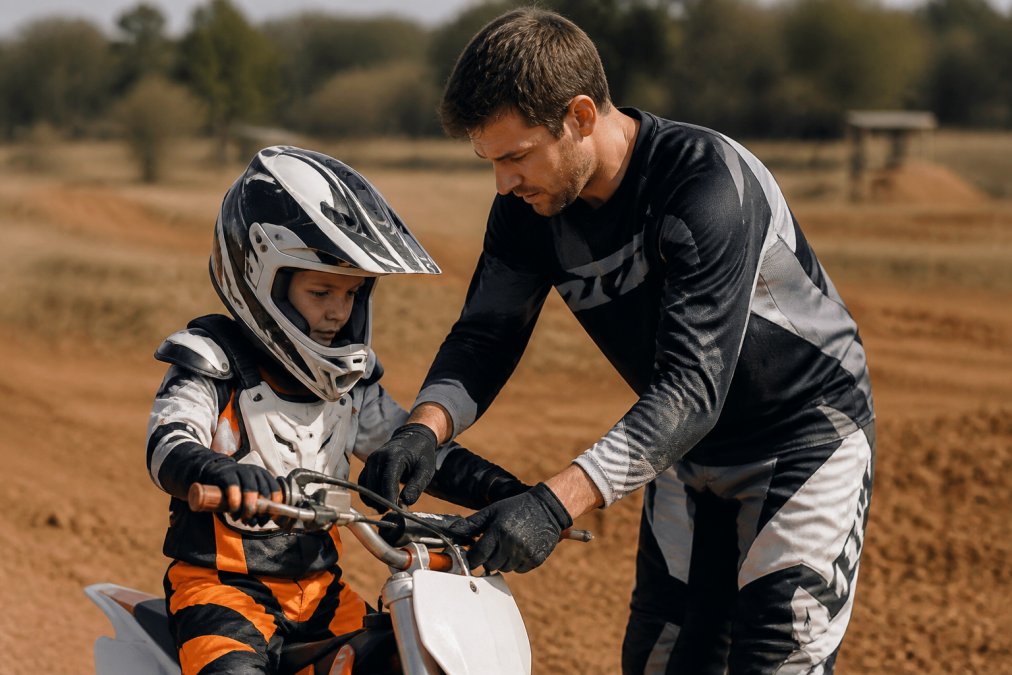
The real difference comes down to engagement. The Moto Academy works best for riders who can follow along with instructional video content and apply it independently. BuddyMX appeals to kids who benefit from interactive elements and app-based progress tracking. Neither approach is inherently superior, it depends on whether your child learns better through traditional video instruction or interactive app-based drills.
Online Motocross Training for Kids: Platform Features
Both platforms recognize that online motocross training for kids requires more than just video. The Moto Academy provides downloadable technique guides and training protocols that parents can reference during practice sessions. Their curriculum covers mental preparation alongside physical skills, addressing the psychological side of rider development.
BuddyMX's platform includes a community element where young riders can see their progress tracked over time. This visual representation of skill acquisition often motivates kids to practice consistently. The app also offers video playback of specific techniques with overlay cues highlighting key body movements.
For parents seeking screen-free alternatives or supplemental resources, Nelmgerian MX offers training journals and activity books that complement any online program. These tools help young riders document their progress, set goals, and stay engaged with motocross learning even when they're not riding or watching videos. Our resources are designed to develop young riders' minds, creativity, and passion for the sport, and provide tools to help young riders succeed on and off the track.
Skill Level Suitability and Rider Development
The Moto Academy positions itself for riders aged 6 and up, with content designed for beginners learning foundational skills. Their progression system moves from basic throttle management through intermediate cornering techniques. This makes them suitable for riders just starting their motocross journey.
BuddyMX accommodates a broader skill range, from complete beginners through more advanced riders. Their rider development approach includes assessments that help identify where a child stands in their skill acquisition journey. This flexibility appeals to families with multiple children at different levels.
Consider your child's current experience. A 5-year-old on a 50cc needs different instruction than an 8-year-old on a larger bike. The Moto Academy's beginner focus works well for younger riders just learning throttle control and basic body positioning. BuddyMX's broader range suits families where kids progress at different speeds or have varying experience levels. Matching the right machine to these developmental stages often requires evaluating the specific mechanical advantages found in beginner dirt bikes.
Motocross Rider Development Tools and Resources
Motocross rider development tools extend far beyond video instruction, they bridge the gap between watching technique and executing it under pressure. Understanding what each platform's tools actually target reveals whether they address your child's specific skill gaps.
The Moto Academy's Instructional Architecture
The Moto Academy provides downloadable technique guides and training protocols organized by skill progression stage. These resources break down individual techniques into mechanical components: throttle control separates into smooth application, modulation during cornering, and recovery after braking. Body positioning is deconstructed into seat placement, knee grip, and arm position relative to throttle input.
This modular approach works well for riders who benefit from understanding the why behind each movement. A parent can reference a specific guide during practice, isolate one element (e.g., "focus on knee grip today"), and give the rider concrete feedback tied to the instructional content. The downloadable format means no internet dependency at the track, critical for riders who practice in areas with poor connectivity.
The limitation: these guides assume the rider can translate visual instruction into muscle memory independently. A 6-year-old watching a video on throttle control may understand it intellectually but struggle to apply it without real-time feedback.
BuddyMX's Interactive Feedback Loop
BuddyMX's app-based tools operate differently. Rather than static guides, the platform offers video playback with overlay cues, animated arrows or highlights showing where the rider's body should be during specific phases of a turn. This visual scaffolding helps younger or more visual learners connect the concept to execution.
Nelmgerian MX Training Journal →
The app's progress tracking system is the key differentiator. Riders (or parents) log practice sessions, mark which skills were practiced, and the app visualizes progression over weeks and months. A rider might see: "Throttle control: 40% proficiency (Week 1) → 65% proficiency (Week 8) → 82% proficiency (Week 16)." This gamification element, seeing measurable progress, motivates many kids to practice consistently.
The trade-off: this requires active logging and engagement with the app. A rider who practices but doesn't log progress won't see the motivational benefit. Families with multiple devices or inconsistent internet access may find the app-dependent model frustrating.
Skill-Specific Resource Gaps
Neither platform typically addresses equipment setup as part of rider development, a notable gap. A rider's throttle control improves faster on a bike with responsive carburetor tuning versus a sluggish one. Body positioning feels different on a properly suspended bike versus one with worn shocks. Yet most online platforms treat bike setup as separate from rider technique.
Similarly, mental preparation tools are often minimal. Both platforms mention confidence-building, but few provide structured exercises for managing track anxiety, visualizing lines before riding, or recovering mentally from crashes. This is where supplemental resources, training journals that prompt reflection on mental state, not just physical technique, add value.
Combining Tools for Faster Progression
Most successful young riders use a layered approach: video instruction (understanding the concept), app-based tracking (motivation and accountability), and supplemental documentation (reflection and goal-setting).
Value for Money and Long-Term ROI
Evaluating these platforms requires moving beyond subscription cost and into measurable outcomes. The competitive landscape typically offers only subjective forum opinions; a structured ROI framework reveals which platform delivers genuine skill progression.
Understanding the Cost Structure
Measuring Real Skill Progression
- Throttle control consistency: Can the rider modulate speed smoothly without jerky inputs? Most platforms claim to teach this, but few track whether riders actually improve measurably.
- Cornering line selection: Does the rider understand apex positioning and exit speed? Video instruction alone often leaves this abstract; interactive feedback (like BuddyMX's app cues) can make it concrete.
- Confidence in new terrain: Can the rider apply learned techniques to unfamiliar tracks? This is the ultimate ROI test, does the platform build transferable skills or just video knowledge?
- Reduced coaching dependency: Does the rider need fewer in-person coaching hours to progress? If a platform cuts your annual coaching bill by $500-$1,000 while maintaining skill gains, that's measurable ROI.
The Hidden Cost of Engagement
Long-Term Value Calculation
Making Your Choice
Your decision should rest on three factors: your child's learning style, their current skill level, and how they stay most engaged with motocross. If your child learns best through watching and practicing independently, The Moto Academy's video-focused approach works well. If they respond to interactive elements and app-based tracking, BuddyMX's platform may keep them more motivated.
Frequently Asked Questions
What are the primary differences between The Moto Academy and BuddyMX?
The Moto Academy emphasizes comprehensive video instruction with detailed riding technique breakdowns, including throttle control, body positioning, and line selection. BuddyMX focuses on interactive coaching feedback and personalized progression tracking. The Moto Academy suits riders who want structured, self-paced learning, while BuddyMX works better for families seeking direct coaching interaction. Both platforms cover essential skills like braking points, cornering speed, and track etiquette, but their delivery methods and coaching feedback structures differ significantly.
Is The Moto Academy worth the subscription cost for beginners?
The Moto Academy works well for beginners if your child responds to video instruction and structured progressions. The platform breaks down fundamental skills like clutch modulation, bike setup, and mental preparation into digestible lessons. However, beginners benefit most from platforms offering real-time coaching feedback. If your child is just starting and needs personalized guidance on technique drills and safety protocols, you may want to compare The Moto Academy's features against platforms offering more direct instructor interaction before committing.
Does BuddyMX offer personalized feedback for young motocross riders?
Yes, BuddyMX's core strength is personalized coaching feedback. Riders can submit video or receive direct coaching on specific skills like throttle management, body positioning, and lap times. This real-time feedback helps accelerate skill acquisition and rider development compared to self-paced video platforms. For families wanting their child to receive tailored coaching on technique drills and progress tracking, BuddyMX's personalized approach is a significant advantage over platforms offering only instructional videos.
Which platform is better for children just starting to ride?
Beginning riders benefit from platforms that combine clear instructional videos with safety protocols and skill assessment. The Moto Academy provides structured fundamentals through video, while BuddyMX offers personalized feedback to catch bad habits early. For children ages 5-9 just starting on 50cc bikes, BuddyMX's coaching feedback may prevent technique mistakes from becoming ingrained. However, The Moto Academy works if your child learns well from visual instruction and your family can supplement with in-person coaching elsewhere.