 ultimate-guide
Motocross Discipline for Young Riders: Build Champions
Table of Contents
- What Is Motocross Discipline for Young Riders?
- How to Get Into Motocross Racing as a Beginner
- Motocross Safety Gear for Kids: Essential Requirements
- Youth Motocross Racing Classes: Structured Skill Development
- Building Discipline Through Patience and Goal Setting
- Financial Breakdown of Entry-Level Motocross
- Transitioning From Hobby Riding to Competitive Motocross
- Parental Support and Long-Term Injury Prevention
- Frequently Asked Questions
Motocross Discipline for Young Riders: Build Champions
Last Updated: July 11, 2026
Building motocross discipline for young riders requires mental toughness, physical precision, and structured skill development that separates confident riders from those who quit after their first crash. At Nelmgerian MX, we've watched hundreds of young riders transform through disciplined training. Those who embrace patience and progressive skill-building become the ones who thrive on and off the track.
This guide covers foundational mindset shifts, safety requirements, training progressions, and the financial realities parents need to understand before committing to this sport.
What Is Motocross Discipline for Young Riders?
Motocross discipline encompasses the mental strength, physical confidence, and structured practice habits required to succeed in off-road motorcycle racing. True discipline means understanding that riding a dirt bike is a full-contact sport with real consequences. Young riders must develop respect for the machine, the track, and their own limitations, respect that translates into humility, perhaps the most valuable trait any young rider can possess.
Mental Strength and Focus Development
Mental toughness separates riders who plateau from those who advance to competitive levels. Mental strength develops through exposure and repetition. A rider who completes 20 laps at a controlled pace builds confidence differently than one who does 5 panicked laps at maximum speed. The mind needs time to process sensory information: the feel of the bike, the line through a corner, the rhythm of acceleration and braking.
Research shows that young athletes who set specific, measurable goals demonstrate significantly higher motivation and persistence than those focused on general outcomes. Instead of "get better at motocross," a disciplined young rider sets targets like "nail the rhythm section in under 45 seconds" or "complete 10 consecutive laps without touching the ground."
Focus development also requires managing distractions through pre-ride routines, breathing exercises, or visualization, tools that give riders control over their mental state regardless of external conditions.
Physical Confidence and Riding Technique
Physical confidence emerges from mastery of specific skills in sequence. A young rider cannot develop confidence by attempting advanced maneuvers before mastering fundamentals. The progression must be intentional: balance before speed, line selection before throttle control, body positioning before jumping.
Riding technique involves dozens of micro-movements that, when coordinated, create smooth, fast riding. The throttle hand must be smooth and progressive. The body must shift weight fluidly to maintain traction. The eyes must look ahead to the next section, not at the front wheel. Physical confidence also depends on the rider's understanding of their own capabilities, knowing exactly what speed they can handle in specific conditions without pushing beyond that limit out of ego.
How to Get Into Motocross Racing as a Beginner
Starting in motocross requires three foundational decisions: choosing the right bike, finding quality training, and committing to a realistic timeline. Expect 3-6 months of consistent practice before a young rider is ready for their first organized race.
Choosing the Right Dirt Bike for Beginners
The most common mistake parents make is buying a bike that's too large or too powerful. A beginner needs a bike they can touch the ground with both feet while seated, with an engine size that matches their age and experience. For most young riders ages 5-8, a 50cc pit bike or small-frame 70cc works well. Riders 8-12 typically progress to 110cc or 125cc machines.
Consider these factors when selecting a beginner dirt bike:
- Seat height: Young rider should touch ground with both feet when seated
- Engine size: Match to age and prior riding experience
- Weight: Lighter bikes are easier to control and recover from mistakes
- Suspension: Should be tuned for the rider's weight
- Maintenance requirements: Choose a model with readily available parts and service
Used bikes are acceptable for beginners if well-maintained. A well-maintained used 125cc can serve a young rider for 2-3 years before they outgrow it.
Finding Local Tracks and Training Facilities
Quality training facilities make the difference between a young rider who develops proper technique and one who picks up bad habits. Look for tracks that offer beginner-specific practice sessions, instruction from certified coaches, safe environments with proper safety equipment and medical staff, and multiple difficulty levels for progression.
Supervised training environments with qualified instruction reduce injury rates by 40% compared to unsupervised riding. Ask about track etiquette and group dynamics when selecting a facility. A young rider should be grouped with riders of similar skill level.
Motocross Safety Gear for Kids: Essential Requirements
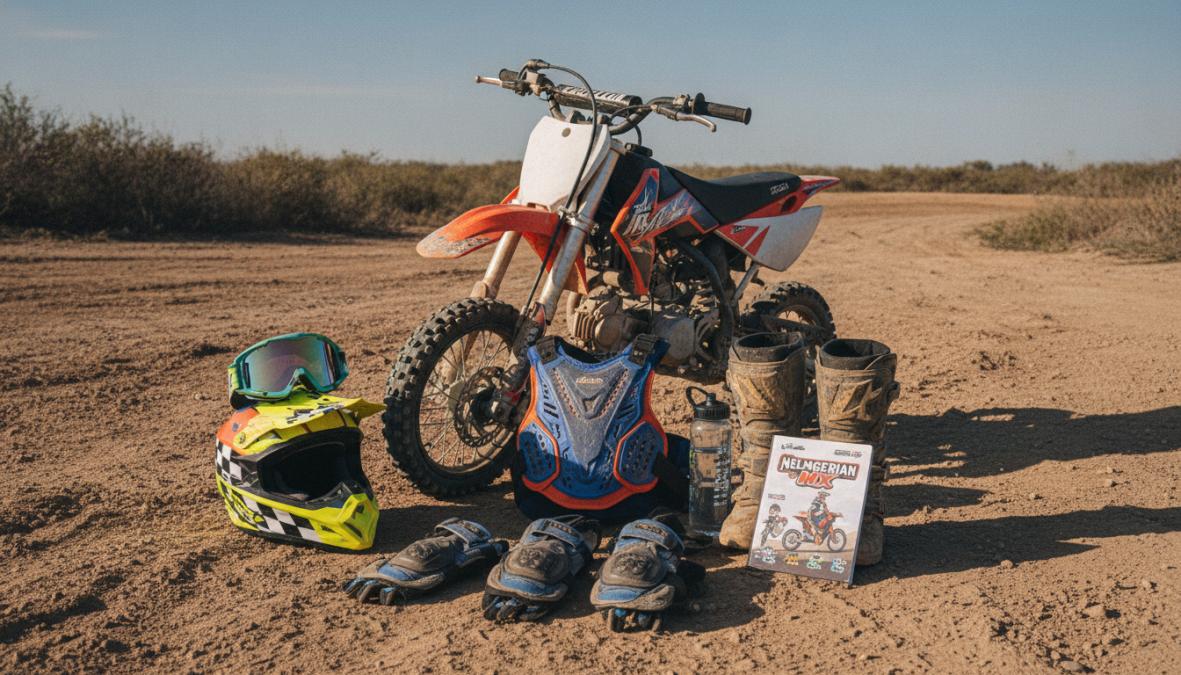
Safety gear isn't optional, it's the foundation of responsible motocross participation. A young rider who crashes at 20 mph can walk away from a properly equipped bike with minor injuries. Budget at least several hundred dollars for a complete safety setup, and expect to replace items as your young rider grows.
Helmet Selection and Fit Standards
The helmet is the single most important piece of safety equipment. A properly fitted helmet can mean the difference between a concussion and a serious head injury. Helmet fit requires the helmet to sit level on the head, with the bottom edge one finger-width above the eyebrows. The cheek pads should be snug without causing pain. When you gently try to rotate the helmet side-to-side, it should move minimally.
Motocross helmets must meet DOT, ECE, or Snell certification standards. These certifications verify that the helmet can absorb impact energy and protect against rotational forces. Consider these helmet features for young riders:
- Visor size: Larger visor protects face and eyes from roost
- Ventilation: Proper airflow prevents overheating
- Weight: Lighter helmets reduce neck strain
- Liner comfort: High-quality padding prevents pressure points
- Replacement schedule: Replace every 3-5 years or after significant impact
A quality motocross helmet costs several hundred dollars, an investment in your young rider's safety.
Body Armor, Boots, and Protective Clothing
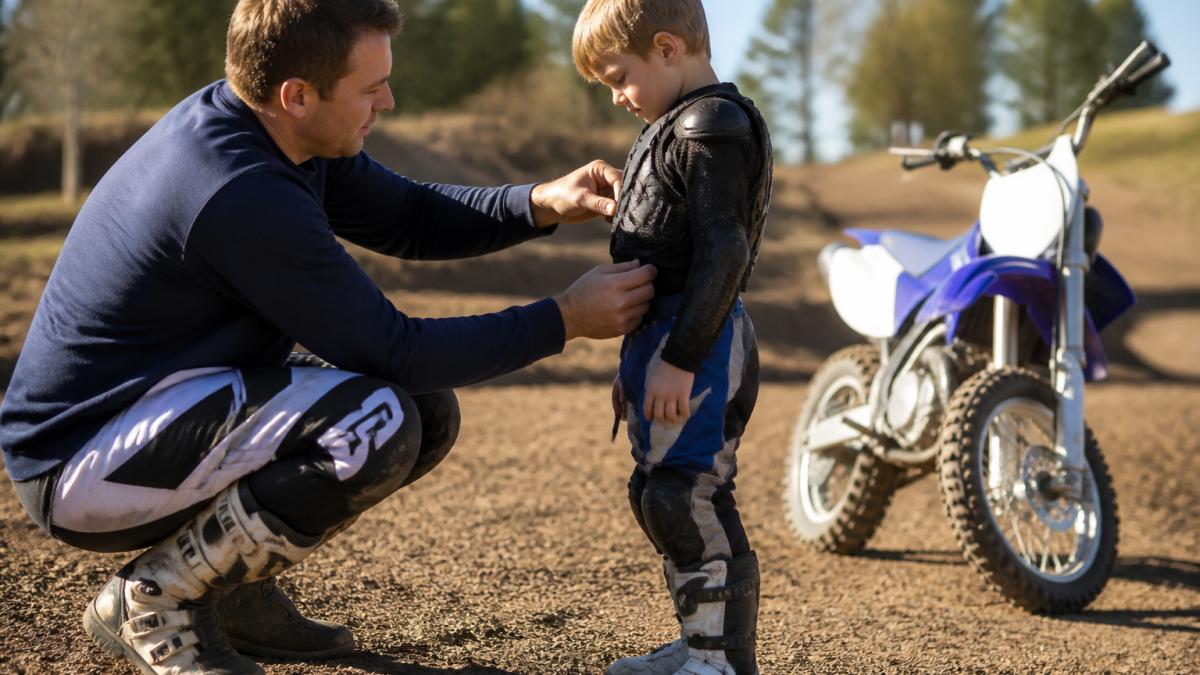
Body armor protects the chest, back, and shoulders from impacts. Young riders should wear chest protectors during all riding sessions. Motocross boots are specifically designed to prevent ankle injuries, among the most common motocross injuries. Quality motocross boots have reinforced ankle support, oil-resistant soles, and protection for the shin and foot.
A complete safety gear setup for young riders includes:
- DOT/ECE-certified motocross helmet
- Chest protector and back protector
- Motocross jersey and pants with reinforced areas
- Motocross-specific boots with ankle support
- Gloves with padded palms and wrist support
- Neck brace (optional but recommended for competitive riders)
Replace safety gear as your young rider grows. Budget $200-400 annually as young riders grow.
Youth Motocross Racing Classes: Structured Skill Development
Organized youth motocross racing classes provide the structure and progression that young riders need to develop discipline. These classes group riders by age, skill level, and bike size, ensuring fair competition and focused skill development.
1-on-1 Coaching vs. Group Training Programs
One-on-one coaching provides personalized feedback and can accelerate skill development significantly. A coach observes a young rider's technique, identifies specific areas for improvement, and provides targeted drills to address weaknesses.
Group training programs offer different benefits. Young riders learn from watching other riders, develop competitive awareness, and benefit from the motivation of training alongside peers. The ideal approach combines both: weekly group training sessions for general skill development and periodic one-on-one coaching to address specific technical issues.
When evaluating coaching, look for instructors with competitive motocross experience who can communicate clearly with young riders and break down complex techniques into simple, understandable steps.
Progressive Training Phases for Young Riders
Effective motocross training follows a progression that builds skills sequentially. Rushing through phases creates gaps in fundamental skills that become obvious at higher speeds.
Phase 1: Foundational Control (Weeks 1-4) Young riders focus on basic bike control: starting, stopping, turning at low speed, and body positioning. No speed work.
Phase 2: Line Selection and Rhythm (Weeks 5-12) Riders learn to identify the fastest line through corners and sections and practice maintaining consistent rhythm. Speed increases gradually.
Phase 3: Throttle Management and Acceleration (Weeks 13-20) Riders develop smooth throttle control and learn to accelerate out of corners without losing traction.
Phase 4: Competitive Awareness (Weeks 21+) Riders practice racing against others, managing pressure, and executing strategies.
This progression typically takes 4-6 months of consistent training.
Building Discipline Through Patience and Goal Setting
Discipline in motocross isn't about punishment, it's about the habits and mental frameworks that allow young riders to improve consistently. Patience is the foundation of discipline. Motocross improvement isn't linear, and understanding that setbacks are part of the learning process prevents frustration from derailing progress.
Establishing Realistic Milestones
Young riders need concrete, measurable goals to maintain focus and motivation. Specific goals like "complete the rhythm section without dabbing" or "lap time under 50 seconds" provide clear targets.
Effective goals follow a progression:
- Short-term (1-2 weeks): "Master the turn-in to the first corner"
- Medium-term (1-2 months): "Consistently complete 10 laps without major mistakes"
- Long-term (6 months): "Compete in the regional championship"
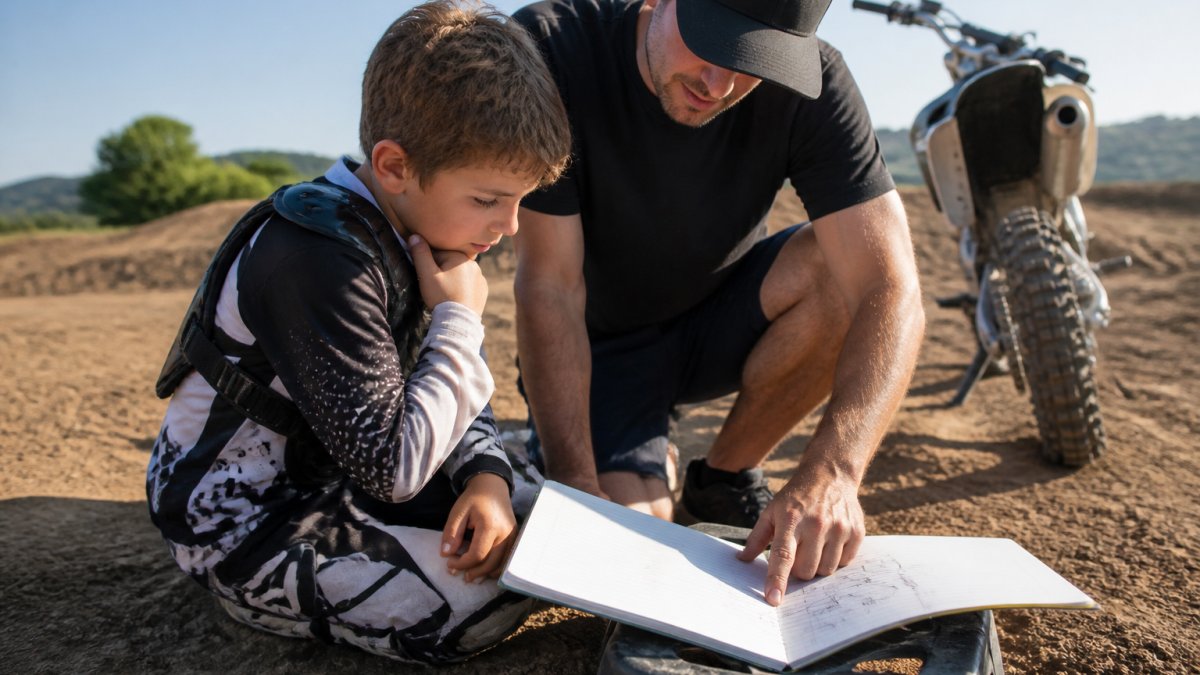
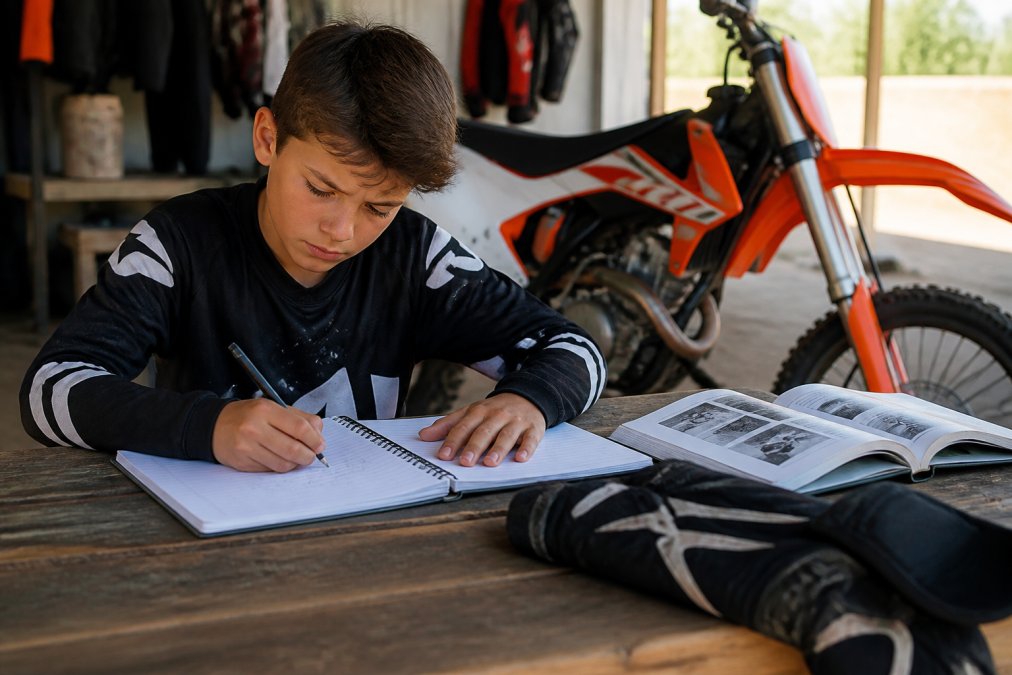
Write goals down. Young riders who write their goals and review them regularly show significantly higher achievement rates than those who keep goals in their heads.
Learning Humility and Handling Setbacks
Motocross is humbling. Every rider crashes. How a young rider processes these experiences determines whether they develop resilience or quit the sport. Humility means understanding that the bike and track are always in control, not the rider.
Coaches and parents play a critical role in helping young riders process setbacks productively. After a crash or poor performance, ask guiding questions rather than providing answers: "What do you think happened?" "What would you do differently?" "What's one thing you'll focus on next time?"
Financial Breakdown of Entry-Level Motocross
Understanding the true cost of motocross helps parents make informed decisions and plan budgets appropriately.
Initial Investment vs. Ongoing Costs
The initial investment for entry-level motocross includes the bike, safety gear, and initial training:
| Category | Cost Range | Notes |
|---|---|---|
| Beginner dirt bike (new) | $1,500-$3,500 | Used bikes: $800-$1,500 |
| Full safety gear | $600-$1,200 | Helmet, armor, boots, gloves, jersey/pants |
| Initial training/coaching | $200-$500 | First few sessions or lessons |
| Track membership or fees | $100-$300 | Annual or per-visit costs |
| Total Initial Investment | $2,400-$5,500 | Varies by location and choices |
Ongoing annual costs include maintenance, replacement gear, and training fees:
| Category | Annual Cost | Notes |
|---|---|---|
| Routine maintenance | $300-$600 | Oil changes, air filter, chain maintenance |
| Replacement safety gear | $200-$400 | Boots, gloves, jersey wear out |
| Training/coaching | $500-$1,500 | Depends on frequency and coaching level |
| Track fees | $100-$300 | Varies by facility and frequency |
| Fuel and consumables | $200-$400 | Gas, spark plugs, air filters |
| Total Annual Cost | $1,300-$3,200 | Competitive riders spend more |
Budgeting for Maintenance and Upgrades
Dirt bikes require regular maintenance to stay safe and reliable. Common maintenance expenses include oil and filter changes ($50-100 per service), air filter replacement ($30-50 per season), chain maintenance ($20-50 per service), spark plug replacement ($15-30 per season), and suspension service ($200-400 annually for competitive riders).
Budget for replacement parts as well. Handlebars, grips, and plastic fairings break during crashes. Many families find it helpful to set aside a monthly maintenance fund to prevent surprise expenses from derailing the budget.
Transitioning From Hobby Riding to Competitive Motocross
Many young riders start as casual trail or practice riders and develop interest in competitive racing. This transition requires a shift in mindset, training approach, and commitment level.
Recognizing Readiness for Competition
A young rider is ready for competitive racing when they demonstrate consistent skill, mental maturity, and genuine interest. Readiness isn't about age or how long they've been riding, it's about capability and motivation.
Signs of readiness include consistent lap times with minimal variation, ability to focus during entire practice sessions, understanding of racing rules and track etiquette, genuine desire to race (not pressure from parents), and ability to handle pressure without panic or recklessness.
Have honest conversations with your young rider about competitive racing. Their answers reveal whether they're genuinely ready or if they feel external pressure.
Race Preparation and Mental Conditioning
Competitive motocross requires mental preparation beyond technical skill. Young riders must learn to manage pre-race anxiety, maintain focus during races, and process results constructively.
Mental conditioning involves visualization (mentally rehearsing successful performance), breathing exercises (calming the nervous system), pre-race routines (creating familiarity and confidence), and positive self-talk (instructive rather than negative).
After races, help your young rider process results productively. Avoid immediately criticizing performance. Instead, ask what they learned, what went well, and what they'll focus on next time. This approach builds resilience and a growth mindset.
Parental Support and Long-Term Injury Prevention
Parents play a critical role in their young rider's success and safety. The right parental approach builds confidence, manages risk, and keeps the sport enjoyable.
Creating a Safe Riding Environment
A safe riding environment starts with quality training facilities and proper supervision. Never allow unsupervised riding, especially for young riders still developing judgment and skills.
Establish clear safety rules: all safety gear required every time, no riding beyond the young rider's skill level, mandatory rest periods to prevent fatigue-related mistakes, and regular bike maintenance inspections before each session.
Create a culture where safety isn't negotiable. Young riders who grow up in environments where safety is consistently emphasized develop habits that protect them throughout their riding careers.
Recovery and Preventing Common Motocross Injuries
Motocross injuries are common, but many can be prevented through proper technique, conditioning, and recovery practices. A conditioning program for young riders should include flexibility work, core strengthening, leg strengthening, upper body conditioning, and cardiovascular fitness.
Recovery is equally important as training. Young riders need adequate sleep (8-10 hours), proper nutrition, and rest days. Young athletes who incorporate structured conditioning and recovery protocols reduce injury rates by up to 50% compared to those who rely on riding alone.
If a young rider sustains an injury, seek professional medical evaluation before returning to riding. A conservative approach to injury recovery prevents long-term complications.
Young riders who develop genuine motocross discipline become more than just fast riders, they become resilient, focused individuals who carry these qualities into all areas of life. The sport teaches patience, humility, and the value of consistent effort in ways that few other activities can match.
At Nelmgerian MX, we've created tools designed to keep young riders engaged with the sport beyond the track. Our rider training journals help young riders set goals and track progress, while our children's storybooks and coloring books build passion for motocross culture. As we expand into our private track in Crossville, Alabama, we're creating a complete destination where families can learn, ride, and grow together. Start your young rider's journey with resources that build both skill and confidence.
Frequently Asked Questions
What age should a child start motocross discipline training?
Most children can begin basic off-road riding instruction between ages 4-7, depending on physical size, coordination, and maturity level. Motocross discipline for young riders develops best when children demonstrate focus and the ability to follow safety instructions. Starting with smaller bikes and controlled environments allows young riders to build confidence gradually before progressing to competitive settings.
What motocross safety gear for kids is absolutely required?
Essential safety gear includes a DOT/ECE-certified helmet, body armor (chest and back protection), motocross boots, gloves, and long sleeves and pants. A properly fitting helmet is non-negotiable, it must sit level on the head with no more than one finger of space between the helmet and eyebrows. Additional protective equipment like neck braces and knee guards reduces injury risk significantly during training and racing.
How do I find youth motocross racing classes near me?
Search for local motocross tracks, training facilities, and riding schools in your area through online directories and local motorsport associations. Many tracks offer structured youth motocross racing classes with certified instructors who teach riding technique, track etiquette, and safety. Ask other motocross families for recommendations, and visit facilities to observe instruction quality and safety standards before enrolling your child.
How much does it cost to get into motocross racing for kids?
Entry-level motocross costs vary widely depending on whether you purchase or rent equipment. Initial investments include a dirt bike, safety gear, and training fees. Ongoing expenses cover fuel, maintenance, track fees, and potential upgrades. Pricing depends on bike size, gear quality, and local track rates. Contact Nelmgerian MX or local training facilities for current pricing and package options tailored to your budget and goals.
This article was written using GrandRanker