 ultimate-guide
Motocross for Beginners Guide: Start Riding Today
Table of Contents
- Why Motocross Is Achievable for New Riders
- Essential Motocross Gear for Beginners
- Best Beginner Motocross Bikes: Finding Your First Dirt Bike
- Basic Motocross Riding Techniques Every Beginner Needs
- How Much Does It Cost to Start Motocross?
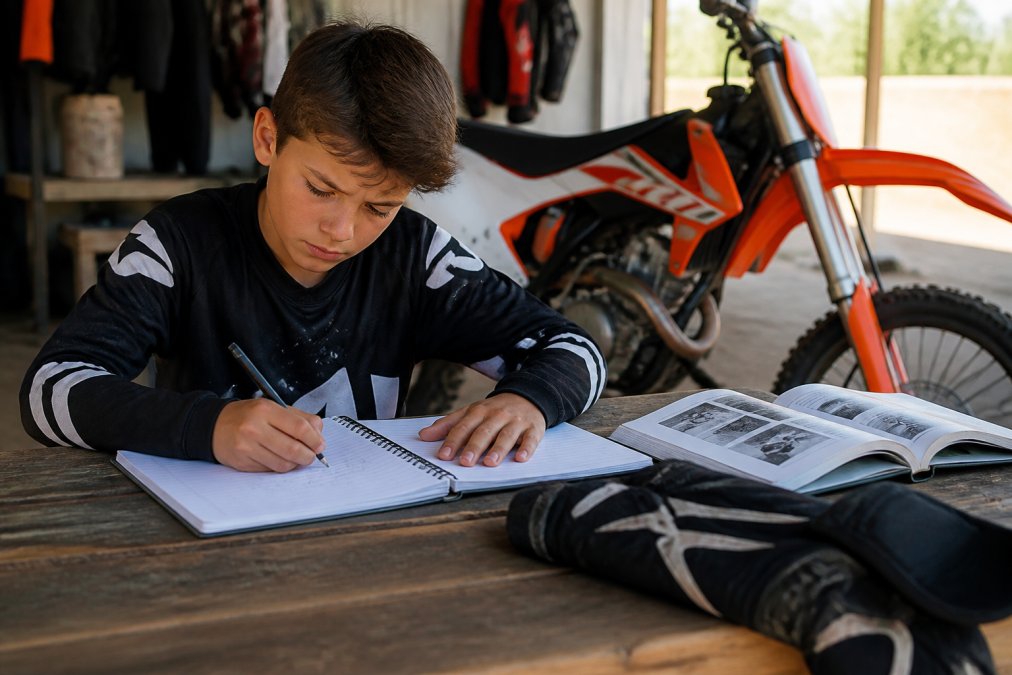
- Preparing for Your First Track Day: Training and Mental Readiness
- Bike Maintenance and Prep Basics for Beginners
- Physical Fitness and Post-Ride Recovery for MX Riders
- Frequently Asked Questions
Motocross for Beginners Guide: Start Riding Today
Last Updated: July 6, 2026
Getting started with motocross doesn't require thousands of dollars or natural athletic ability. What matters most is understanding the fundamentals, investing in proper safety gear, and committing to consistent practice. This guide breaks down everything you need to know, from selecting your first dirt bike to preparing mentally for track day.
Why Motocross Is Achievable for New Riders
Modern dirt bikes are lighter, more forgiving, and easier to control than machines from a decade ago. The real advantage new riders have today is access to knowledge, technique videos, local clubs, and mentorship from experienced riders. The learning curve still exists, but you're not climbing it blind.
What most beginners get wrong: they think they need to be fearless. You don't. The best riders manage fear, respect the bike and track, and build confidence gradually. Fear keeps you safe.
Essential Motocross Gear for Beginners
Protective equipment isn't optional. It's the difference between a bad day and a life-changing injury.
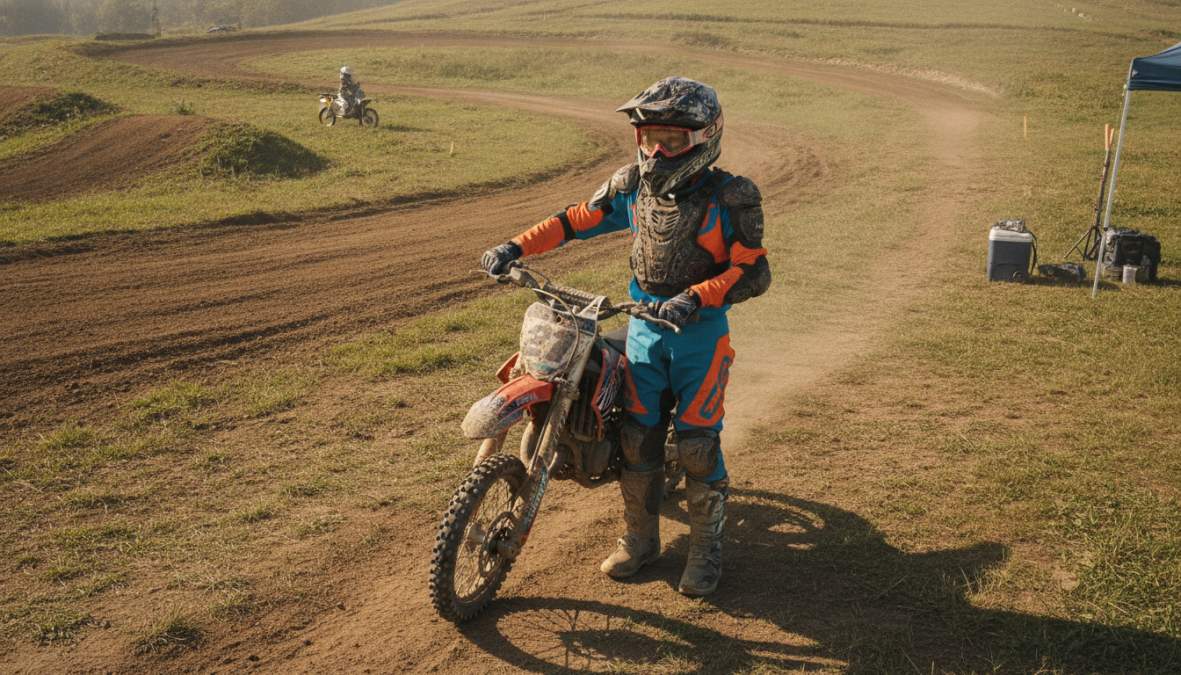
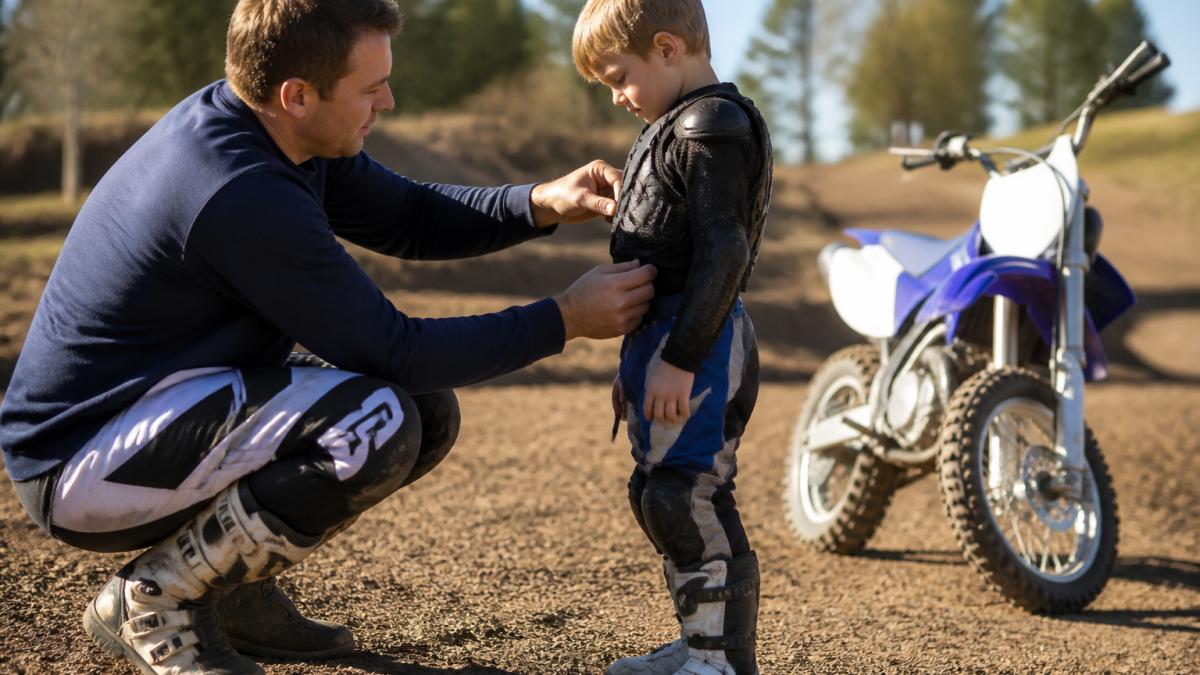
IMAGE: Young beginner rider wearing complete protective gear including helmet, boots, jersey, pants, and gloves standing with [dirt bike at outdoor track in bright daylight | section:Essential Motocross Gear for Beginners]
Helmet, Boots, and Protective Equipment
Your helmet is non-negotiable. A quality motocross helmet costs $300-600 and is the single most important piece of gear you'll buy. Look for DOT or Snell certification. Brands like Bell, Fox, and Troy Lee Designs dominate the market. Replace it after any significant impact, even if it looks fine.
Motocross-specific boots ($150-300) are stiffer than regular motorcycle boots and designed for the impacts you'll experience. Your ankles will thank you after your first crash.
Body armor includes chest protectors, back protectors, and shoulder guards. Start with a basic chest protector ($80-150) and add more coverage as you get comfortable.
Jersey, Pants, and Gloves
Motocross-specific jerseys ($60-120) are made from lightweight, breathable mesh designed for heat and movement. Regular athletic wear tears too easily and offers no protection.
Pants ($100-250) include reinforced areas on the knees and seat. Quality matters here, cheap pants rip in your first crash.
Gloves ($40-80) protect your hands and improve grip. Your instinct during a crash is to catch yourself with your hands. Gloves reduce road rash and give you confidence to hang on.
Best Beginner Motocross Bikes: Finding Your First Dirt Bike
Any reliable beginner-friendly bike will teach you what you need to know. Your second bike choice matters more than your first.
Two-Stroke vs Four-Stroke Engines
Two-stroke engines are lighter and deliver power directly but require more maintenance. Four-stroke engines are heavier, more fuel-efficient, and smoother. For your first bike, four-stroke is the safer choice because the power delivery is predictable and forgiving.
Popular beginner four-stroke bikes include the Honda CRF150F, Yamaha YZ125F, and Kawasaki KLX110. These bikes are designed specifically for riders learning fundamentals.
Choosing the Right Bike Size and Class
Sit on the bike with both feet flat on the ground, you should touch the ground with your toes, not your whole foot. If you're stretching, the bike is too big.
For riders under 5'6" or weighing less than 150 pounds, a 110-125cc four-stroke is ideal. Taller or heavier riders can handle 150cc bikes.
| Bike Class | Engine Size | Rider Height | Rider Weight | Best For |
|---|---|---|---|---|
| Mini | 50-110cc | Under 5'4" | Under 120 lbs | Young children, very small adults |
| Beginner 4-Stroke | 125-150cc | 5'4"-5'10" | 120-180 lbs | Most adult beginners |
| Intermediate | 250cc | 5'8"+ | 160+ lbs | Riders with 1+ season experience |
| Advanced | 450cc | 5'10"+ | 180+ lbs | Competitive riders, experienced only |
Budget $2,000-4,000 for a used beginner bike in good condition. New bikes cost $4,500-7,000. Used is fine if you inspect carefully, check the air filter, chain tension, and suspension. Ask for service records.
Basic Motocross Riding Techniques Every Beginner Needs
Technique separates riders who improve from those who crash repeatedly. Fundamentals are learnable through focus and repetition.
Body Position and Clutch Control
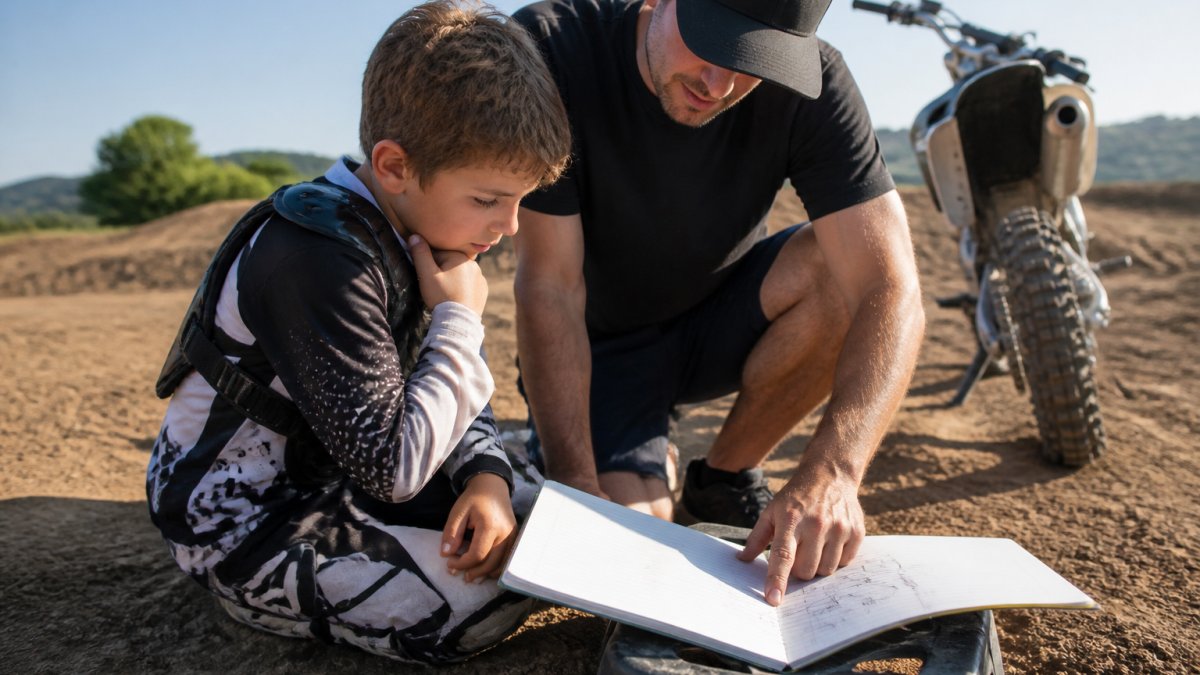
Sit toward the back of the seat, not the front. Your elbows should be up and out, not tucked. Keep your head over the handlebars. This position gives you control and lets you move your weight around the bike.
Clutch control manages power delivery. Pulling the clutch lever disengages the engine. Releasing it gradually engages power. Smooth clutch work means smooth acceleration.
Practice clutch control in an open area before hitting the track. Start in first gear, pull the clutch fully, roll on throttle, then slowly release the clutch while maintaining steady throttle. The bike should move forward smoothly.
Throttle Management and Cornering
Throttle control comes after body position and clutch control. Too many beginners focus on throttle before mastering fundamentals.
In corners, your body position changes. As you approach a turn, sit forward and inside the bike. Weight the outside peg, this keeps the bike upright while your body leans into the turn. Roll off the throttle before the turn, brake if needed, then roll back on smoothly as you exit.
Start slow and focus on smooth inputs rather than speed. A rider with smooth throttle control and good body position will look faster than a jerky rider, even if the second rider is technically going faster.
Jumping and Suspension Basics
Don't attempt jumps in your first month. Master flat ground first. When ready, start with small doubles, jumps close enough that you can't crash between them.
Beginners shouldn't adjust suspension settings. Learn to ride the bike as it comes. After a few months, you'll understand what adjustments feel like and what you actually need.
How Much Does It Cost to Start Motocross?
Your first year of motocross will cost between $4,000 and $8,000, depending on whether you buy new or used and how often you ride.
First-Year Budget Breakdown
- Dirt bike: $2,500-5,000 (used) or $5,000-7,500 (new)
- Safety gear (complete set): $800-1,500
- Track membership or day passes: $200-500 per season
- Fuel and maintenance: $500-1,000 per season
- Replacement parts and repairs: $500-1,500
- Training or coaching (optional): $200-800
Total first-year cost: approximately $5,000-9,000 for a complete setup including a used bike and all gear.
Transport and Logistics Costs
A basic enclosed trailer costs $1,500-3,000. An open trailer is cheaper ($800-1,500) but exposes your bike to weather. Some riders haul bikes in pickup trucks with a ramp.
Factor in fuel for transportation. If your track is 30 miles away and you ride twice per month, that's roughly $40-60 per month in gas. Local motocross communities often help by sharing trailers or carpooling, which cuts costs significantly.
Preparing for Your First Track Day: Training and Mental Readiness
Your first track day is nerve-wracking. That's normal. Every rider felt it. The difference between riders who succeed and those who quit is mental preparation.
Track Etiquette and Safety Rules
Read track rules before you arrive. Most tracks require a safety briefing. Attend it fully. The briefing covers gate protocol, flag meanings, and what happens if you crash.
When the gate drops, everyone accelerates. Don't jump the start. Don't block other riders intentionally. If someone is faster, let them pass. Racing is competitive, but it's not a contact sport.
Flag meanings: yellow flag means caution (slow down). Red flag means the moto is stopped. Checkered flag means the moto is finished. Black flag means you're disqualified.
Mental Preparation and Managing Riding Anxiety
Anxiety before your first race is universal. Your heart rate climbs, your hands shake. This is your nervous system preparing you for action, not a sign you shouldn't be there.
Manage anxiety through preparation. Know the track layout. Walk it on foot if possible. Visualize yourself riding smoothly. Breathe deeply before the gate drops, five seconds in, hold for two, five seconds out.
Talk to other riders. Most are nervous too. Hearing that experienced riders still get butterflies before races is reassuring.
Set realistic expectations for your first moto. Your goal isn't to win. Your goal is to finish, learn the track, and ride smoothly. If you do those three things, you've won.
Bike Maintenance and Prep Basics for Beginners
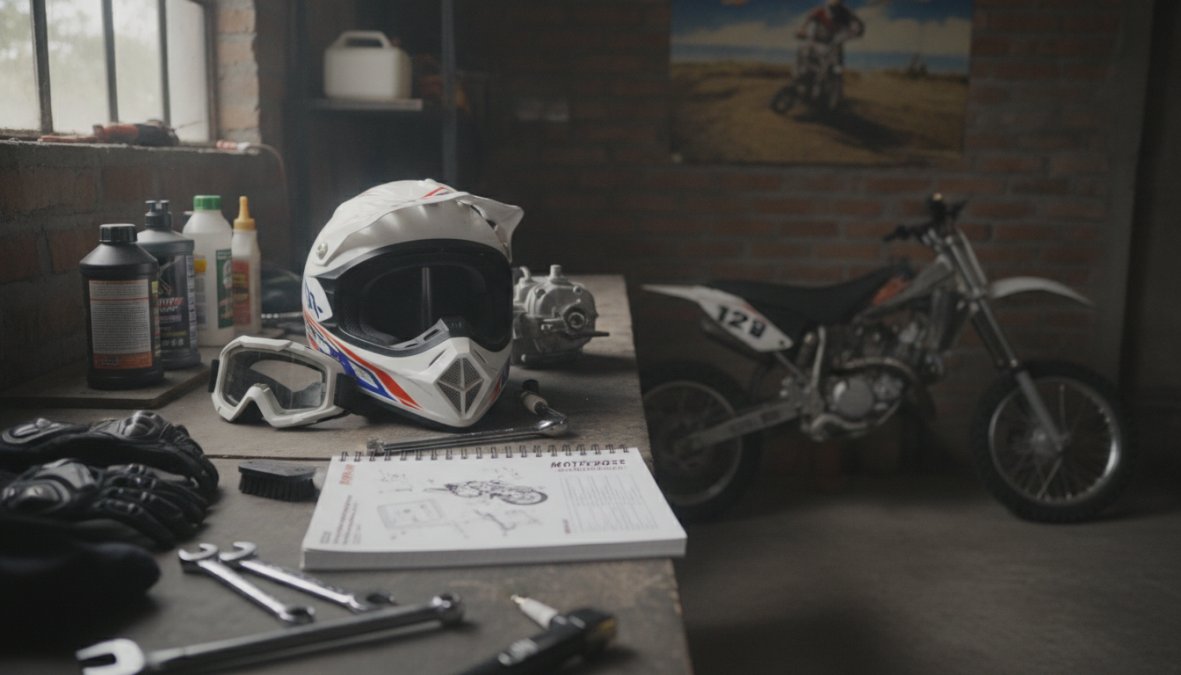
A well-maintained bike is a reliable bike. You don't need to be a mechanic, but you need to know the basics.
Air Filter, Chain Tension, and Suspension Checks
Check your air filter before every ride. A clogged filter reduces power and makes the bike harder to start. If it looks dirty, clean it or replace it ($20-40).
Chain tension should be checked weekly. The chain should have about 1-2 inches of play at the midpoint. Adjust tension by moving the rear wheel forward or backward in the swingarm slots. Lubricate the chain after every few rides.
Visually inspect suspension for oil leaks around fork seals and shock. A small amount of oil is normal. Heavy leaking means you need service. Check that suspension moves smoothly with no grinding sounds.
Tire pressure matters. Check cold (before riding) with a quality gauge. Most beginner bikes run 12-15 PSI front and 13-16 PSI rear. Check your manual for exact specs.
Physical Fitness and Post-Ride Recovery for MX Riders
Motocross is physically demanding. Your forearms, shoulders, core, and legs all take a beating. Fitness is essential for riding well and staying healthy.
Conditioning Before You Hit the Gate Drop
Focus on grip strength, core stability, and leg endurance. Farmers carries build grip strength. Planks and dead bugs build core stability. Squats and lunges build leg strength.
Cardiovascular fitness matters too. Motocross is intense, your heart rate stays elevated for the entire moto. Running, cycling, or rowing for 20-30 minutes builds the aerobic capacity you need.
Start conditioning 4-6 weeks before your first track day. Bodyweight exercises work fine, push-ups, pull-ups, squats, and planks will prepare your body.
Injury Prevention and Recovery Strategies
Crashes happen. Wrist injuries, ankle sprains, and shoulder separations are common. The best prevention is protective gear and controlled riding early in your progression.
Recovery after riding matters as much as the ride itself. Stretch for 10-15 minutes after every ride, focusing on forearms, shoulders, hips, and hamstrings. Ice any sore areas for 15 minutes. Sleep is when your body repairs itself, prioritize seven to nine hours.
If you get injured, don't ride through it. A minor injury that you ignore becomes a major injury. Take a week off if you need to. Your progress won't disappear.
Starting motocross as a beginner is an investment in time, money, and mental energy. But it's an investment that pays dividends in confidence, fitness, and community. The journey starts with gear, a bike, and a decision to show up. Everything else builds from there.
Frequently Asked Questions
Is motocross hard for beginners to learn?
Motocross has a learning curve, but it's achievable with proper training and practice. Most beginners see noticeable improvement within 5-10 track days. Start with basic riding techniques like body position, clutch control, and throttle management on a beginner-friendly dirt bike. Focus on fundamentals before attempting advanced maneuvers like jumping. Physical fitness and mental preparation also play key roles in your progress.
What motocross gear for beginners is absolutely essential?
Essential protective equipment includes a DOT-certified helmet, sturdy boots, goggles, jersey, pants, and gloves. A chest protector and neck brace are highly recommended. Quality gear protects against injuries during crashes and builds confidence on the track. Budget $400-$800 for a complete beginner gear setup. Don't compromise on helmet quality, it's your most critical piece of safety equipment for any moto.
What is the best beginner motocross bike for someone with no experience?
Look for a lightweight dirt bike with manageable power, typically 100-150cc four-stroke or 85-125cc two-stroke engines. Four-strokes offer easier clutch control and smoother power delivery, making them ideal for beginners. Consider your height and inseam when choosing bike size, you should touch the ground with both feet when seated. Used beginner bikes are available, but ensure proper maintenance and inspection before purchase.
How much does it cost to start motocross in your first year?
First-year costs typically range from $3,000-$7,000+. Budget includes: dirt bike ($1,500-$4,000), protective gear ($400-$800), track fees ($50-$200 per day), maintenance supplies ($300-$500), and transport options like a trailer ($500-$2,000). Add training clinics ($200-$500) and fuel. Transport and logistics are often overlooked but essential, factor in trailer rental, fuel, and travel time. Start with a realistic budget and adjust as you progress.
This article was written using GrandRanker