 ultimate-guide
Motocross Gear Guide for Young Riders: Safety First
Table of Contents
- Why Proper Motocross Gear Matters for Young Riders
- Kids Motocross Helmet Safety: Standards & Selection
- Youth Dirt Bike Gear Sizing: Getting the Fit Right
- Beginner Dirt Bike Gear Checklist: Essential Protection
- Best Kids Motocross Gear Sets: What to Look For
- Building Confidence: The Psychological Role of Proper Gear
- Second-Hand Gear Safety: What Parents Should Know
- Climate-Specific Gear: Riding Year-Round
- Frequently Asked Questions
Last Updated: July 22, 2026
Why Proper Motocross Gear Matters for Young Riders
Young riders face real consequences when they skip protective equipment or wear the wrong gear. The difference between a bad fall and a serious injury often comes down to whether a young rider is wearing the right gear, fitted correctly, and appropriate for their skill level. This guide covers everything you need to know about selecting, fitting, and maintaining protective equipment for young motocross riders.
Kids Motocross Helmet Safety: Standards & Selection
Your young rider's helmet is the most critical piece of protective equipment on the bike. A helmet directly determines whether a head impact results in a minor incident or a life-changing injury.
ECE and DOT Certification Explained
ECE certification (Economic Commission for Europe) and DOT certification (Department of Transportation) are the two primary safety standards for motocross helmets. ECE-approved helmets meet strict European testing protocols for impact absorption, retention system strength, and field of vision. DOT-certified helmets follow American standards that are similarly rigorous but use different testing procedures.
For young riders in the United States, DOT certification is the minimum requirement. Many serious riders prefer ECE-approved helmets because the testing standards are considered more comprehensive. When shopping for a kids motocross helmet, look for both certifications if possible. Never purchase a helmet without one of these certifications, regardless of price or brand reputation.
Full-Face vs. Open-Face Helmets for Young Riders
Full-face helmets provide complete coverage of the head, face, and jaw. They're the standard choice for motocross because they protect against roost (rocks and debris kicked up by other riders), facial impacts, and jaw injuries. Open-face helmets leave the face and chin exposed, making them unsuitable for motocross racing or serious training.
For any young rider on a dirt bike doing actual motocross, a full-face helmet is non-negotiable. The investment in a proper full-face helmet certified to ECE or DOT standards will protect your rider's face, jaw, and teeth.
Youth Dirt Bike Gear Sizing: Getting the Fit Right
Proper sizing is where most parents make mistakes. A helmet that's too loose won't stay in place during a crash. Gear that's too tight restricts movement and causes discomfort, leading young riders to remove protection mid-ride.
Measuring Your Young Rider Correctly
Start by measuring your rider's head circumference with a soft measuring tape placed about one inch above the eyebrows and ears, going around the fullest part of the head. Cross-reference this measurement with the helmet manufacturer's size chart.
For body gear, measure chest circumference, waist, and inseam. When trying on gear, have your rider wear the base layers they'll use during actual riding. Always have your rider move through riding positions, standing on pegs and leaning into turns, to verify that gear stays in place and doesn't restrict motion.
Growth-Adjustable Gear: A Smart Investment
Young riders grow quickly, and replacing protective gear every season becomes expensive. Growth-adjustable gear incorporates expandable sizing, adjustable straps, or modular components that accommodate 1-2 sizes of growth. Chest protectors with adjustable side panels, pants with adjustable waistbands and inseam extensions, and jerseys with room to grow are all examples.
The upfront cost of growth-adjustable gear is typically 15-25% higher than fixed-size equivalents, but the value becomes clear when your rider outgrows their first set and the adjustable pieces still fit.
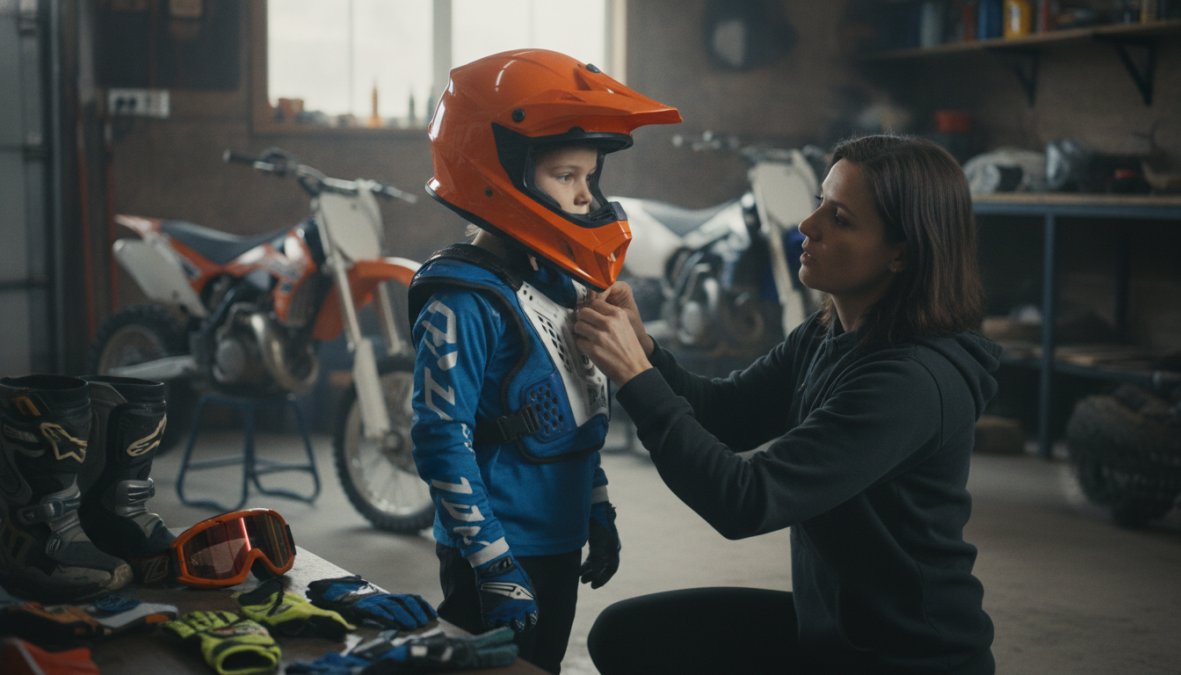
Beginner Dirt Bike Gear Checklist: Essential Protection
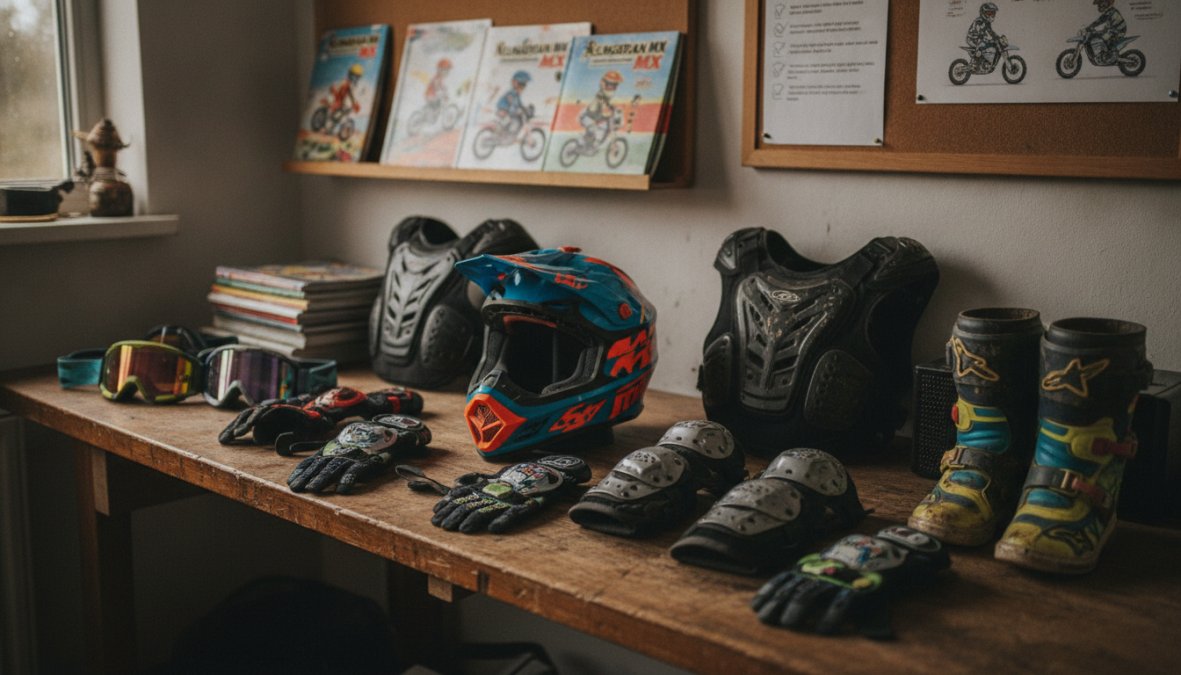
A complete beginner dirt bike gear checklist includes seven core pieces of protective equipment. Each serves a specific function, and skipping any one creates unnecessary risk.
| Gear Type | Primary Protection | Fit Priority | Replacement Frequency |
|---|---|---|---|
| Full-Face Helmet | Head, face, jaw | Snug, no movement | Every 3-5 years or after impact |
| Chest Protector | Ribs, sternum, spine | Secure, no shifting | Every 2-3 years |
| Riding Jersey | Abrasion resistance | Allows full arm movement | Every 1-2 seasons |
| Riding Pants | Leg abrasion, impact | Secure at waist, full leg movement | Every 1-2 seasons |
| Motocross Boots | Ankle support, foot protection | Snug ankle, heel-to-toe room | Every 2-3 years |
| Gloves | Hand grip, finger protection | Snug fit, full dexterity | Every 1-2 seasons |
| Goggles | Eye protection, visibility | Comfortable, no pressure points | Every season or as needed |
Chest Protectors and Roost Deflectors
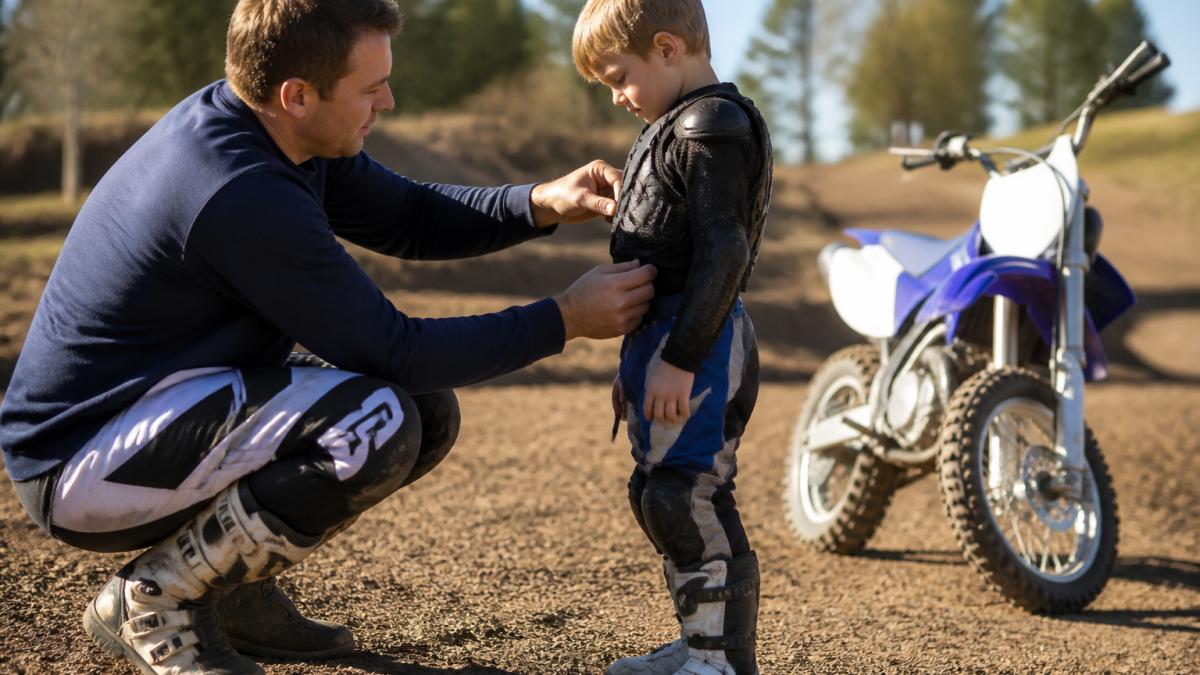
A chest protector shields the ribs, sternum, and spine from impact and roost. For young riders, a chest protector with a roost deflector (a curved upper panel that deflects flying rocks) is essential. When fitting a chest protector, ensure the bottom edge sits at least two inches below the rib cage so it doesn't restrict breathing. The side panels should be snug but not tight.
Riding Boots and Ankle Support
Motocross boots are engineered specifically to support the ankle, protect the foot from impacts and roost, and provide grip on foot pegs. A quality motocross boot has reinforced ankle support, a stiff sole for peg feel, and abrasion-resistant materials on the heel and toe.
Fit is critical. The boot should be snug around the ankle and midfoot but allow enough room in the toe box for your rider's toes to move slightly. Proper ankle support prevents sprains and fractures, the most common beginner injuries besides minor abrasions.
Gloves, Jersey, and Pants: Abrasion Resistance Matters
Motocross gloves provide grip on the handlebars, protect fingers from impacts, and offer abrasion resistance. Look for gloves with reinforced palm material, padded knuckles, and secure wrist closures.
A riding jersey is made from abrasion-resistant synthetic materials, not cotton. Quality motocross jerseys use mesh panels for ventilation combined with reinforced panels on the shoulders and elbows. The jersey should allow full arm movement without bunching fabric.
Riding pants serve the same function with reinforced panels on the hips, thighs, and knees. They should fit snugly at the waist and allow full leg movement at the knees and hips.
Best Kids Motocross Gear Sets: What to Look For
Most young riders benefit from starting with a complete gear set rather than buying pieces individually.
Complete Gear Combos vs. Building Piece by Piece
A complete kids motocross gear set typically includes a helmet, chest protector, jersey, pants, gloves, and sometimes boots and goggles. Buying as a set offers 10-20% cost savings compared to buying individually and ensures all components fit together properly.
However, your rider may not fit perfectly into every piece. In these cases, buying pieces individually allows you to optimize fit for each component. For first-time buyers, start with a quality complete set from a reputable motocross brand.
Budget-Friendly and Premium Options
Budget-friendly gear sets (typically $200-400) provide adequate protection for beginning riders but use less durable materials. These work well for young riders who are still figuring out whether they'll stick with motocross or who are outgrowing gear quickly.
Premium gear sets (typically $600-1200+) use higher-quality materials, better ventilation, and superior impact protection. For serious young riders planning to race or ride frequently, premium gear is a worthwhile investment.
Mid-range gear sets ($400-600) often provide the best value, using quality materials while remaining affordable. Mid-range gear typically includes growth-adjustable features, which extends useful life.
Building Confidence: The Psychological Role of Proper Gear
Protective gear does more than prevent injuries. It builds confidence. A young rider wearing a properly fitted helmet, chest protector, and boots feels more secure and capable on the bike. They're more willing to push their limits and develop skills faster because they're not anxious about getting hurt.
Young riders in quality gear show measurably faster skill development and more aggressive riding compared to riders in minimal or poorly fitting gear. The protection creates mental space for learning.
Second-Hand Gear Safety: What Parents Should Know
Second-hand gear is an economical option, especially for young riders who outgrow equipment quickly. However, buying used protective equipment requires specific knowledge.
Helmets are the most critical piece to evaluate. Never buy a used helmet that has any visible cracks, dents, or damage to the shell. Impact damage that's not visible can compromise the foam's ability to absorb future impacts. A helmet that's been in a crash is no longer safe to use, even if it looks fine.
Chest protectors, jerseys, and pants are safer to buy used. Inspect them for deep abrasions that expose protective layers, tears in seams, or broken straps. Boots and gloves can be purchased used without concern as long as they're structurally sound. Goggles should have intact lenses with no cracks or scratches.
When buying second-hand gear, ask the seller directly whether the equipment has been in a crash. If you're unsure about the history or condition of any piece, it's better to buy new.
Climate-Specific Gear: Riding Year-Round
Young riders who race or train during different seasons need gear that adapts to temperature and weather conditions.
Summer gear prioritizes ventilation with large mesh panels, moisture-wicking liners, and minimal padding. Lighter colors reflect heat.
Spring and fall gear needs moderate ventilation with some insulation. Mid-weight jerseys with a mix of solid and mesh panels work well. Long-sleeved base layers add warmth without bulk.
Winter gear requires insulation and wind protection. Thermal base layers under your jersey keep your rider warm. Winter-specific boots with thicker insulation and waterproofing prevent cold feet.
Rather than buying completely new gear sets for each season, start with mid-weight summer gear and add base layers or swap out specific pieces as temperatures change.
Young riders who invest in proper protective equipment and understand how to select, fit, and maintain that gear develop faster and stay safer on the track. Start with a quality, well-fitted helmet certified to ECE or DOT standards, add a complete set of protective gear appropriate for your rider's size and skill level, and commit to replacing gear as your rider grows. Your young rider will develop skills confidently and safely.
Frequently Asked Questions
What is the most important piece of motocross gear for young riders?
The helmet is critical, it's the only gear protecting your child's head and brain during falls or collisions. Always choose a helmet with ECE or DOT certification, which ensures it meets safety standards for impact protection. A properly fitted, full-face helmet offers the best protection for young motocross riders. Never compromise on helmet quality, even if other gear is budget-friendly.
How do I know if youth dirt bike gear sizing is correct?
Proper sizing means gear fits snugly without restricting movement. For helmets, there should be minimal side-to-side movement when you gently twist it. Jersey and pants should allow full arm and leg extension. Riding boots should support the ankle without pinching. Measure your young rider's height, weight, and specific areas (chest, waist, inseam) against manufacturer sizing charts. Growth-adjustable gear with expandable features can accommodate rapid growth common in youth riders.
What's the difference between used and new motocross gear for kids?
Used helmets should never be purchased, internal foam degrades over time and may not provide proper impact protection after previous crashes. Other used gear (jerseys, pants, boots, gloves) is acceptable if it's clean, shows no major damage, and fits properly. Inspect seams, zippers, and padding carefully. Protective armor in used chest protectors or knee braces should be intact and not cracked. When in doubt, invest in new protective equipment for safety assurance.
How much gear does a beginner dirt bike rider actually need?
A complete beginner dirt bike gear checklist includes: full-face helmet (ECE/DOT certified), chest protector with roost deflector, riding jersey with moisture-wicking material, riding pants with reinforced areas, motocross-specific boots with ankle support, gloves for grip and abrasion resistance, and goggles with tear-offs for visibility. You can start with essential items and add specialized pieces like knee braces later. Many brands offer beginner gear sets that bundle these items together affordably.
This article was written using GrandRanker