 ultimate-guide
Motocross Line Choice: A Complete Guide
Table of Contents
- What Is Motocross Line Choice and Why It Matters
- How Speed and Line Selection Work Together
- Reading Track Conditions and Terrain for Better Lines
- Inside vs. Outside Lines: When to Use Each
- Momentum Conservation and Line Evolution During a Race
- Motocross Cornering Drills to Master Your Line Selection
- How to Improve Lap Times in Motocross Through Line Discipline
- Line Choice for Different Skill Levels and Track Conditions
Last Updated: August 21, 2026
What Is Motocross Line Choice and Why It Matters
Motocross line choice is the strategic selection of the path you take through each corner and section of track. At Nelmgerian MX, we understand that line choice isn't just about steering, it's about momentum, traction, and the mental discipline to repeat the same decision under fatigue.
The line you choose determines your exit speed, your next acceleration point, and whether you can maintain throttle through rough sections. A poor line wastes energy; a good line compounds advantages lap after lap. Riders who master motocross line choice go faster while using less energy, which matters when racing multiple motos or pushing hard in final laps (peer-reviewed research).
Most riders learn by instinct, attacking corners aggressively and hoping the bike sticks. That works until fatigue, track changes, or faster competition expose the weakness. Line choice separates riders who adapt from those who can't, it's the foundation of race craft.
How Speed and Line Selection Work Together
Speed and line selection are inseparable. The relationship is simple: throttle control + line precision = corner speed.
Most riders focus on throttle first, then pick whatever line gets them through. The data tells a different story. Riders who choose their line first, then modulate throttle to suit it, carry more speed through corners and exit faster (peer-reviewed research).
Consider a typical berm. The inside line looks shorter; the outside line looks safer. Neither is correct in isolation. The right line depends on your entry speed, bike setup, and throttle control. Enter too fast on the inside and you'll wash the front. Enter too slow on the outside and you'll lose momentum into the next section.
The critical insight: momentum is the primary asset. A line that sacrifices momentum to save a few feet of distance costs you more than it gains. A slightly longer line that lets you maintain or gain speed is always faster.
Reading Track Conditions and Terrain for Better Lines
Track conditions change constantly. Morning sessions feel different from afternoon sessions. Wet dirt behaves differently from packed-down dirt. Reading these conditions and adjusting your line accordingly separates consistent riders from fast ones.
Start with a physical track walk. Look for ruts, deep, worn lines where hundreds of riders have gone before you. If the rut is on line, use it; if it's off line, avoid it. Look for berms, the banked turns that let you carry speed. Look for braking bumps, the rough sections where riders brake hard and traction is poor. Each terrain type demands a slightly different line choice.
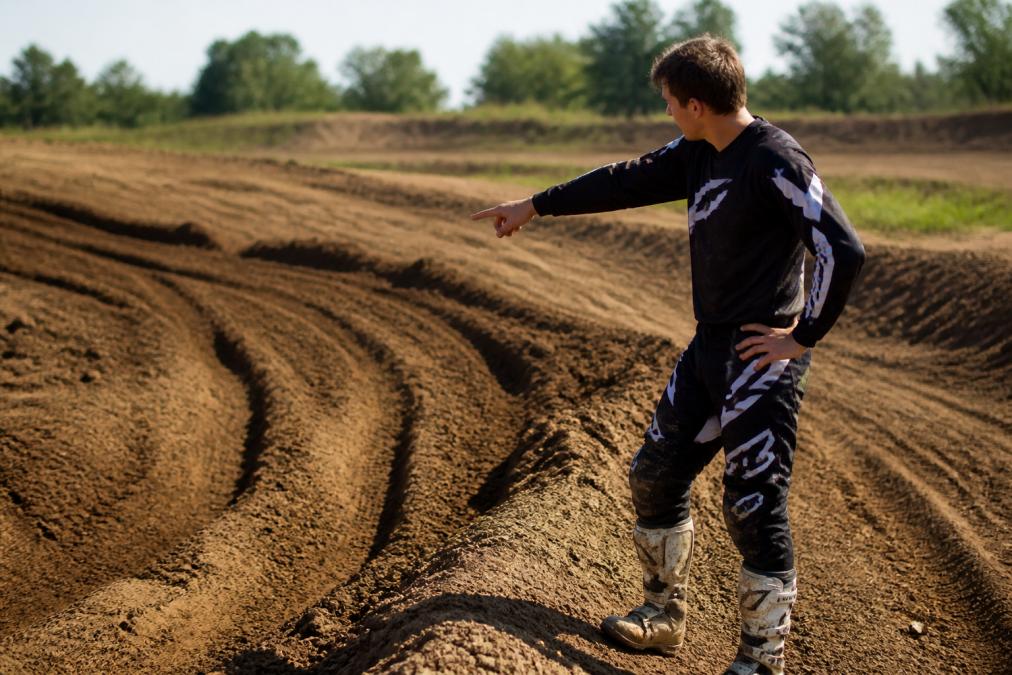
Packed-down sections offer predictable grip; loose sections demand respect. Jump faces require managing air time and landing angle, not just throttle control. The line you choose in practice might not work in the race. Track conditions deteriorate as more riders pass through. Fresh ruts form. Loose sections get packed. Anticipate these changes and adapt. Riders who adjust their line mid-race maintain consistency; those who don't watch lap times climb as the track roughens.
Observe how other riders navigate sections, noting where they brake, accelerate, and struggle. This visual scanning becomes your data source for line evolution.
Inside vs. Outside Lines: When to Use Each
Inside lines are tighter and shorter but often force harder braking and later acceleration. You gain distance savings but lose speed. Inside lines work when you need to set up for a tight following corner or defend against a pass.
Outside lines are longer but let you carry more speed through the corner and exit faster. Outside lines work when the next section rewards speed, a long straightaway, a series of fast corners, or a jump. The extra distance is worth it because you maintain momentum.
The best riders use both, choosing the inside line when it serves their strategy and switching to the outside line when speed matters more. Body positioning changes with line choice. Inside lines demand more aggressive body positioning; outside lines let you sit more upright and focus on throttle control.
Momentum Conservation and Line Evolution During a Race
Momentum is the currency of motocross. Every time you brake, you're spending momentum; every time you accelerate, you're earning it back. Riders who manage this exchange best finish first.
Line evolution is what happens when you realize your chosen line isn't working and adjust it. Early in a moto, the track is fresh and you can use aggressive lines. As the track deteriorates, those same lines might not work. Ruts deepen. Loose sections get looser. Your line needs to evolve with the track.
Conservative riders stick with their original line and accept slower lap times as the track worsens. Aggressive riders evolve, they move their braking point, shift their apex slightly, and find new lines that work on deteriorating track. This is race craft.
Late in a moto, when tired, your instinct is to brake earlier and play it safe (peer-reviewed research). Fast riders do the opposite, they maintain commitment to the line, trust their setup, and push through fatigue. This confidence comes from hundreds of practice laps.
Lap time consistency depends on line consistency. If you're changing your line every lap, times vary wildly. If you're repeating the same line, times stabilize. Once stabilized, you can push harder within that line. This is how improvement happens.
Motocross Cornering Drills to Master Your Line Selection
Drills build muscle memory. Muscle memory builds consistency. Consistency builds speed.
The line repetition drill: Pick a single corner and commit to the exact same line for ten consecutive laps. This trains your body to repeat the same input and your eyes to find the same visual reference points lap after lap.
The apex drill: Focus on hitting the same apex point every lap. Mark it mentally, a rock, a rut, a shadow. Hit that point ten laps in a row. This teaches precision and shows that corners are about hitting specific points.
The exit acceleration drill: Focus on your acceleration point as you exit the corner. Practice rolling on throttle at the exact same point for ten consecutive laps. This connects line choice to throttle control.
The deteriorating track drill: Ride a corner hard for twenty laps and watch how your line needs to evolve as the track changes. This teaches you to read track conditions in real time and adapt.
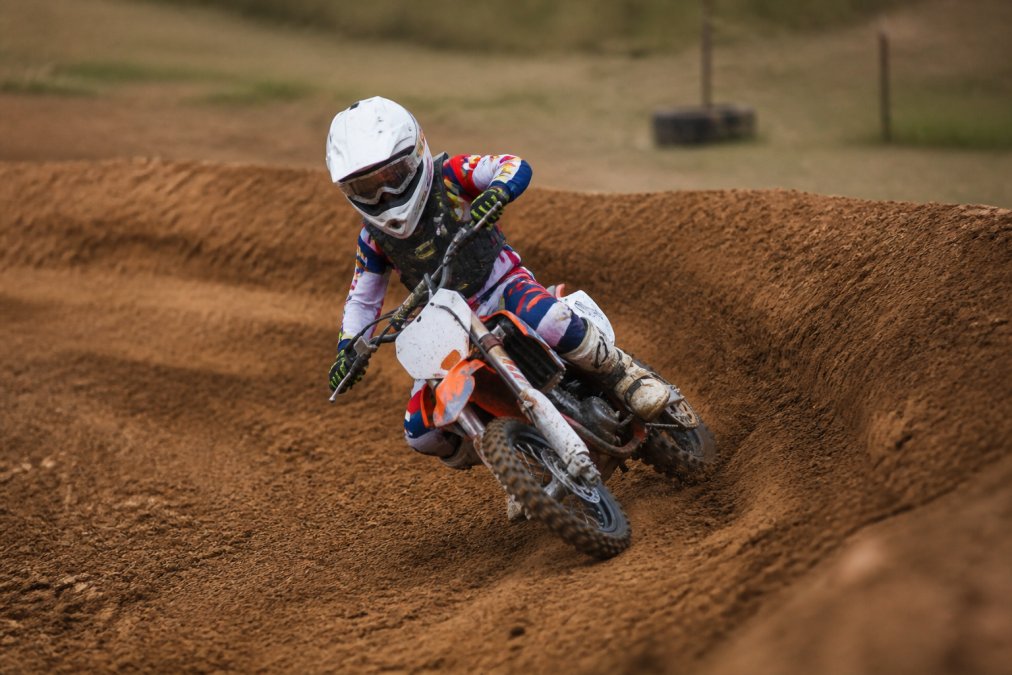
Do these drills early in your practice session when your mind is sharp and your body is responsive.
How to Improve Lap Times in Motocross Through Line Discipline
Lap time improvement comes from three sources: better fitness, better bike setup, and better line choice. Most riders focus on the first two and ignore the third. That's a mistake.
A rider with perfect fitness and setup but poor line choice will lose to a rider with average fitness and setup but excellent line choice. Line discipline multiplies the effect of everything else.
Line discipline means committing to your chosen line even when instinct says to deviate. It means braking at the same point every lap, hitting the same apex every lap, and accelerating at the same point every lap. This consistency allows you to compare lap times meaningfully.
Establish a baseline by riding ten laps at a comfortable pace and recording times. Now push harder for ten more laps without changing your line. If times improve, you had more speed available. If times stay the same or worsen, you were already at your limit on that line.
Most riders think they need a faster line. What they actually need is better execution of their current line. Once you've maxed out one line, then experiment with alternatives.
Pay attention to where you're losing the most time. Is it on straights? Your exit speed from corners is too low. Is it in corners? Your line choice might be correct but execution is sloppy. Are lap times consistent? You have good line discipline. Are they all over the place? You're changing your line too much.
Line Choice for Different Skill Levels and Track Conditions
A beginner's primary constraint is confidence. They need a line that feels safe and predictable, wider lines, earlier braking points, conservative throttle. The line might be slow, but it's consistent and builds confidence.
An intermediate rider's primary constraint is consistency. They have confidence to attack but lack precision to repeat the same line lap after lap. They pick a line they can nail every time, even when tired.
An advanced rider's primary constraint is optimization. They can repeat any line, so their focus shifts to finding the fastest line for specific track conditions on the specific day. They constantly micro-adjust, moving braking points a few feet, shifting apexes slightly, changing exit acceleration points.
Track conditions dictate line choice. On fresh, smooth track, you can use aggressive lines with late braking and hard cornering. On rough, rutted track, you need conservative lines with earlier braking and smoother inputs. Wet dirt has different grip than dry dirt. Muddy sections demand different lines than packed sections. Riders who adapt their line choice to these conditions maintain consistency.
Mastering motocross line choice is a long-term project. It compounds over years of deliberate practice. But every hour you spend on line discipline pays dividends.
Nelmgerian MX is built on this principle. Our rider training journals help young riders track their line progress, document what works on different tracks, and build the discipline that separates fast riders from champions. Whether you're just starting on a 50cc or pushing for your first podium, understanding motocross line choice is the foundation. Start with the drills. Build the consistency. Then watch your lap times drop.
| Skill Level | Primary Focus | Line Strategy | Typical Constraint |
|---|---|---|---|
| Beginner | Confidence building | Wide, safe, predictable | Fear of crashing |
| Intermediate | Consistency | Repeatable, moderate aggression | Precision under fatigue |
| Advanced | Optimization | Adaptive, track-specific | Finding marginal gains |
Frequently Asked Questions
What are the common mistakes beginners make when choosing motocross lines?
Beginners often brake too early before corners, rush their apex, and fail to use the full width of the track. They also chase faster riders' lines instead of finding their own smooth path and frequently lose momentum by over-correcting. The biggest mistake is not reading the track conditions, what works on a packed-down section won't work in rutted areas. Slow down, walk the track, and commit to one line per lap until it becomes second nature.
How does motocross track reading techniques improve your speed?
Reading the track means identifying where traction is best, where ruts form, and how berms are shaped. This knowledge lets you choose the fastest, most consistent line. You'll know where to accelerate hard, where to brake gently, and how to carry momentum through flow sections. By understanding terrain and grooming patterns, you avoid losing time in loose sections and capitalize on packed-down areas where grip is highest. Track walk before practice is essential.
Why does line choice change throughout a motocross race?
As the track breaks down during a moto, ruts deepen, berms pack down differently, and grip levels shift. Early in the race, you might use a smooth outside line with good traction. As ruts develop, the inside line becomes faster because the rut provides a natural groove. Fatigue also affects your decision-making, later laps may require a simpler, more conservative line that preserves energy. Successful riders adapt their line choice lap by lap based on evolving track conditions.
How can I practice line selection during training sessions?
Start with motocross cornering drills focused on one turn at a time. Set cones or markers to define your apex and practice hitting it consistently from 5-10 laps. Once that feels smooth, extend to two consecutive corners as a unit. Record video of your runs to compare your line against faster riders. Work with a coach or mentor to identify where you're losing time. Spend time on track walk before each session to commit the optimal line to memory before you ride.
Can poor line choice lead to increased fatigue during a moto?
Absolutely. A poor line forces you to brake harder, accelerate more aggressively, and fight the bike through corners, all of which drain energy fast. When you choose the right line, you maintain better momentum, use throttle control more smoothly, and let the bike flow naturally. This efficiency means less physical strain and better lap times in the final laps when fatigue hits hardest. Riders who master line choice stay fresher and faster when it matters most.
How do professional riders identify the fastest line on a track?
Pros use visual scanning to spot the apex before each corner, identifying where grip is best and where ruts or grooming offer advantages. They walk the track multiple times, feeling the terrain and memorizing banking angles. During practice, they test different lines and analyze lap times to see which produces the best corner speed and acceleration out of the turn. They also study how the track evolves, what's fastest in practice may change by the final moto as conditions shift.
How does how to improve lap times in motocross relate to line choice?
Lap time improvements come directly from better line choice. By optimizing your apex, carrying more momentum through flow sections, and using the track's terrain efficiently, you naturally gain speed. Consistency matters too, hitting the same line lap after lap builds confidence and rhythm. Data-driven practice, where you compare your lap times against different lines you test, shows exactly which choices work. Line discipline is the fastest path to faster lap times without needing more raw speed.
This article was written using GrandRanker