 ultimate-guide
Motocross Safety Gear for Toddlers: A Complete Guide
Table of Contents
- Why Motocross Safety Gear Matters for Young Riders
- Essential Protective Equipment Checklist for Toddlers
- Youth Dirt Bike Helmet Sizing and Fitment
- Toddler Chest Protector for Dirt Bikes: What You Need to Know
- Motocross Safety Standards for Kids and Certifications
- Dirt Bike Riding Tips for Toddlers: Building Confidence Safely
- Gear Durability and Growing Into Equipment
- Conclusion
- Frequently Asked Questions
Last Updated: August 7, 2026
Why Motocross Safety Gear Matters for Young Riders
Every parent watching their toddler approach a dirt bike faces the same tension: excitement tempered by legitimate fear. Motocross carries real injury risk. A fall at 15 mph without protection looks different than one with it. Your child's bones are still developing, their reflexes forming, and their ability to brace for impact limited.
This is where motocross safety gear for toddlers becomes non-negotiable. The right protective equipment doesn't just reduce injury severity, it changes what injuries look like. A properly equipped rider who crashes walks away with bruises. An unprotected rider faces fractures, road rash requiring skin grafts, or worse.
At Nelmgerian MX, we've watched families navigate this decision. Some assume their child is too young to need serious gear. Others buy adult-sized equipment and hope it works. Neither approach protects the way youth-specific gear does. A toddler's proportions, center of gravity, and strength are different. Gear designed for their actual body size absorbs impact more effectively and stays in place where it matters.
The stakes are simple: proper motocross safety gear for toddlers is the difference between a minor scare and a season-ending injury. This guide covers what actually works, how to fit it correctly, and how to build your child's confidence while keeping them protected.
Essential Protective Equipment Checklist for Toddlers
Young riders need comprehensive protection across every vulnerable point. A helmet alone isn't enough. Neither is body armor without proper footwear. Each piece serves a specific purpose, and gaps in coverage create risk.
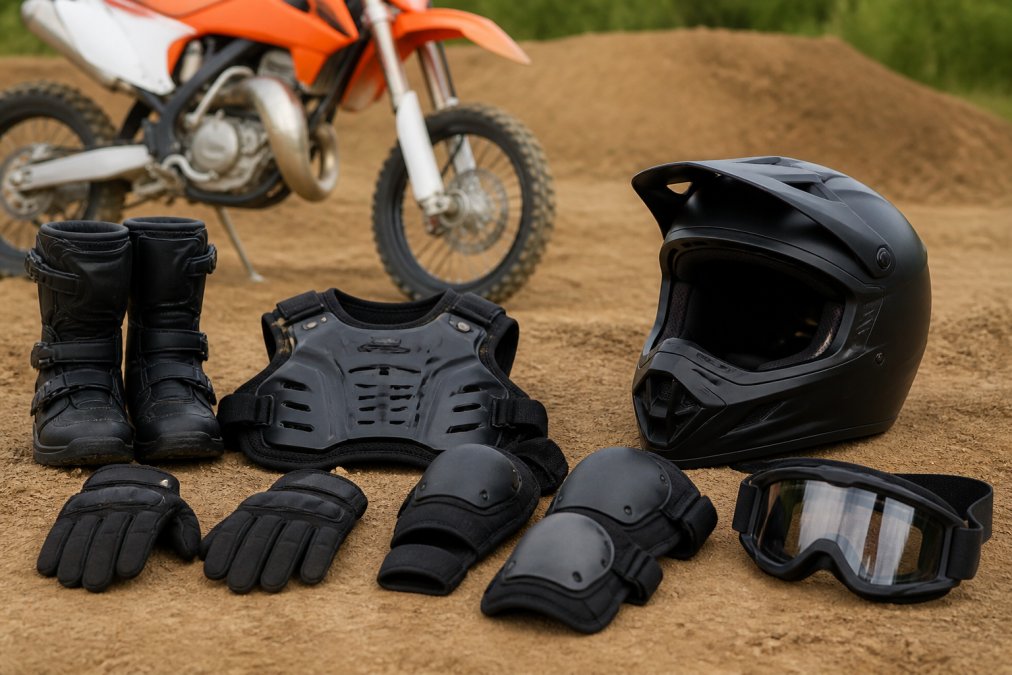
Here's what every toddler rider needs before getting on a bike:
- Full-face helmet with DOT certification
- Youth chest protector with impact-absorbing padding
- Motocross-specific riding jersey with reinforced shoulders and elbows
- Padded riding pants with knee and hip protection
- Motocross boots with ankle support and shift pad
- Gloves designed for youth hands with wrist protection
- Neck brace for additional cervical spine support
- Goggles with proper ventilation and UV protection
Helmets and Full-Face Protection
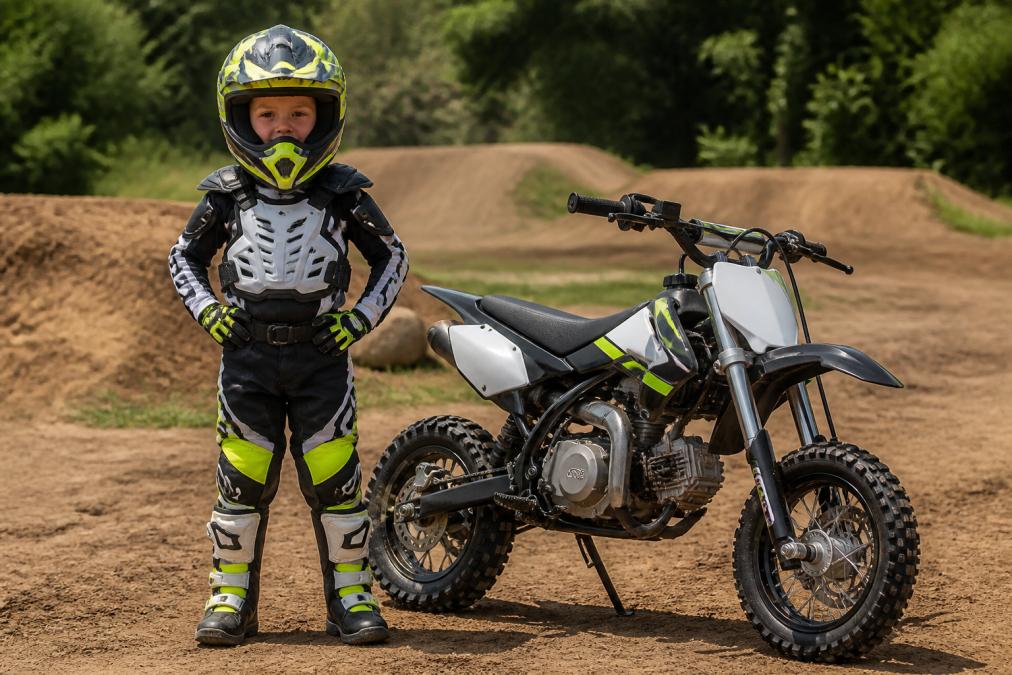
A full-face helmet is the single most important piece of protective equipment. Head injuries in young riders can be catastrophic. A toddler's skull is still developing, with soft spots that don't fully ossify until age 3-4. Even after that point, the brain itself is still developing, making concussion impacts more serious.
Full-face helmets protect the entire face, jaw, and chin, areas that take direct impact in most falls. Open-face or half helmets leave the jaw and lower face exposed, where riders often land when they tumble over the handlebars.
Look for helmets with DOT (Department of Transportation) certification as a minimum, Snell Memorial Foundation certification for additional impact testing, proper ventilation to prevent heat buildup, and removable, washable interior liners for hygiene. Youth helmets are sized smaller with proportionally larger eye ports and shorter chin bars, fitting a toddler's head shape correctly so the impact-absorbing foam makes contact where it needs to.
Body Armor and Impact Absorption
The chest, ribs, and spine take tremendous force in falls. A toddler's ribcage is still cartilage-heavy, meaning ribs bend and compress rather than break cleanly. Compressed ribs can puncture lungs. A youth chest protector combines rigid shell protection with foam padding. The shell disperses impact across a wider area. The foam absorbs the remaining energy.
Quality chest protectors include hard plastic shell over vital organs, multi-density foam that compresses progressively, shoulder cap protection extending down the upper arm, adjustable straps that keep the protector centered, and lightweight construction so toddlers don't fatigue wearing it.
Neck braces add cervical spine protection, increasingly recommended for young riders. The neck is vulnerable in forward-over-the-bars crashes and side impacts. A neck brace doesn't prevent all neck injuries, but it reduces the range of extreme motion that causes whiplash and fractures.
Boots, Gloves, and Extremity Protection
Hands and feet take hits constantly in motocross. A toddler's ankles are still developing, with growth plates that don't fully harden until the mid-teens. Motocross boots designed for youth riders have reinforced ankle support with internal and external bracing, shift pad on the left boot to protect where the foot contacts the bike, oil-resistant soles that grip the footpegs, ankle height that extends 4-6 inches above the foot, and flexible sole that allows natural pedal movement.
Gloves protect against abrasion and impact. Young riders instinctively put their hands down in a fall. Quality youth gloves include reinforced palm padding with impact-absorbing material, wrist support that prevents hyperextension, breathable mesh on the back of the hand, secure cuff that doesn't slip during riding, and sizing that actually fits a child's hand proportions.
Youth Dirt Bike Helmet Sizing and Fitment
A helmet that doesn't fit correctly provides less protection than no helmet at all. Loose helmets shift during impact, leaving parts of the head exposed. Tight helmets cause headaches and discomfort, which means riders want to remove them.
Proper youth dirt bike helmet sizing starts with accurate measurement. Use a soft measuring tape around the widest part of your child's head, typically about an inch above the eyebrows and ears. Measure to the nearest half-inch. That measurement in inches equals the helmet size.
A properly fitted helmet should feel snug but not painful, not shift forward or backward when you gently tug it, have about one finger's width of space between the helmet and forehead, rest on the head without tilting, and keep the chin strap positioned firmly under the chin without restricting breathing. Check the fit by having your child shake their head side to side and front to back. The helmet should move with their head, not slide independently.
Toddlers grow quickly. A helmet that fits perfectly in January might be tight by June. Many families buy helmets with the expectation they'll outgrow them in 12-18 months. That's normal. Better to replace a helmet regularly than to use one that's too large or too small.
Toddler Chest Protector for Dirt Bikes: What You Need to Know
A toddler chest protector for dirt bikes is specifically engineered for young riders' body proportions. Adult chest protectors sit too high, leaving the lower ribs exposed, and are too heavy, causing fatigue.
Youth-specific chest protectors address these differences: shorter overall length that ends at the natural waist, narrower shoulder width matching a child's frame, lighter weight materials that don't cause neck strain, smaller arm holes that don't gap, and adjustable straps that accommodate growth over 1-2 seasons.
The best chest protectors for toddlers combine hard shell protection with strategic padding. The hard plastic shell over the sternum and ribs disperses impact force. The foam padding underneath absorbs what the shell doesn't disperse. This two-layer approach is more effective than foam-only protectors.
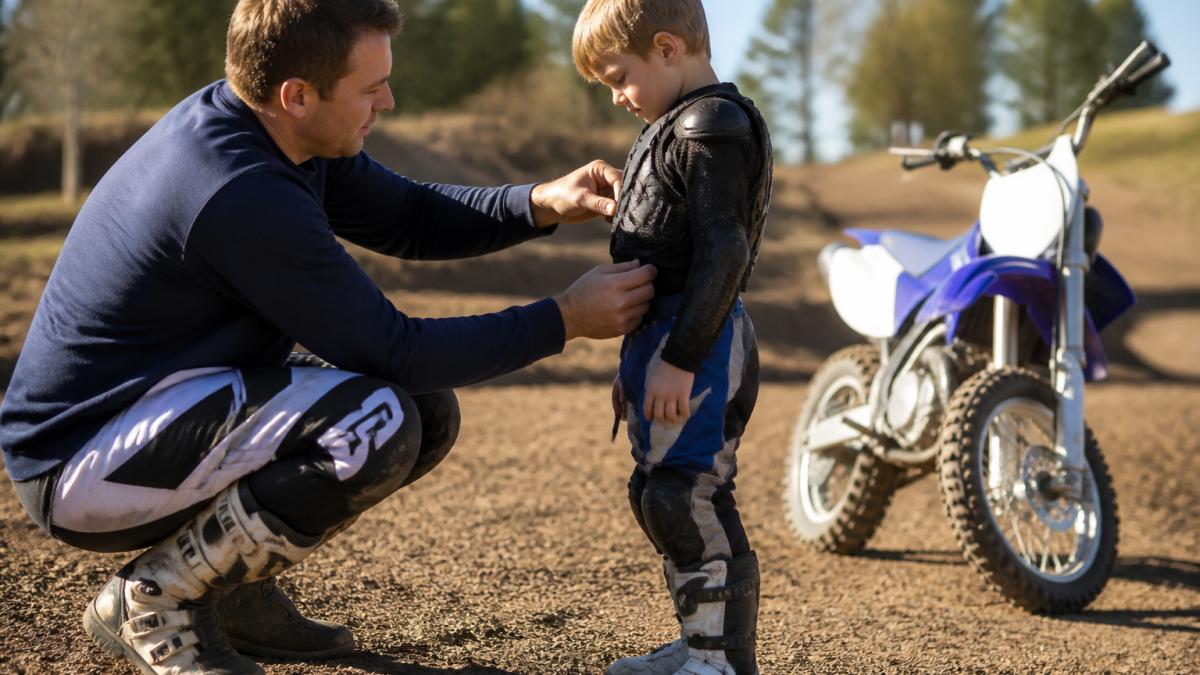
Look for protectors with impact-rated materials like EVA foam, which is durable and provides consistent protection, or gel-based padding that adapts to impact. Fit matters as much as protection level. Have your child wear the protector while sitting on the bike, then adjust the straps until it doesn't move when they lean forward or side to side.
Motocross Safety Standards for Kids and Certifications
Understanding safety standards helps you identify gear that's actually been tested versus gear that just looks protective.
The Department of Transportation (DOT) sets minimum standards for motorcycle helmets, including those used in motocross. DOT certification means the helmet has been tested for impact absorption, penetration resistance, and retention. The Snell Memorial Foundation runs additional testing beyond DOT requirements. Snell-certified helmets undergo more rigorous impact testing at multiple speeds and angles.
For body armor and protective apparel, look for gear that specifies CE certification (European standard adopted by many manufacturers), impact-rated foam or shell materials with documented absorption levels, seam construction that doesn't fail under stress, and material durability tested against abrasion.
Reading the tag on protective gear tells you what you're getting. A tag that simply says "protective" without specifying materials or testing is a red flag. A tag that lists foam density, shell hardness, or certification bodies indicates the manufacturer knows what they're building.
For toddler-specific gear, youth motocross brands often have better testing standards than general children's sports equipment manufacturers. A company that specializes in youth motocross has tested their gear on young riders and understands the specific injury patterns they need to protect against.
Dirt Bike Riding Tips for Toddlers: Building Confidence Safely
Confidence is the foundation of safe riding. A rider who's afraid makes tense decisions. A rider who's confident but reckless takes unnecessary risks. The goal is confident and cautious, which comes from gradual skill building in controlled environments.
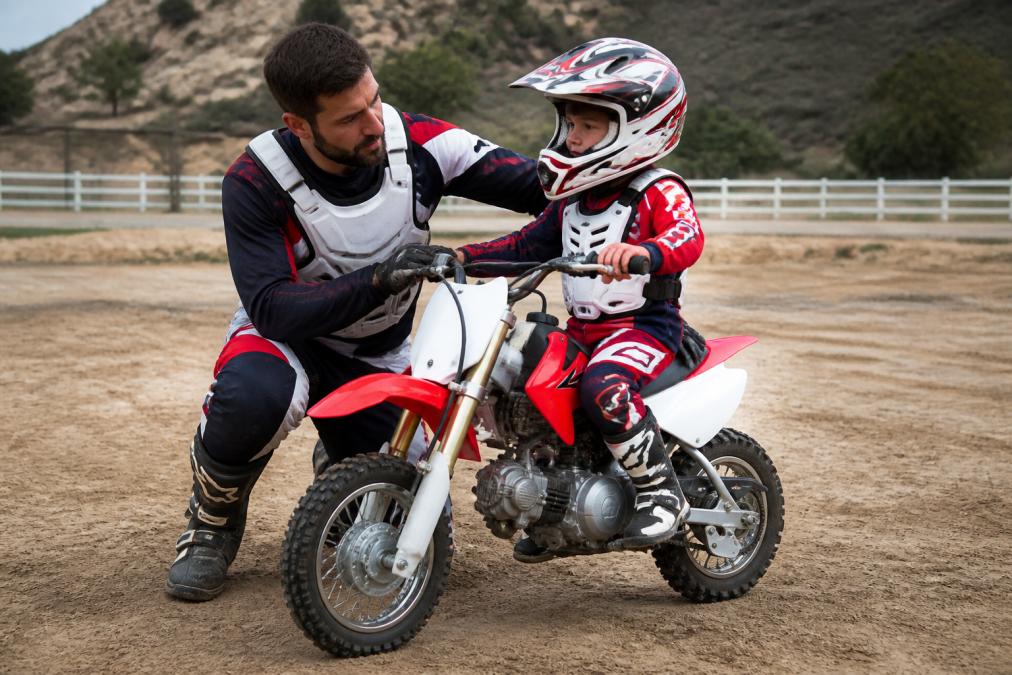
Start on small bikes with training wheels or support. A 50cc bike with training wheels lets toddlers learn throttle control and balance without worrying about tipping. Progress to bikes without training wheels only when your child demonstrates consistent balance on the training-wheel version, usually after 4-6 weeks of regular practice.
Teach proper body positioning before teaching aggressive riding. A toddler should learn to sit centered on the seat, keep their elbows up, look where they're going, and use their legs to stabilize. Practice in flat, open areas without obstacles. A parking lot or small field is ideal. Avoid terrain with ruts, rocks, or trees until your child has months of riding experience.
Limit riding sessions to 30-45 minutes for toddlers. Young riders fatigue quickly, and fatigue leads to crashes. Stop before your child is exhausted and end on a positive note. Use positive reinforcement rather than criticism. Praise specific improvements: "You kept your elbows up that whole lap." A toddler who's afraid of doing something wrong stops trying.
Gear Durability and Growing Into Equipment
Toddlers grow 2-4 inches per year. Gear that fits perfectly in January might be tight by June. For helmets, always buy current size. A loose helmet is dangerous. For body armor and protective apparel, you can buy slightly larger if the sizing allows for growth without compromising protection.
Look for gear with adjustable straps. A chest protector with adjustable shoulder and waist straps can accommodate 1-2 inches of growth. Pants with adjustable waist and inseam can grow with your child. Plan on replacing boots every 1-2 years.
Many families find that buying youth-specific gear and replacing it annually costs less than buying adult gear and dealing with poor fit. Quality gear lasts longer and costs less per season of use than budget alternatives.
Track your child's growth and gear fit quarterly. When gear shows significant wear, replace it rather than continuing to use compromised protection.
Conclusion
Protecting your toddler while they learn motocross requires specific gear designed for their body, proper fitting that you verify regularly, and a progression approach that builds confidence without rushing. The investment in youth-specific protective equipment, helmet, chest protector, boots, gloves, and apparel, creates the foundation for safe, enjoyable riding that your child will remember for life.
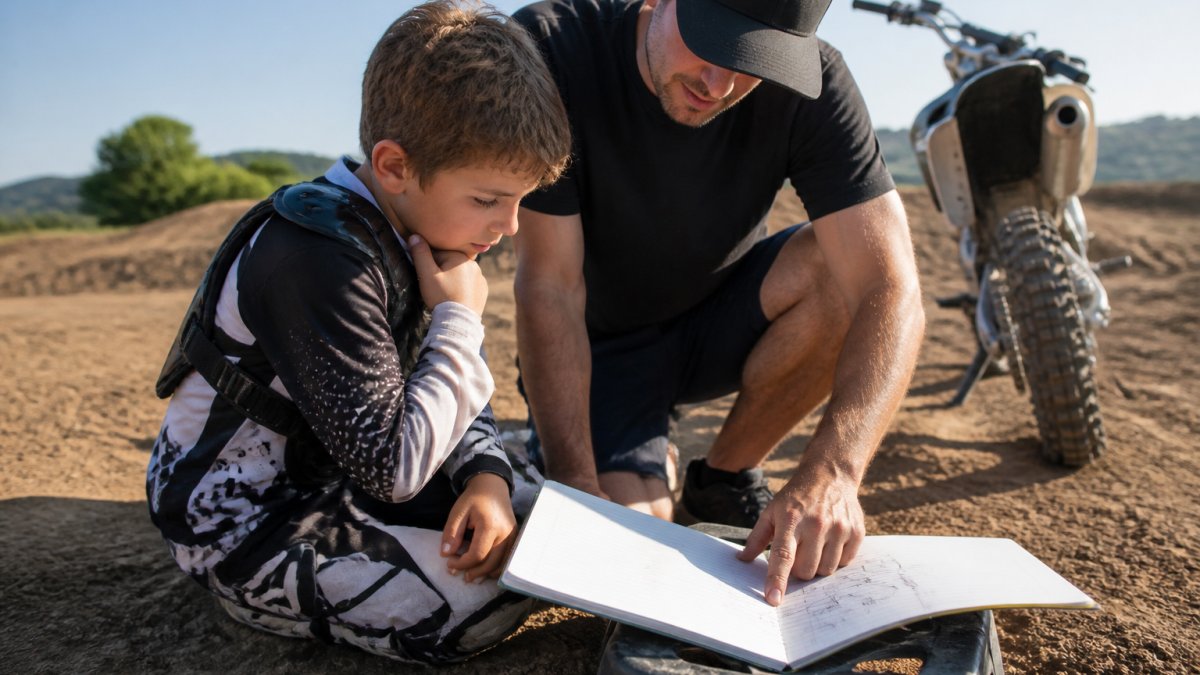
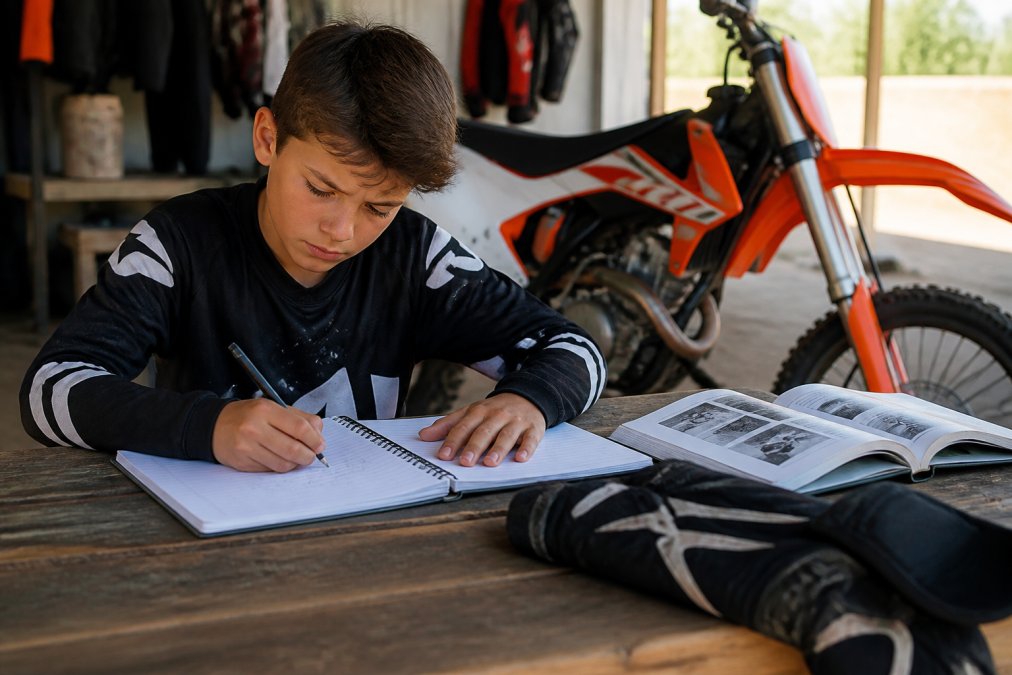
Nelmgerian MX is committed to helping families navigate this journey. Beyond protective gear, our rider training journals help young riders track their skill progression and build the mental confidence that matches their physical protection. When your child understands what they're learning and sees their progress documented, they ride with purpose rather than fear. Visit Nelmgerian MX to explore resources that keep your young rider engaged, protected, and progressing safely.
Frequently Asked Questions
What is the minimum age for a child to wear motocross safety gear and ride a dirt bike?
Children as young as 3 years old can begin wearing motocross safety gear and riding small-displacement bikes like 50cc models with proper adult supervision. However, gear selection and bike size must match the child's physical development. Always prioritize a full-face helmet, chest protector, and youth-specific body armor. Start with professional instruction to ensure your toddler learns correct riding fundamentals and safety habits from day one.
How do I know if youth dirt bike helmet sizing is correct for my toddler?
A properly fitting helmet should feel snug but not painful. Place two fingers between the helmet and your child's forehead, this is the correct spacing. The helmet should not move side to side when you gently twist it, and your toddler should be able to open their mouth fully without the chin bar pressing uncomfortably. Always choose helmets certified by DOT or Snell standards. Measure your child's head circumference and consult the manufacturer's size chart before purchasing.
Why is a toddler chest protector for dirt bikes essential, and what should it cover?
A chest protector shields vital organs from impact during falls and collisions. For toddlers, choose youth-specific chest protectors that cover the sternum, ribs, and upper back with impact-absorbing padding. Look for articulated armor that moves with your child's body and breathable, moisture-wicking fabric for comfort during rides. Ensure the protector fits snugly without restricting arm movement, and verify it meets safety certification standards before use.
What motocross safety standards for kids should I look for when buying gear?
Look for DOT (Department of Transportation) certification on helmets, which ensures they meet federal safety standards. The Snell Memorial Foundation also provides rigorous helmet testing. For body armor, check for ASTM International standards and CE certification marks indicating impact protection testing. Youth-specific gear should be labeled as designed for children and tested for smaller body proportions. Always verify certifications on product packaging and manufacturer websites before purchasing.
This article was written using GrandRanker