 ultimate-guide
Motocross Safety Tips for Parents: Complete Guide
Table of Contents
- Motocross Safety Tips for Parents: Why It Matters
- Youth Motocross Safety Gear Checklist: Essential Equipment
- How to Teach Kids Motocross Safety: Training and Instruction
- Choosing the Right Dirt Bike for a Child: Size and Fit
- Youth Motocross Injury Prevention: Pre-Ride and Track Safety
- Post-Crash Support and Emergency Preparedness
- Motocross Safety Tips for Parents: Building Confidence and Skill
- Conclusion: Creating a Safe Motocross Journey
- Frequently Asked Questions
Last Updated: July 10, 2026
Motocross Safety Tips for Parents: Why It Matters
Motocross injuries among young riders are a significant concern for families entering the sport. At Nelmgerian MX, we provide practical safety tips to keep children safe while building confidence on the track. The difference between a positive first experience and a traumatic one often comes down to preparation, equipment, and knowledge.
Families that follow a structured safety approach report higher rider retention, faster skill development, and significantly fewer serious injuries.
Youth Motocross Safety Gear Checklist: Essential Equipment
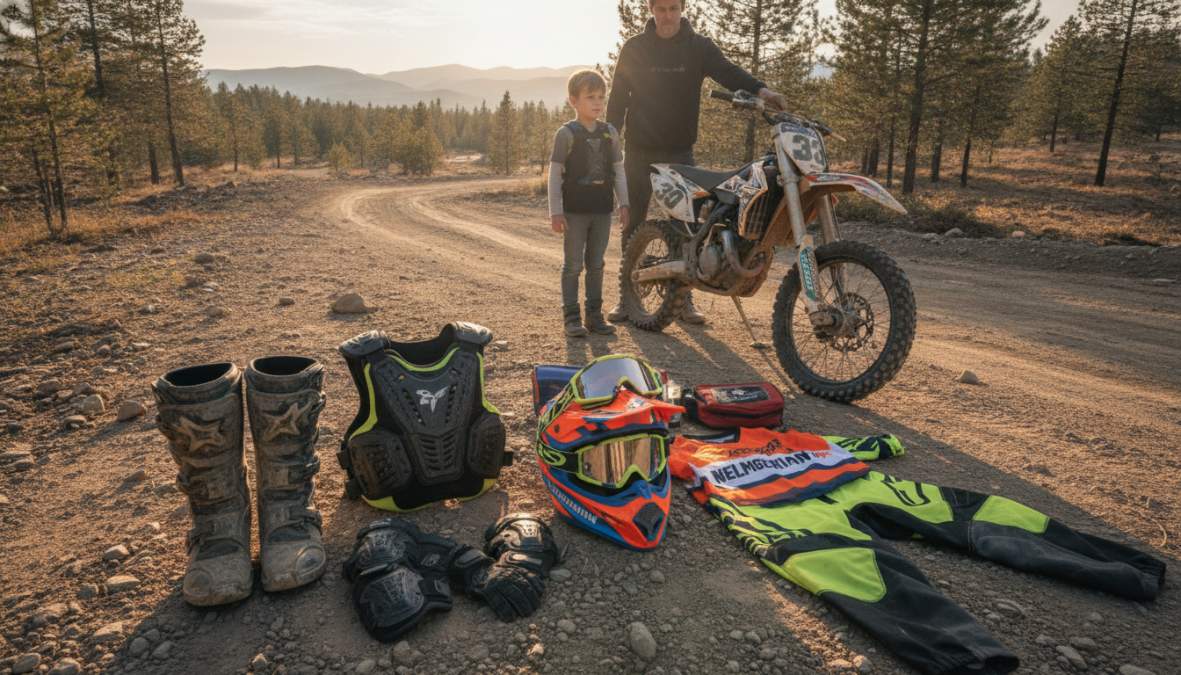
Proper protective equipment is non-negotiable. According to American Motorcyclist Association safety guidelines, riders wearing full protective equipment reduce serious injury risk by up to 50% compared to riders in minimal gear.
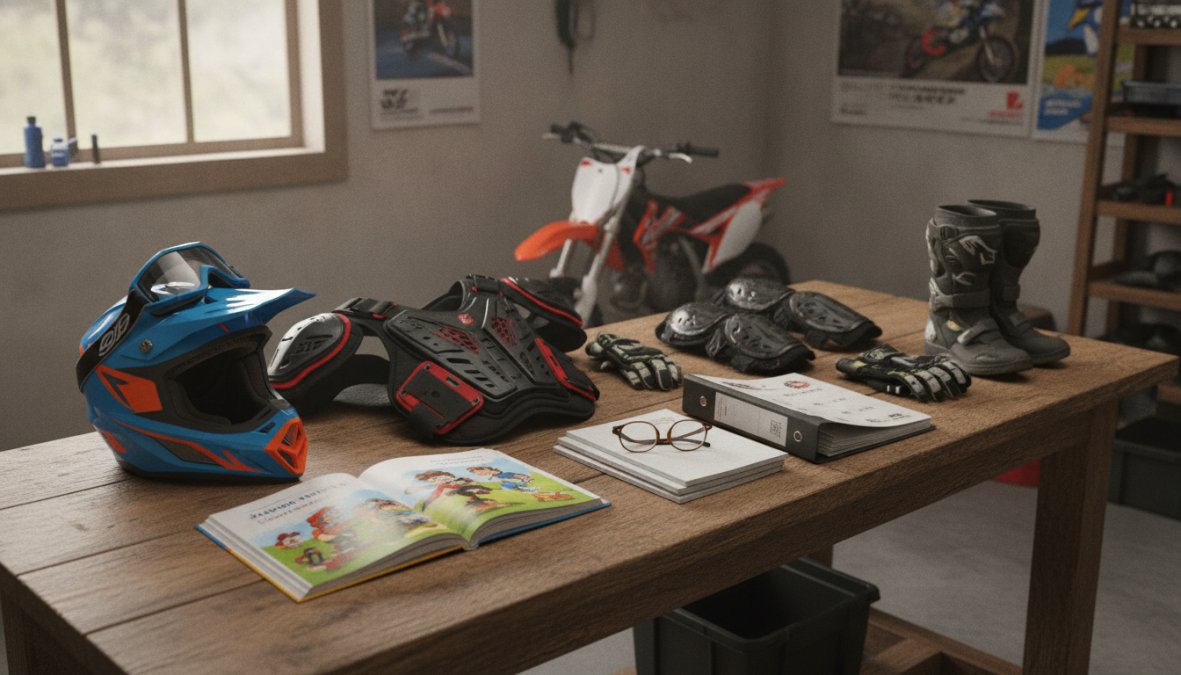
Essential Gear Checklist:
- DOT/ECE-certified motocross helmet
- Chest protector and roost guard
- Shoulder and elbow pads
- Kidney belt
- Motocross-specific gloves
- Jersey and pants (reinforced fabric)
- Motocross boots (ankle support)
- Goggles (anti-fog, shatter-resistant)
- Neck brace (optional but recommended for competitive riders)
Helmet Selection and Fit Standards
Your child's helmet is the most critical piece of safety equipment. A proper-fitting helmet stays in place during crashes and absorbs impact energy effectively. The correct fit means the helmet sits level on the head with a snug chin strap. When you gently try to twist the helmet side-to-side, it should move with the head, not separately.
Many parents buy helmets too large "for growth", this is a mistake. Replace the helmet as your child grows. Look for helmets certified by DOT or ECE. Motocross helmets differ from street helmets with a more pronounced visor, extended chin protection, and better ventilation. Replace helmets after any significant crash where the head made impact, as internal foam degrades after absorption.
Body Armor and Protective Apparel
Body armor includes chest protectors, roost guards, shoulder and elbow pads, and kidney belts. These pieces protect against impacts that would otherwise cause broken ribs, collarbone fractures, or internal injuries.
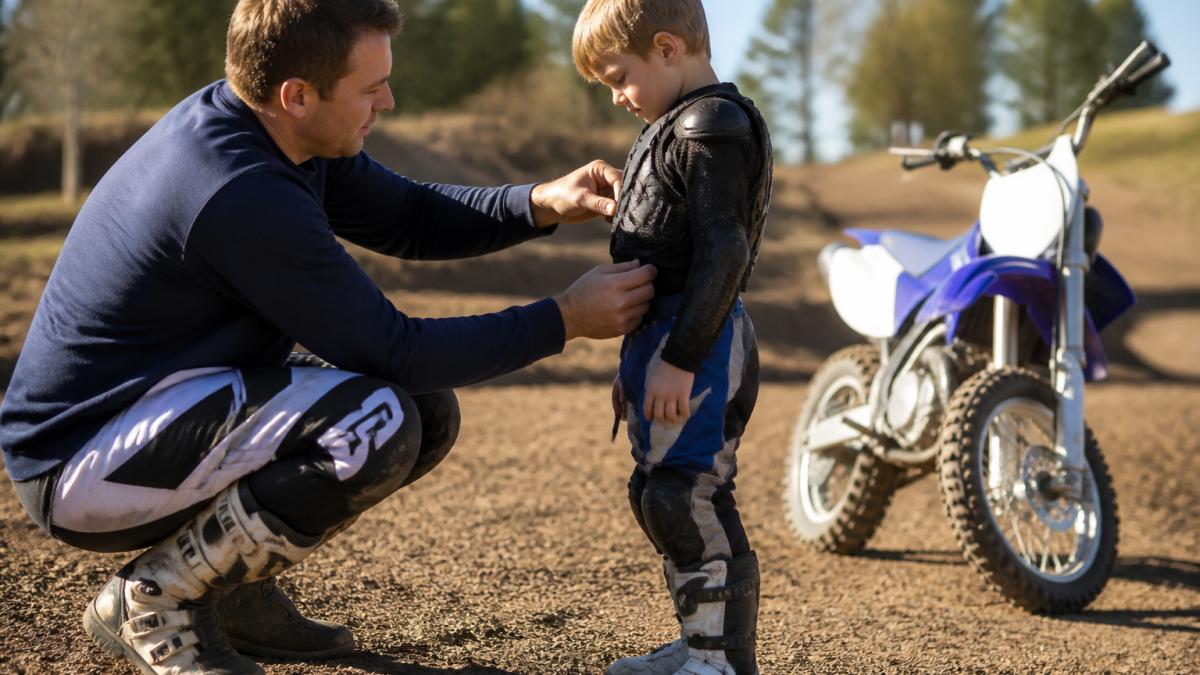
Chest protectors come in hard shell (plastic) and soft padding. Hard shell offers maximum protection but can be uncomfortable in heat. Fit matters as much as the gear itself, armor that's too loose slides during crashes; armor that's too tight restricts breathing. Motocross-specific jerseys and pants use reinforced fabric in high-wear areas to resist abrasion during slides.
Boots, Gloves, and Goggles
Motocross boots feature reinforced ankle support, oil-resistant soles, and protection for the shifter foot. A child's ankle is still developing; proper support prevents sprains and fractures. Motocross gloves have padded palms to reduce hand fatigue and protect against impact. Goggles protect eyes from dust, mud, and flying debris, with anti-fog lenses essential for visibility.
| Gear Item | Purpose | Replacement Timeline |
|---|---|---|
| Helmet | Head impact protection | After any significant crash, or every 5 years |
| Chest Protector | Rib and organ protection | Every 2-3 years or after hard impacts |
| Gloves | Grip and hand protection | Every 1-2 seasons |
| Boots | Ankle support and grip | Every 2-3 seasons |
| Goggles | Eye protection and visibility | As lenses degrade or scratch |
| Jersey/Pants | Abrasion resistance | Every 2-3 seasons |
How to Teach Kids Motocross Safety: Training and Instruction
A child's first experience on a motocross bike sets the tone for their entire relationship with the sport. Proper instruction builds confidence and establishes safe habits from day one. Research from the Motorcycle Safety Foundation shows that riders receiving structured instruction progress faster and have fewer accidents than self-taught riders.
Professional Training and Riding Schools
A qualified riding instructor teaches proper body positioning, throttle control, braking technique, and how to handle obstacles. Look for instructors certified by recognized organizations with experience teaching young riders. At Nelmgerian MX, we're expanding our training offerings with a private track in Crossville, Alabama, designed specifically for families learning together.
Building Riding Technique and Throttle Control
Throttle control is the single most important skill for young riders to master early. A child who can smoothly modulate throttle input will recover from mistakes and maintain control in difficult situations.
Start on flat ground with low speeds, having your child practice rolling on and off the throttle smoothly. Progress to small hills and obstacles only after they demonstrate smooth throttle control. Braking technique matters equally, teach progressive braking with steady pressure rather than hard stops that lock wheels. Proper body positioning, knees gripping the tank, elbows up, weight forward on climbs, gives the rider control.
Choosing the Right Dirt Bike for a Child: Size and Fit
Selecting the wrong bike size is one of the most common mistakes parents make. A bike that's too large overwhelms a young rider; a bike that's too small frustrates them as they outgrow it within months.
The right bike size depends on three factors: age, height, and inseam measurement. Inseam is the most important, it determines whether your child can touch the ground with both feet when sitting on the seat. Measure your child's inseam by having them stand barefoot with legs slightly apart, measuring from the inside of their ankle to the top of their thigh. When sitting on the bike, your child should be able to touch the ground with the balls of both feet.
Many parents buy a bike their child will "grow into." This creates a dangerous situation. A child on a too-large bike can't touch the ground, can't control the bike effectively, and loses confidence. Replace the bike as your child grows; bikes hold their value and you'll recoup most of your investment when you sell.
Engine Size and Power Management
Engine size matters less than many parents think. A smaller engine with good handling characteristics teaches better technique than a larger engine with poor manners. Four-stroke engines deliver power more progressively and are more forgiving of throttle mistakes. For young beginners, four-stroke is almost always the better choice. Automatic clutch or semi-automatic transmissions make learning easier, allowing your child to focus on throttle, braking, and body positioning.
Youth Motocross Injury Prevention: Pre-Ride and Track Safety
Injury prevention starts before your child mounts the bike. A structured pre-ride inspection catches mechanical problems that could cause crashes. Understanding track safety protocols and supervision requirements prevents accidents that proper preparation could have avoided.
Pre-Ride Inspection Checklist for Parents
Spend five minutes before each ride checking the bike. Most mechanical failures that cause crashes are preventable with basic inspection.
Pre-Ride Inspection Steps:
-
Check tire pressure and condition. Low pressure causes poor handling. Proper pressure is typically 10-12 psi for youth bikes.
-
Inspect brakes. Squeeze the brake lever. It should feel firm and stop the wheel without excessive lever travel.
-
Check the chain. Spin the wheel and watch the chain. It should move smoothly without binding or jumping.
-
Test throttle response. Twist the throttle fully open and closed. It should move smoothly without sticking.
-
Inspect all bolts. Check that the handlebars, seat, and fenders are tight.
A child who grows up watching you perform this inspection will eventually do it themselves, preventing crashes caused by neglected maintenance.
Understanding Track Safety and Supervision
Track safety depends on proper track design, adequate supervision, and clear rules enforced consistently. A well-maintained track has smooth transitions, proper drainage, and appropriately-sized jumps for the skill level riding. Supervision means more than watching from the sidelines, an effective supervisor knows what to look for: riders exceeding their skill level, mechanical problems, fatigue, or signs of injury. According to the American Motorcycle Association youth safety standards, supervised practice sessions with clear rules reduce injury rates by 30% compared to unstructured riding.
Post-Crash Support and Emergency Preparedness
Most young riders will crash at some point. How you respond to a crash, both immediately and in the weeks after, determines whether your child returns to the sport with confidence or develops lasting fear.
Psychological Recovery After a Crash
A crash is traumatic, even if injuries are minor. After a minor crash with no injuries, resist the urge to immediately put your child back on the bike. Ask what they remember and help them understand what went wrong. Once they understand the cause, they can address it.
Return to riding gradually. Start with the exact obstacle or situation where the crash occurred, but at lower speed. Build confidence incrementally. Some children develop lasting anxiety after crashes. Don't push them back into situations that trigger fear. Instead, work with a professional instructor who understands trauma-informed coaching.
Insurance and Medical Preparedness
Before your child rides, verify that your health insurance covers motocross injuries. Some policies exclude motorsports. If your policy doesn't cover motocross, consider supplemental sports injury insurance. Prepare for emergencies by knowing where the nearest medical facility is located and verifying that medical personnel are present at organized track events.
Motocross Safety Tips for Parents: Building Confidence and Skill
Confidence and skill develop together. A child who masters fundamentals feels confident. A confident child takes on new challenges. This positive feedback loop creates rapid progression.
Mental Preparation and Confidence Development
Mental preparation starts before your child ever rides. Visualization, having them mentally rehearse successful rides, reduces anxiety and builds confidence. Set realistic goals like "complete three laps without stopping" rather than vague goals. Celebrate effort, not just results. A child who crashed but tried a difficult obstacle made progress.
Transitioning from Trail to Track Riding
Trail riding and track riding require different skills. Trail riding emphasizes obstacle navigation and terrain reading. Track riding emphasizes speed, rhythm, and consistency. Start with open practice sessions at a track, no competition, no pressure. Work with an instructor during this transition to identify technique adjustments and provide confidence-building coaching.
Conclusion: Creating a Safe Motocross Journey
Parents often feel overwhelmed by the responsibility of keeping their child safe while supporting their passion for motocross. The good news is that structured preparation, proper equipment, and ongoing education reduce risks dramatically. Most injuries result from preventable causes: inadequate gear, poor technique, inadequate supervision, or bikes that don't fit.
At Nelmgerian MX, we're committed to supporting families through this journey with educational resources and training tools. Start with safety gear, invest in professional instruction, maintain your child's bike consistently, and provide emotional support through crashes and setbacks. These foundational practices create the conditions for your child to develop into a skilled, confident, and safe motocross rider.
Nelmgerian MX provides the educational tools and training resources to help you guide your child safely through every stage of development. Explore our rider training journals designed to build confidence and document progress, and stay tuned for our upcoming private track facility in Crossville, Alabama.
Frequently Asked Questions
What is the minimum age to start motocross, and what safety gear is mandatory?
Most youth riders begin between ages 4-7 on small dirt bikes, though readiness depends on maturity and coordination. Mandatory safety gear includes a DOT/Snell-certified helmet, body armor (chest protector and spine guard), motocross boots, gloves, and goggles. Many riding schools and AMA-affiliated tracks require full protective apparel before allowing young riders on the track. Starting with professional instruction ensures children learn proper technique alongside safety habits from day one.
How do I choose the right size dirt bike for my child?
Select a size-appropriate dirt bike based on your child's age, height, and inseam length rather than engine size alone. A child should be able to touch the ground with their toes while seated. For beginners, smaller displacement engines (50cc-110cc) provide better control and confidence building. Consider your child's strength and riding experience, an oversized bike increases injury risk and frustration. Test rides at local dealerships or training facilities help ensure proper fit before purchase.
What are the most common motocross injuries in children, and how can I prevent them?
Common injuries include fractures (wrists, arms, collarbones), sprains, and head trauma. Prevention starts with proper safety gear, helmets reduce head injury risk significantly, while body armor protects against impact. Professional training teaches correct riding posture, balance, and obstacle navigation techniques that reduce crashes. Regular pre-ride inspections ensure the bike functions safely. Supervision on age-appropriate tracks and progressive skill development through structured training minimize injury risk substantially.
Should my child attend a professional motocross riding school?
Yes, professional training is highly recommended for youth riders. Riding schools teach proper throttle control, braking techniques, body positioning, and track etiquette in a controlled environment. Instructors identify and correct bad habits early, building confidence and skill safely. Many AMA-affiliated schools offer youth-specific programs designed for beginner riders. Training accelerates skill development, reduces crash risk, and helps young riders understand risk management, making it one of the best safety investments parents can make.
This article was written using GrandRanker