 ultimate-guide
Motocross Skill Progression Tracking Guide
Table of Contents
- Why Tracking Your Motocross Skill Progression Matters
- Building a Standardized Self-Assessment Rubric
- Core Motocross Riding Techniques and Progression Levels
- Implementing a Motocross Training Program with Data Tracking
- Motocross Fitness Training and Mental Focus Development
- Online Motocross Coaching and Post-Ride Analysis
- Creating Your Drill-Based Progression Roadmap
- Common Mistakes in Motocross Skill Tracking and How to Avoid Them
- Frequently Asked Questions
Last Updated: July 26, 2026
Why Tracking Your Motocross Skill Progression Matters
Documenting your development transforms vague improvements into measurable progress. At Nelmgerian MX, we've seen firsthand how riders who track their skills systematically advance faster than those who simply ride without structure. The difference between stagnation and rapid improvement comes down to intentional measurement. When you track your riding technique, lap times, physical conditioning, and mental focus, you create a feedback loop that accelerates learning.
Building a Standardized Self-Assessment Rubric
Creating a clear, standardized way to rate your own riding is the foundation of any effective skill progression tracking system. A solid self-assessment rubric breaks riding skills into specific, observable behaviors and assigns clear ratings to each level. Instead of vague terms like "good" or "needs work," you define exactly what beginner-level, intermediate-level, and advanced-level performance looks like for each skill.
Evaluating Fundamental Riding Techniques
Fundamental riding techniques form the foundation of everything else in motocross: body positioning, throttle control, clutch control, and basic line selection. For body positioning, a D-class rider sits centered on the bike with minimal weight transfer, while a C-class rider shifts weight deliberately in corners and jumps. A B-class rider has smooth, efficient weight transitions that match the terrain, and an A-class rider shifts weight with precision, anticipating terrain changes before they arrive.
Throttle control operates similarly. Beginners are on-off with the throttle, creating jerky acceleration. Intermediate riders modulate more smoothly but sometimes lose momentum in technical sections. Advanced riders roll on throttle progressively, maintaining traction while maximizing speed.
Rating Body Positioning and Throttle Control
Body positioning and throttle control are interconnected, poor body positioning forces you to compensate with throttle control, and vice versa. Create a simple 1-5 scale for each skill where 1 means "struggling with basics" and 5 means "consistently excellent." For body positioning, rate yourself on how well you move your weight in different terrain types: flat sections, berms, jumps, and technical whoops. For throttle control, rate yourself on smoothness, consistency, and your ability to maintain traction in different conditions.
Core Motocross Riding Techniques and Progression Levels
Understanding how core riding techniques progress from beginner to advanced levels gives you a roadmap for your development.
Cornering and Clutch Control Mastery
Cornering is where races are won and lost. A beginner approaches corners cautiously, braking early and turning in slowly. An intermediate rider brakes harder and turns more aggressively but sometimes runs wide or loses traction. An advanced rider carries speed through corners smoothly, hitting the apex precisely, and accelerates hard out of the turn.
Clutch control connects throttle input to traction. Beginners rarely use the clutch strategically. Intermediate riders use it to manage wheelies and maintain traction in technical sections. Advanced riders modulate engine power so smoothly that it's almost invisible, matching available grip at every moment. Track your cornering performance by noting which corners you struggle with and whether you're hitting apexes consistently.
Jumping and Track-Specific Skills
Jumping is one of the most intimidating skills for new riders but also one of the most learnable. A beginner is hesitant on jumps, braking before them and landing hard. An intermediate rider commits to jumps and takes off cleanly but sometimes over-rotates. An advanced rider controls jump height with throttle and lands smoothly. An elite rider adjusts jump technique based on jump size and landing angle without conscious thought.
Track-specific skills matter because different tracks demand different strengths. A tight, technical track rewards precise body positioning and clutch control. A wide-open track rewards speed and smooth throttle management. A jump-heavy track rewards confidence and body control in the air.
Implementing a Motocross Training Program with Data Tracking
A structured training program combined with systematic data tracking transforms casual riding into deliberate practice. This is where the motocross skill progression tracking guide becomes a living document that guides your weekly training decisions.
Setting Realistic Progression Goals and Milestones
Goals without milestones are just wishes. Instead of "get better at cornering," set a goal like "improve my average corner speed on the technical section by 5 mph within 8 weeks" or "move from a 3 to a 4 on the cornering rubric by the end of the season." Break seasonal goals into monthly milestones so you have clear targets to work toward.
Using Training Journals and GPS Performance Metrics
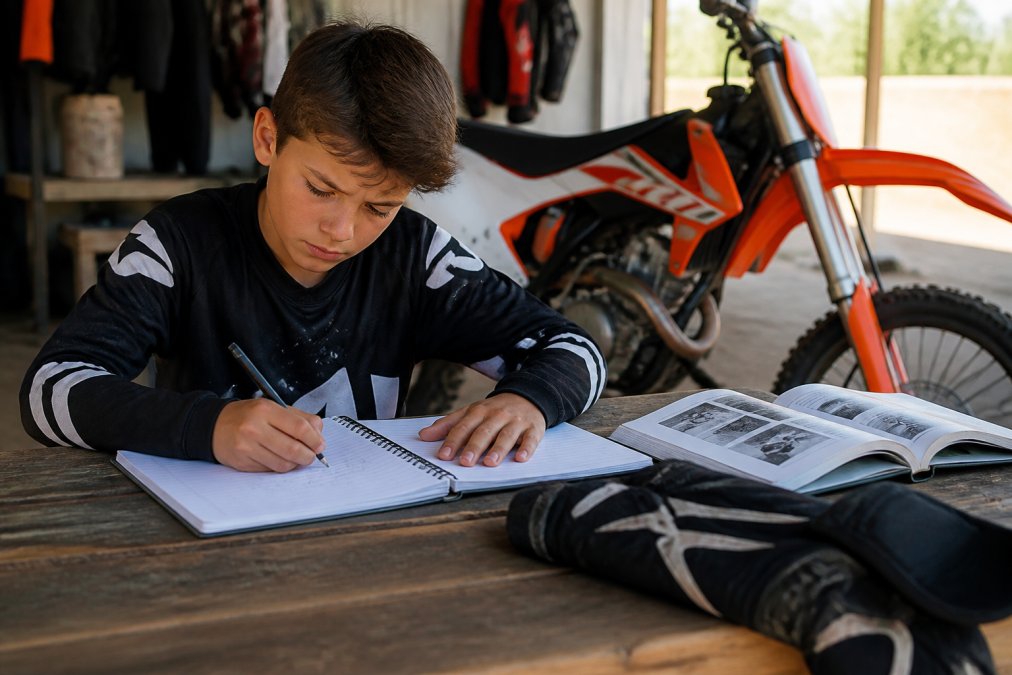
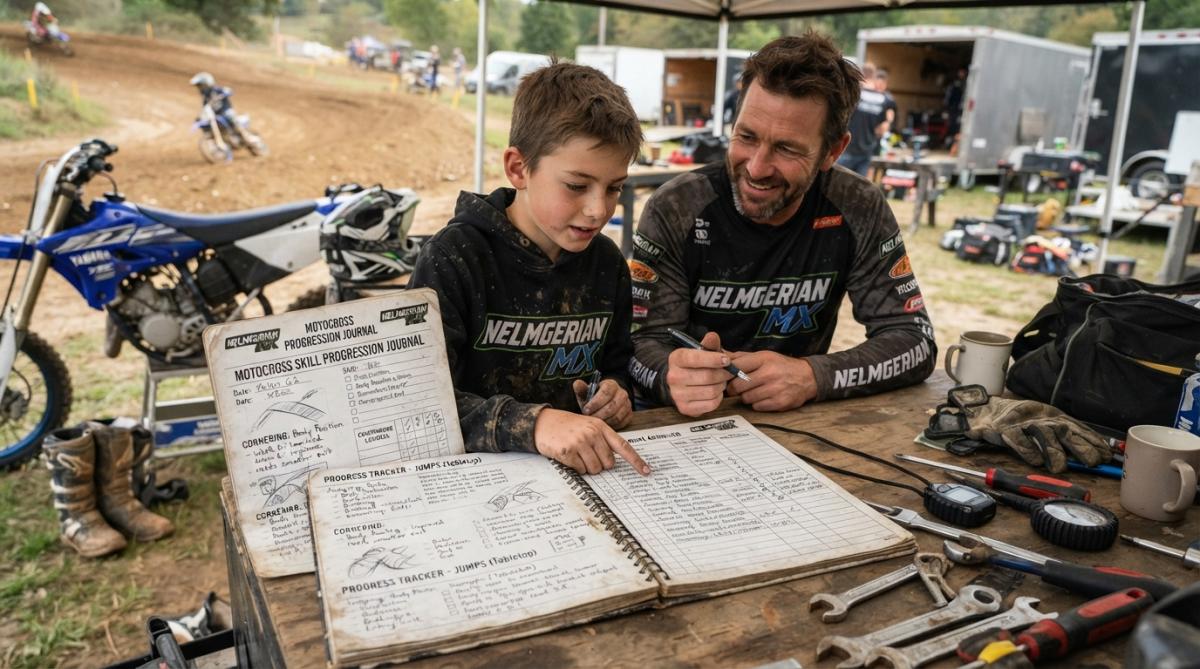
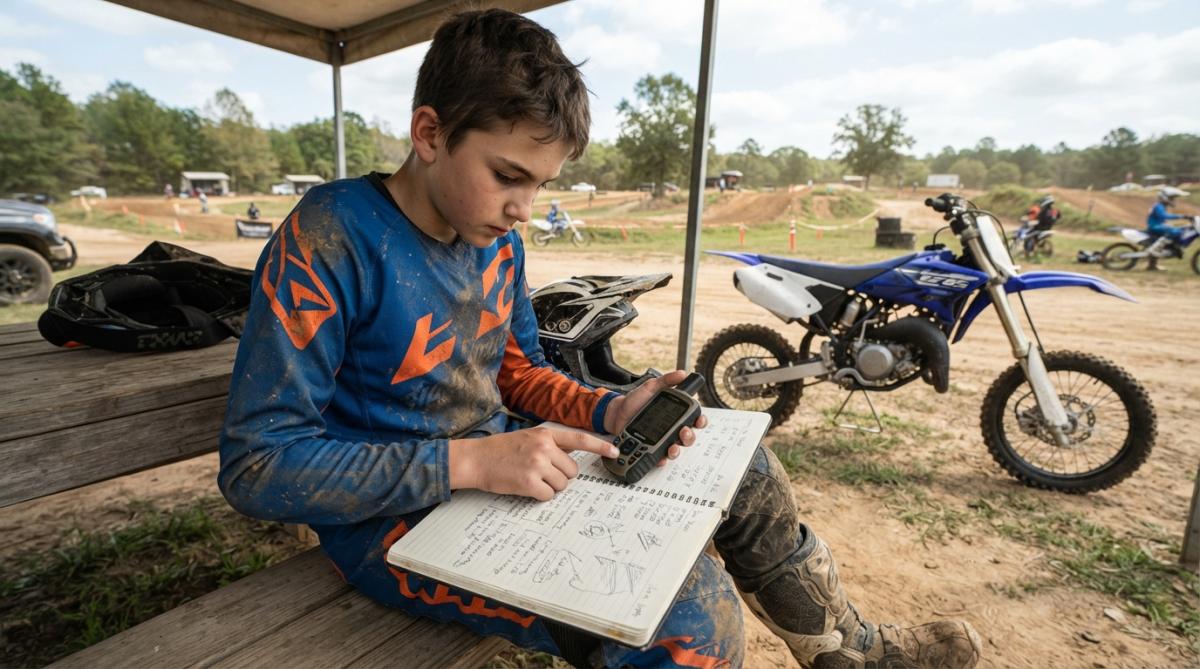
A training journal is the central hub of your motocross skill progression tracking guide. Every practice session, race, and training moment gets documented: the date, track conditions, specific drills you worked on, how you felt, what went well, and what needs improvement.
GPS performance metrics add quantitative data to your qualitative observations. Modern motocross riders can use GPS watches or smartphone apps to track lap times, top speed, acceleration patterns, and braking points. The combination of journal notes and GPS data tells a complete story. Your journal might say "felt great on the whoops today," and your GPS data confirms it with faster times through that section.
Motocross Fitness Training and Mental Focus Development
Riding skill is only half the equation. Physical fitness and mental resilience determine whether you can execute those skills consistently, especially when fatigue sets in or pressure increases.
Conditioning for Endurance and Competitive Racing
Motocross demands exceptional cardiovascular endurance. A moto can last 15 minutes or longer, and riders often compete in multiple motos on the same day. Your fitness level directly impacts your ability to maintain focus and execute technique in the final laps. Effective conditioning includes sport-specific training: grip strength, core stability, neck strength, and cardiovascular capacity.
Track your fitness metrics the same way you track riding metrics. Measure your grip strength monthly. Time how long you can hold a plank. Run timed cardiovascular tests. As your fitness improves, you should feel noticeably fresher in final laps, and your lap times should stay more consistent throughout the session. Mental focus is equally important, your motocross skill progression tracking guide should include notes on mental performance: Did you stay focused or did your mind wander? Did you handle pressure well?
Online Motocross Coaching and Post-Ride Analysis
Professional coaching accelerates progress dramatically. A coach sees inefficiencies in your line, timing issues in your throttle control, or mental patterns that hold you back. Combined with video review and post-ride analysis, coaching becomes a powerful tool for skill development.
Using Coaching Tools and Video Review
Video review is one of the most underutilized tools in motocross training. When you watch yourself riding, you see problems that feel invisible while you're on the bike. Your line looks different. Your body positioning looks different. Your throttle application looks different. Modern coaching platforms allow you to upload video, have a coach review it, and receive specific feedback on technique. When you review video, use your standardized rubric to rate yourself.
Creating Your Drill-Based Progression Roadmap
Generic riding doesn't build specific skills. Deliberate practice with targeted drills does. Your motocross skill progression tracking guide should include a specific set of drills designed to address your weaknesses and build your strengths.
Practice Drills for D-Class Through A-Class Riders
D-class riders (beginners) should focus on fundamental drills: smooth throttle control on straightaways, basic body positioning in corners, and simple jump approach. C-class riders add complexity: linking corners smoothly, maintaining throttle through technical sections, and jumping with more commitment. B-class riders work on consistency and speed: maintaining high speed through technical sections, reading track conditions, and executing under pressure. A-class riders refine and specialize: finding marginal gains, developing signature techniques, and performing under extreme pressure. Document which drills you use, how often you use them, and how they correlate with improvements in your rubric ratings.
Track Conditions Analysis and Bike Setup Optimization
Different track conditions demand different approaches. A track that's dry and hard requires different body positioning and throttle control than a track that's wet and soft. Your training journal should note track conditions for every session, and your rubric ratings should reflect how well you adapted to those conditions. Bike setup also impacts your ability to execute technique. Track your setup changes and their impact on your performance.
| Skill Area | D-Class Focus | C-Class Focus | B-Class Focus | A-Class Focus |
|---|---|---|---|---|
| Cornering | Basic line selection | Smooth transitions | Speed maintenance | Apex precision |
| Throttle Control | Smooth roll-on | Modulation in technical sections | Acceleration timing | Micro-adjustments |
| Body Positioning | Centered riding | Weight transfer basics | Efficient movement | Anticipatory shifts |
| Jumping | Commitment building | Rotation control | Height optimization | Landing consistency |
| Mental Focus | Building confidence | Concentration under fatigue | Race strategy | Pressure management |
Common Mistakes in Motocross Skill Tracking and How to Avoid Them
The biggest mistake is tracking without acting on the data. If your data shows you're weak in technical sections, your next week of training should emphasize whoops and technical terrain. Another common mistake is being inconsistent with your rubric ratings, rate yourself based on objective behaviors, not your feelings. Many riders also compare their progress to others instead of to their own baseline. Your progress is your own and it's meaningful regardless of where others stand. Finally, riders often track too many metrics and get overwhelmed. Pick the 5-7 most important metrics for your current goals and track those consistently.
Tracking your motocross skill progression isn't just about statistics and spreadsheets, it's about taking control of your development. Most riders leave their improvement to chance, hoping they'll get better through sheer seat time. The riders who actually progress systematically use tools like training journals, standardized rubrics, and performance metrics to understand exactly where they stand and where they need to go. Nelmgerian MX provides rider training journals and educational resources specifically designed to help young and developing riders implement this systematic approach to skill development. With tools that combine journaling, skill assessment, and performance tracking, you can transform casual riding into deliberate practice that builds confidence and measurable improvement both on and off the track. Start tracking your progress today and watch how quickly your riding transforms when you measure what matters.
Frequently Asked Questions
How do you track progress in motocross skill progression?
Effective motocross skill progression tracking combines multiple methods: maintain a detailed training journal documenting lap times, track conditions, and specific techniques practiced; use GPS tracking tools and performance metrics apps to record speed and consistency; conduct post-ride video analysis to review body positioning, cornering, and jumping technique; and establish a standardized self-assessment rubric that rates your abilities in fundamental riding techniques, throttle control, and clutch control. Regular data review helps identify improvement patterns and areas needing focused drill work.
What motocross training program structure works best for beginners?
A structured motocross training program should include: foundational riding technique sessions (20-30% of track time), progressive drill work targeting specific skills like cornering and jumping, physical conditioning for motocross fitness training, and dedicated mental focus practice. Set realistic progression goals tied to measurable outcomes, such as reducing lap time variance or mastering a specific jump technique. Beginners benefit from breaking practice into focused skill blocks rather than unstructured riding, with weekly review of performance metrics to track advancement from beginner to D-class rider status.
How can motocross coaching online help accelerate my skill development?
Online motocross coaching provides structured feedback through video analysis of your riding technique, remote assessment of body positioning and throttle control, and personalized drill recommendations. Coaches can review your training journal data and performance metrics to identify inefficiencies in cornering, jumping, or track-specific approaches. Many coaching platforms integrate with GPS tracking tools, allowing coaches to analyze lap data and suggest suspension tuning or bike setup adjustments. This remote feedback accelerates skill mastery by providing expert perspective without requiring full-time local coaching.
What metrics should I prioritize when tracking motocross skill progression?
Prioritize three categories of metrics: speed-based (lap times, consistency variance, segment splits), technique-based (video assessment scores for body positioning, cornering smoothness, jump landings), and endurance-based (laps completed without performance degradation, heart rate recovery). Use a training journal to document which practice drills you completed and their difficulty level. Track progression from D-class through A-class rider benchmarks. Include qualitative notes on track conditions and mental focus during sessions. This multi-dimensional approach reveals whether improvements come from fitness, technique refinement, or mental confidence.
This article was written using GrandRanker